Rare 2,000-Year-Old Celtic Silver Hoard Found Beneath a Former Sports Field
Struck in the 1st century BC · Found in 2025 See it on the timeline →
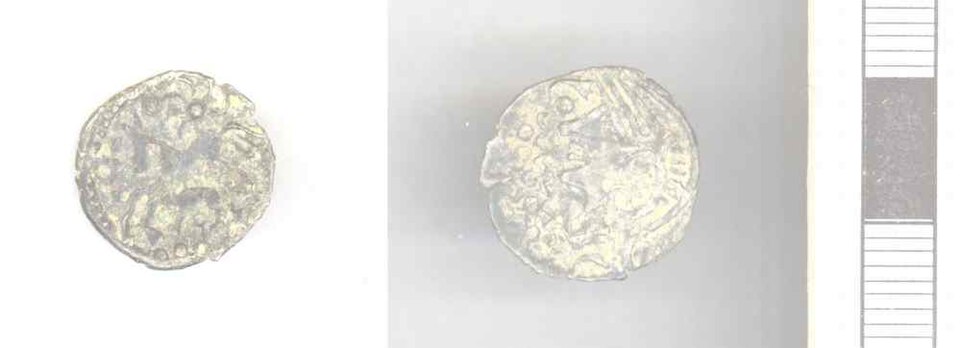
Archaeologists digging the site of a new fire station in Thuringia found eleven Celtic silver coins, the largest hoard of its kind ever found in the state, buried in the first century BC.
In the summer of 2025, archaeologists from Thuringia's state heritage office, the TLDA, were excavating a former sports field on the Singer Berg, a hill just north-east of the village of Singen in the Ilm-Kreis, ahead of building work for a new fire station. The excavation leader, Ronny Krause, began finding small silver coins.
A follow-up investigation in August 2026 confirmed what they were: eleven Celtic silver quinarii of the so-called Prague type, struck in the first century BC. They lay scattered over an area of about 5.8 by 1.5 metres, spread out by later ploughing, but the archaeologists recorded the position of each one, and that showed they had once been buried together, probably in a bag or box of some material that has since decayed.
That makes it a closed find: a group put into the ground at a single moment. Only about 80 coins of this type were previously known from the whole of Thuringia, and this is the largest hoard of the period ever found there. The coins are thought to have been minted in the Gotha area, to the north-west, and the find adds to what is known of Celtic trade routes and workshops in the region.
The same site produced a scatter of much later objects too: a Roman denarius of AD 164 to 169, an early medieval glass bead in red and yellow, part of an iron knife, a 16th-century silver coin and a Prussian uniform button.
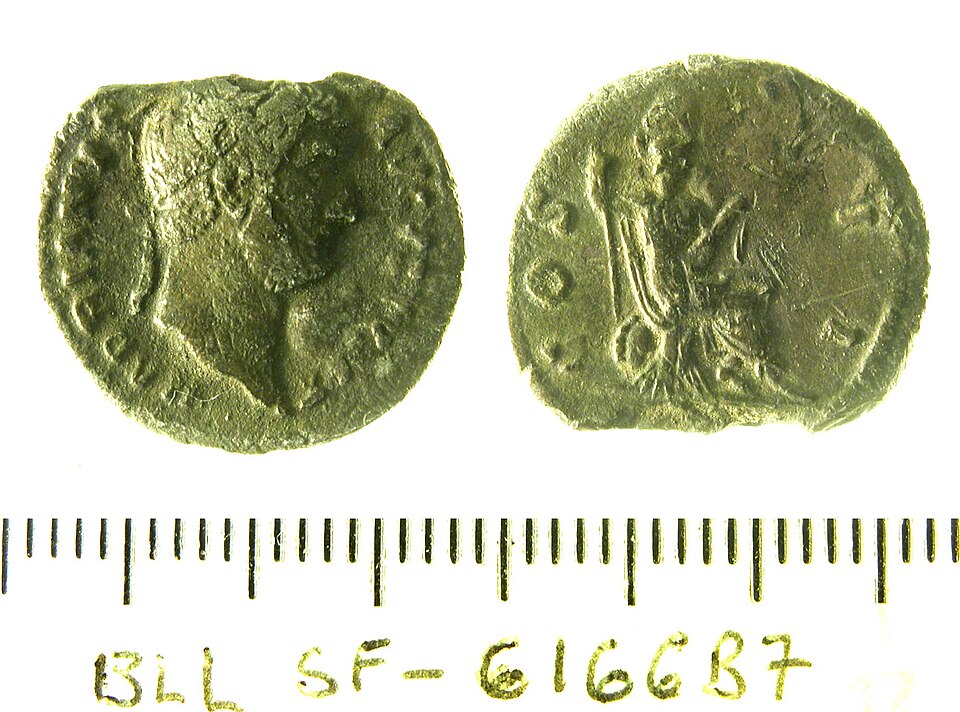
Reported by Arkeonews and Archäologie Online (18 September 2026), from the TLDA. Written for Global Finds from those reports. Photo: a Celtic silver coin based on the Roman denarius and quinarius, recorded with the Portable Antiquities Scheme (not from this hoard), The Portable Antiquities Scheme, Katie Hinds, Wikimedia Commons, CC BY-SA 2.0.
Approximate location50.72, 11.06View on map
Source: Arkeonews