Le Câtillon II: the world's largest Celtic coin hoard, found in Jersey
Famous find Buried around 50 BC · Found in 2012 See it on the timeline →
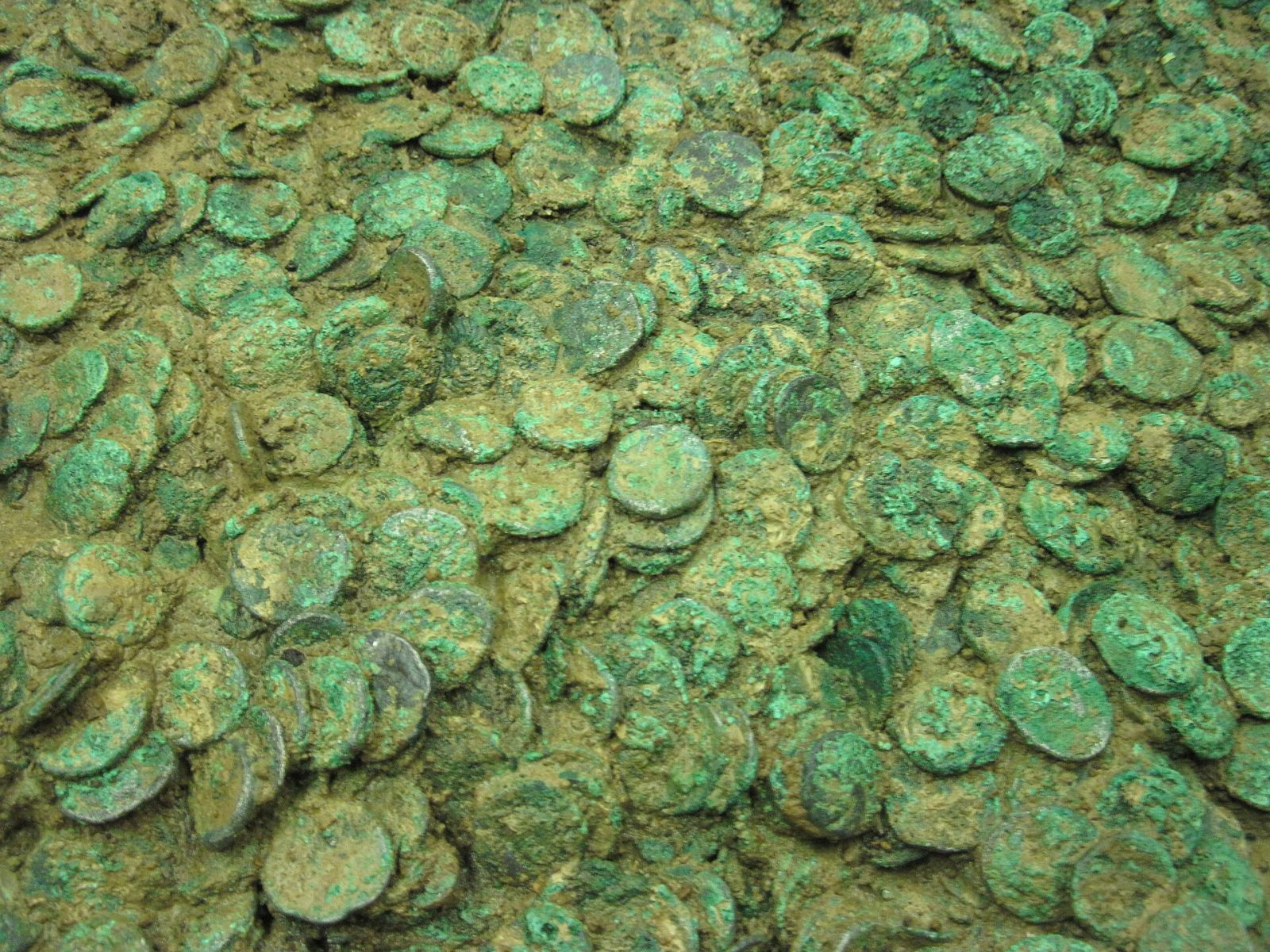
In 2012 two Jersey detectorists who had searched the same area for 30 years found a hoard of nearly 70,000 Iron Age coins and gold jewellery. It is the largest Celtic coin hoard ever found.
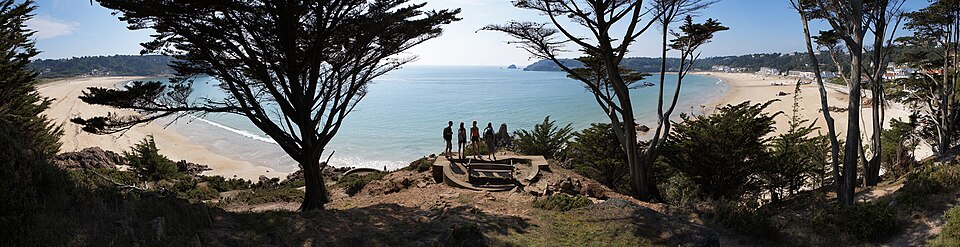
Reg Mead and Richard Miles had searched the fields of Grouville, in the east of Jersey, for about 30 years, convinced that more coins lay there after an earlier hoard had been reported from the area. In 2012 they were proved right. When their detectors turned up a few Iron Age coins, they stopped, filled the hole back in and reported the find to Jersey Heritage.
What archaeologists then uncovered was a single solid mass of coins. It was lifted out in one block of earth weighing roughly three-quarters of a tonne and taken apart in a laboratory, where the position of every coin was recorded in three dimensions. The final count was 69,347 coins, most of them silver and billon coins of the Coriosolitae, a Celtic people of Armorica, in what is now Brittany, along with gold torcs, silver bracelets, rings, glass beads and the remains of a purse.
The coins suggest the hoard was buried around 50 BC, during Julius Caesar's conquest of Gaul, probably by Coriosolite leaders hiding their wealth on the island as the Romans advanced.
Under Jersey law the hoard belonged to the Crown. In December 2021 the Government of Jersey bought it for £4.25 million, with the finders sharing in the payment, using money confiscated from criminals through its Civil Asset Recovery Fund. It is on display at La Hougue Bie Museum in Jersey.
Le Câtillon II is the largest hoard of Celtic coins ever found, and one of the most carefully excavated.
Written for Global Finds from Jersey Heritage, the Government of Jersey and other published accounts. Photo: the hoard during cleaning in 2012, Man vyi, Wikimedia Commons, public domain.
Approximate location49.19, -2.05View on map
Source: Jersey Heritage