Metal Detectorists Dug up 141 Roman Gold Coins - Along with a 1,600 year old mystery!
Buried around AD 400 to 410 · Found in 2019 See it on the timeline →
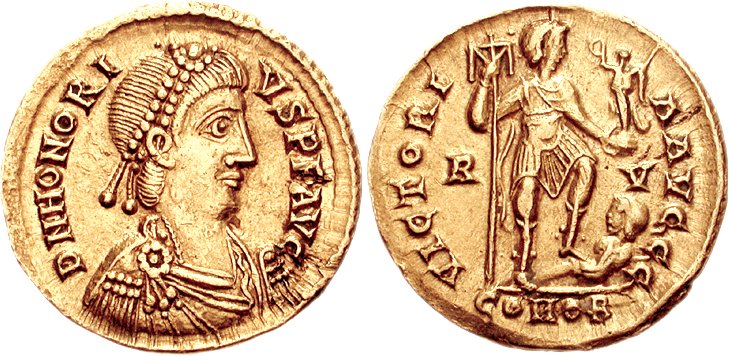
Two detectorists in northern Luxembourg spotted a Roman gold coin in a ploughed field in 2019. Years of secret excavation uncovered a hoard of 141 gold solidi beside a Roman watchtower.
In 2019, two metal detectorists, Jos Müller and Cliff Nosbusch, were searching a ploughed field on a low rise known locally as the Rank, near the village of Holzthum in the Oesling region of northern Luxembourg. One of them saw a gold coin lying on the surface, a late Roman solidus in near-mint condition. Around 37 more followed.
They reported the find to Luxembourg's national archaeological institute, the INRA. Its archaeologists surveyed the field, carried out a geomagnetic survey, and then excavated it as quietly as possible, with help from the Luxembourg Army's mine-clearance service, over several years until 2024. The discovery was kept secret throughout to protect the site.
In all, the hoard turned out to contain about 141 gold solidi, which had been buried together, probably in a purse or other container that has since rotted away. They were struck by nine emperors and usurpers who ruled between AD 364 and 408, from Valentinian I to Honorius, at eight mints across the empire, from Trier in the west to Constantinople and Antioch in the east.
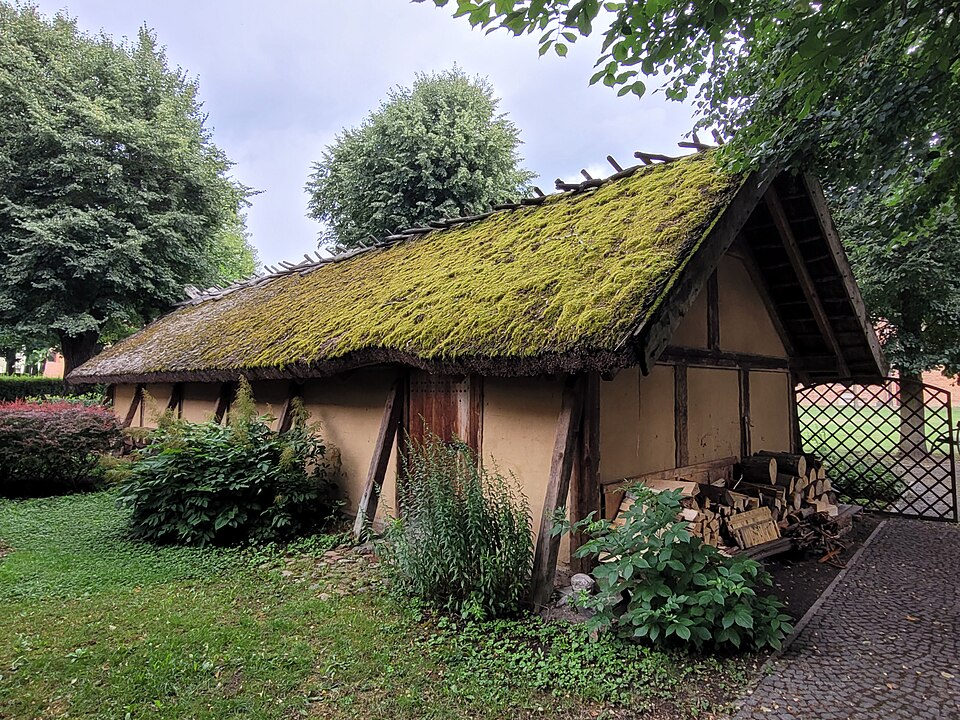
The Rank turned out to be the site of a Roman burgus, a small fortified watchtower guarding a stretch of road, with room for a garrison of six to eight men. Graves were found nearby. The coins were probably buried during the reign of Honorius, around the start of the fifth century, by someone who never came back for them.
Luxembourg's Culture Minister, Eric Thill, has said the finds will add to our understanding of the last century of Roman rule in the West.
Reported by Popular Mechanics (2026). Written for Global Finds from that report and Chronicle.lu's account of the excavation. Photo: a gold solidus of Honorius, struck at Ravenna about AD 402 to 406 (not from this hoard), Classical Numismatic Group, Wikimedia Commons, CC BY-SA 3.0.
Approximate location49.98, 6.07View on map
Source: Chronicle.lu
Also reported by