A Metal Detectorist Unearthed a 17th-Century Ring Linked to Westminster Abbey
Made about 1695, after Dr Busby's death · Found in 2024 See it on the timeline →
More photographs
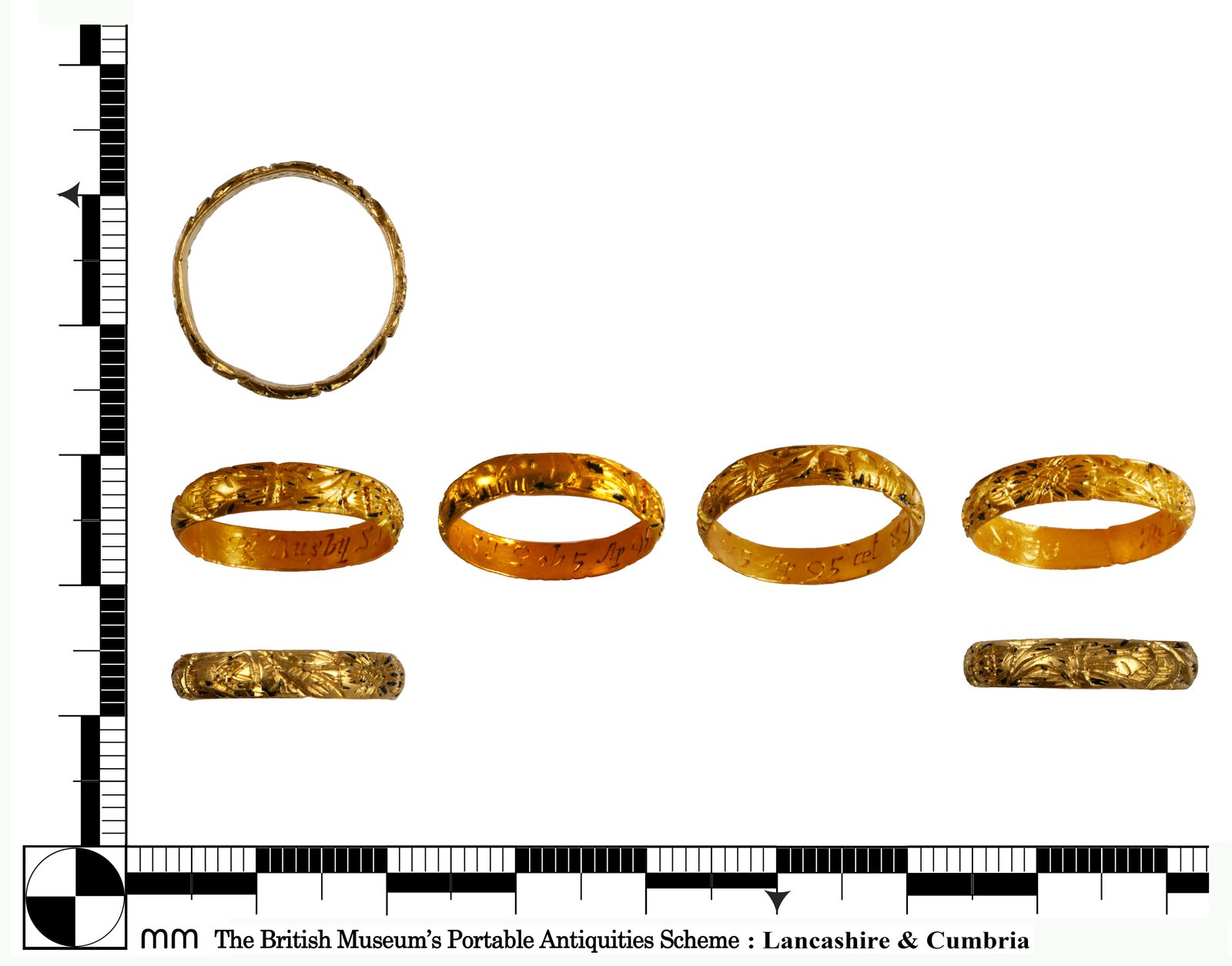
A detectorist near Preston found a 17th-century gold memorial ring made in memory of Westminster School's most famous headmaster. Westminster School has now bought it at auction.
In August 2024, Amanda Parker was metal detecting on farmland at Catforth, near Preston in Lancashire, when she dug up a gold ring about eight inches down.
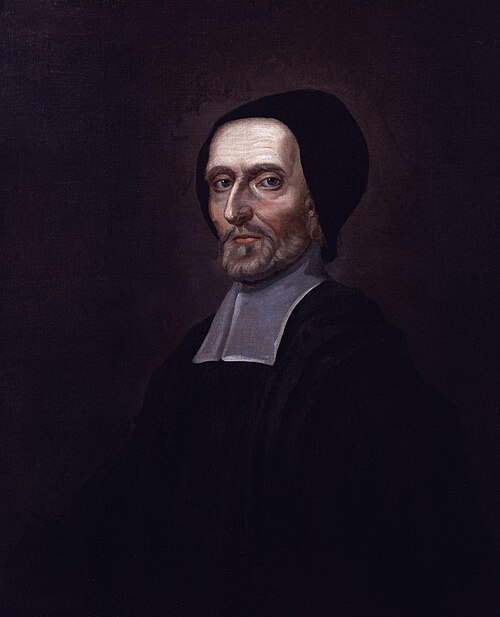
It is a memorial ring from the late 17th century, engraved with flowers and a skull, a reminder of death, and inscribed with the name of Dr Richard Busby. Busby was headmaster of Westminster School from 1638 until his death in 1695, nearly 57 years, and was called the most celebrated schoolmaster of his time. Among his pupils were the philosopher John Locke, the architect Christopher Wren, the poet John Dryden, the composer Henry Purcell and the scientist Robert Hooke. He is buried in Westminster Abbey.
In his will, Busby left money for friends and acquaintances to buy rings in his memory. About 90 were made, with leaf decoration, of which around 20 also had a skull, and they were given to clergy, church officials, choristers, pupils and bell ringers.
After researching her find, Ms Parker visited Westminster School, where staff were delighted to see it. She said she does not detect for money, and that this was the only find she had ever put up for sale. On 23 June 2026 it was sold at Noonans in Mayfair, with an estimate of £2,000 to £3,000, and the buyer was Westminster School itself, for a hammer price of £3,200.
The school's archivist, Dr Elizabeth Wells, said it was thrilling to have the ring back, 331 years after Busby's death. It will be used for teaching, made available to researchers and put on display from September 2026.
Reported by JCK (2026) and Noonans (13 July 2026). Written for Global Finds from those reports. Photos: (1) the ring itself, recorded with the Portable Antiquities Scheme as LANCUM-88D4BB, © The Portable Antiquities Scheme, CC BY. (2) Dr Richard Busby, portrait by an unknown artist, National Portrait Gallery, London, Wikimedia Commons, public domain.
Approximate location53.82, -2.79View on map
Source: Noonans
Also reported by