The Winchester Hoard: Iron Age gold jewellery with a Roman touch
Famous find Made about 75 to 25 BC · Found in 2000 See it on the timeline →
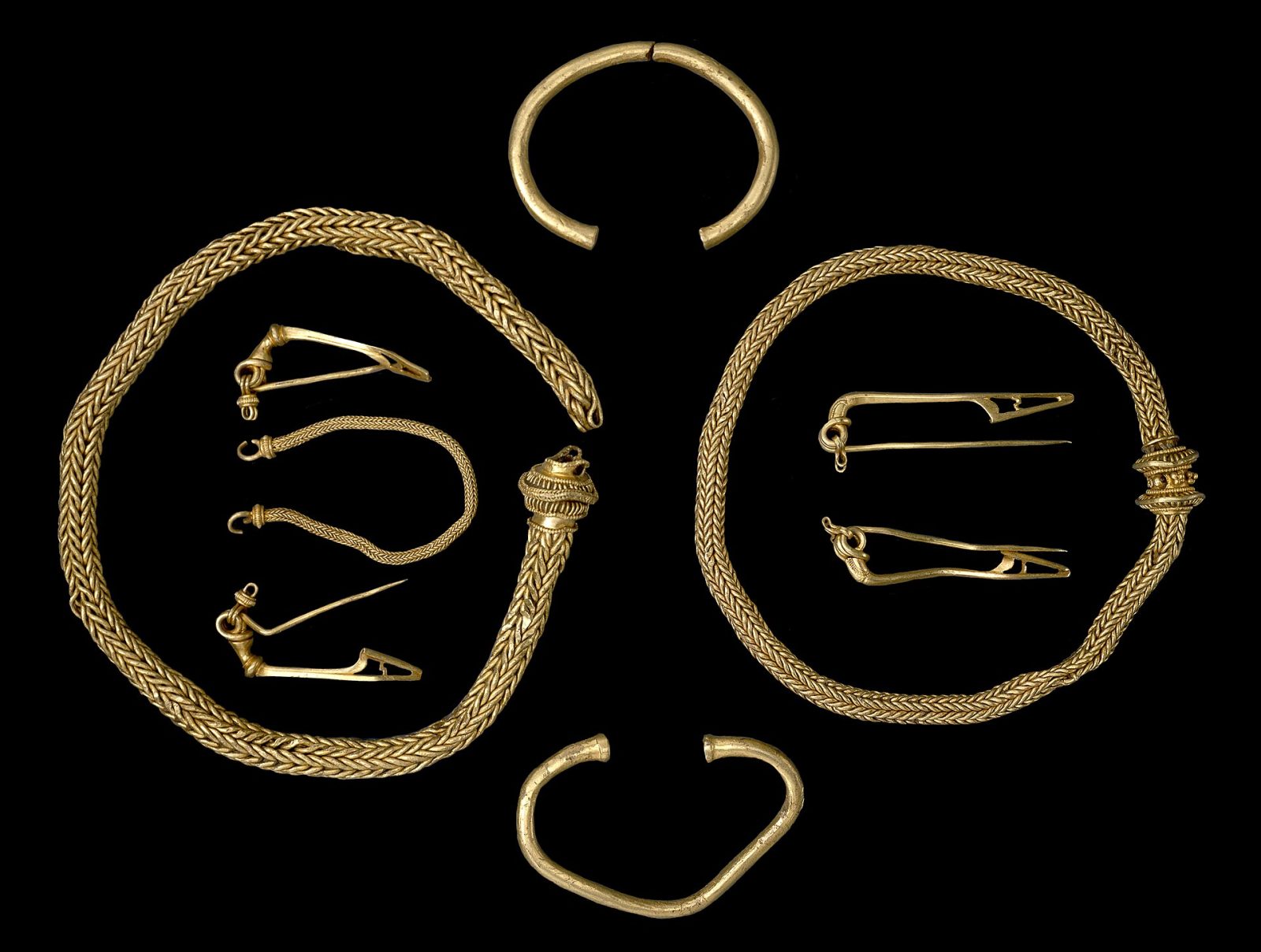
In 2000 a retired florist detecting near Winchester found two sets of gold neck-rings and brooches and two bracelets, more than a kilogram of very pure gold buried about 2,000 years ago.
In the autumn of 2000, Kevan Halls, a retired florist and metal detectorist, was searching farmland in the parish of Owslebury, a few miles south-east of Winchester in Hampshire, when he found the first pieces of gold. Over several visits he recovered the rest of a hoard that had been buried on its own on top of a small hill, not in a grave, a settlement or a temple.
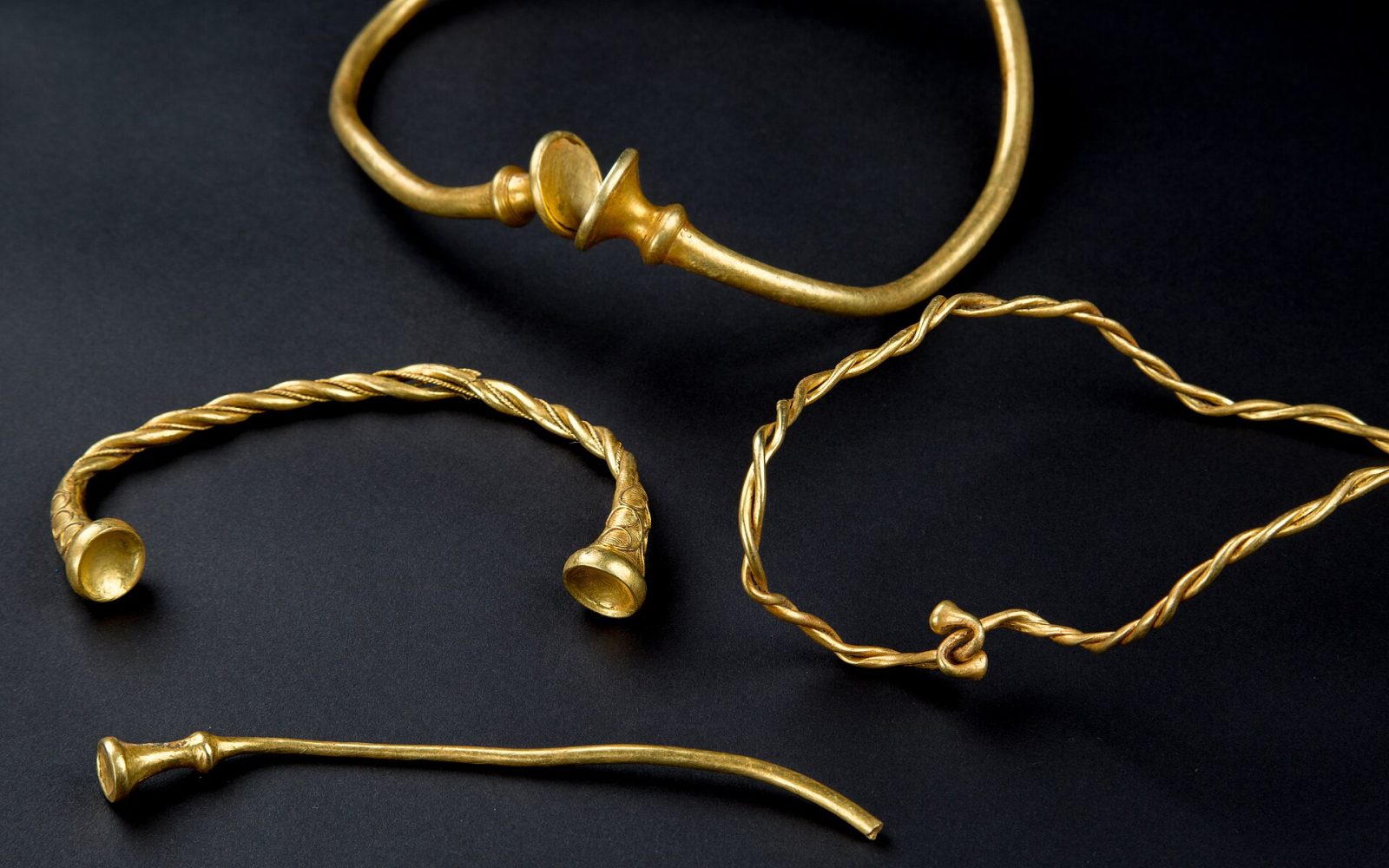
There are ten pieces, about 1.16 kilograms of very pure gold in all. They make up two matching sets of jewellery, each a neck-ring, or torc, with a pair of brooches that were joined by a chain, along with two bracelets. One of the two chains has never been found. The British Museum dates the hoard to about 75 to 25 BC. Before it was found, only two other gold brooches were known from Iron Age Britain.
What makes the Winchester jewellery stand out is the way it was made. The torcs are built from fine gold wire linked in the loop-in-loop technique and decorated with filigree and granulation, methods of the Roman and Greek world rather than of British Iron Age goldsmiths. The British Museum suggests the pieces were made by a craftsman trained in the Roman world, perhaps as a diplomatic gift to a British ruler around the time of Julius Caesar's expeditions to Britain.
The hoard was declared Treasure and valued at £350,000, at the time the largest reward paid under the Treasure Act, which was shared between the finder and the landowner. The British Museum bought it in 2001 with grants from the National Heritage Memorial Fund and the Art Fund, and it is on display in the museum's Room 50.
Written for Global Finds from the British Museum, the National Heritage Memorial Fund and other published accounts. Photo: the Winchester Hoard, The British Museum / Ian Richardson, Wikimedia Commons, CC BY-SA 2.0.
Approximate location51.01, -1.27View on map
Source: British Museum