The Crosby Garrett Helmet: a Roman face-mask helmet sold to an unknown buyer
Famous find Made about AD 150 to 250 · Found in 2010 See it on the timeline →
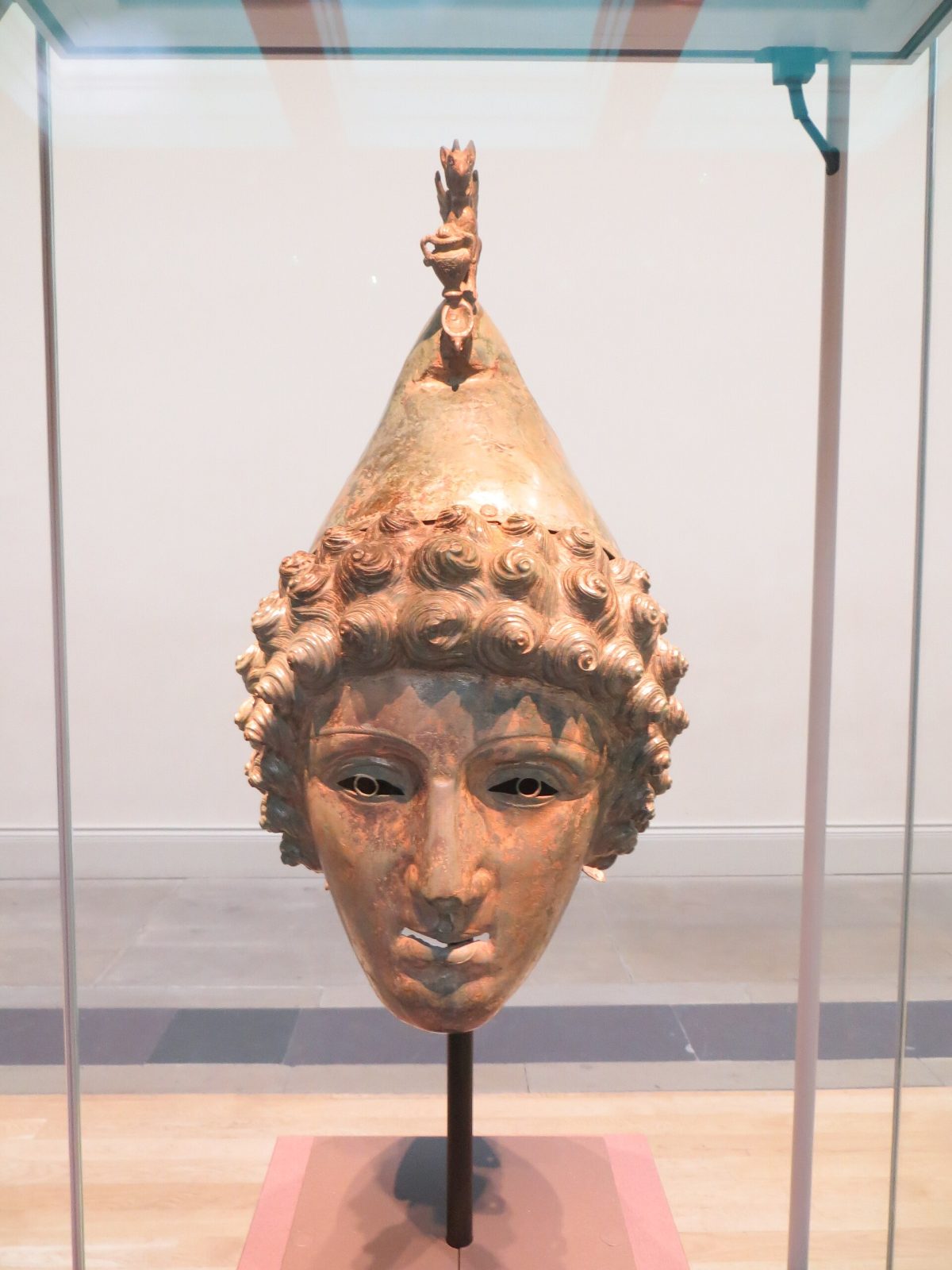
In 2010 a young detectorist in Cumbria found a Roman cavalry helmet with a face mask, in dozens of pieces. Because the law did not count it as Treasure, it was restored and sold at auction for about £2.3 million to a private collector.
In May 2010 a metal detectorist in his twenties, who has never been named, was searching pasture near the village of Crosby Garrett in Cumbria, not far from Kirkby Stephen, when he found the pieces of a copper-alloy helmet about 25 centimetres down. He had been detecting in the parish with his father for several years.
It was a Roman cavalry sports helmet, made in two parts: a cap of curly hair topped by a griffin, and a face mask showing a clean-shaven young man. Helmets like this were worn for parades and display, not for battle. It seems to have been folded before it was buried, and it came out of the ground in 67 fragments. Specialists date it to the late 2nd or early 3rd century AD, though the auction house described it as earlier.
Because it was a single object of copper alloy, not gold or silver, it did not count as Treasure under the Treasure Act. There was no legal duty to report it and no right for a museum to acquire it. The finder did tell the Portable Antiquities Scheme, and in August 2010 two finds liaison officers visited the findspot with him and recorded it. By then the pieces were with Christie's, which had the helmet restored for sale despite requests from the British Museum and the Portable Antiquities Scheme to wait until it could be examined. Evidence about how it was made and buried may have been lost in the process.
At Christie's in London on 7 October 2010, against an estimate of £200,000 to £300,000, it sold for about £2.3 million to an anonymous private collector bidding by telephone. Tullie House Museum in Carlisle, backed by the British Museum, had raised £1.7 million with help from the National Heritage Memorial Fund, the Art Fund and the public, and was outbid.
Excavations at the findspot afterwards found a Romano-British farming settlement that nobody had known about, and a stone structure that may have marked the place where the helmet was buried. The owner has lent it to exhibitions at the Royal Academy, the British Museum and Tullie House, but it remains in private hands.
Written for Global Finds from Sally Worrell's report for the Portable Antiquities Scheme, Archaeology magazine and other published accounts. Photo: the Crosby Garrett Helmet on loan to the British Museum, Jononmac46, Wikimedia Commons, CC BY-SA 3.0.
Approximate location54.48, -2.42View on map