18.5-kilogram Viking silver hoard found in Denmark is the largest ever discovered
Buried in the 900s See it on the timeline →
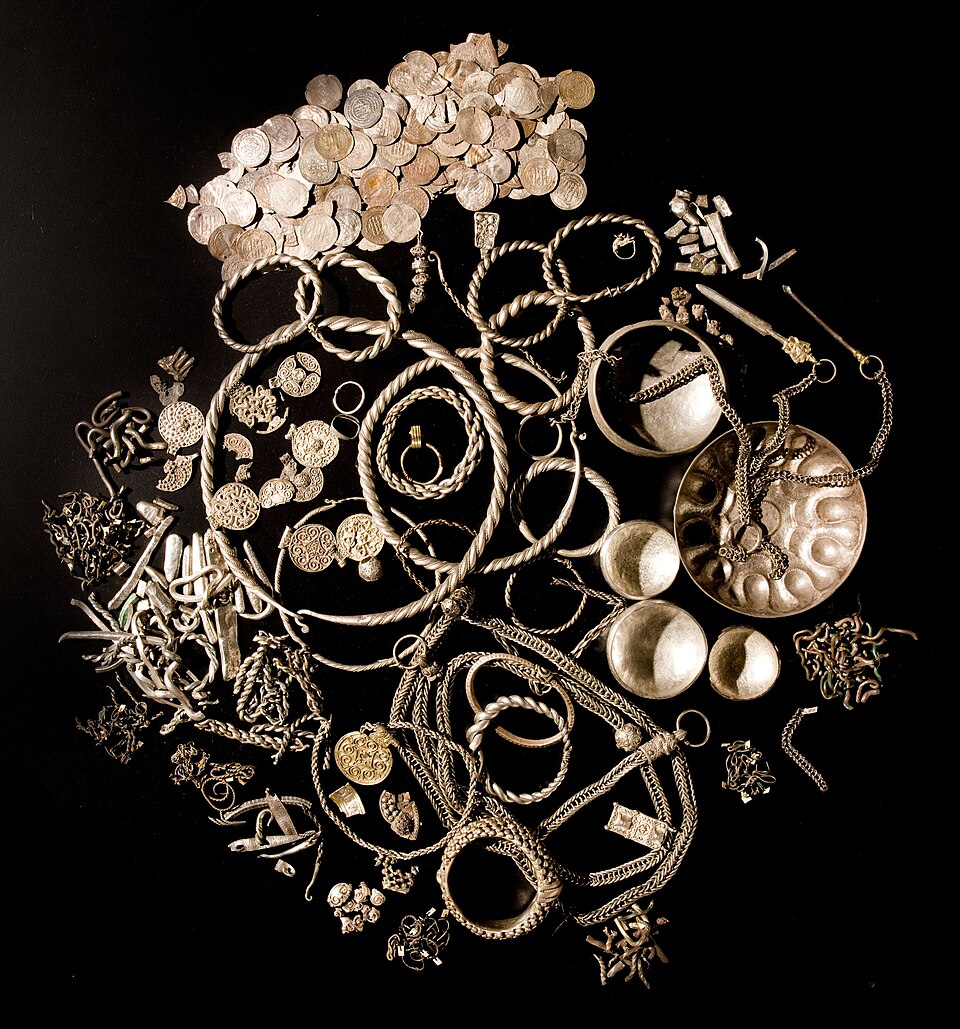
A homeowner laying a new terrace in Rebild, north Jutland, dug up Denmark's largest Viking silver hoard: 18.5 kilograms, about 700 pieces, nearly three times the previous record.
A homeowner in Rebild, in North Jutland, was preparing the ground for a new terrace in their garden when, after about half an hour's digging, the spade hit something that made a strange sound. They thought it was old iron or fencing wire, but careful digging by hand revealed silver.
It turned out to be the largest Viking Age silver hoard ever found in Denmark: 18.5 kilograms of silver, made up of about 700 objects and fragments. About 320 of them, weighing 6.4 kilograms, were still inside the clay pot they had been buried in during the 900s, and the rest lay scattered in the soil around it. The previous Danish record, the Terslev hoard, weighs about 6.5 kilograms, so Rebild is almost three times the size.
Most of the hoard is silver bars, arm rings and cut-up pieces of silver, valued by weight rather than counted. There are 47 whole coins and coin fragments, including Arabic dirhams and Anglo-Saxon pennies of King Edward the Elder, who reigned from 899 to 924, which help to date it. There is also a small Thor's hammer amulet, and one silver bar carries a few runes, possibly reading "hutu", which might be a name or a mark of ownership.
Torben Sarauw, an archaeologist at Nordjyske Museer, the museums of North Jutland, called it a find of great importance and compared it to discovering a safe from the Viking Age. The hoard is danefæ, treasure that belongs to the Danish state, and has gone to the National Museum in Copenhagen for assessment. Nordjyske Museer hopes to display it at the Viking Museum Fyrkat.
Reported by Archaeology News Online Magazine (2026), from Nordjyske Museer. Written for Global Finds based on those reports. Photo: the Terslev hoard, the previous record holder (not this find), Nationalmuseet, Wikimedia Commons, CC BY-SA 4.0.
Approximate location56.89, 9.82View on map
Source: Nordjyske Museer
Also reported by