The Derrynaflan Hoard: the find that changed Ireland's detecting laws
Famous find Made in the 8th and 9th centuries AD · Found in 1980 See it on the timeline →
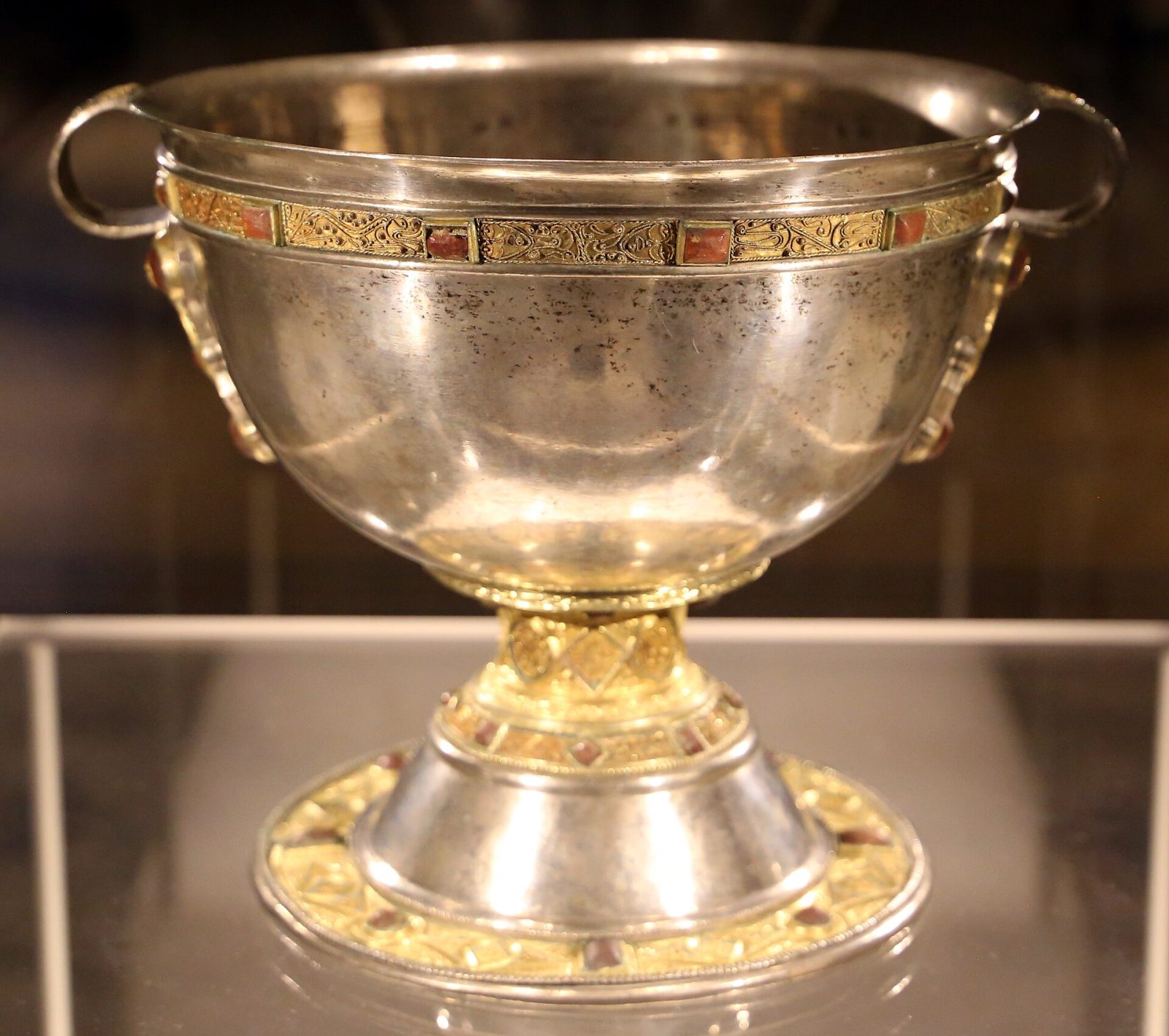
In 1980 a father and son with metal detectors found a hoard of early medieval church silver on a monastic island in a Tipperary bog. The court battle that followed made the State the owner of Ireland's buried past.
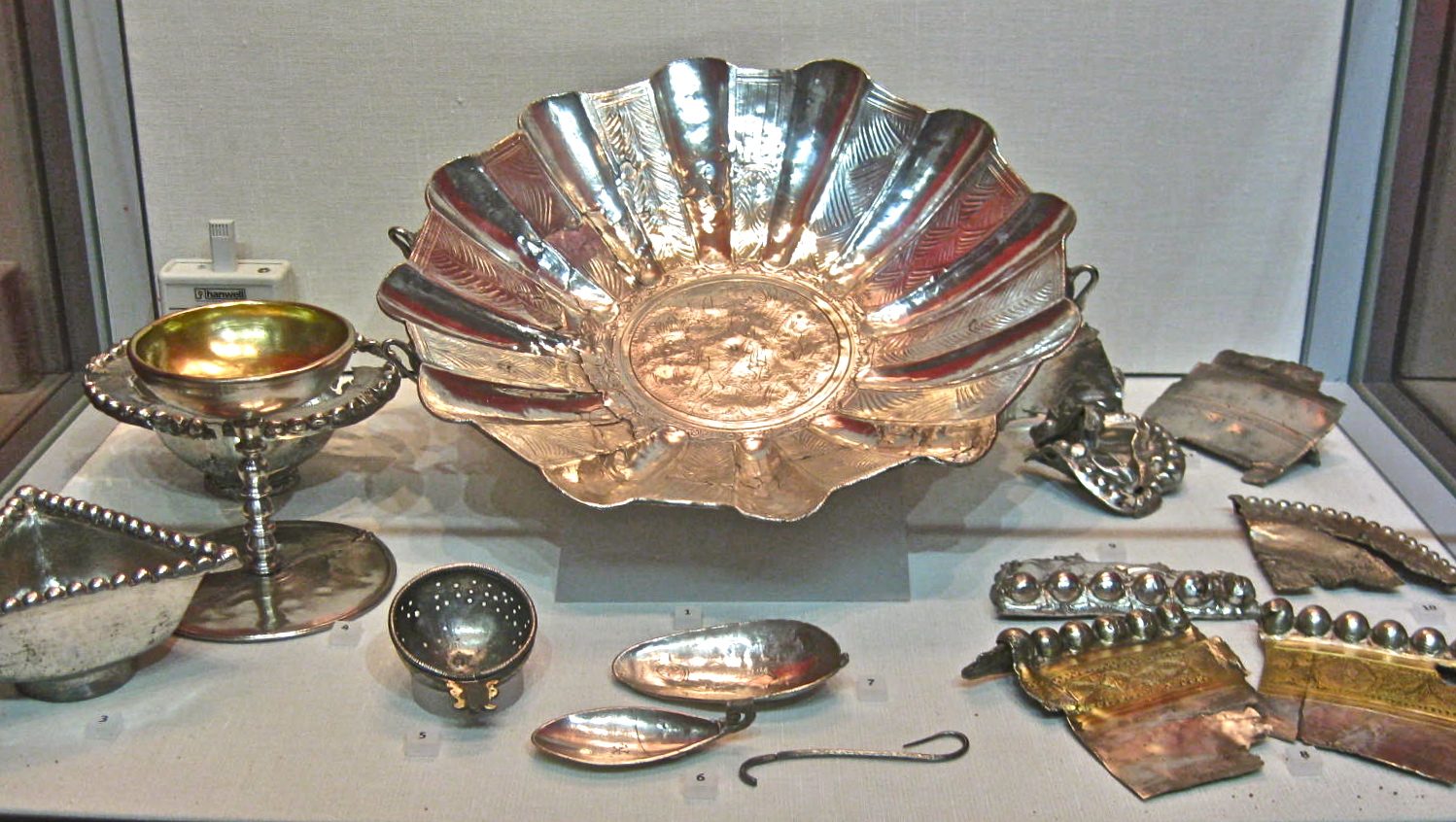
On 17 February 1980, Michael Webb and his son, also Michael, from Clonmel, were searching with metal detectors at Derrynaflan, an island of dry ground in Littleton bog in County Tipperary and the site of an early Irish monastery. They found a bronze basin lying upside down, and under it a set of church altar vessels that had been hidden there more than a thousand years before.
The hoard has five pieces: a silver chalice; a silver paten, the dish that held the bread at Mass; a hoop that may have been the paten's stand; a bronze strainer-ladle; and the basin that covered them all, which helped to protect the rest. The National Museum of Ireland dates the chalice, decorated with gold filigree, to the early 9th century, and the paten, built from more than 300 separate pieces, to the 8th. Why they were buried is not known. Raids by Vikings or by rival Irish kings are the usual suggestions.
The Webbs gave the hoard to the National Museum, and then the arguments began. The State offered them IR£10,000, which they refused. In 1986 the High Court found in their favour and said the hoard, or its value, put at about IR£5.5 million, should go back to them. A year later, in Webb v Ireland, the Supreme Court ruled the other way. It decided that the right to treasure trove was part of the sovereignty of the Irish State under the Constitution, so the hoard belonged to the State. But because the Webbs had been led to expect a fair reward, the court held that they were owed one, and they were eventually paid IR£25,000 each.
The case changed the law. The National Monuments (Amendment) Act 1987 made it an offence to search for archaeological objects with a metal detector without a licence, and the 1994 Act made the State the owner of any archaeological object found with no known owner, replacing treasure trove altogether. Both still govern detecting in Ireland today.
The Derrynaflan Hoard is on display in the Treasury at the National Museum of Ireland on Kildare Street in Dublin. Later excavation at the site by the museum recovered further small pieces belonging to it.
Written for Global Finds from the National Museum of Ireland, the Trafficking Culture project at the University of Glasgow and other published accounts. Photo: the Derrynaflan Chalice in the National Museum of Ireland, Sailko, Wikimedia Commons, CC BY 3.0.
Approximate location52.60, -7.73View on map