The Panagyurishte Treasure: Thracian gold found by three brothers digging clay
Famous find Made about 300 BC · Found in 1949 See it on the timeline →
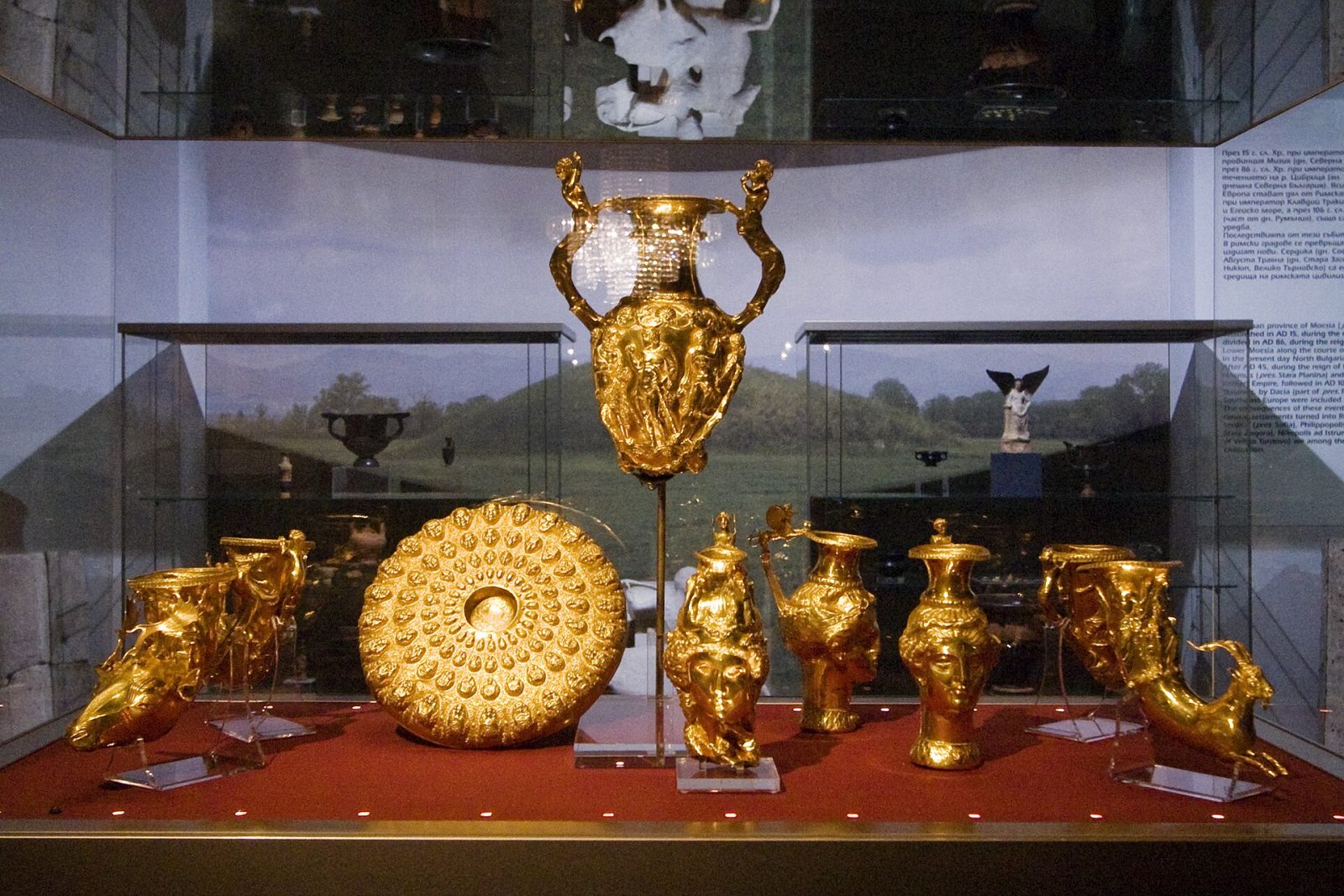
In 1949 three brothers digging clay for a tile works in Bulgaria uncovered nine solid gold vessels, more than 6 kilograms of Thracian gold made around 300 BC for feasting and drinking wine.
On 8 December 1949, three brothers, Pavel, Petko and Mihail Deikov, were digging clay at the Merul tile works near the railway station on the edge of Panagyurishte, a town in the Sredna Gora mountains of central Bulgaria, when they struck a cluster of gold vessels. They cleaned them and handed them over to the authorities.
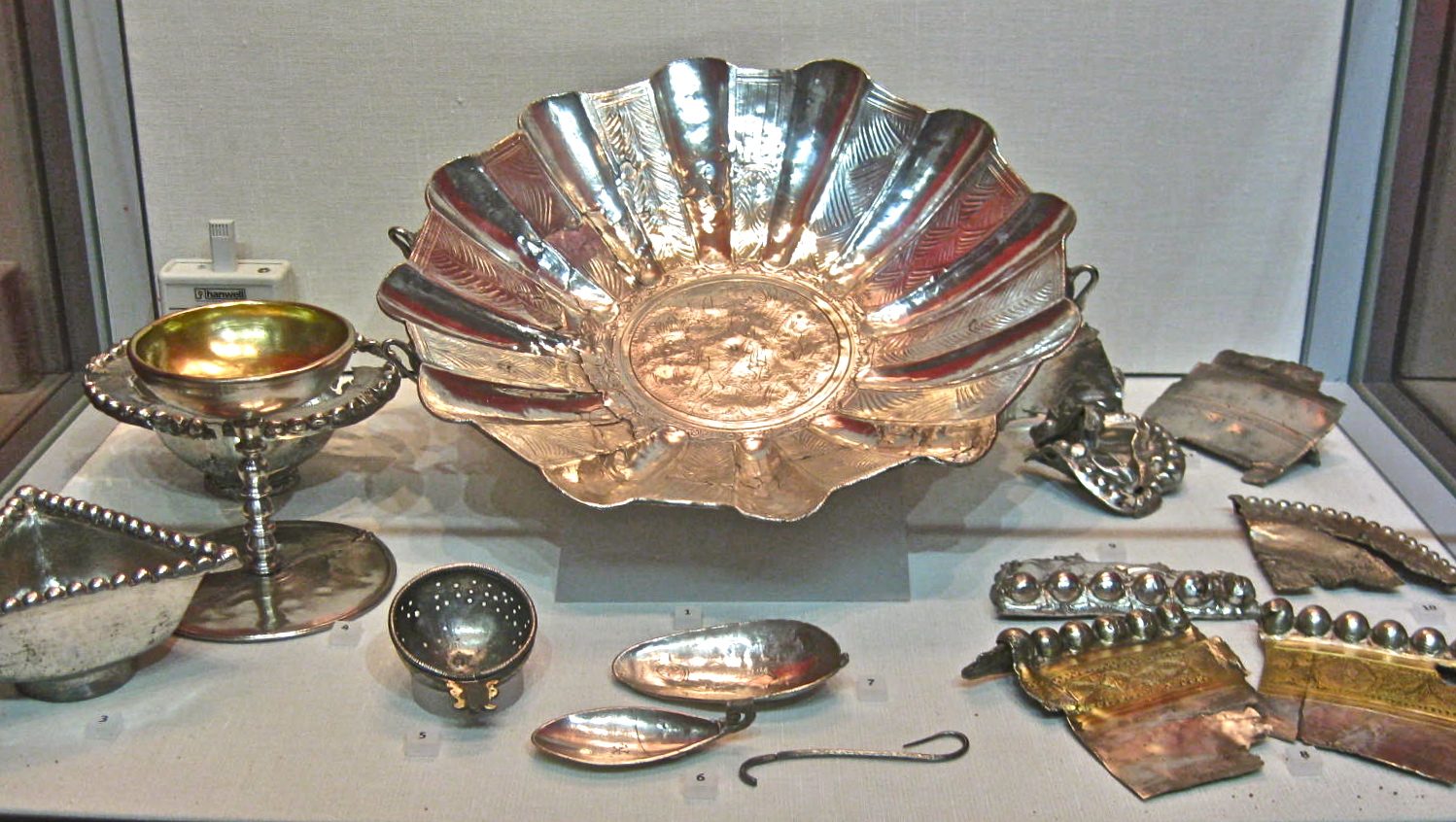
There are nine pieces of almost pure gold, weighing 6.164 kilograms in all. The largest is an amphora-rhyton, a two-handled jar with handles shaped as centaurs. Four drinking vessels end in the heads or foreparts of animals: a ram, a goat and two deer. Three jugs are shaped as the heads of women. The ninth piece is a phiale, a shallow dish for pouring offerings, decorated with rings of acorns and rows of small human heads in relief.
The vessels were made in the late 4th or early 3rd century BC by or for the Thracians, who lived in what is now Bulgaria and were in close touch with the Greek cities of the Aegean and the Black Sea. Many of the scenes on them come from Greek myth, but the set was made for Thracian tastes. It is often suggested that it was a royal drinking service, perhaps belonging to the Odrysian king Seuthes III, but that is a theory, and why and when the set was buried is unknown.
The phiale carries a remarkable detail. Its weight is inscribed on it twice, in two different currencies: as 100 Persian gold darics and as just over 196 Greek drachmas. It is, in effect, a dish that carries its own value.
The treasure belongs to Bulgaria and has been displayed at the National History Museum in Sofia, the Regional Archaeological Museum in Plovdiv and the history museum in Panagyurishte itself, as well as on loan to major museums abroad. Copies go on show when the originals are travelling.
Written for Global Finds from the J. Paul Getty Museum, the Bulgarian News Agency and other published accounts. Photo: the Panagyurishte Treasure on display in Sofia, Ann Wuyts, Wikimedia Commons, CC BY 2.0.
Approximate location42.49, 24.20View on map
Source: J. Paul Getty Museum