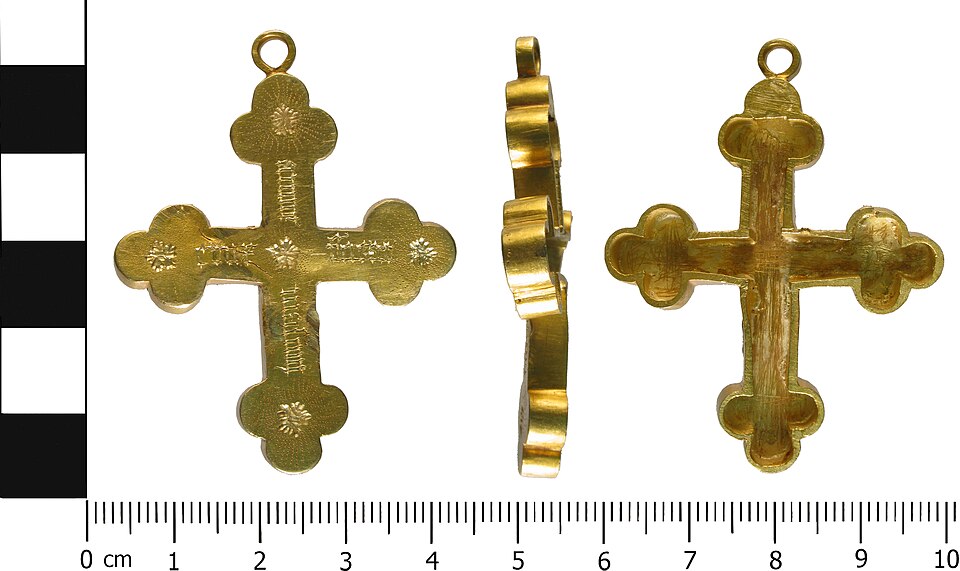
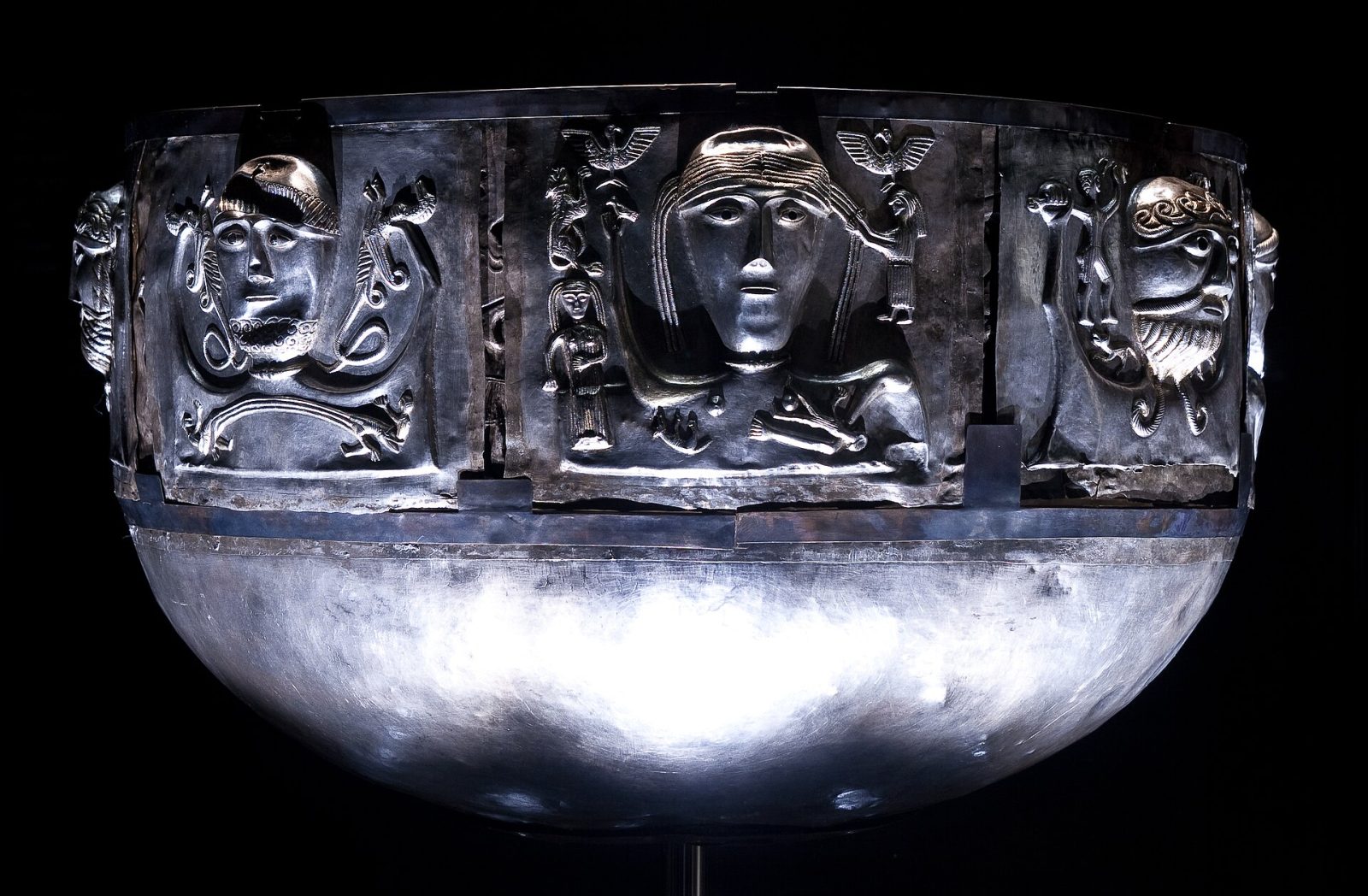
A gold medieval reliquary cross recorded with the Portable Antiquities Scheme (not this find), Birmingham Museums Trust, Teresa Gilmore, Wikimedia Commons, CC BY-SA 4.0.
A detectorist at a club rally on the Isle of Sheppey found a small gold reliquary cross, engraved with Christ on one side and the Virgin and Child on the other, with its pearl and pin still in place.
On 28 August 2026, Shelley Couzins, who has been metal detecting for four years, was at a rally with the Medway History Finders on the Isle of Sheppey, in Kent, when she found a small gold cross.
It is a reliquary cross, a pendant made to hold a tiny sacred relic. It weighs 10.6 grams and is about 2.5 centimetres long. One side is engraved with an image of Jesus, and the other with Mary holding the infant Jesus. What appears to be its original pearl still hangs from it, and its pin is intact.
It is thought to be medieval, possibly from the time of Henry VIII, but it has not yet been formally examined and dated.
Ms Couzins has reported it under the Treasure Act and handed it to the Finds Liaison Officer. If it is found to be significant, the British Museum may assess it.
The exact find spot is being kept secret because of the risk of illegal night-time detecting, known as nighthawking, at the site.
Ms Couzins said the find was a dream come true, after years of digging up mostly rubbish.
Reported by KentOnline (7 September 2026). Written for Global Finds from that report. Photo: a gold medieval reliquary cross recorded with the Portable Antiquities Scheme (not this find), Birmingham Museums Trust, Teresa Gilmore, Wikimedia Commons, CC BY-SA 4.0.
Those four are for England and Wales, where the Portable Antiquities Scheme records finds and the Treasure Act decides what must be reported.
Scotland runs its own system, and every find is reportable there — not only treasure. Treasure Trove Unit ›
The Republic of Ireland is different again, and severely so. Searching for archaeological objects without the Minister’s written consent is a criminal offence carrying fines or imprisonment, and the definition is broad enough to cover coins, buttons and buckles of almost any age. Do not assume British rules travel with you. The law, from the National Museum ›
Northern Ireland is stricter still. The Treasure Act applies and finds go to National Museums NI within fourteen days, but any searching that involves digging — metal detecting expressly included — needs a licence, and licences are only granted for archaeological projects. National Museums NI ›
This site covers discoveries from all over the world, and so does the variation in the law — from a recording scheme that thanks you, to a criminal offence. Wherever you are searching, find out what applies there before you go, not after.