Metal Detectorists Thought They'd Hit the Jackpot When They Discovered a Gold Bracelet Dating to the Bronze Age.
Made around 1100 BC · Found in 2026 See it on the timeline →
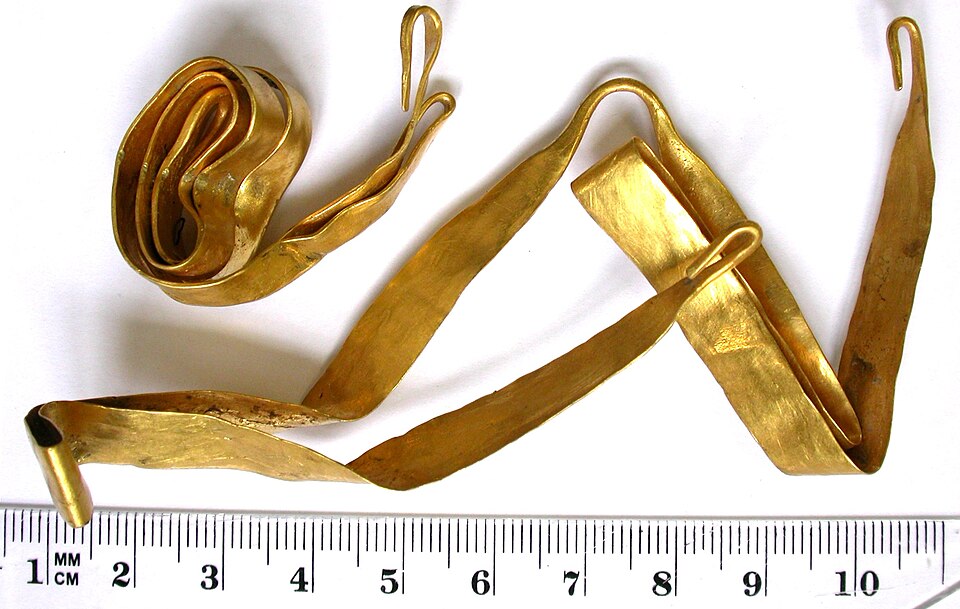
At a detecting rally near Carlisle, two friends found three complete Bronze Age gold torcs, about 3,100 years old. The rally was also a protest against plans for the UK's largest electricity substation.
In late May 2026, dozens of metal detectorists gathered near Carlisle, close to the border between England and Scotland, for a four-day rally. Over the four days they searched about 470 acres and recorded hundreds of finds, from a Viking brooch and a Roman coin hoard to a Bronze Age axe head and an 1817 coin of George III.
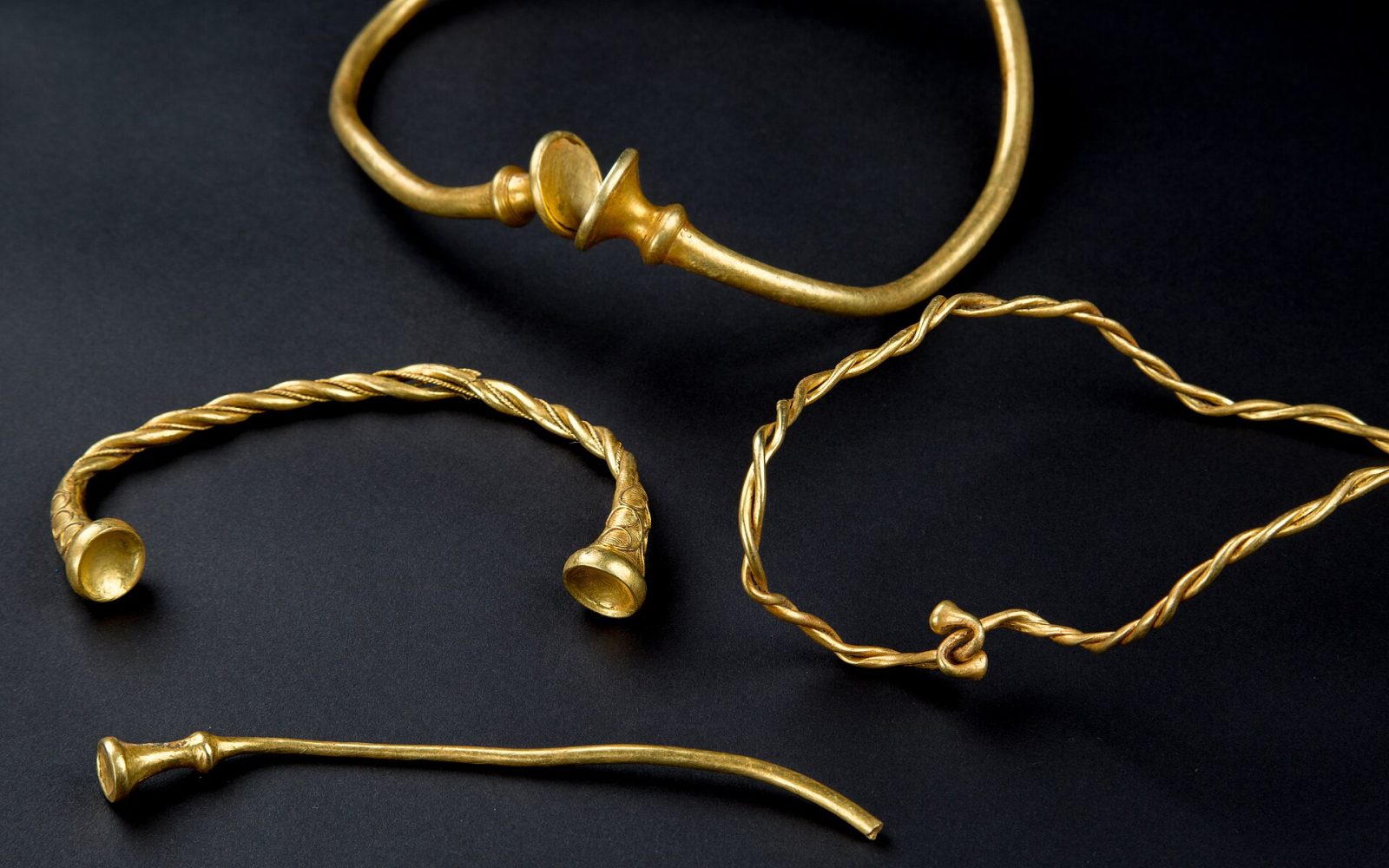
The standout came from Andy Crammond, a 34-year-old gas engineer from Scotland. At first he thought the curved object in his hand was a bull's nose ring, until he saw how it shone and felt the weight of it. His friend Alan Daniels, 48, came over to look, and together they found two more. All three were complete gold torcs, the bracelets of the Bronze Age, made around 1100 BC. Together they weigh about 520 grams.
Jim Morris, an archaeologist at the University of Lancashire, called them spectacular: surviving torcs are usually fragments, so a complete one is rare and three together rarer still. The British Museum is assessing whether they meet the legal definition of Treasure. If they do, a museum will be able to acquire them, and the reward will be shared between the two finders and the landowner, Richard Forbes.
The rally had a second purpose. Members of Lothian Relics Metal Detecting were invited by a local group opposing National Grid's plans to build what would be the UK's largest substation on the land, as part of its Cross Border Connection project. The campaigners hope the archaeology will help persuade National Grid to build somewhere else.
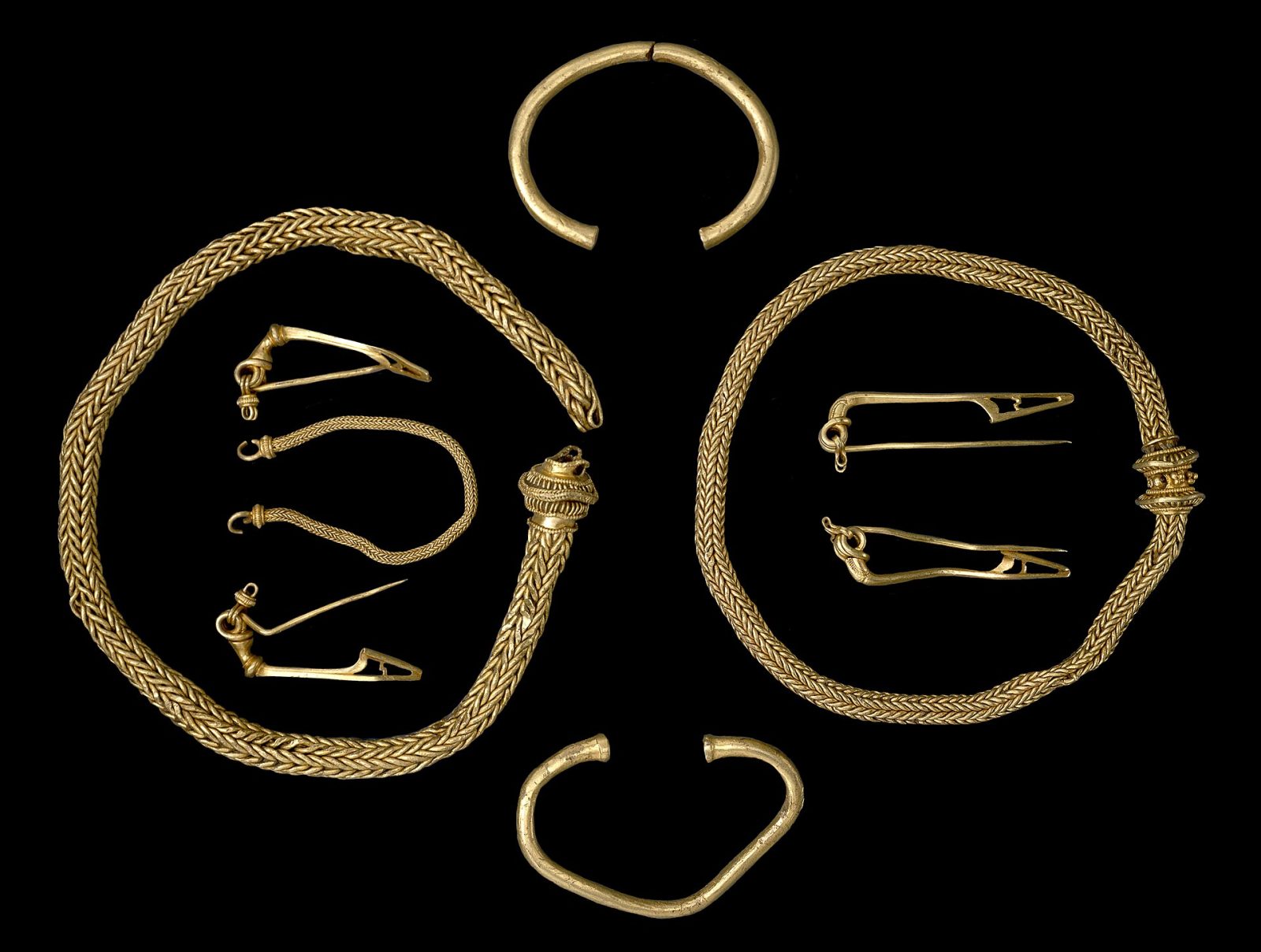
Reported by Smithsonian Magazine (6 August 2026), drawing on BBC News, Cumbria Crack, the News and Star and The Telegraph. Written for Global Finds from that report. Photo: two Middle Bronze Age gold ribbon torcs recorded with the Portable Antiquities Scheme (not this find), Buckinghamshire County Council, Ros Tyrrell, Wikimedia Commons, CC BY-SA 2.0.
Approximate location54.89, -2.94View on map
Source: Smithsonian Smart News