I found a gold Viking sword pommel in a field
Between AD 900 and 1120 · Found in 2019 See it on the timeline →
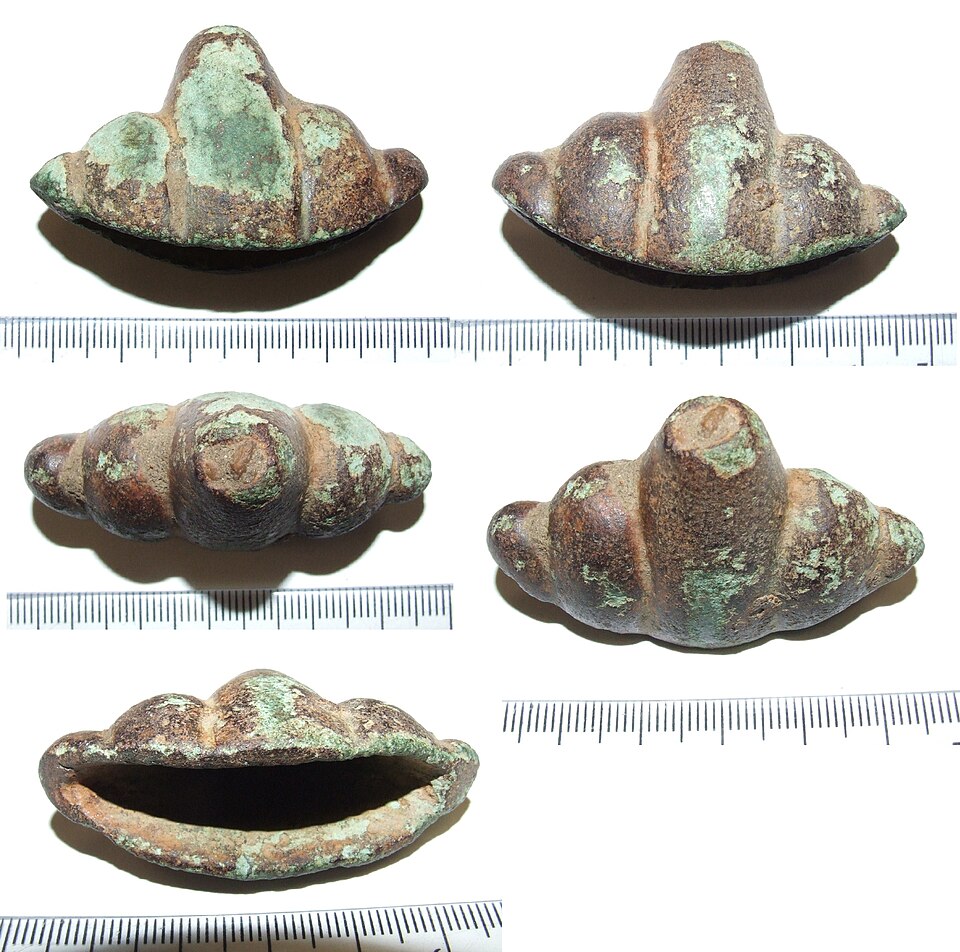
Six weeks after taking up detecting, an electrician found a gold and silver Viking-age sword pommel near Brigstock in Northamptonshire. It has now been declared Treasure.
In 2019, Andy Green, an electrician who lives on a narrowboat on the Grand Union Canal, was out with a group of detectorists in fields near Brigstock, outside Corby in Northamptonshire. He had taken up the hobby only six weeks earlier.
His detector gave a signal, so he dug. When the tips of a lobed object began to show through the soil, he took it for a bullet case, until he saw the gleam of gold. The other detectorists realised he had found something special when they saw him sitting on the ground, laughing.
It was the pommel from a Viking-age sword, nearly 75 millimetres long, made of gold and silver and covered in fine beaded decoration. He reported it to Northamptonshire's Finds Liaison Officer, Eleanore Cox, who called it a once-in-a-lifetime find. She brought in a specialist in Viking swords from Glasgow, who told her that work of this kind came from Gotland, in Sweden: either the pommel was made there, or a Gotland metalworker made it in England. It has been dated to between AD 900 and 1120, when this part of England lay within the Danelaw, the area settled by Scandinavians.
After a coroner declared the pommel Treasure, there was a further twist. A man contacted Ms Cox to say that his son, also a detectorist, had found a gold loop near Brigstock in 2018, made from three strands of beaded gold wire twisted together. A Viking sword expert believes it is a fitting from further down the hilt, possibly of the same sword. The loop had already been recorded with the Portable Antiquities Scheme, and no museum had wanted it.
A Northamptonshire museum now hopes to acquire the pommel.
Reported by BBC News (19 July 2026). Written for Global Finds from that report. Photo: a copper-alloy Viking sword pommel recorded with the Portable Antiquities Scheme (not this find), The Portable Antiquities Scheme, Adam Daubney, Wikimedia Commons, CC BY-SA 4.0.
Approximate location52.46, -0.61View on map
Source: BBC