The Rillaton Cup: Bronze Age gold that spent a century with the royal family
Famous find Made about 1800 to 1600 BC · Found in 1837 See it on the timeline →
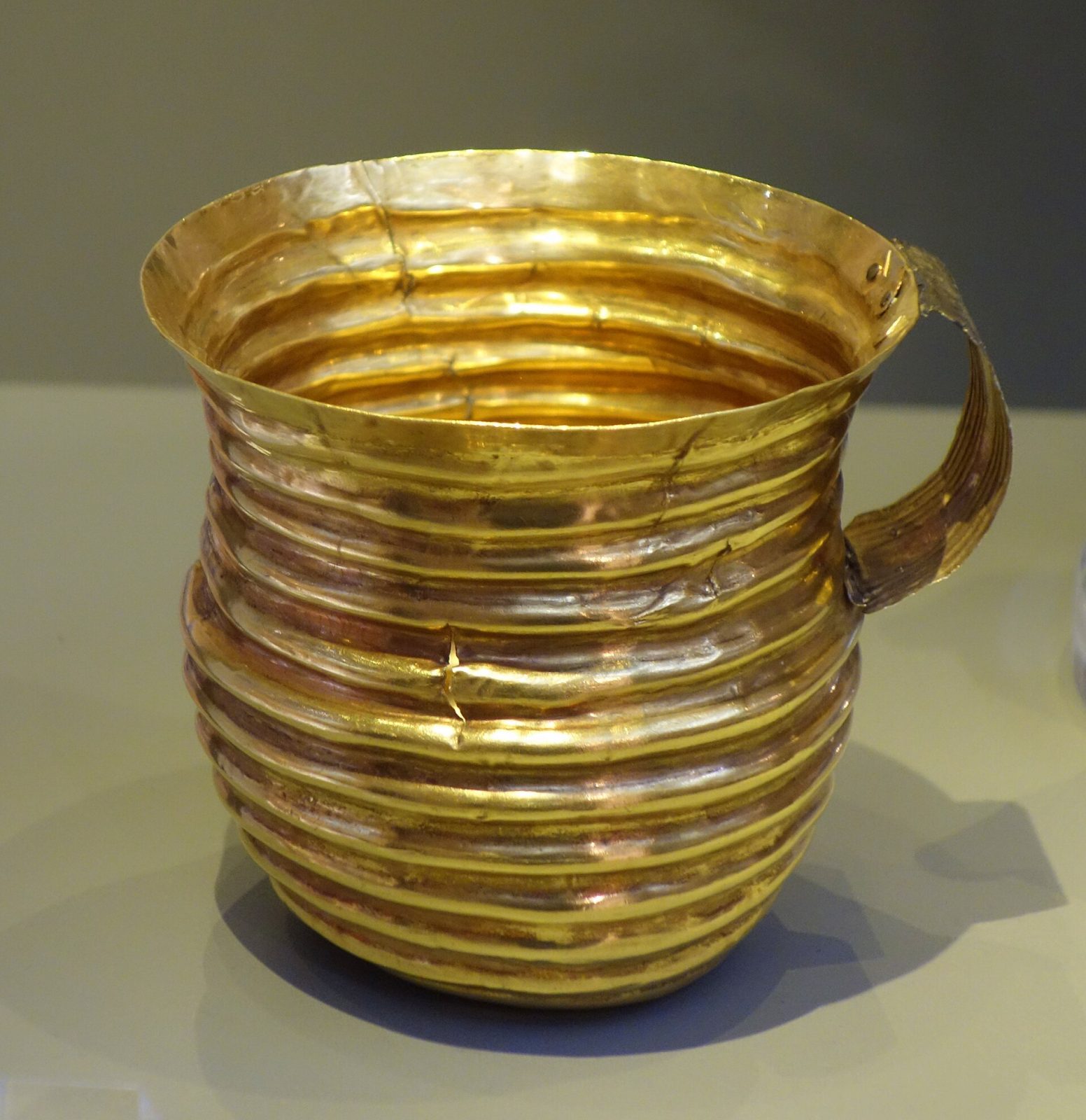
In 1837 workmen taking stone from a burial cairn on Bodmin Moor found a gold cup beaten from a single sheet. It went to the Crown, spent a century in royal palaces, and now stands in the British Museum beside the Ringlemere Cup.
In 1837, workmen taking stone from Rillaton Barrow, a large cairn near Minions on the eastern edge of Bodmin Moor in Cornwall, broke into a stone-lined grave. Inside, with human remains and a bronze dagger, was a pottery vessel, and inside that a small gold cup. Being tucked inside the pot may be why it survived in one piece.
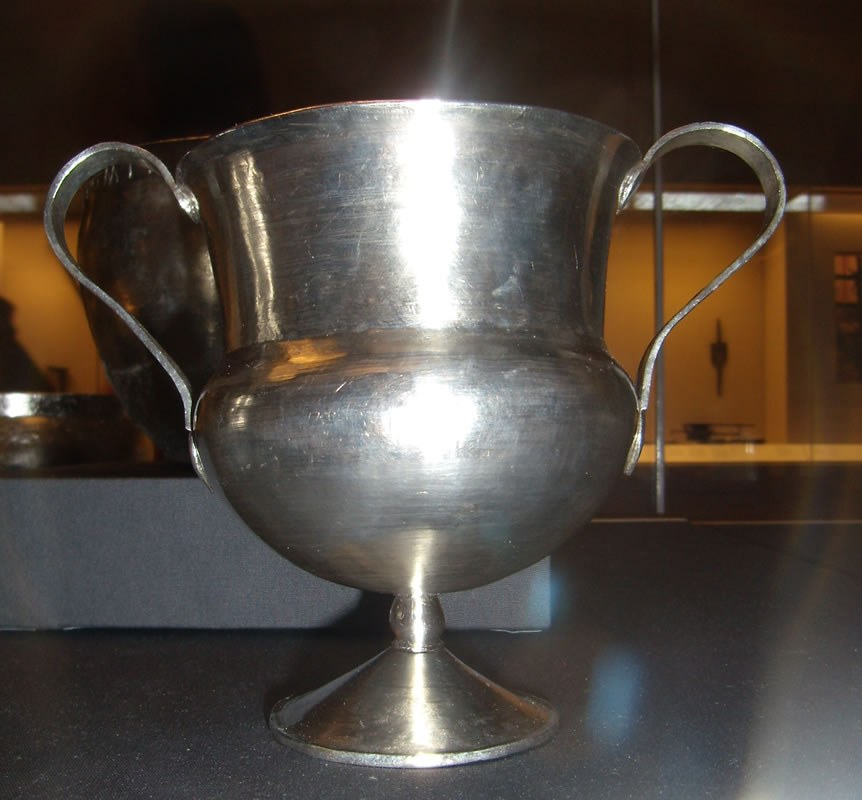
The cup is about 8.5 centimetres tall and was beaten from a single sheet of gold, with ribbed sides and a handle fixed on with rivets and small diamond-shaped washers. It dates from the Early Bronze Age: the British Museum puts it at about 1800 to 1600 BC, though other estimates are a little later. Only a handful of gold cups like it are known from northern Europe, and only one other from Britain, the Ringlemere Cup, found in Kent in 2001.
The land belonged to the Duchy of Cornwall, so the cup and dagger went to King William IV as treasure trove, shortly before he died. Queen Victoria and Prince Albert displayed them in the Swiss Cottage museum at Osborne House, and the cup later moved to Marlborough House and then to Buckingham Palace, where it was kept in a cabinet of gold objects. King George V is said to have used it to hold his collar studs, though that may be no more than a good story.
After the king's death in 1936, the cup was lent to the British Museum, where it has been on display ever since, beside the Ringlemere Cup. It still belongs to the Royal Collection. A replica is in the Royal Cornwall Museum in Truro.
Written for Global Finds from the Royal Collection Trust, the British Museum and other published accounts. Photo: the Rillaton Cup in the British Museum, Daderot, Wikimedia Commons, CC0.
Approximate location50.52, -4.46View on map
Source: Royal Collection Trust