The Thetford Treasure: Roman gold, a forgotten god and a find nobody reported
Famous find Buried around AD 390, or perhaps as late as 420 to 440 · Found in 1979 See it on the timeline →
In 1979 a detectorist dug up a late Roman hoard of gold jewellery and silver spoons on a Thetford building site, and didn't report it. By the time archaeologists heard, the findspot had been built over.
In November 1979, Arthur Brooks, a metal detectorist from Norwich, was searching ground at Gallows Hill in Thetford, Norfolk, that had just been stripped of its topsoil for building. He did not have the landowners' permission. Late in the day, as the light failed, he dug out a hoard of gold and silver.
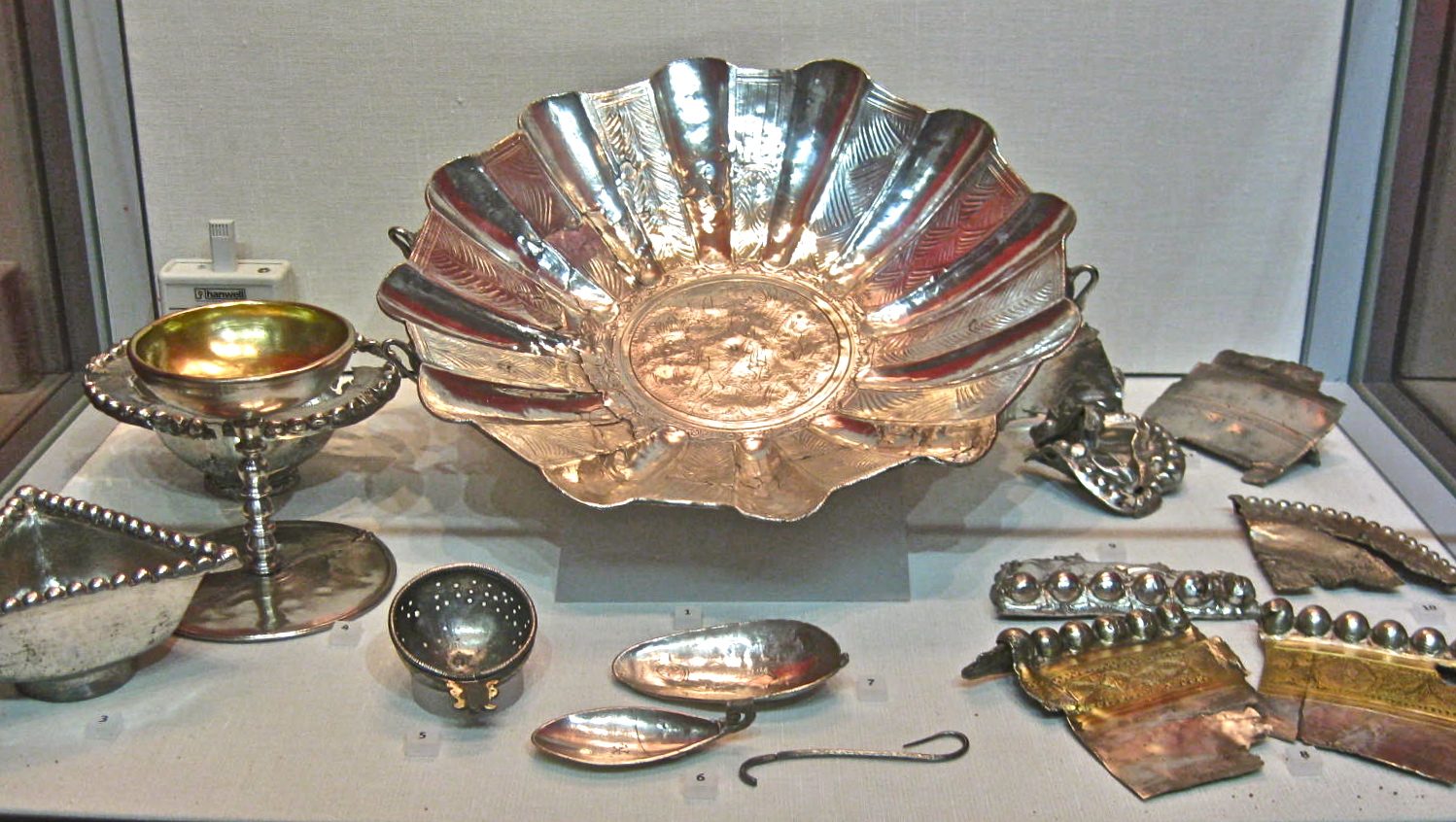
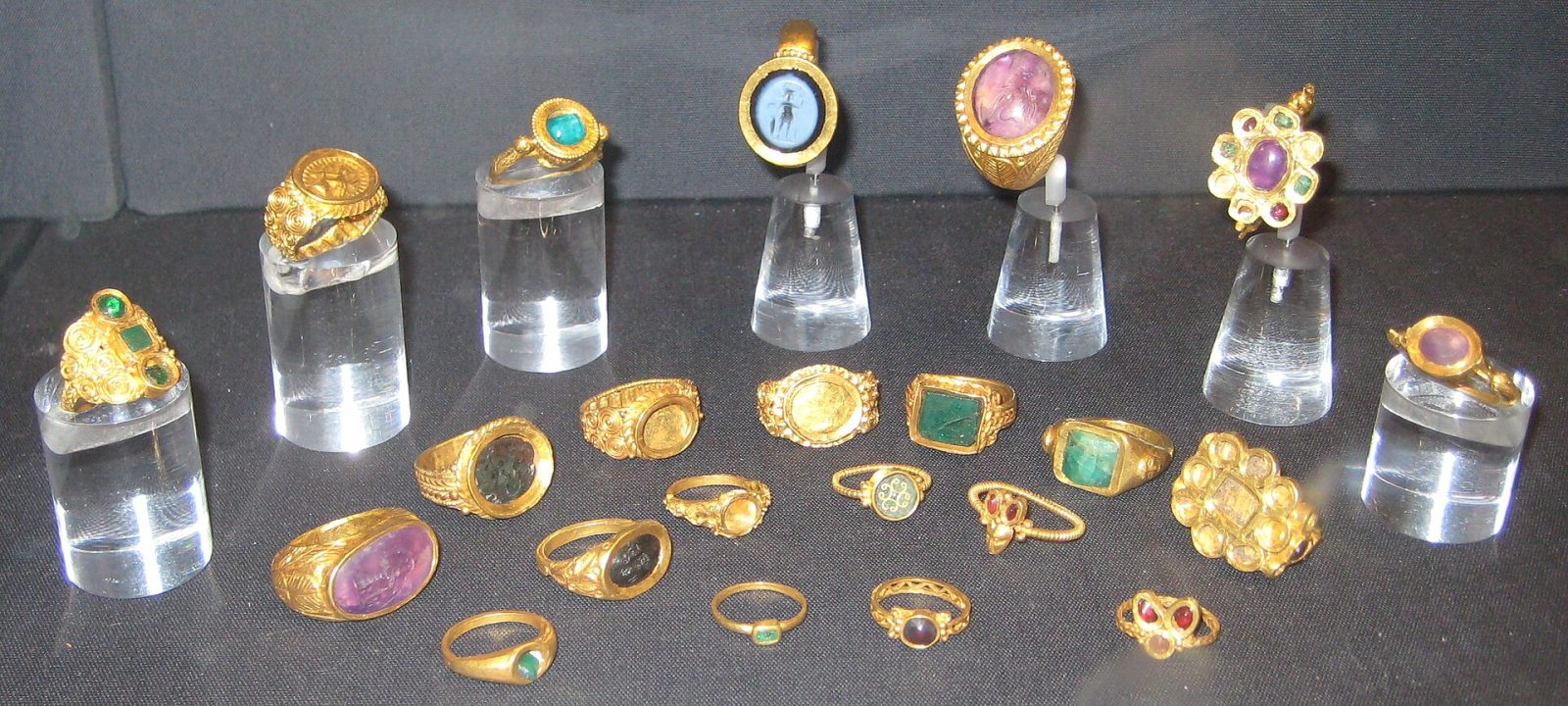
It turned out to be one of the most remarkable late Roman finds from Britain. There were 22 gold finger rings, bracelets, necklaces, pendants and clasps, a gold belt buckle decorated with a dancing satyr, an engraved gem, and 36 silver spoons and strainers. Twelve of the spoons are inscribed to Faunus, an old Italian god of the countryside, which suggests the treasure belonged to people who still worshipped him at a time when the Empire was officially Christian.
Brooks did not report the find. He tried to sell some of the pieces privately, and archaeologists only learned of it months later, by which time the site had been built over. Brooks died in July 1980. The treasure was declared treasure trove in 1981 and went to the British Museum, and because it had not been reported the reward was much reduced. Excavations on the surrounding land between 1980 and 1982 found a large Iron Age enclosure and evidence of a Roman temple, but the exact spot where the hoard lay, and anything buried with it, was lost.
The British Museum has long dated the burial to around AD 390. In 2025 the archaeologist Ellen Swift argued that many of the pieces were made in the 5th century, and that the hoard was buried between about 420 and 440, after Roman rule in Britain had ended. If she is right, it is a rare glimpse of life in the decades after Rome.
The treasure is on display in the British Museum.
Written for Global Finds from the British Museum, the Norfolk Historic Environment Record, the Journal of Roman Archaeology and other published accounts. Photo: gold rings from the Thetford Treasure in the British Museum, BabelStone, Wikimedia Commons, CC0.
Approximate location52.42, 0.74View on map
Source: British Museum