The Fishpool Hoard: Wars of the Roses gold from a Nottinghamshire building site
Famous find Buried between winter 1463 and summer 1464 · Found in 1966 See it on the timeline →
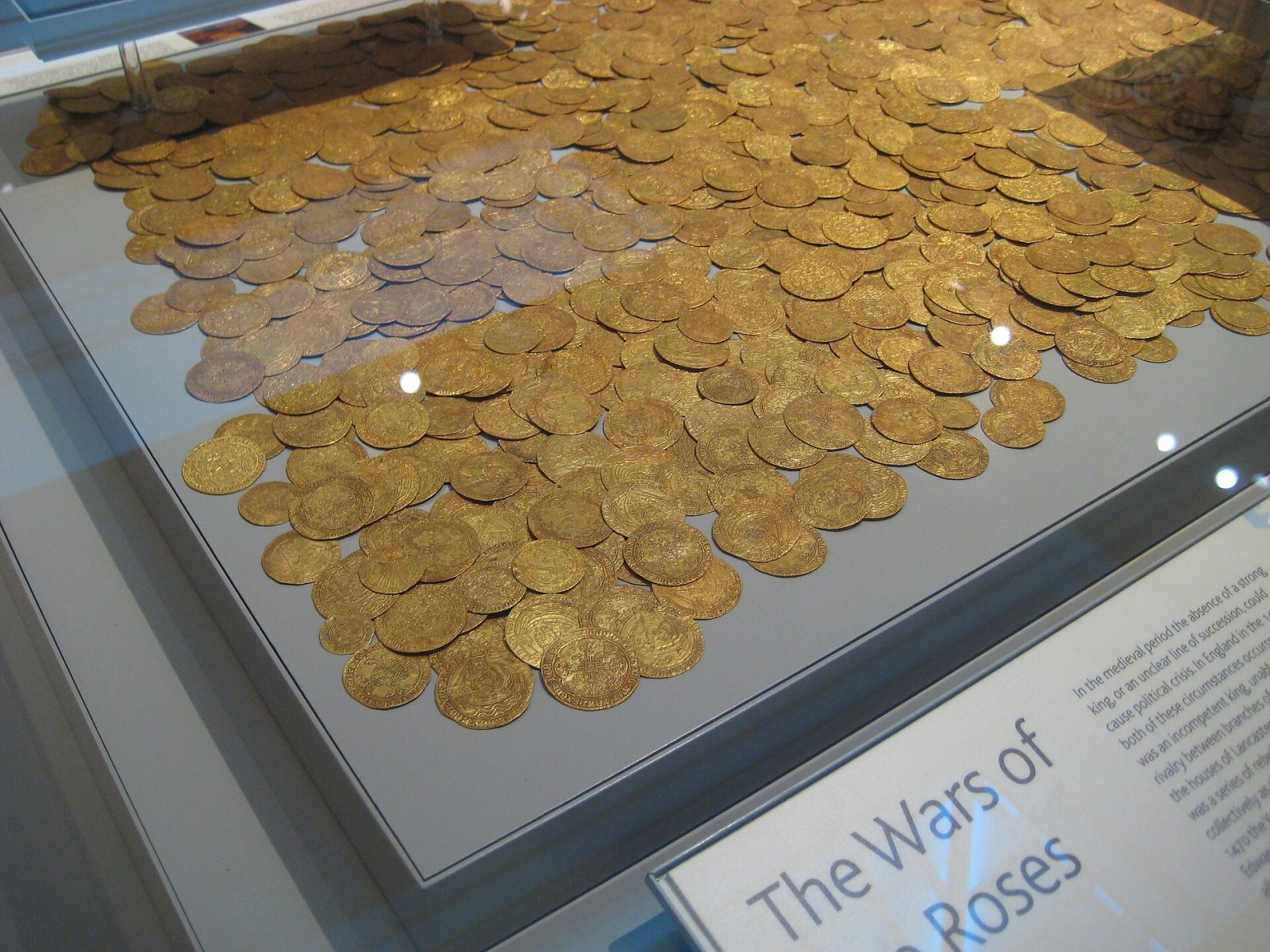
In 1966 a mechanical digger on a building site at Ravenshead in Nottinghamshire turned up 1,237 gold coins and pieces of jewellery, hidden during the Wars of the Roses. It is the largest hoard of medieval coins ever found in Britain.
On 22 March 1966, a mechanical digger working on a building site at Fishpool, now part of Ravenshead, near Blidworth in Nottinghamshire, turned up gold coins in the sand. Workmen, a lorry driver and a boy who happened to be there gathered them up: 1,237 gold coins, along with four rings, three pendants, a heart-shaped brooch and two lengths of gold chain. The coins lay in neat stacks, as if they had been in a bag.
The coins span more than a century, from Edward III in the 1350s to Edward IV, and include English, Scottish, French and Burgundian pieces. The latest are coins of Edward IV of a type issued up to August 1464, with none of the types that followed, so the hoard was buried between the winter of 1463 and the summer of 1464, at the height of the Wars of the Roses.
When it was buried it was worth about £400, a fortune at the time; the British Museum has put it at around £300,000 in today's money. That much gold, and the large share of foreign coins, suggests it was not an ordinary family's savings. One idea is that it belonged to the Lancastrian cause, perhaps hidden by someone fleeing after the Lancastrian defeat at Hexham in May 1464, but that cannot be proved.
The jewellery is more personal. The heart-shaped brooch is inscribed in French, je suy vostre sans de partier, I am yours without parting, and one of the pendants is a tiny enamelled padlock.
The hoard was declared treasure trove and acquired by the British Museum, where it is on display. It remains the largest hoard of medieval coins ever found in Britain.
Written for Global Finds from the British Museum, the Nottinghamshire Historic Environment Record and other published accounts. Photo: gold coins from the Fishpool Hoard in the British Museum, BabelStone, Wikimedia Commons, CC0.
Approximate location53.09, -1.17View on map
Source: British Museum