The Water Newton Treasure: the earliest Christian silver from the Roman Empire
Famous find Made in the 4th century AD · Found in 1975 See it on the timeline →
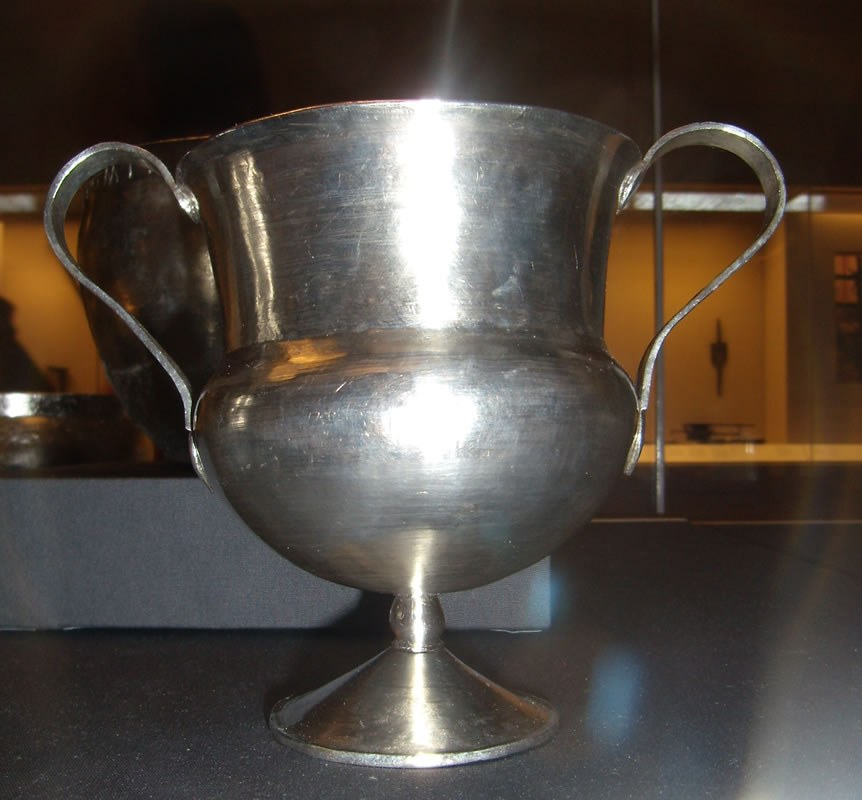
In 1975 a ploughed field at Water Newton, on the site of a Roman town near Peterborough, gave up 28 silver and gold objects marked with Christian symbols, the earliest known Christian church silver from anywhere in the Roman Empire.
In February 1975, a recently ploughed field at Water Newton, near Peterborough, gave up a hoard of Roman silver. The field lies on the site of Durobrivae, a Roman town on Ermine Street, and the find was made by an amateur archaeologist, Alan Holmes. The plough had already damaged some of the pieces.
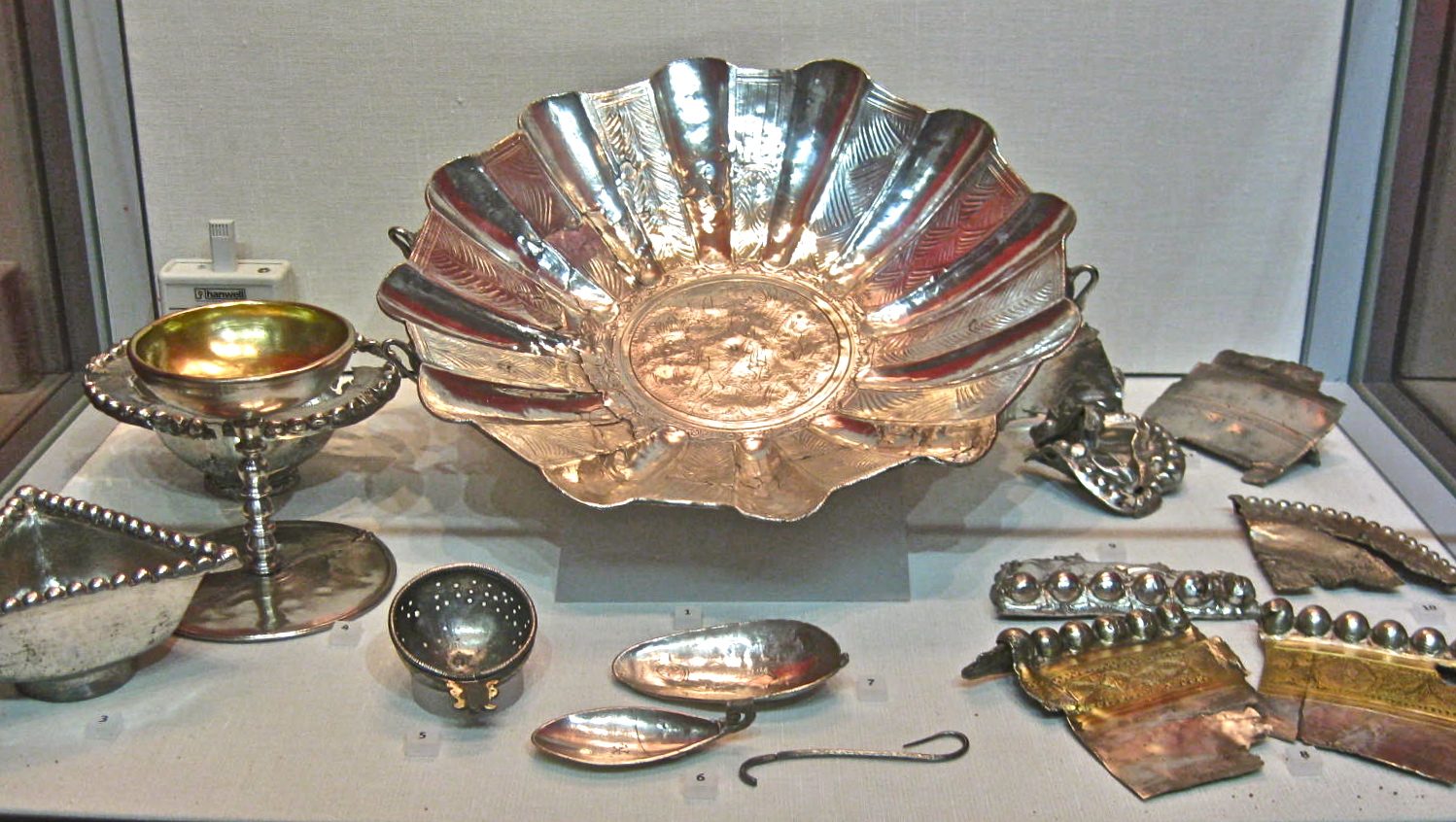
There were 28 objects: nine silver vessels, a set of thin silver plaques and a gold disc. The vessels include a decorated jug, a two-handled cup, bowls, dishes and a strainer. Many pieces carry the chi-rho, the monogram formed from the first two letters of Christ's name in Greek, and the plaques are triangular, like leaves, a shape also used for offerings at pagan shrines.
Some pieces carry inscriptions. One bowl reads, in the British Museum's translation, "I, Publianus, honour your sacred shrine, trusting in you, O Lord", and others name women, Amcilla, Innocentia and Viventia, who were presumably members of the same Christian congregation.
The treasure was made in the 4th century AD. Christianity only became legal in the Roman Empire in 313, and the date the hoard was buried cannot be fixed precisely. Why it was hidden is unknown; persecution or unrest are possible reasons.
It was declared treasure trove and is now in the British Museum, which describes it as the earliest group of Christian liturgical silver yet found anywhere in the Roman Empire. Not every scholar agrees it was used in church services rather than given as offerings, but either way it is some of the most important evidence for a Christian community in Roman Britain.
Written for Global Finds from the British Museum, The National Archives and other published accounts. Photo: a two-handled silver cup (cantharus) from the Water Newton Treasure, Udimu, Wikimedia Commons, CC BY-SA 3.0.
Approximate location52.56, -0.36View on map
Source: British Museum