Metal detectorist finds 'rare' Roman treasures in Buckinghamshire
Roman, late 2nd to 3rd century AD See it on the timeline →
More photographs
A detectorist in the Chilterns found a hoard of Roman bronze objects, including a rare rattle complete with the peas inside it. He and the landowner have given the whole hoard to the Discover Bucks Museum.
Adam McLelland, a metal detectorist, was searching land in the Chilterns, in Buckinghamshire, with the landowner's permission when he found a hoard of Roman objects that had lain in the ground for nearly 2,000 years.
Rather than dig it out himself, he brought in Buckinghamshire Council's archaeology team. The council asked Oxford Archaeology to carry out the excavation, which its own archaeologists monitored. Study after the dig suggests the objects had been put in a bag, or wrapped in cloth, which has since rotted away.
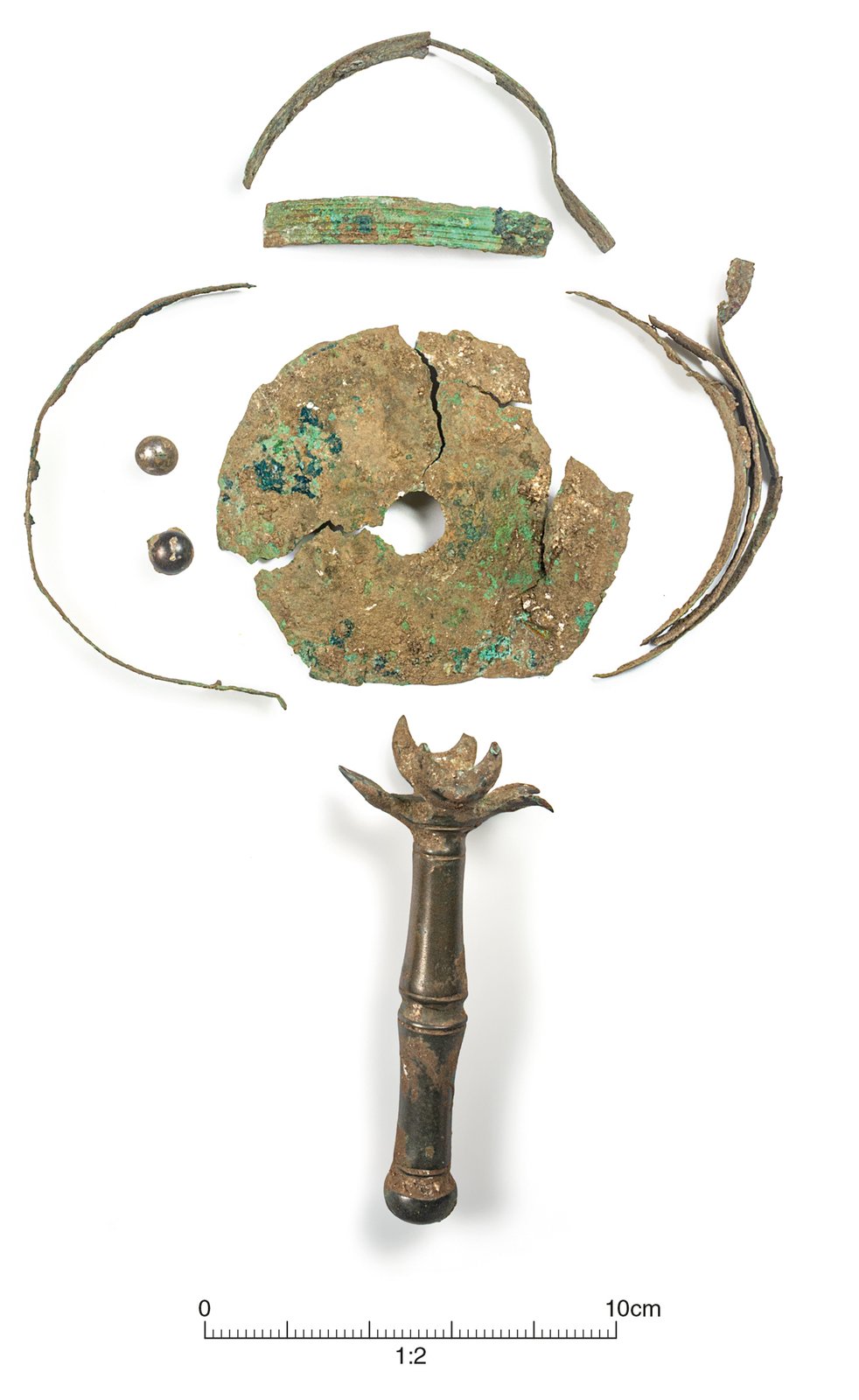
The hoard includes two enamelled mounts, a glass gaming counter, a bone die and several other bronze objects. The most important find is an ornate bronze rattle. According to the museum, it seems to have all its pieces, including the "peas" that rattled inside it, though it is extremely fragile. Rattles were used in Roman religious ceremonies, and very few have been found in Britain.
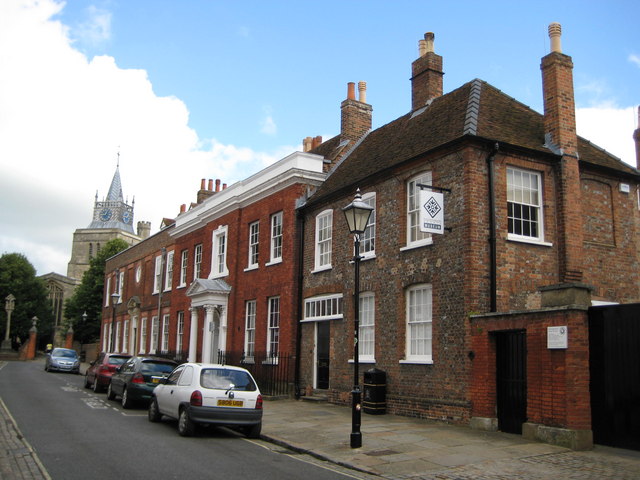
Conservation was slow and expensive, and without it the fragile pieces and the enamel on the mounts would have deteriorated. A private donor came forward to pay for it. Mr McLelland and the landowner then gave the whole hoard to the Discover Bucks Museum on Church Street in Aylesbury, where it went on display in July 2026 during the Festival of Archaeology.
Ian Richardson, head of portable antiquities and Treasure at the British Museum, described the donation as a great example of detectorists, archaeologists and museums working together.
Reported by BBC News (17 July 2026). Written for Global Finds from that report. Photo: (1) the rattle from the hoard, its pieces laid out, recorded with the Portable Antiquities Scheme as BUC-D05A89, © The Portable Antiquities Scheme, CC BY. (2) Buckinghamshire County Museum, Aylesbury, Nigel Cox, geograph.org.uk via Wikimedia Commons, CC BY-SA 2.0.
Approximate location51.67, -0.92View on map
Source: BBC