Finland's largest known late Iron Age coin hoard found at Sysmä
Late Iron Age (Viking Age); burial date still being studied · Found in 2026 See it on the timeline →
A detectorist near Sysmä in southern Finland has found the country's largest Viking Age coin hoard: about 4.5 kilograms of silver coins, split between two birch-bark containers.
On 3 September 2026, metal detectorist Kalle Lappinen was searching near the church village of Sysmä, in the Päijät-Häme region of southern Finland, when he found silver coins. The next day, archaeologist Esko Tikkala of Lahti Museums, the regional museum responsible for the area, examined the site and supervised the recovery of the hoard.
The coins had been packed into two containers made of birch bark, placed among stones about 45 centimetres down, roughly 12 metres apart. Some of the birch bark has survived, which is rare, and shows how silver was wrapped for burial. Together the coins weigh about 4.5 kilograms. They are still stuck together, uncleaned and uncounted, but there are thousands of them. With them were a piece of hacksilver, the cut silver traded by weight, a silver arm ring, a silver fitting and a silver bead.
Lahti Museums describes it as the largest Late Iron Age coin hoard known from Finland. The previous record, found at Nousiainen in 1895, held about 1,700 coins and other objects weighing about 2.2 kilograms, so Sysmä is roughly twice the size. Finland's Late Iron Age includes the Viking Age.
The coins now need cleaning and conservation, after which the museum will work out how many there are, where they came from and when the hoard was buried.
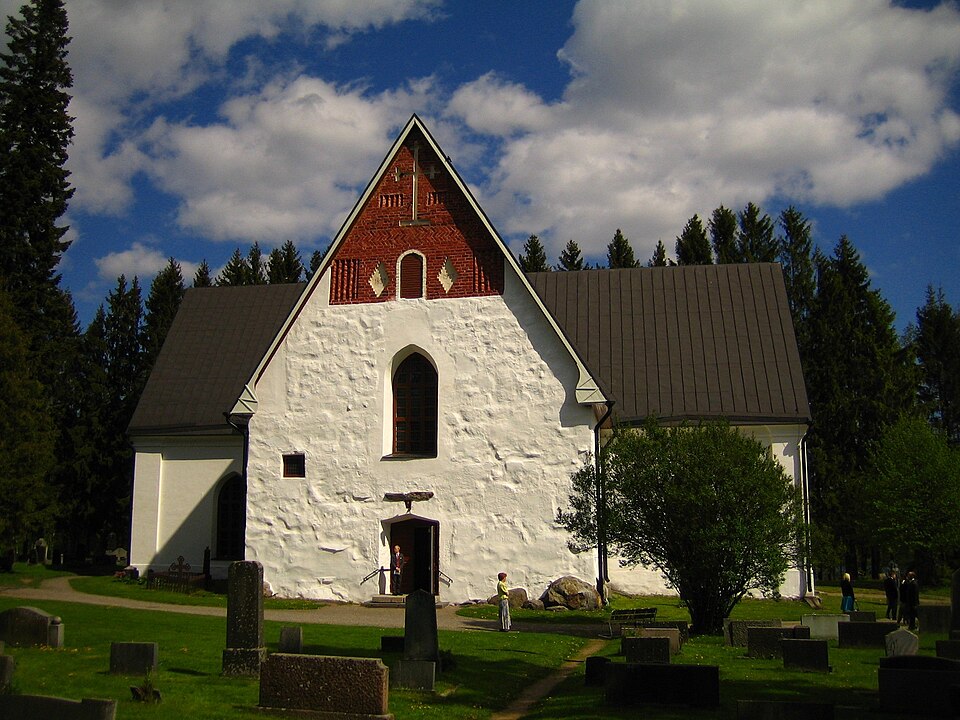
Reported by Space Daily, from Lahti Museums (7 September 2026). Written for Global Finds from those reports. Photo: Sysmä church, Tomisti, Wikimedia Commons, CC BY-SA 3.0.
Approximate location61.50, 25.68View on map
Source: Arkeonews
Also reported by