The St Ninian's Isle Treasure: Pictish silver found by a schoolboy in Shetland
Famous find Made about AD 800 · Found in 1958 See it on the timeline →
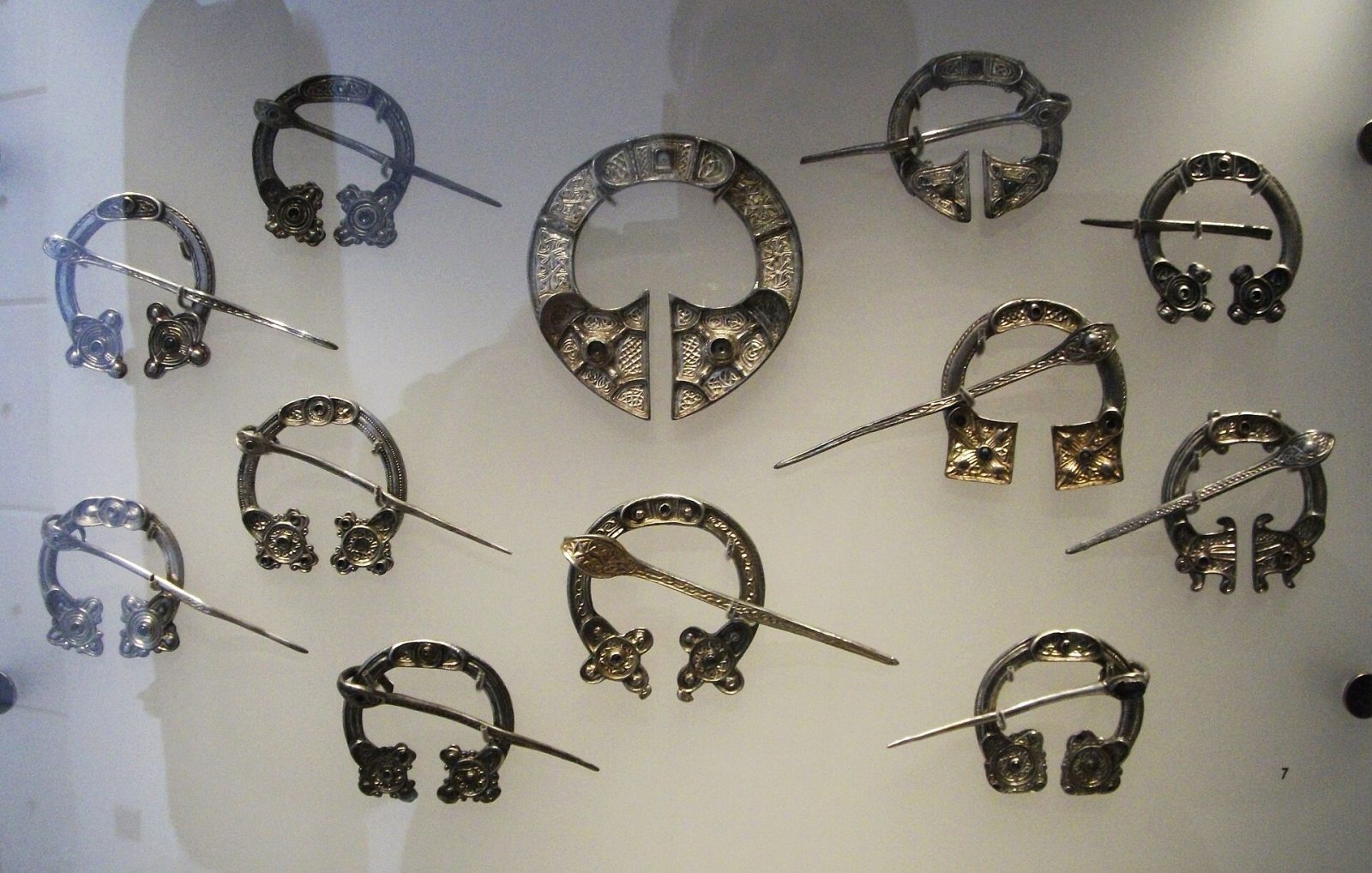
In 1958 a 15-year-old Shetland schoolboy helping on a university dig found 28 pieces of Pictish silver under a slab in the floor of a ruined church. The court case that followed settled who owns treasure in Scotland.
In the late 1950s a team from the University of Aberdeen, led by Professor Andrew O'Dell, spent its summers excavating the ruined medieval chapel on St Ninian's Isle, a small island joined to the south of Mainland Shetland by a curving beach of sand. On 4 July 1958, Douglas Coutts, a 15-year-old local schoolboy on his first day helping at the dig, found a stone slab marked with a cross in the floor of the earlier church beneath the chapel. Under it lay the remains of a wooden box packed with silver.
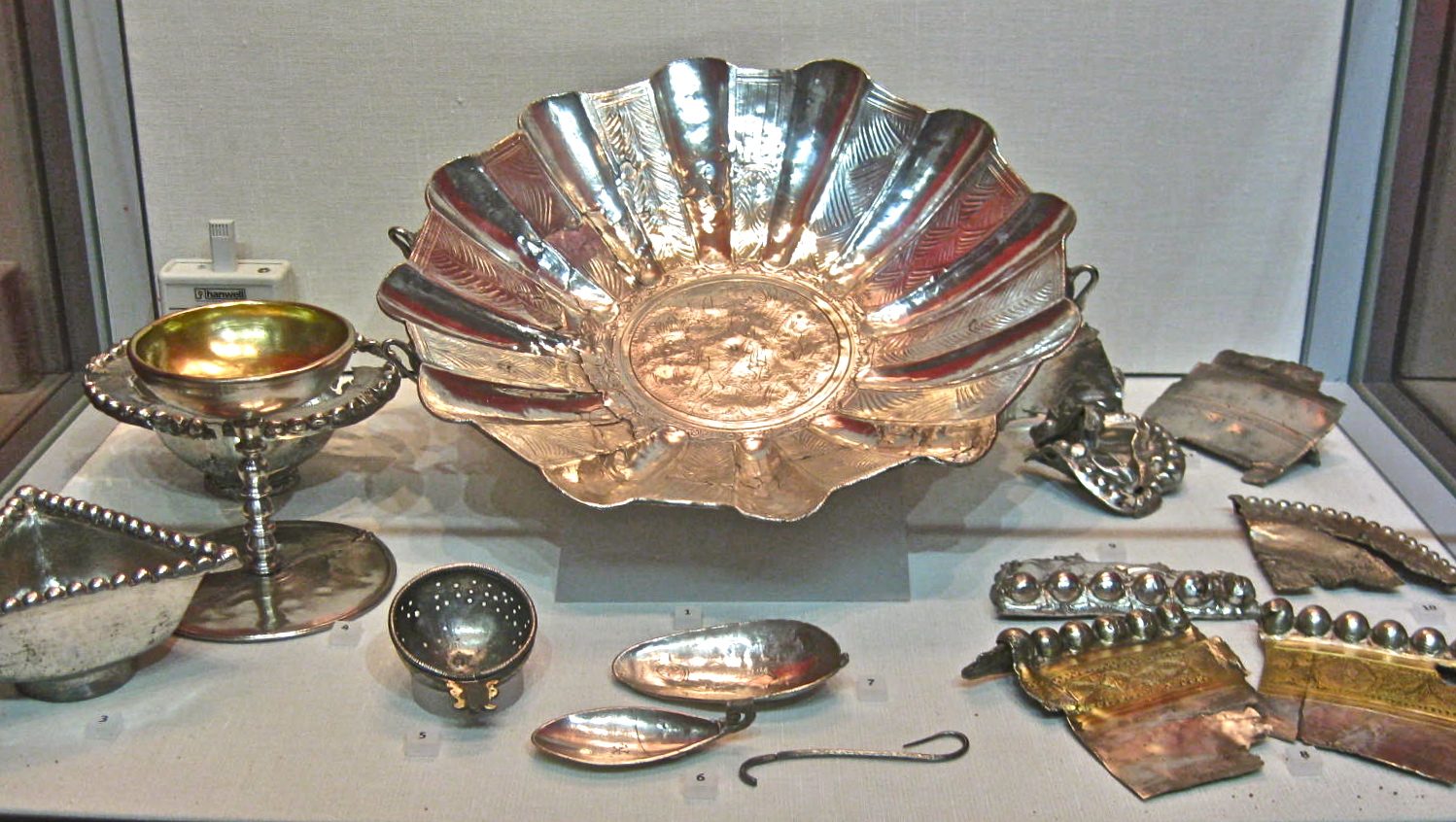
There were 28 objects of silver and silver-gilt: 12 penannular brooches, the open ring-shaped brooches used to fasten cloaks; eight bowls, one of them a hanging bowl; a spoon; a pronged implement; two chapes from the ends of sword scabbards; a sword pommel; and three small cone-shaped mounts. A piece of a porpoise's jawbone was buried with them. The treasure is dated to about AD 800. The brooches are among the finest Pictish metalwork known, while the sword fittings are thought to be Anglo-Saxon work.
The hoard is often thought to have been hidden around the time the first Viking raids reached the northern isles, though that cannot be proved. One of the chapes carries an inscription, and a recent reading suggests it includes a Latin blessing and the name of a Pict.
Who owned the treasure had to be settled in court. In Lord Advocate v University of Aberdeen and Budge, decided in 1963, Scotland's Court of Session ruled that treasure trove in Scotland belongs to the Crown as ownerless property, and rejected the argument that Shetland's old Norse udal law should apply instead.
The treasure went to what is now the National Museum of Scotland in Edinburgh, where it is on display. Shetland Museum in Lerwick shows replicas, and the originals have twice returned to Shetland for exhibitions, most recently for the 50th anniversary of the find in 2008.
Written for Global Finds from Shetland Museum and Archives, National Museums Scotland and other published accounts. Photo: brooches from the St Ninian's Isle Treasure in the National Museum of Scotland, Johnbod, Wikimedia Commons, CC BY-SA 3.0.
Approximate location59.97, -1.34View on map
Source: Shetland Museum and Archives