The Shrewsbury Hoard: 9,315 Roman coins found by a beginner sheltering from the rain on his first outing
Famous find Buried about AD 335 · Found in 2009 See it on the timeline →
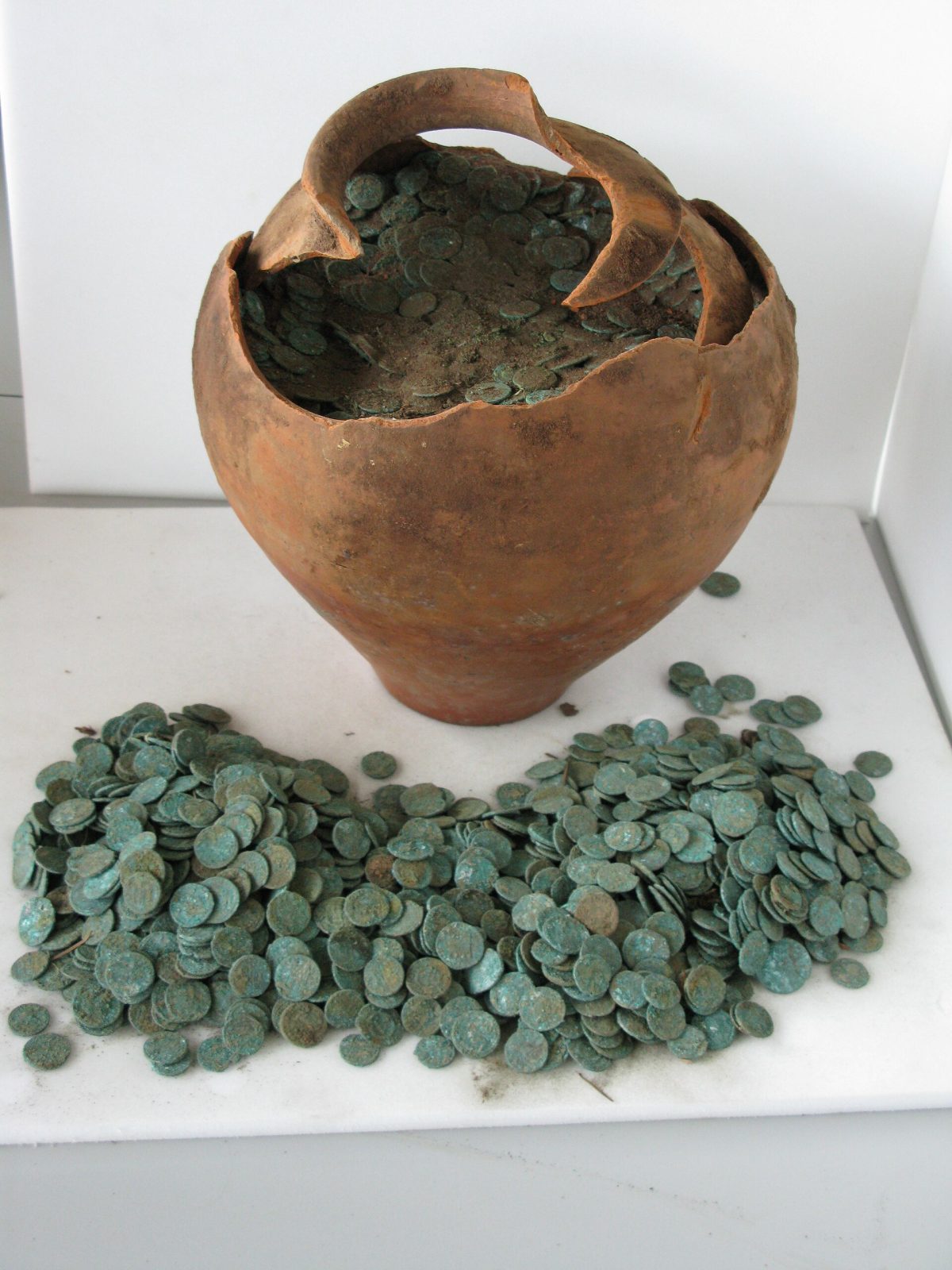
In August 2009 Nic Davies, who had taken up metal detecting a month earlier, was sheltering from rain near Shrewsbury when he found a Roman pot packed with 9,315 coins of the age of Constantine. He had not asked the landowner's permission, and the coroner said so.
In August 2009, Nic Davies, who had taken up metal detecting only about a month earlier, was sheltering from the rain beside a bridleway in a plantation near Shrewsbury when he switched his machine on. After a few shotgun cartridges, he found the top of a pot full of coins, which he described as running off his fingers. It was his first real find.
He dug the pot out himself, though without disturbing the coins inside, and took it to Peter Reavill, the Finds Liaison Officer for Herefordshire and Shropshire, who carried out a small excavation of the pit with Shropshire Council's archaeologists. The pot was a large, thin-walled storage jar of Severn Valley ware, set in a pit and capped with a flat stone. With its contents it weighed about 32 kilograms.
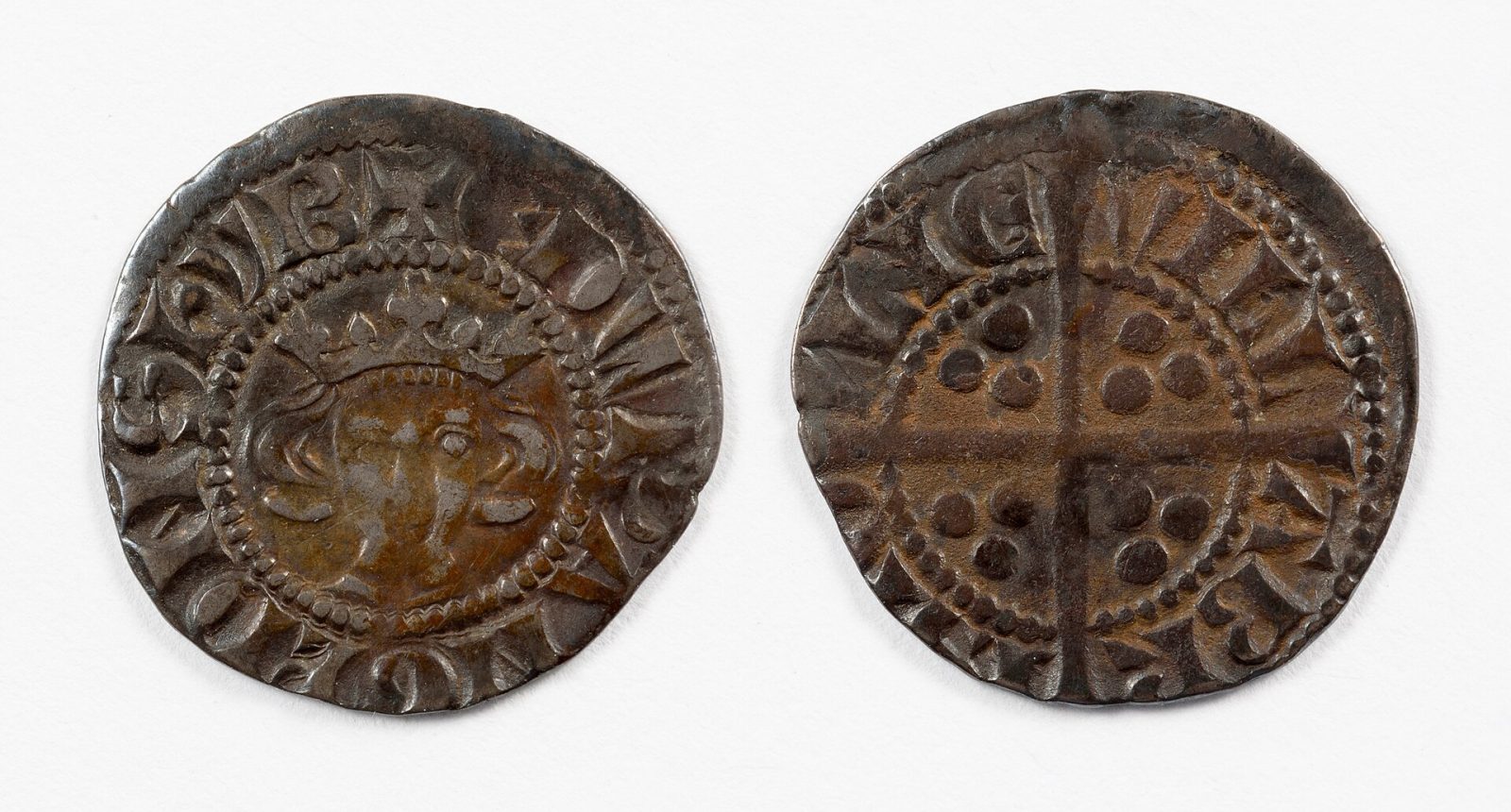
Inside were 9,315 copper-alloy coins: 9,297 small nummi struck between AD 313 and 335, some of them washed with silver, and 18 older coins of the late 3rd century. About 300 more were scattered around the pit. The coins lay in layers, the oldest at the bottom, from about AD 320, and the newest at the top, from 333 to 335, which shows that their owner added to the store over a number of years. Scraps of the cloth bags they had been kept in survived, along with an iron nail. Many of the coins were struck to celebrate the anniversaries of Rome and of the new capital, Constantinople. For all its size, the hoard was worth less than a year's pay for a legionary.
The coins were cleaned and studied at the British Museum. At the inquest in October 2011, the coroner declared them Treasure, praising Mr Davies for not disturbing them but criticising him for detecting without the landowner's permission, which he had not known he needed. Shropshire Council's museum service acquired the hoard with the help of several grants, and it went on display in the Roman gallery of Shrewsbury Museum and Art Gallery when the museum reopened in 2014.
Written for Global Finds from Shropshire Council (2013), BBC News (2011) and the Portable Antiquities Scheme. Photo: the Shrewsbury Hoard in its pot, Portable Antiquities Scheme, Wikimedia Commons, CC BY 2.0.
Approximate location52.71, -2.75View on map
Source: Shropshire Council