Famous finds

The finds every detectorist knows: hoards turned up by ploughs, builders and fellow detectorists, and the treasures that changed what we know about the past. Oldest first, by when they were made or buried. Each one is on the finds timeline too.

507 famous finds, oldest first · page 1 of 13. Jump to: Prehistoric · Bronze Age · Iron Age · Roman · Early Medieval · Medieval · Post-Medieval · Modern

FF 440

Made about 9000 BC · found 2015

Star Carr pendant

England · Jewellery

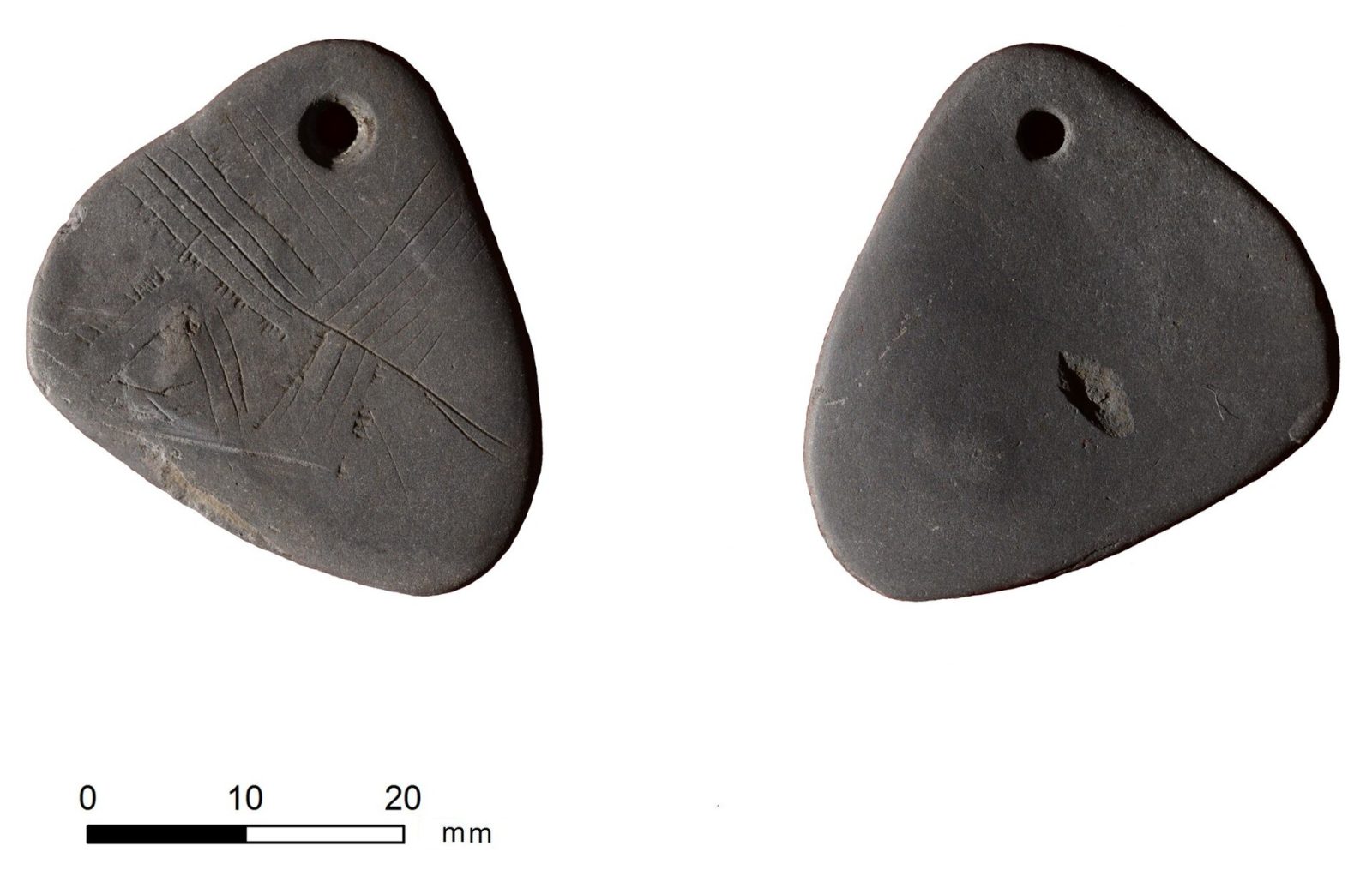
In 2015 student Tom Bell, volunteering on the dig at Star Carr in North Yorkshire, picked up what he thought was a smooth stone from the mud of an ancient lake. It was a shale pendant engraved about 11,000 years ago, the earliest known Mesolithic art in Britain.
FF 305

Made about 9,000 years ago · found 1983

'Ain Ghazal statues

Jordan · Artefacts

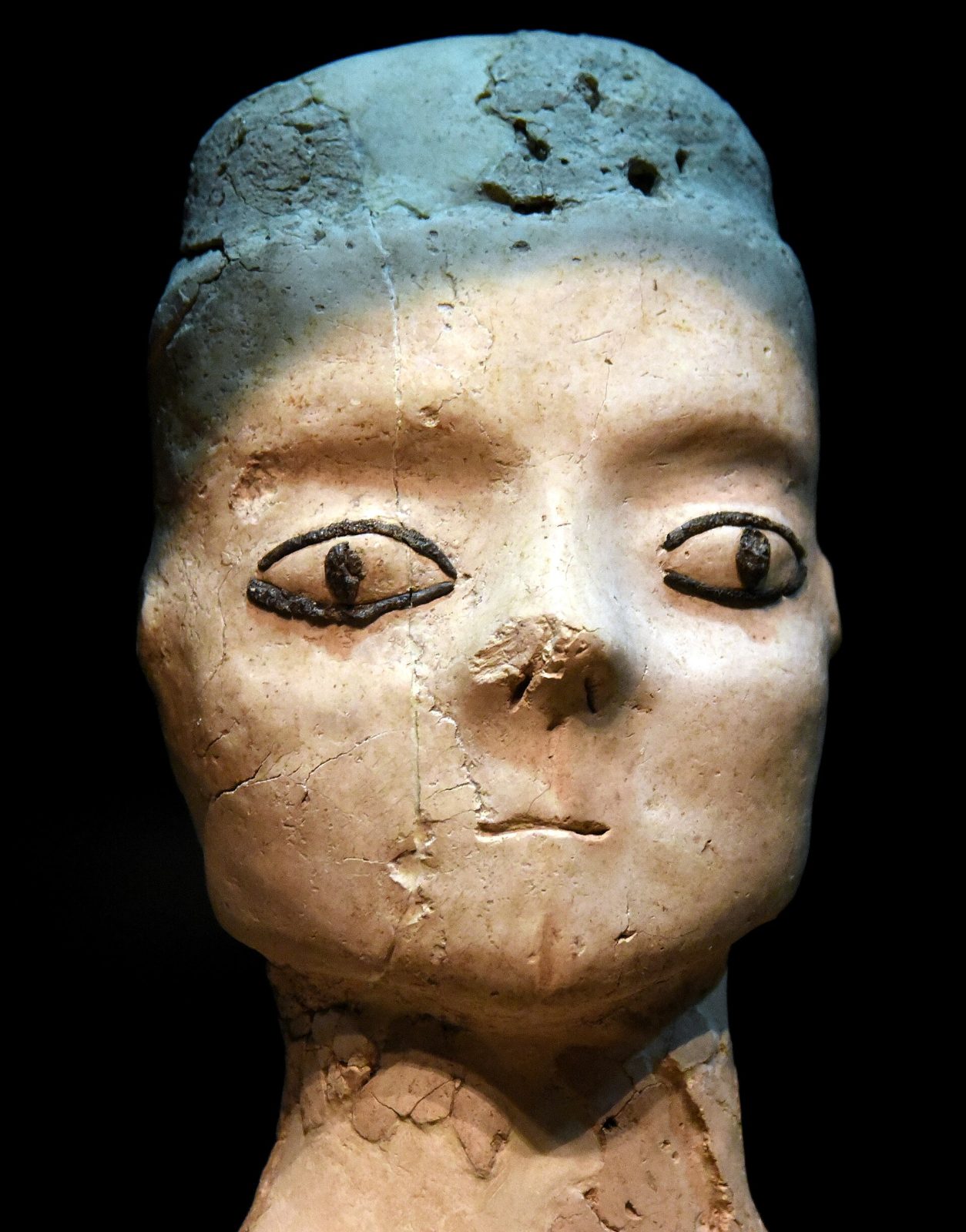
In 1983 archaeologists excavating a Neolithic village on the edge of Amman, Jordan, found a pit packed with human figures made of lime plaster, and a second cache followed. Made about 9,000 years ago, they are among the oldest large statues of people ever found.

FF 548

Made about 5700-4500 BC (Vinča culture) · found 1956

Goddess on the Throne

Kosovo · Artefacts

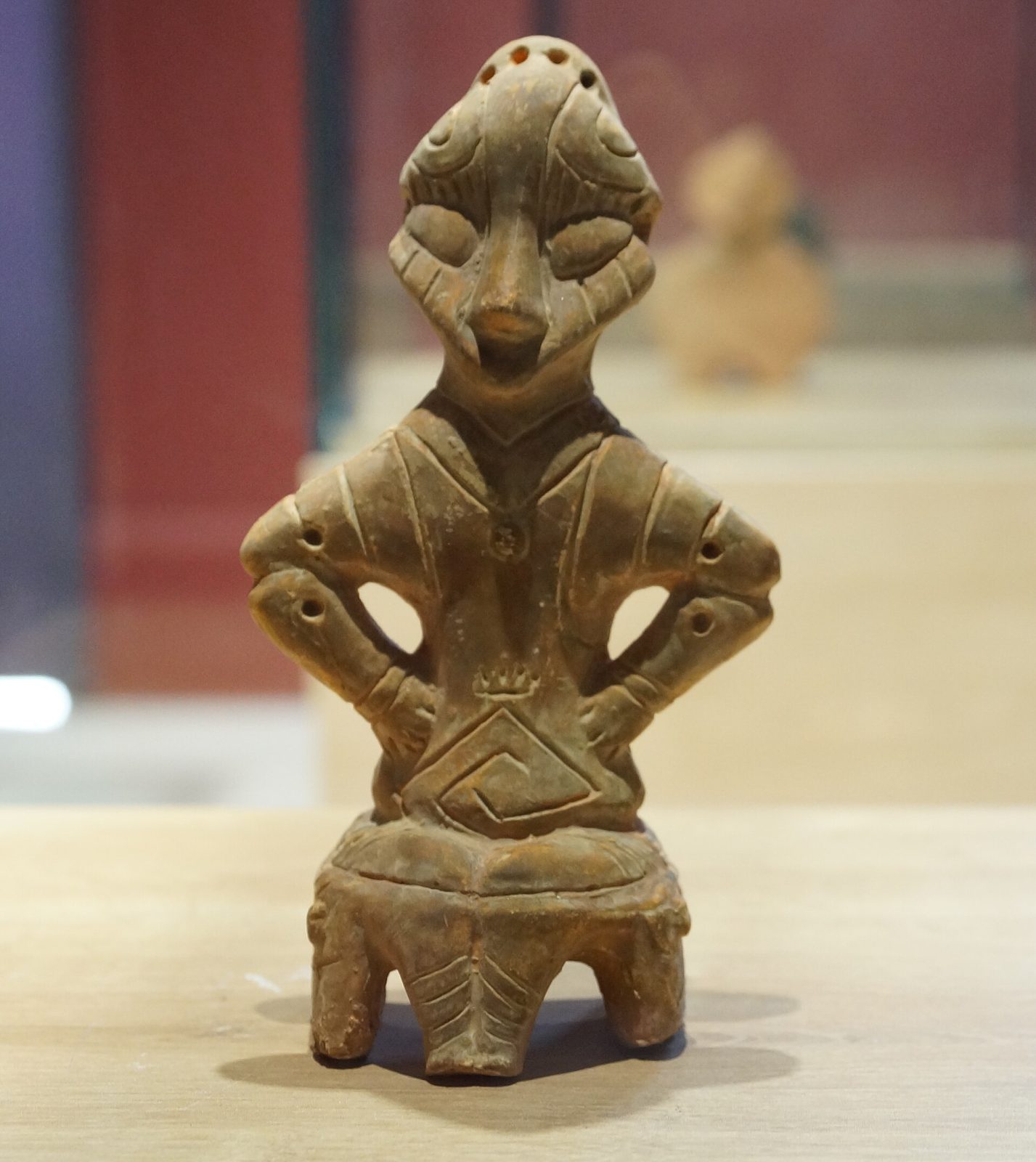
In 1956, excavations at Tjerrtorja, a Neolithic settlement found while a textile factory was being built on the edge of Pristina, uncovered a small terracotta woman seated on a stool. The Goddess on the Throne is now the emblem of Kosovo's capital.

FF 129

Buried about 4600 to 4350 BC (Copper Age) · found 1972

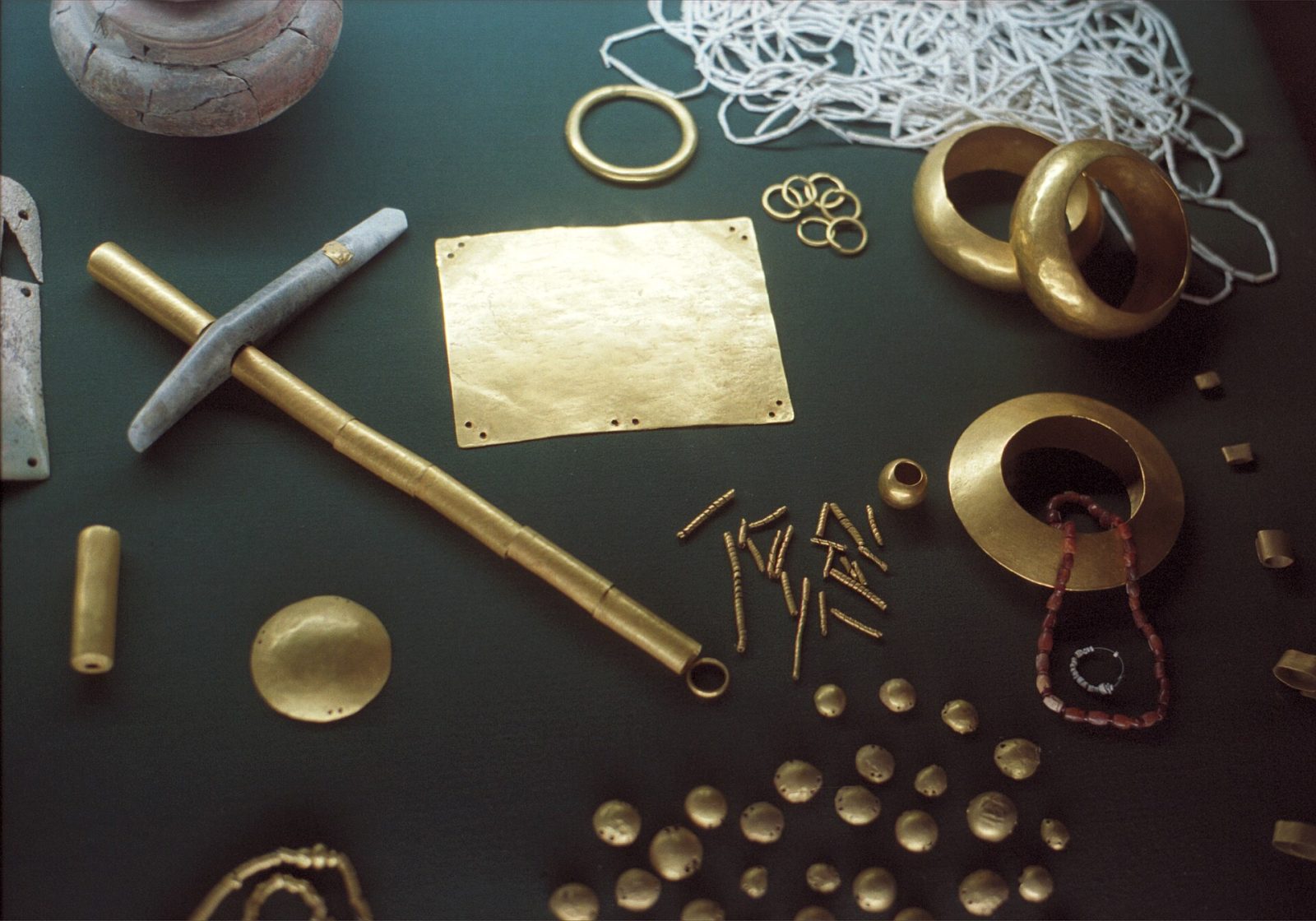
Varna Necropolis gold

Bulgaria · Jewellery

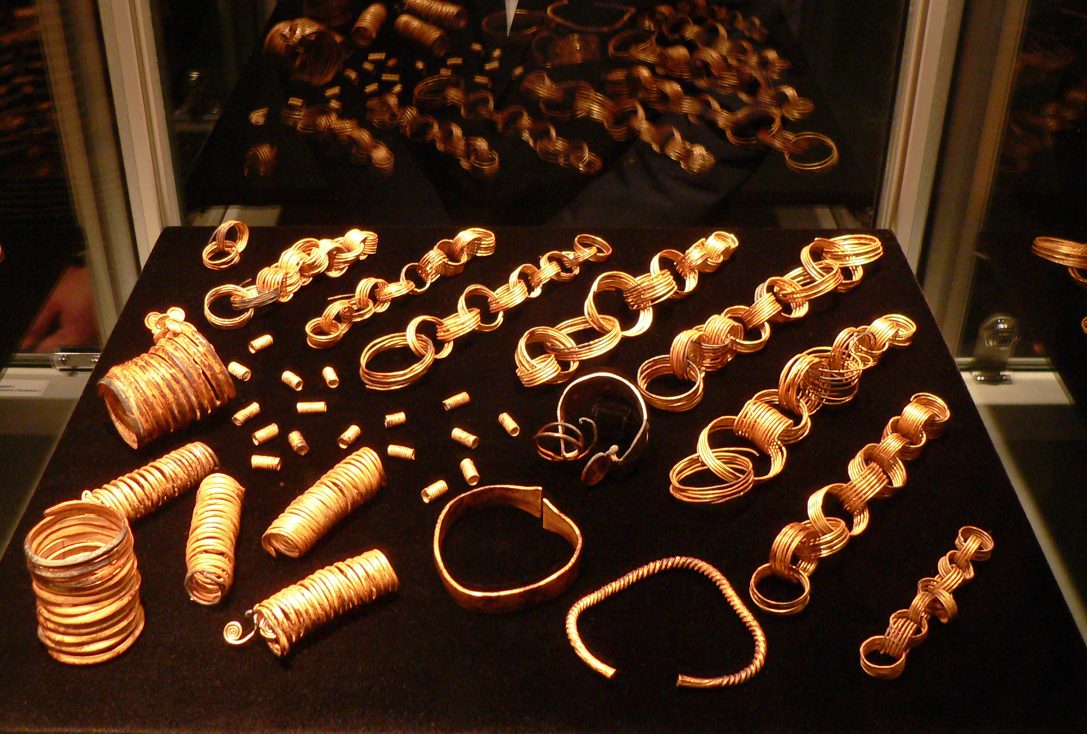
In 1972 a young excavator driver digging a cable trench in Varna, Bulgaria, uncovered a Copper Age cemetery full of gold. Made around 4500 BC, it is the oldest worked gold yet found anywhere.

FF 304

Made about 3600 to 3400 BC · found 2008

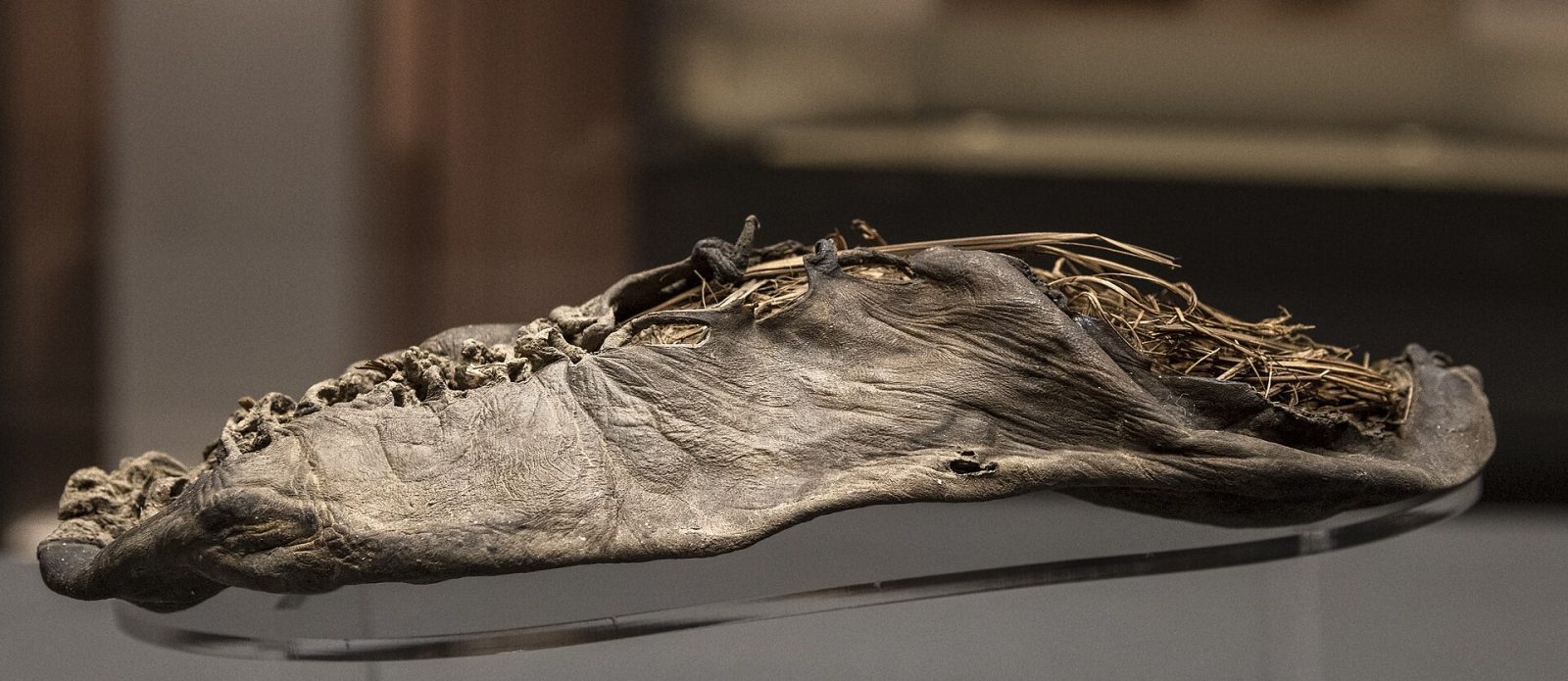
Areni-1 shoe

Armenia · Artefacts

In 2008 an Armenian student digging in the Areni-1 cave found a complete leather shoe stuffed with grass, lying beneath a broken pot. Radiocarbon dating showed it was made about 5,500 years ago, centuries older than the shoes of Ötzi the Iceman.

FF 333

Made about 3350 to 3100 BC · found 1991

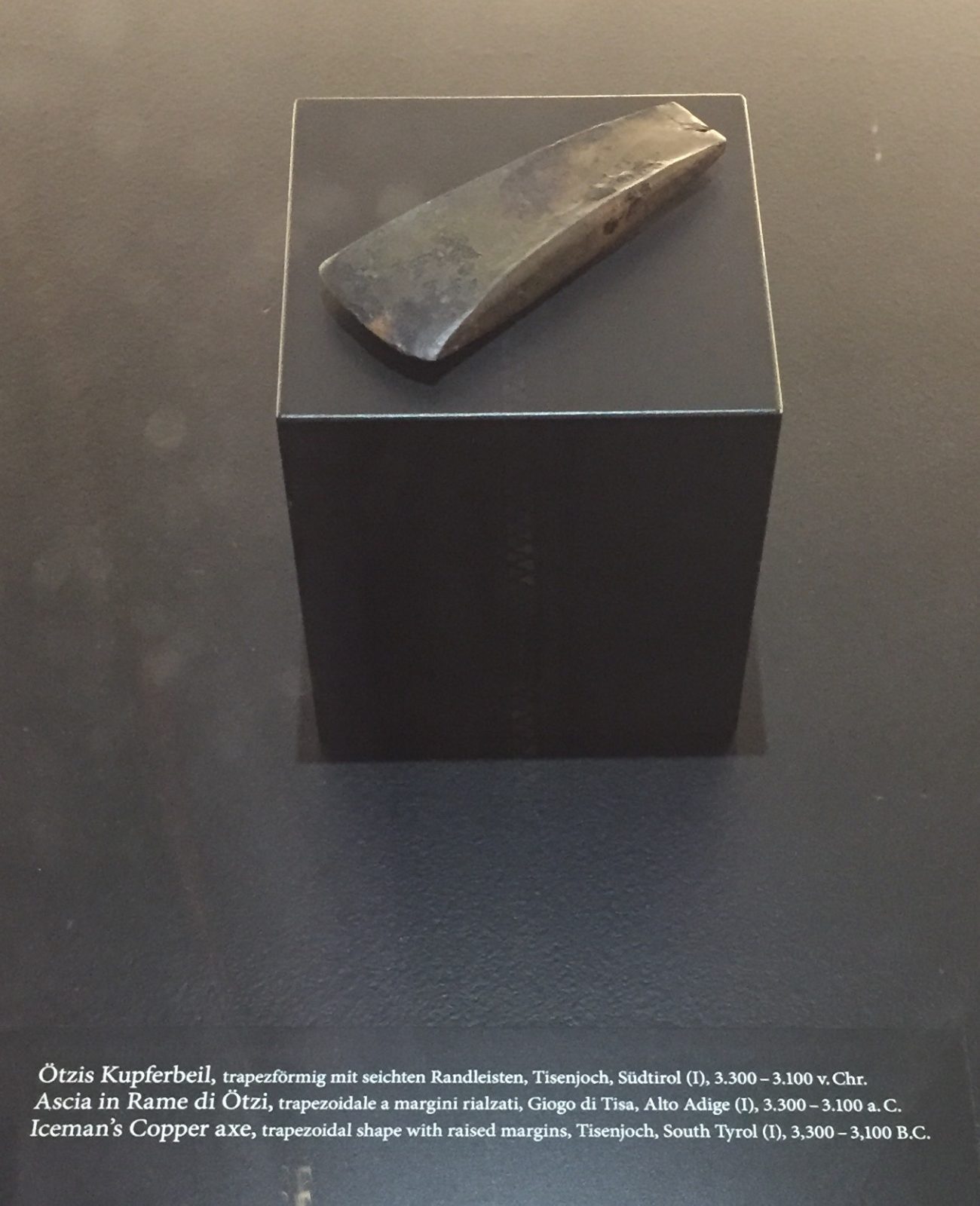
Ötzi's copper axe

Italy · Tools

In September 1991 two German hikers found a body melting out of the ice high in the Alps. It was Ötzi, a man killed about 5,300 years ago, and with him was the only complete Copper Age axe ever found, its blade made of copper from Tuscany.

FF 481

Made about 3000 BC, in the 1st Dynasty · found 1901

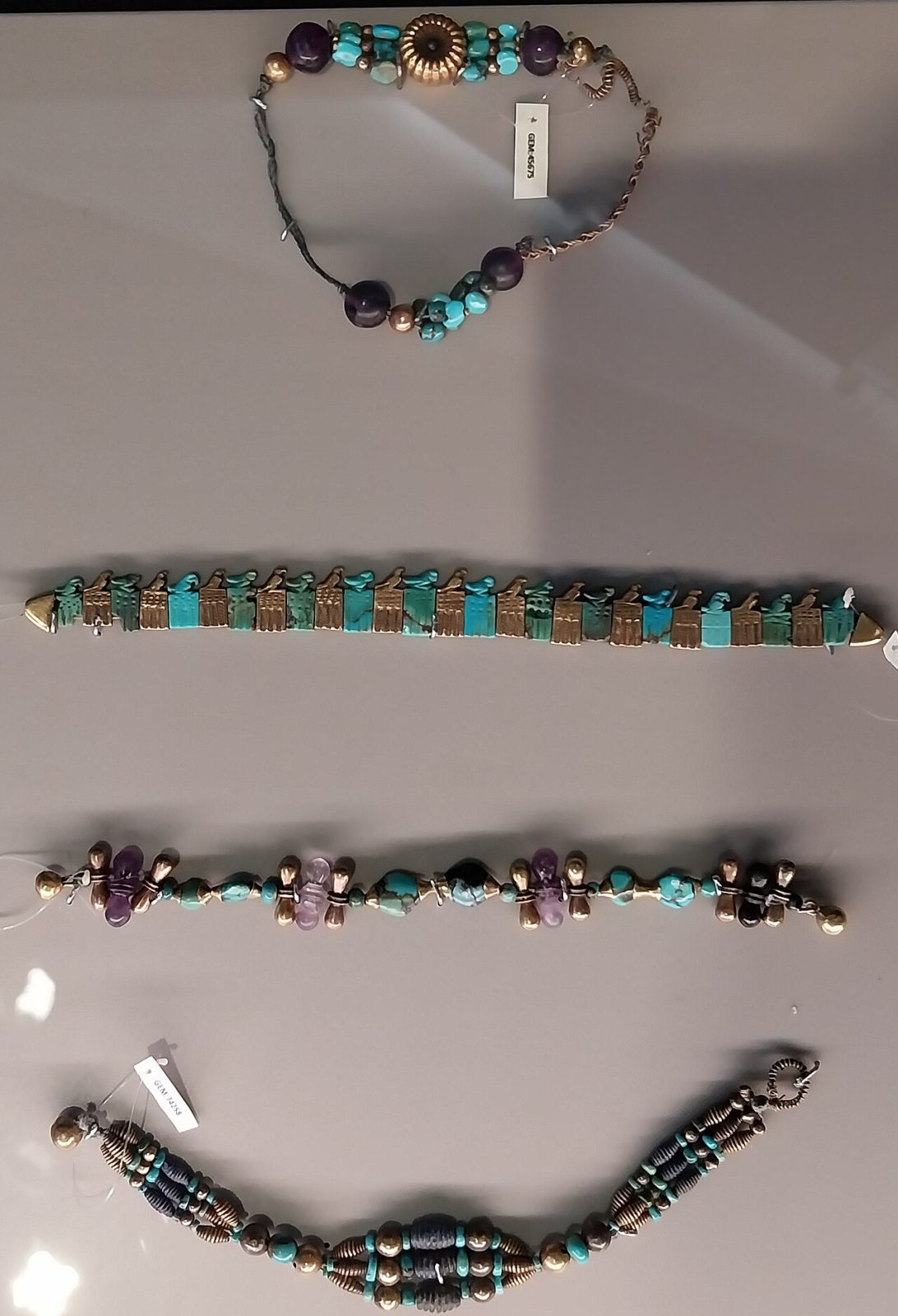
Djer's bracelets

Egypt · Jewellery

In the winter of 1900–01, workmen digging for Flinders Petrie in the tomb of King Djer at Abydos found part of a mummified arm in a hole in the wall. Inside its wrappings were four bracelets of gold, turquoise, lapis and amethyst, among the oldest royal jewellery in the world.

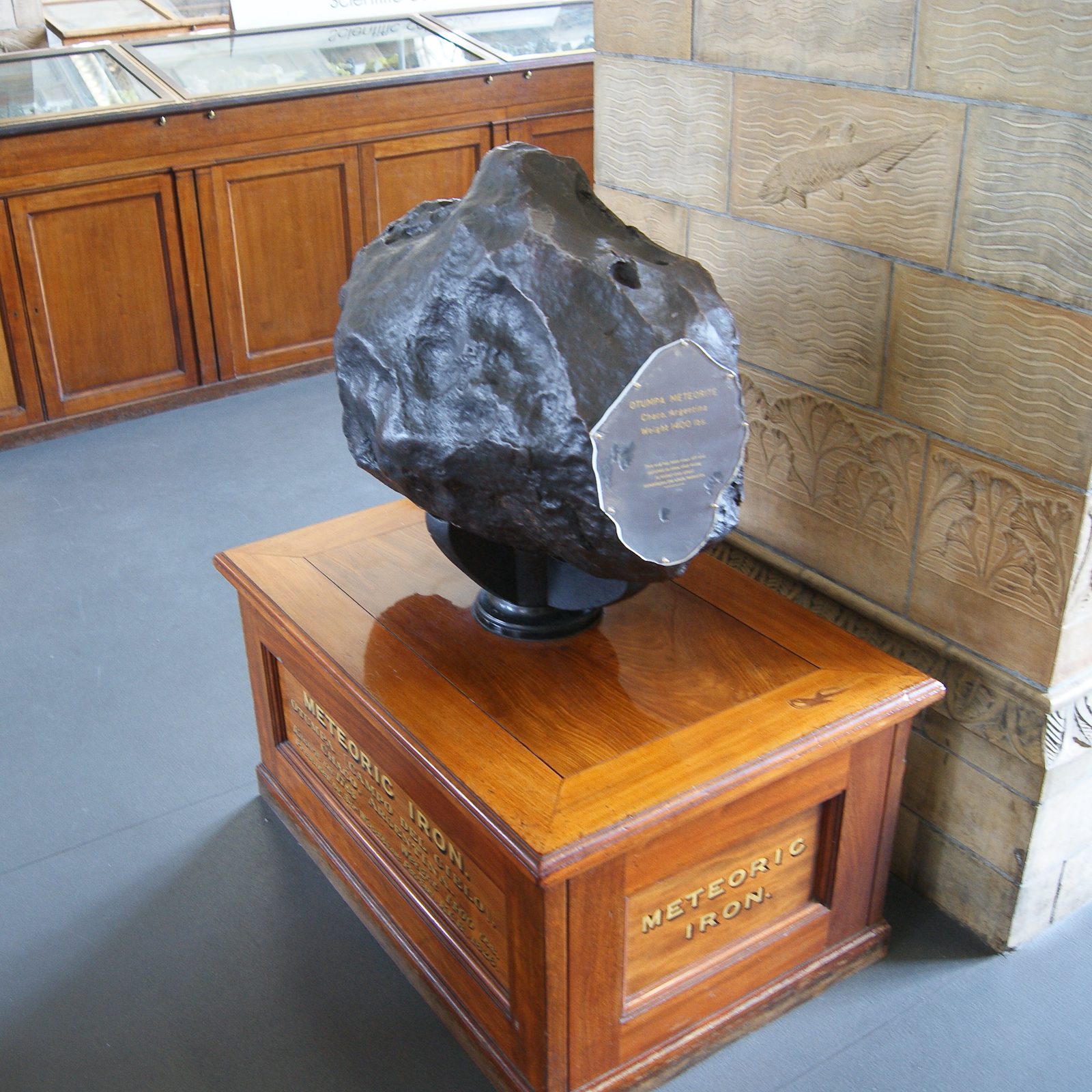
FF 287

Fell about 4,000 to 4,700 years ago · found 1969

Campo del Cielo meteorites

Argentina · Mystery

About 4,000 years ago a giant iron meteorite broke up over northern Argentina, scattering more than 100 tonnes of iron across the Chaco plain. Spanish explorers hunted for its 'table of iron' from 1576, and in 1969 a metal detector found a 28-tonne mass five metres down.
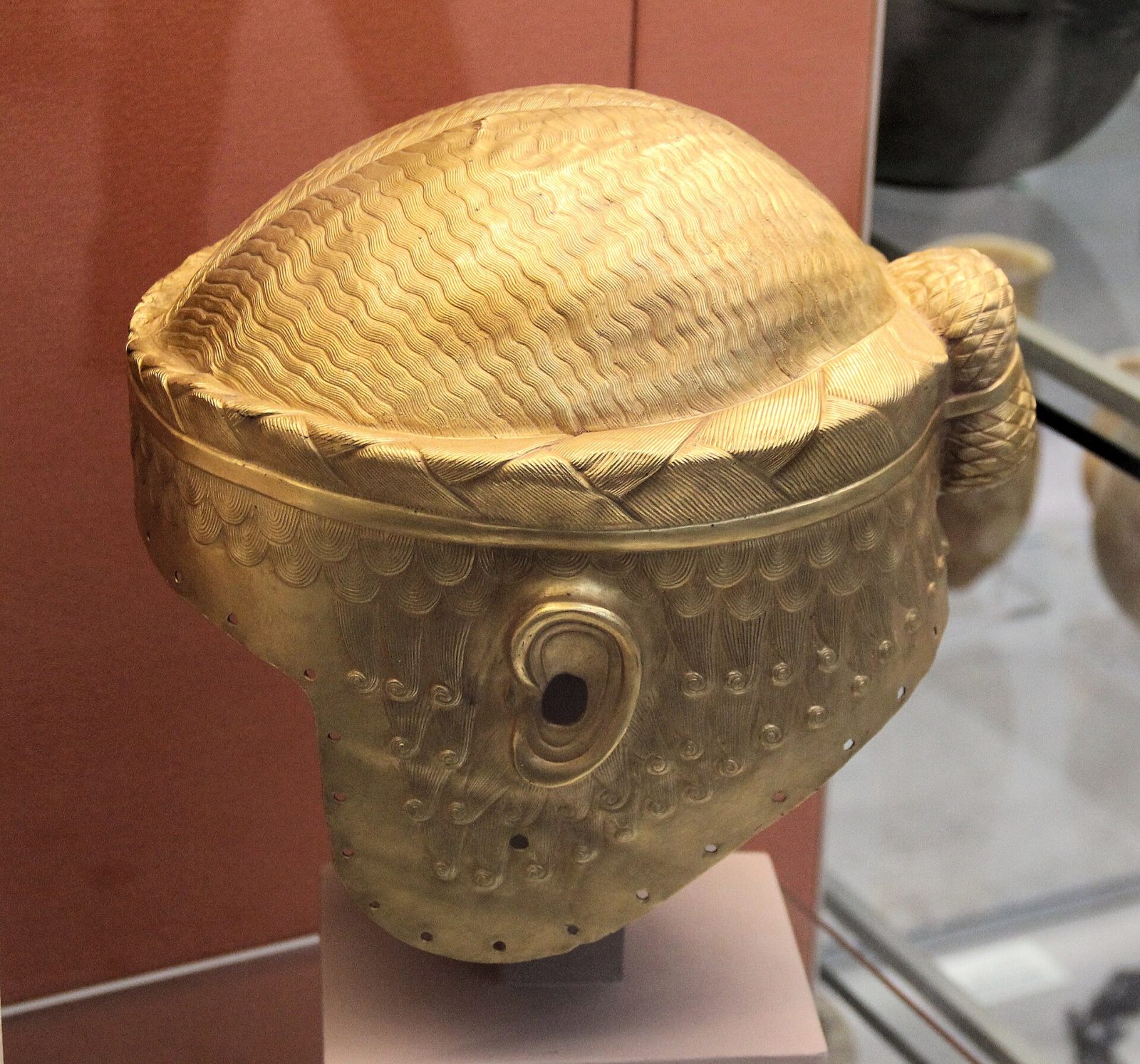
FF 257

About 2600 to 2450 BC · found 1927

Helmet of Meskalamdug

Iraq · Weapons

In 1927 Leonard Woolley, excavating the Royal Cemetery at Ur in southern Iraq, found a helmet beaten from a single sheet of gold in the shape of a man's hair. Around 4,500 years old, it survived the looting of 2003 hidden in a flooded bank vault.

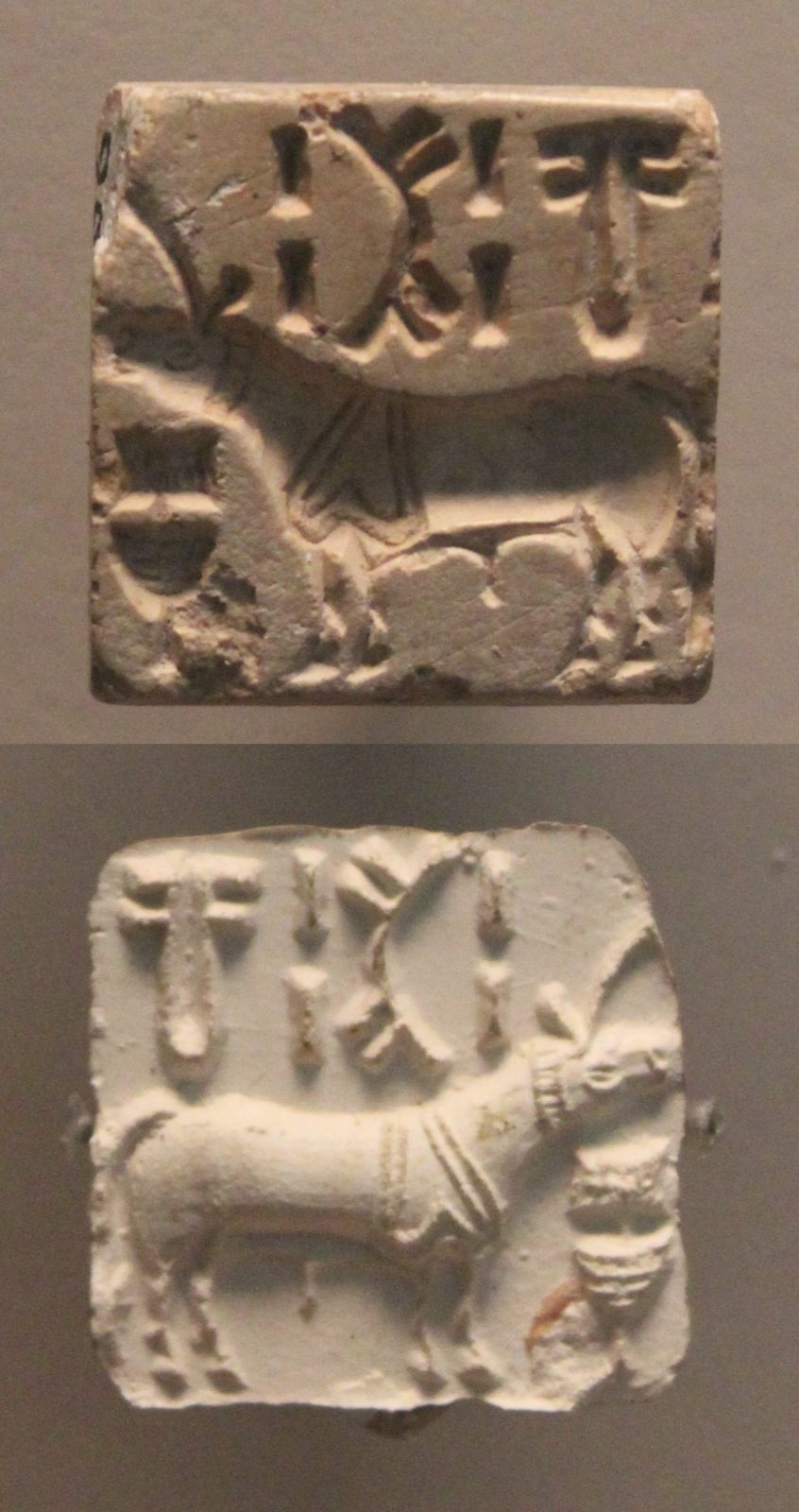
FF 294

Mature Harappan, about 2600 to 1900 BC · found 1922

Mohenjo-daro unicorn seals

Pakistan · Artefacts

In the early 1920s archaeologists digging at Mohenjo-daro in Pakistan revealed a forgotten Bronze Age civilisation. Among its most famous finds are hundreds of small carved stone seals showing a one-horned 'unicorn' and a line of the Indus script, which has never been deciphered.

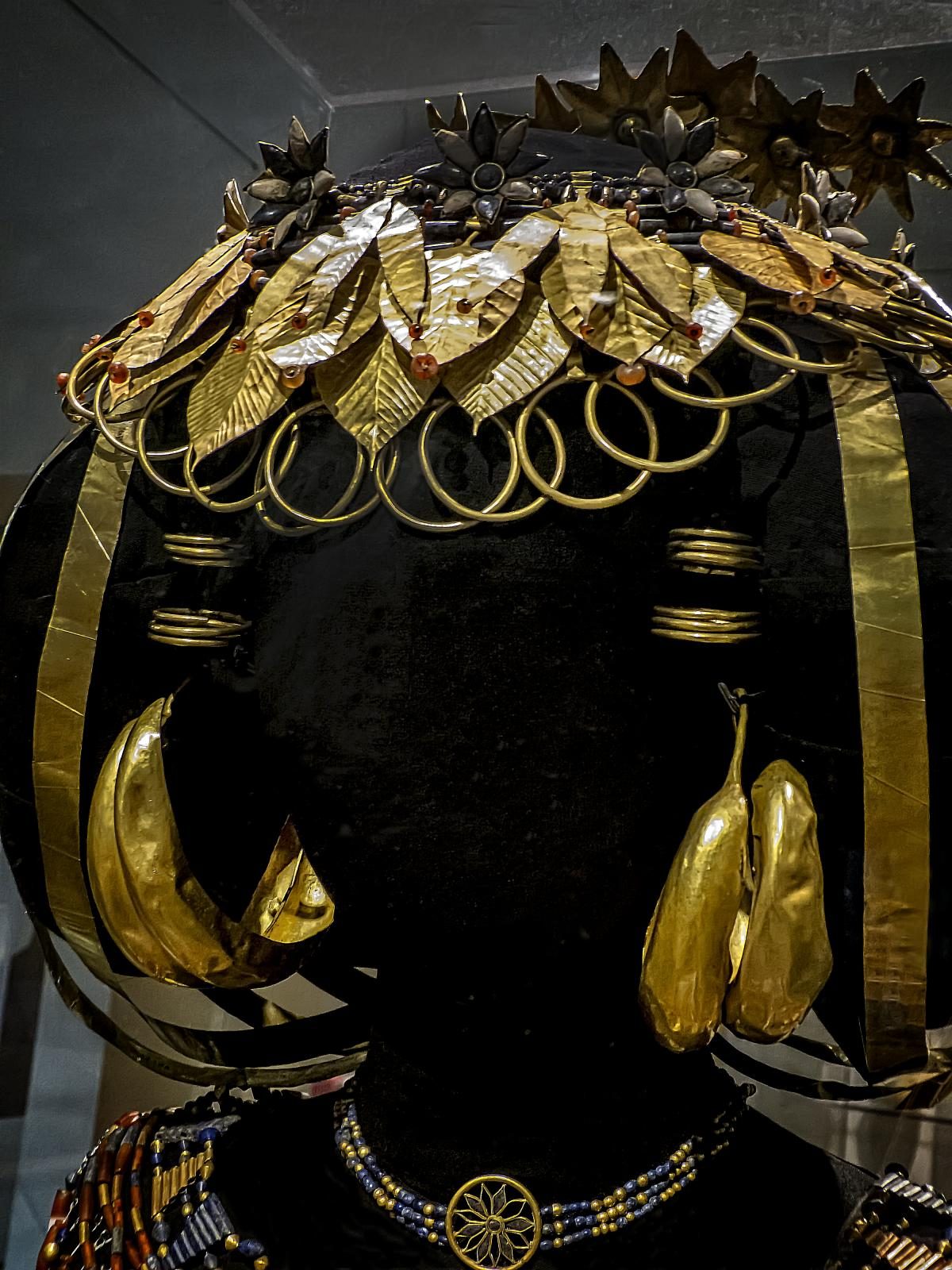
FF 442

Buried about 2600 to 2450 BC · found 1928

Queen Puabi's headdress

Iraq · Jewellery

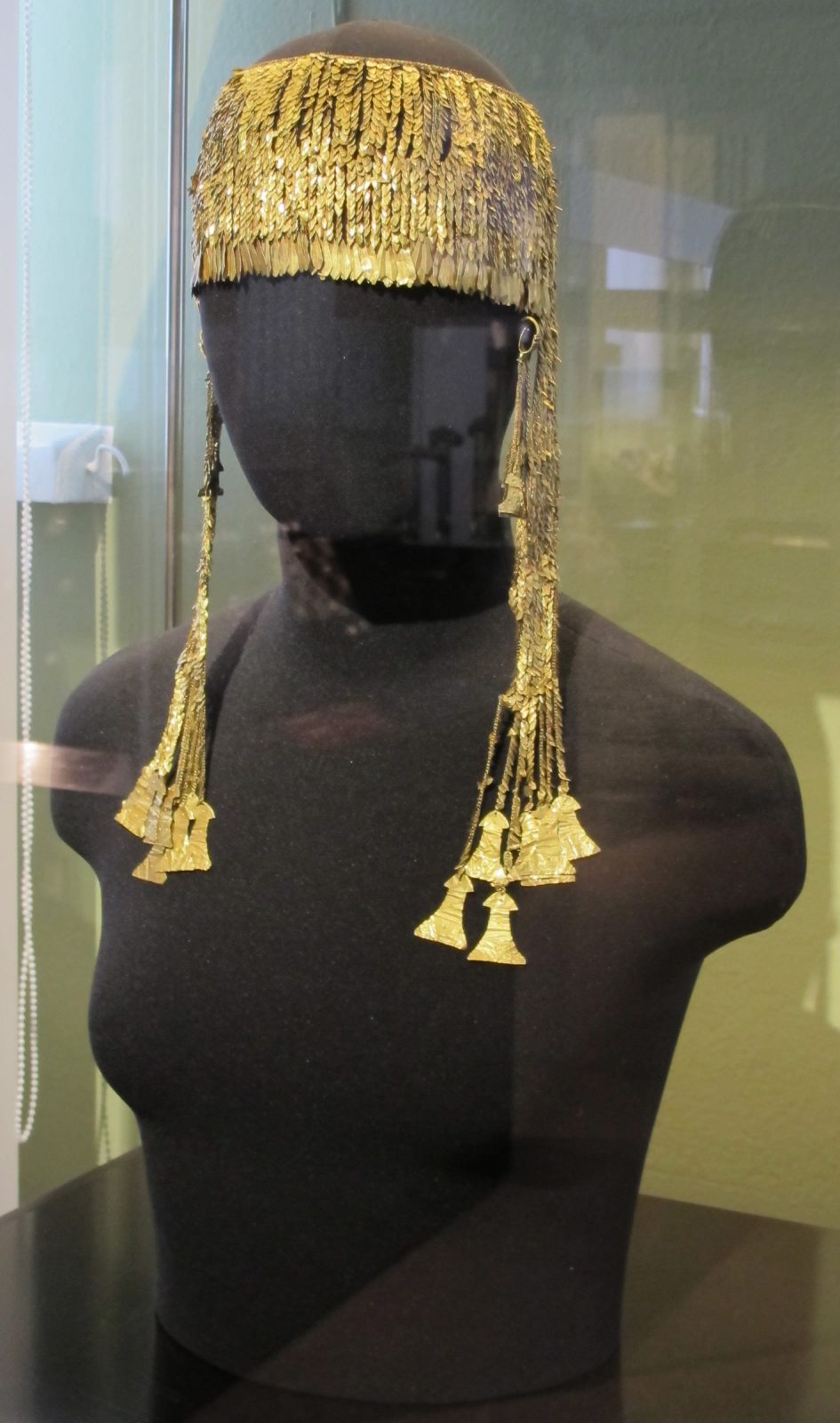
In the 1927–28 season at Ur in Iraq, Leonard Woolley's team found the intact tomb of Queen Puabi, buried around 2600 to 2450 BC. Her headdress of gold leaves, flowers and rings and a towering gold comb is one of the masterpieces of Sumerian jewellery.

FF 381

Made about 2550 to 2250 BC · found 1873

Priam's Treasure

Turkey · Hoards

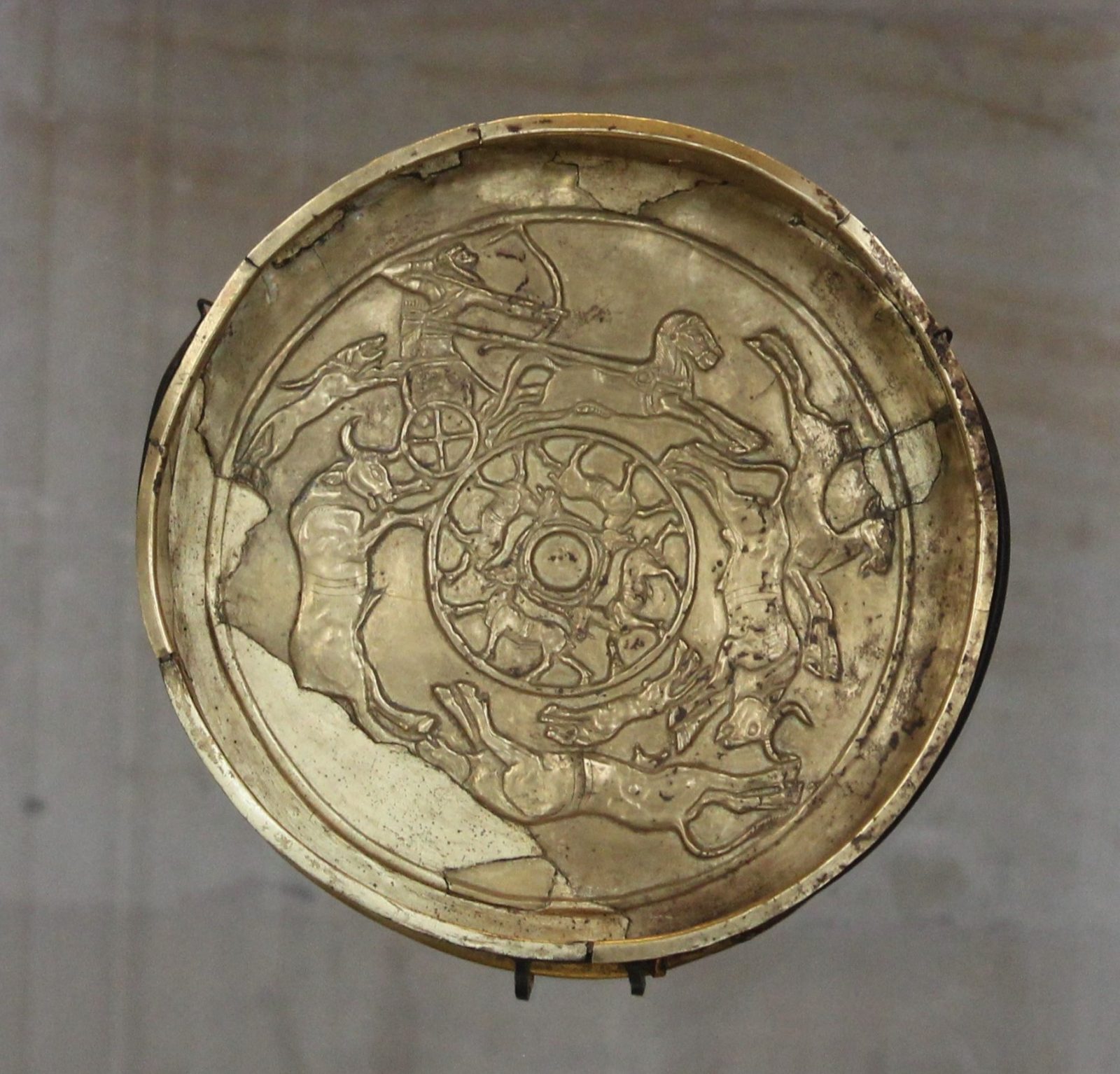
In May 1873 Heinrich Schliemann found a cache of gold and silver at Troy and named it the treasure of King Priam. It was a thousand years older than Homer's Troy. Taken from Berlin by the Red Army in 1945, it was secretly kept in Moscow until 1993.

FF 216

About 2400 to 2000 BC · found 1869

Llanllyfni Lunula

Wales · Jewellery

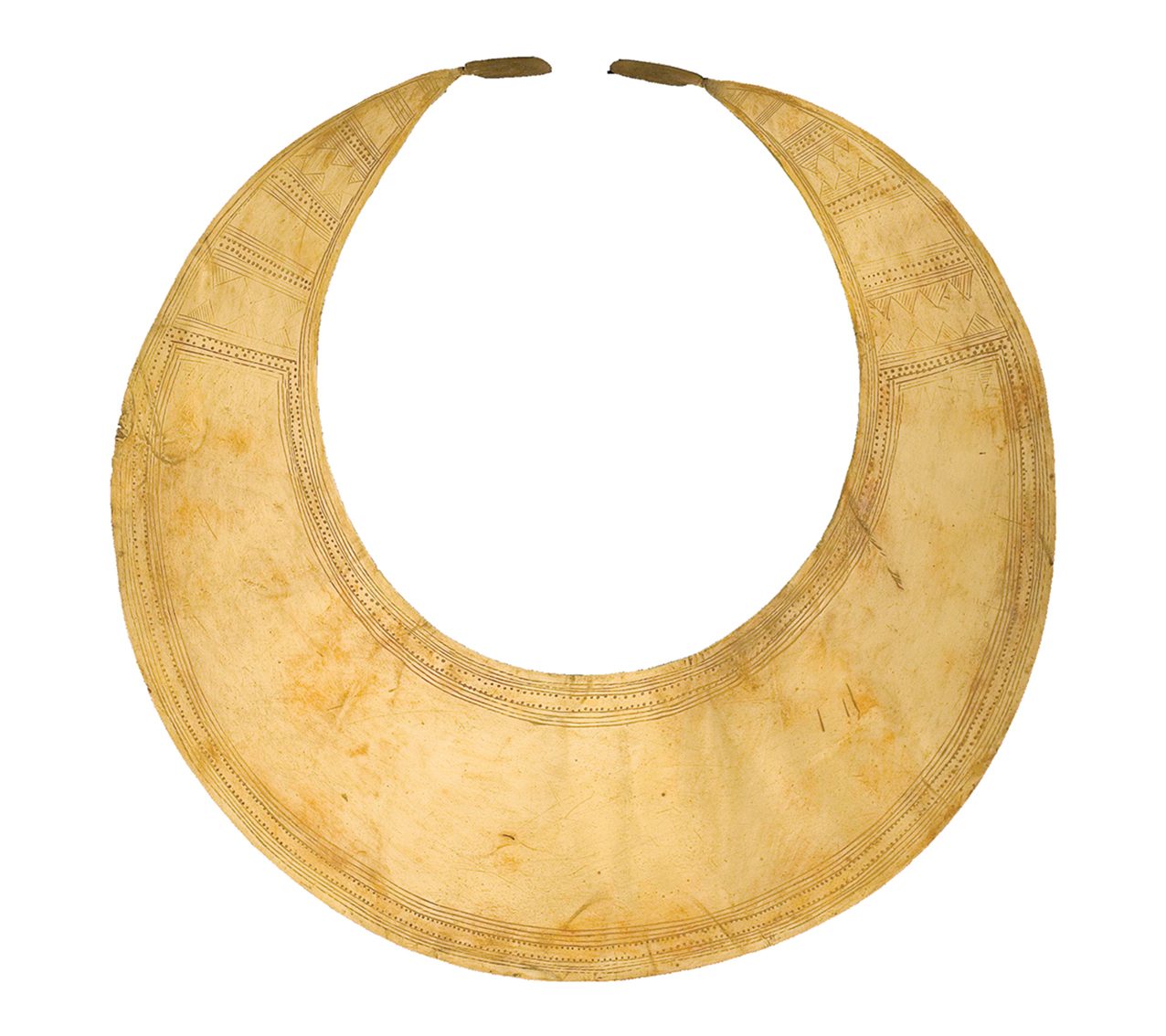
Around 1869 a Gwynedd farmer saw what he thought was a yellow laurel leaf sticking out of a peat bog. It was an Early Bronze Age gold collar, more than 4,000 years old. In October 2025 it was stolen from St Fagans museum in a night-time raid.

FF 448

Made about 2400 to 2200 BC · found 2014

Kirkhaugh gold ornament

England · Jewellery

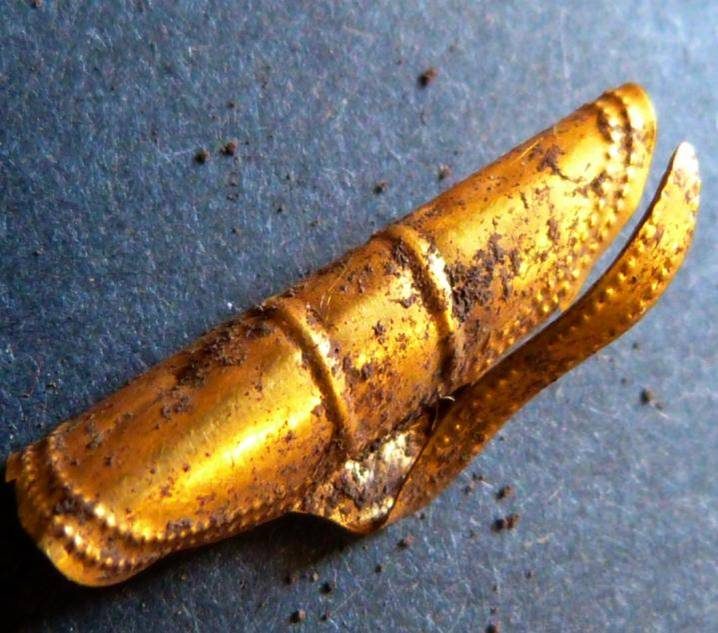
On 23 July 2014, four boys on a community dig at Kirkhaugh in Northumberland found a tiny Early Bronze Age gold ornament. Its twin had been found in the same burial cairn in 1935, and two of the boys were great-great-grandsons of a man on that dig.

FF 269

About 2100 BC to AD 200; start of bronze debated · found 1966

Ban Chiang

Thailand · Artefacts

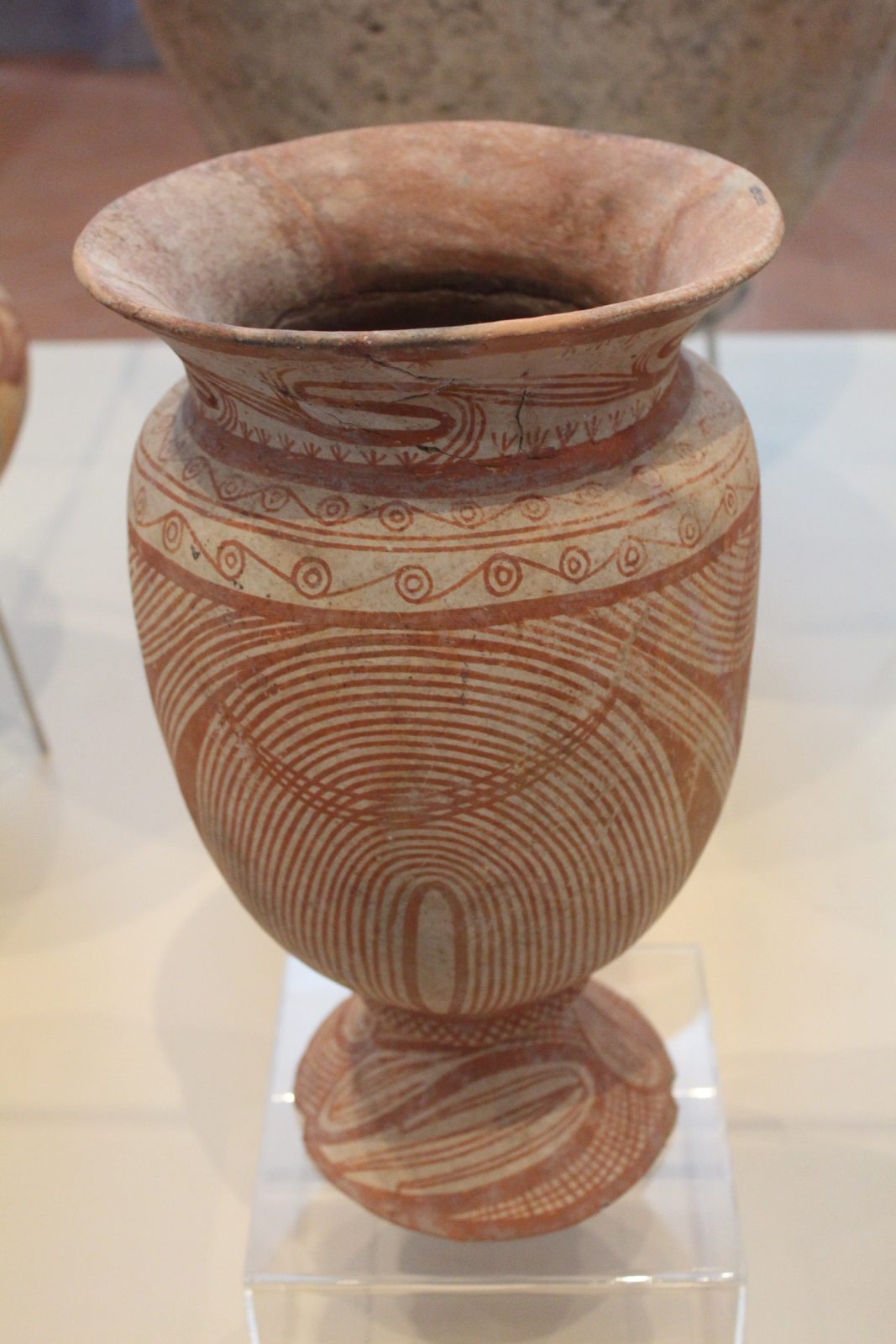
In 1966 an American student walking in the village of Ban Chiang in north-east Thailand found painted pots sticking out of a path. Excavations revealed one of South-East Asia's earliest bronze-making cultures, and a wave of looting that took decades to undo.

FF 431

Made about 1981 to 1975 BC · found 1920

Silver scarab of Wah

Egypt · Jewellery

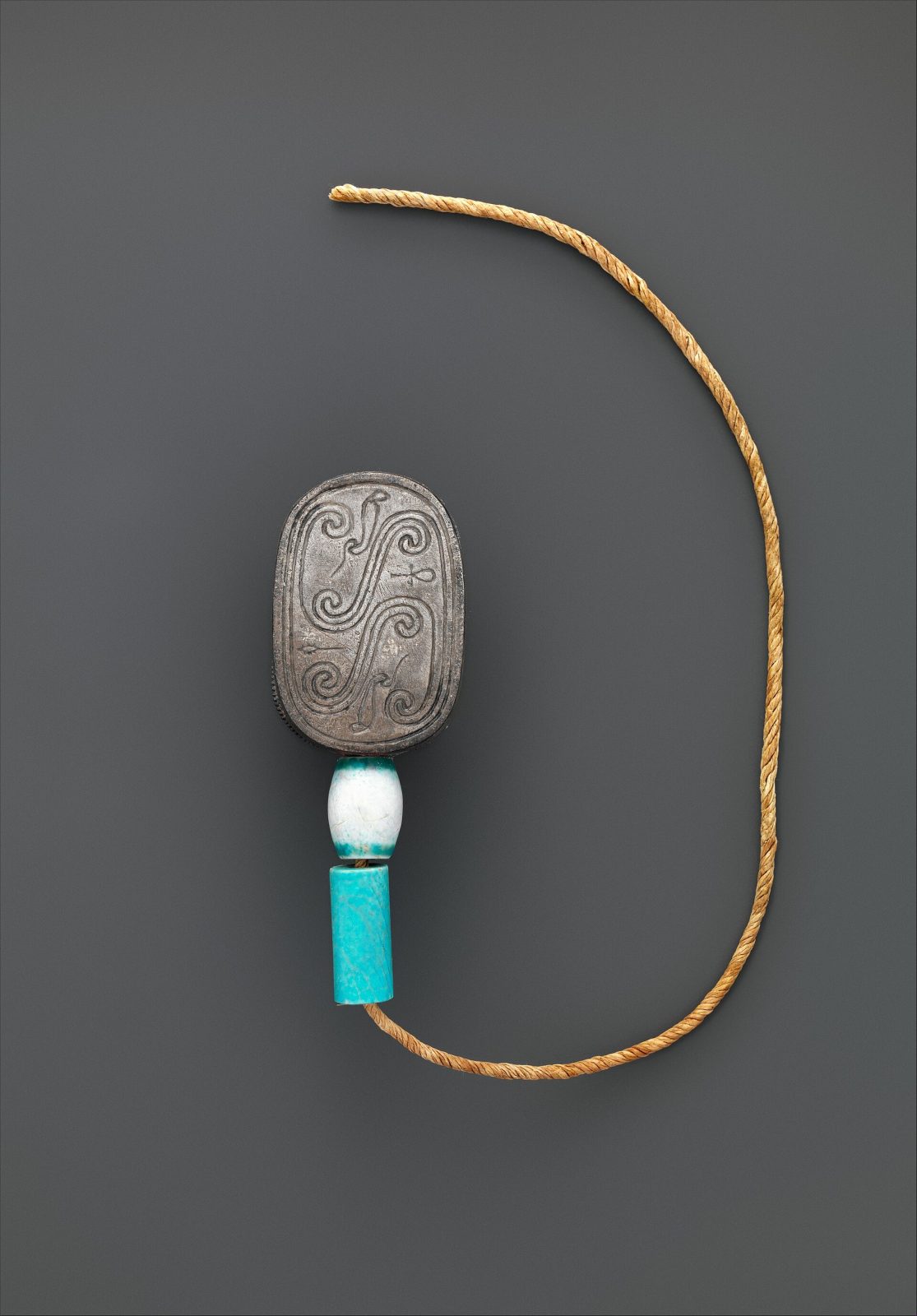
In 1920 Metropolitan Museum excavators at Thebes in Egypt found the intact burial of Wah, a storehouse overseer. His mummy went on display unopened. Years later an X-ray revealed jewellery inside, and in 1940 unwrapping uncovered a large silver scarab naming him.

FF 85

Made about 1950 to 1750 BC · found 2001

Ringlemere Gold Cup

England · Artefacts

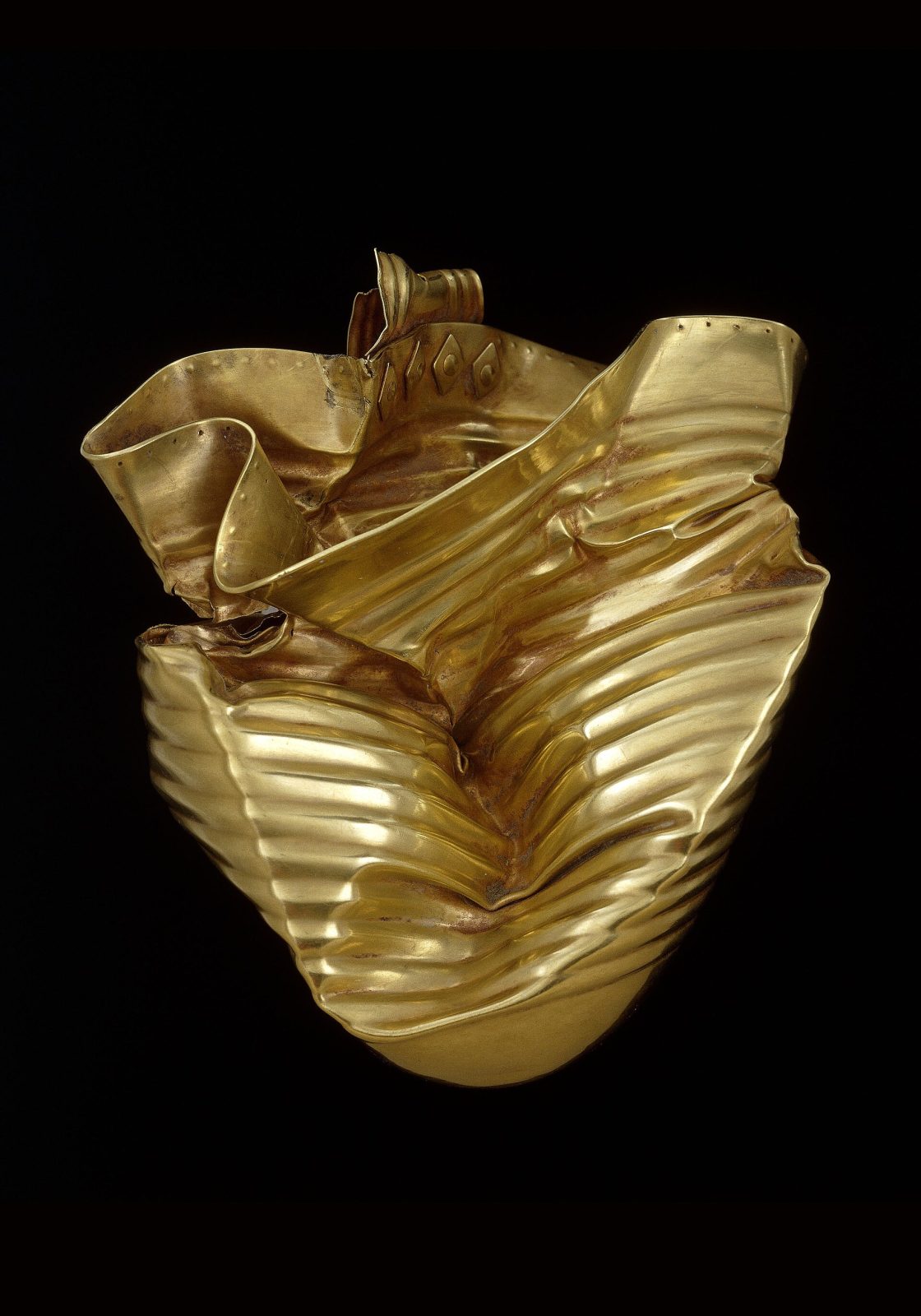
In 2001 a detectorist in Kent found a crushed gold cup in a ploughed field. It was a rare Early Bronze Age cup, and the excavation that followed his report found an ancient monument hidden beneath the field.

FF 163

Buried about 1950 BC · found 1808

Bush Barrow

England · Artefacts

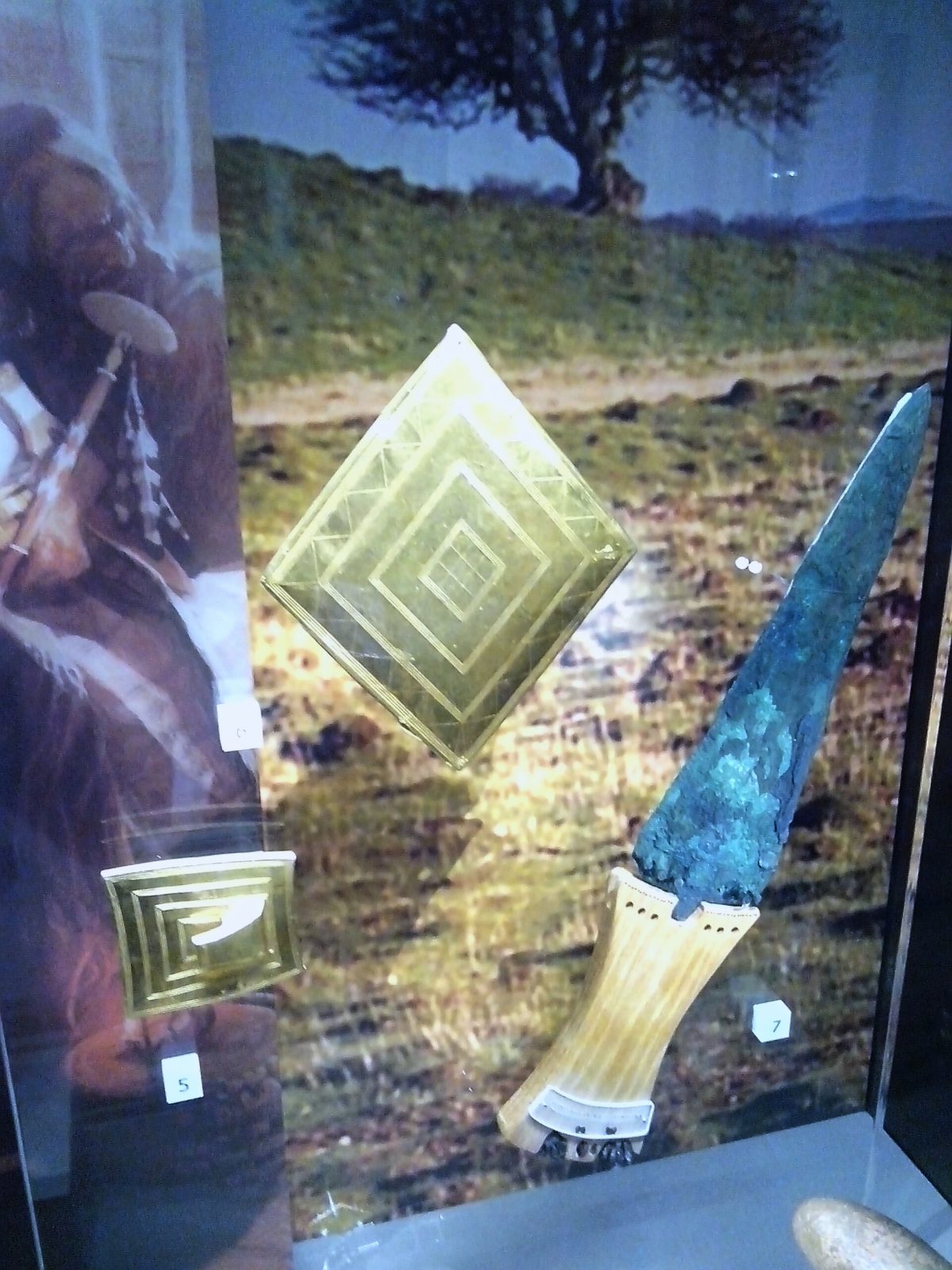
In 1808 an antiquarian digging a burial mound near Stonehenge found a man buried with a gold lozenge, three daggers and a stone mace. One dagger handle had been decorated with around 140,000 tiny gold studs, each thinner than a hair.

FF 501

Made about 1900 BC, in the 12th Dynasty · found 1895

Khnumet's gold diadem

Egypt · Jewellery

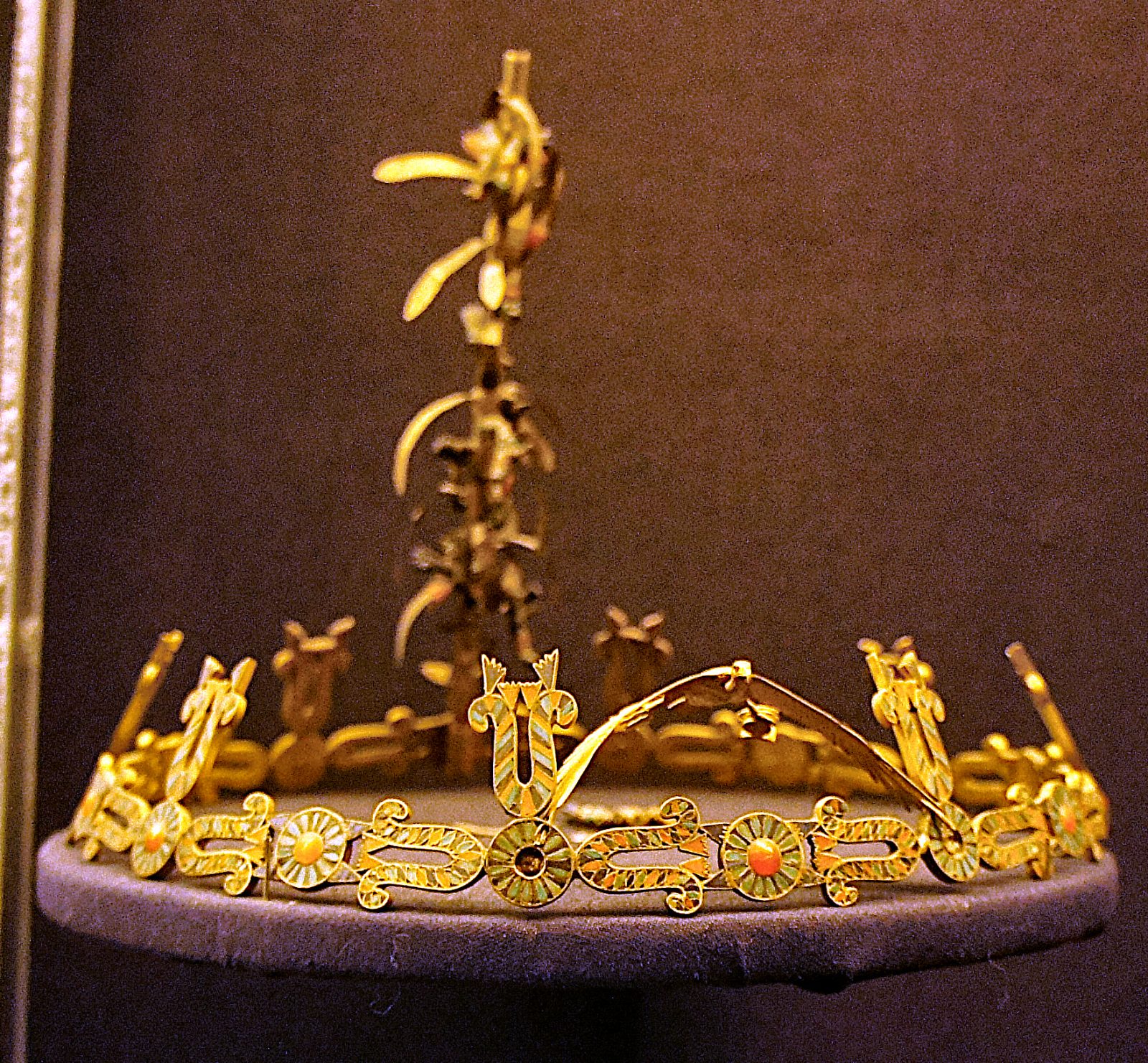
In the winter of 1894–95 the archaeologist Jacques de Morgan found the intact burial of Princess Khnumet beside the White Pyramid at Dahshur in Egypt. Beside her coffin lay a gold diadem of flowers and inlaid stones, made around 1900 BC.

FF 89

Made about 1900 to 1600 BC · found 1833

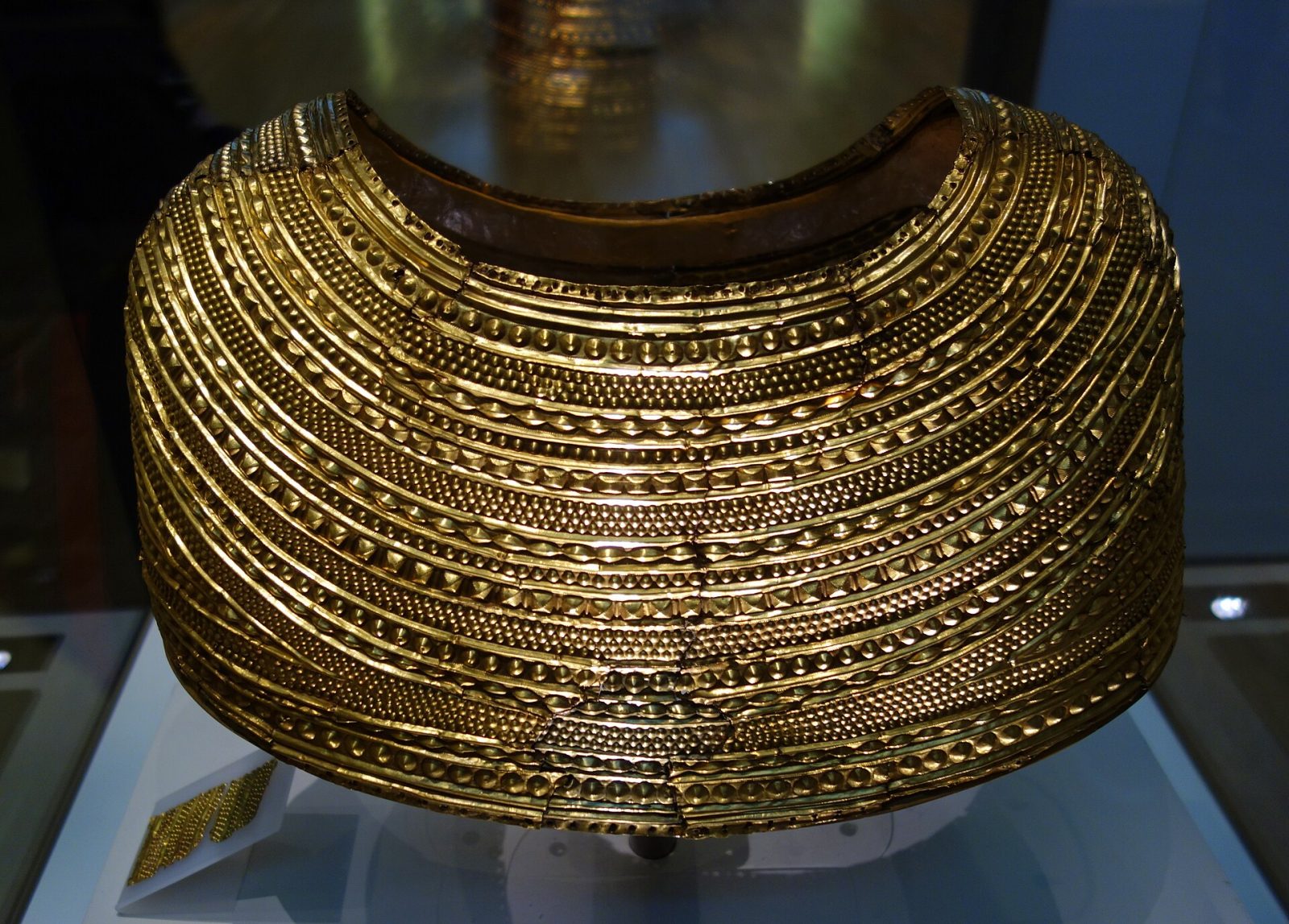
Mold Gold Cape

Wales · Jewellery

In 1833 workmen taking stone from a burial mound at Mold in Flintshire found a cape of beaten sheet gold, made around 1900 to 1600 BC. Nothing like it has been found anywhere else in the world.

FF 419

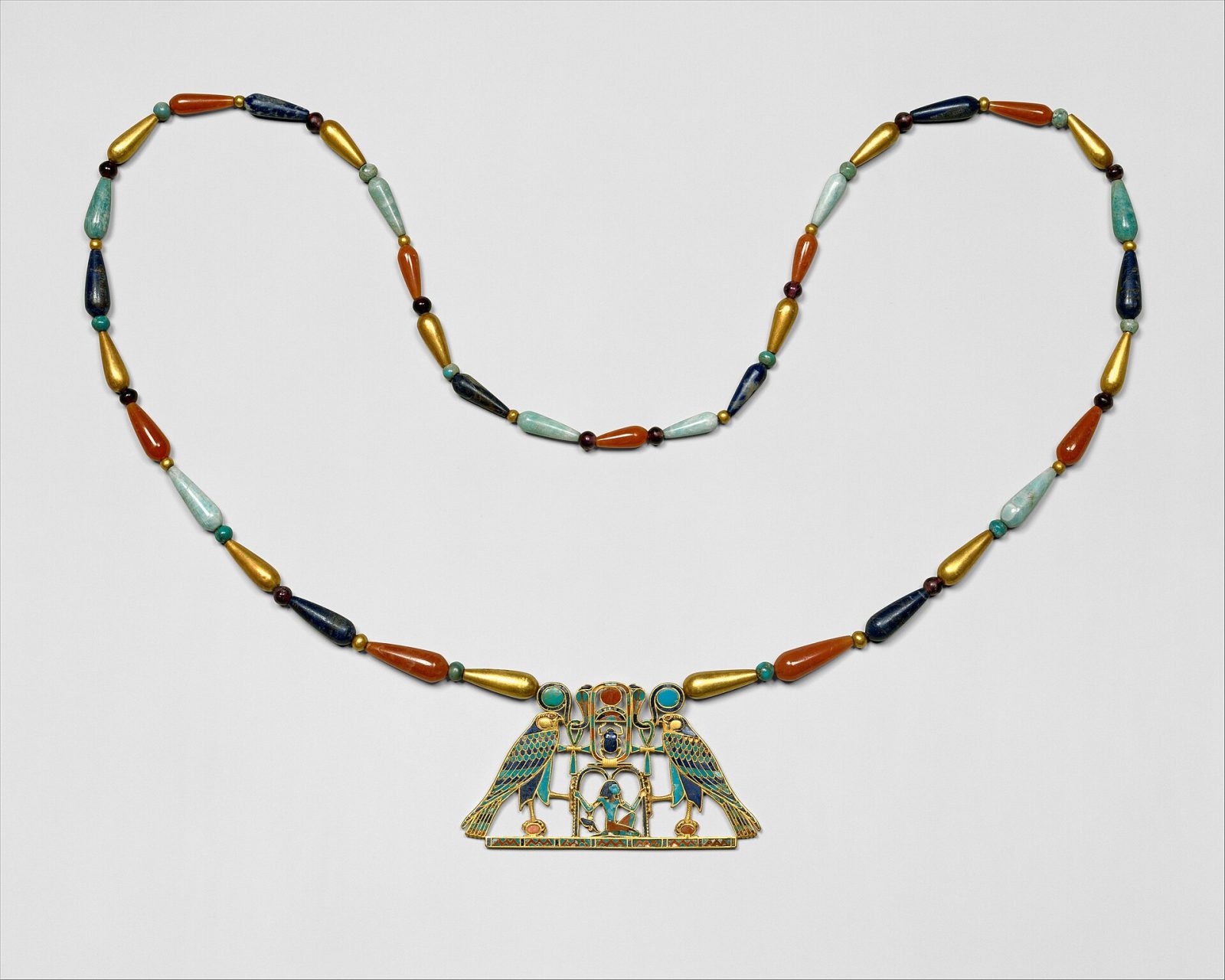
Made in the reign of Senwosret II, about 1887 to 1878 BC · found 1914

Pectoral of Sithathoryunet

Egypt · Jewellery

In February 1914 Flinders Petrie's team, clearing a looted tomb beside the pyramid of Senwosret II at Lahun in Egypt, found a recess of dried mud full of gold. Among the princess Sithathoryunet's jewels was a gold pectoral inlaid with 372 cut stones.

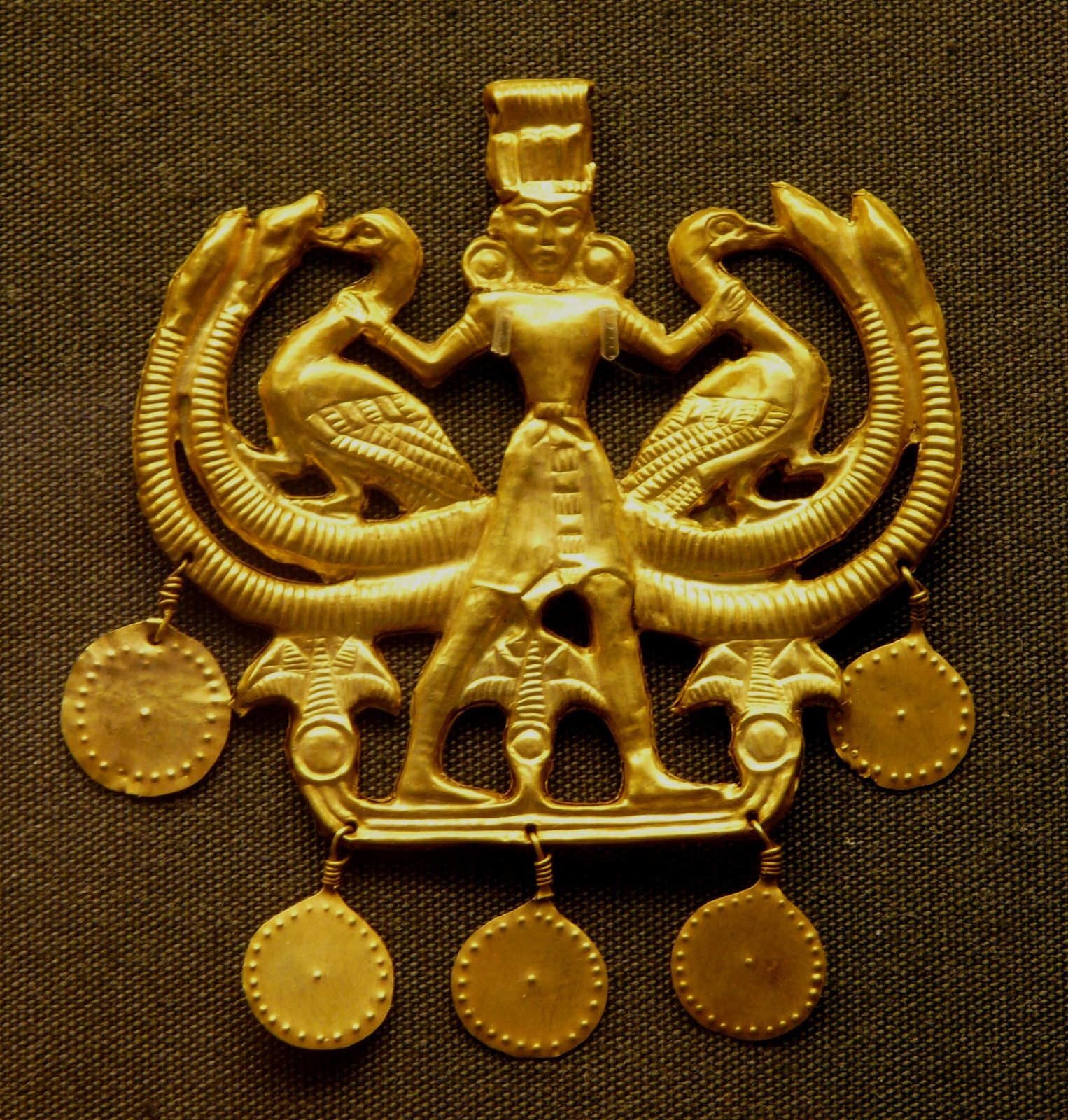
FF 382

Made about 1850 to 1550 BC · found 1880

Aegina Treasure

Greece · Jewellery

Minoan gold jewellery said to have come from the Greek island of Aegina was offered to the British Museum by a London sponge merchant in 1891. Its finest piece, a gold god holding two birds, is famous, but where and how the treasure was found is still argued over.

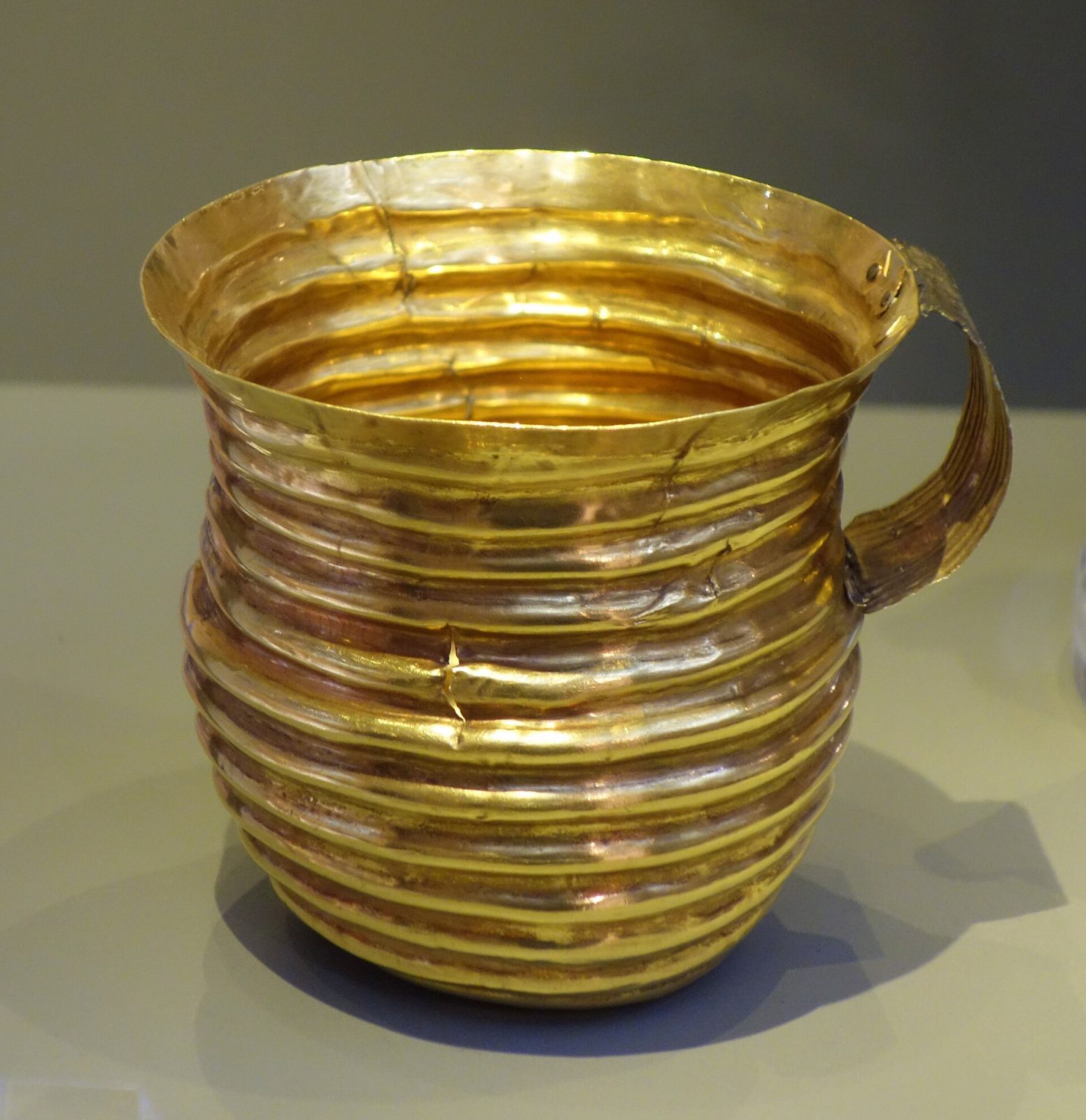
FF 97

Made about 1800 to 1600 BC · found 1837

Rillaton Gold Cup

England · Artefacts

In 1837 workmen taking stone from a burial cairn on Bodmin Moor found a gold cup beaten from a single sheet. It went to the Crown, spent a century in royal palaces, and now stands in the British Museum beside the Ringlemere Cup.

FF 100

Buried about 1600 BC · found 1999

Nebra Sky Disc

Germany · Artefacts

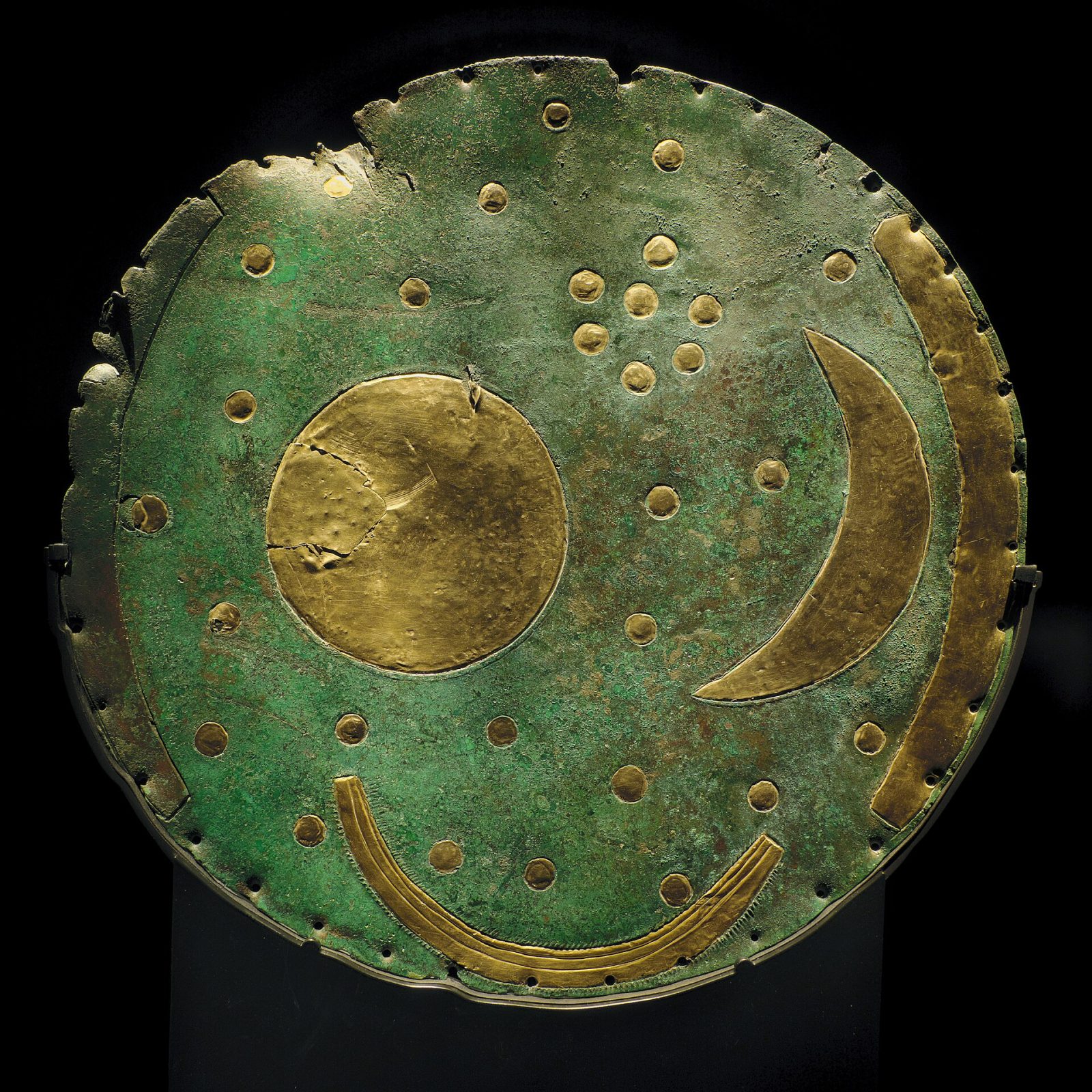
In 1999 two men digging illegally with metal detectors on a hilltop in eastern Germany found a bronze disc inlaid with a gold sun, moon and stars. It took a police sting in a Basel hotel to save it.

FF 480

Made about 1800 to 1700 BC · found 1930

Malia bee pendant

Greece · Jewellery

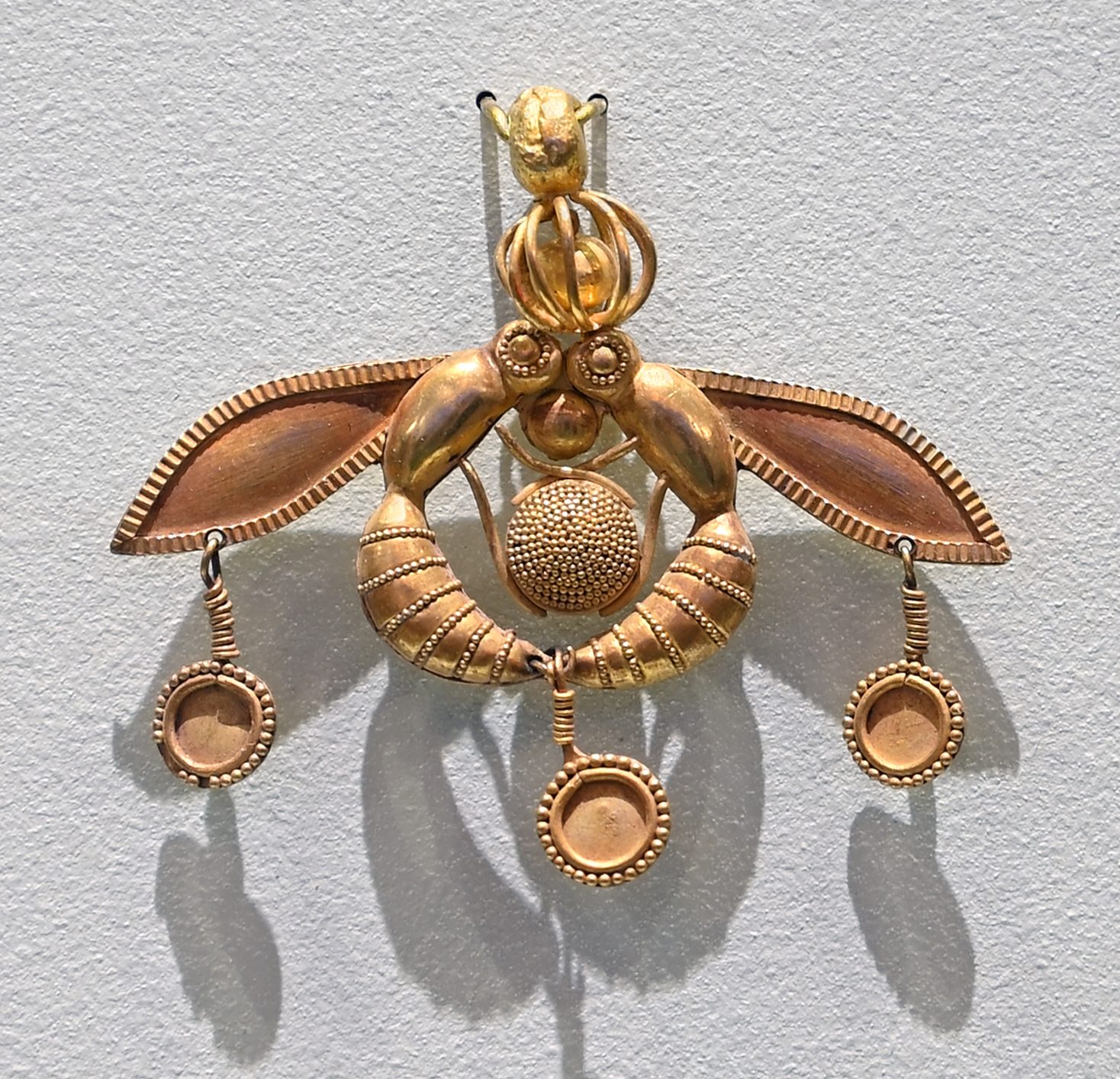
In 1930 French archaeologists clearing a Minoan burial building at Chrysolakkos, the 'pit of gold', beside the palace of Malia in Crete, found a tiny gold pendant of two insects around a honeycomb. Local diggers had plundered the cemetery long before, but they missed this.

FF 357

Made about 1700 to 1650 BC · found 1908

Phaistos Disc

Greece · Mystery

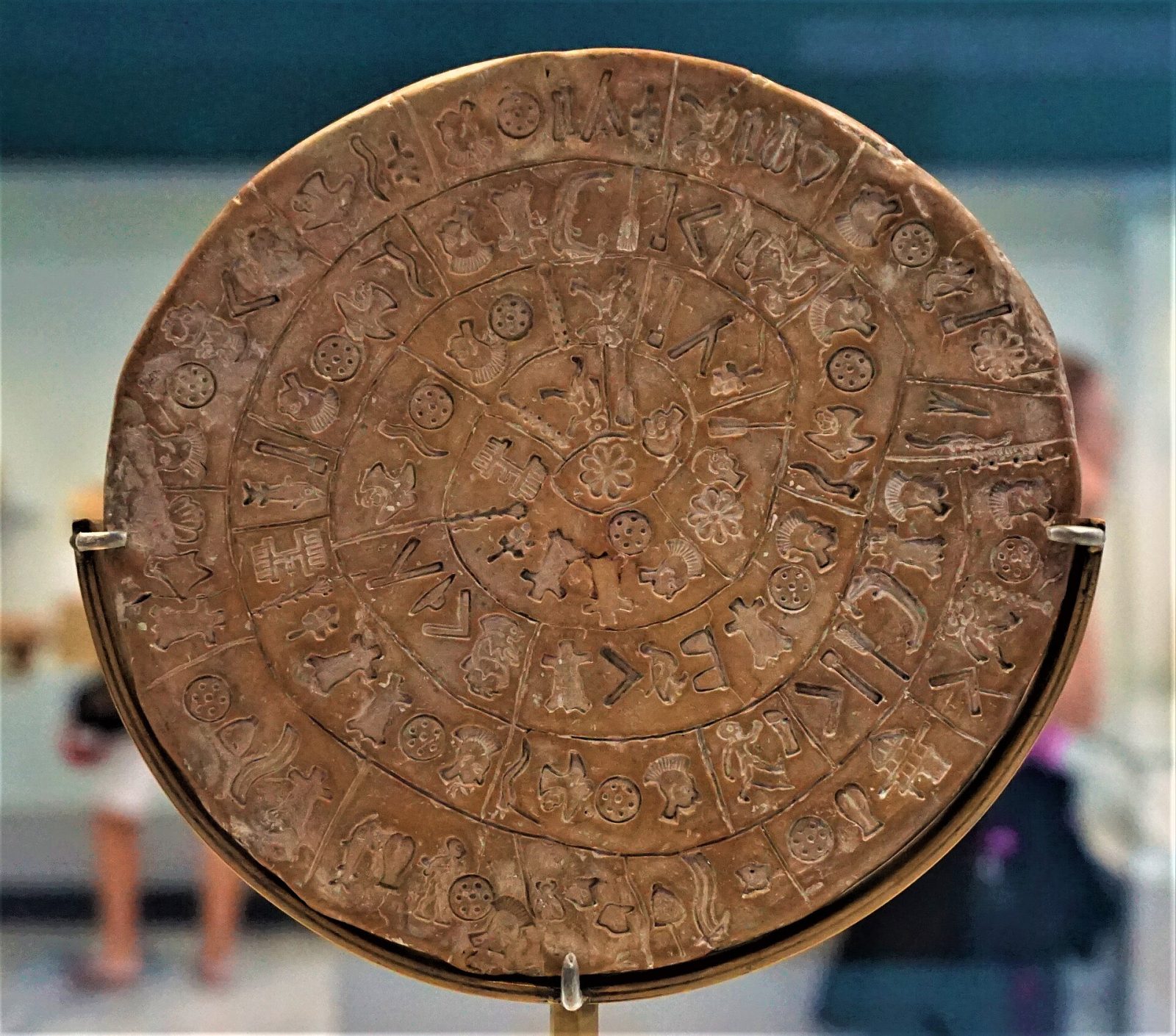
On 3 July 1908 Italian archaeologists excavating the Minoan palace of Phaistos in Crete found a small clay disc covered on both sides with a spiral of 241 stamped signs. More than a century later, nobody has read it, and a few doubt that it is genuine.

FF 469

Made about 1560 to 1530 BC · found 1859

Ahhotep's golden flies

Egypt · Jewellery

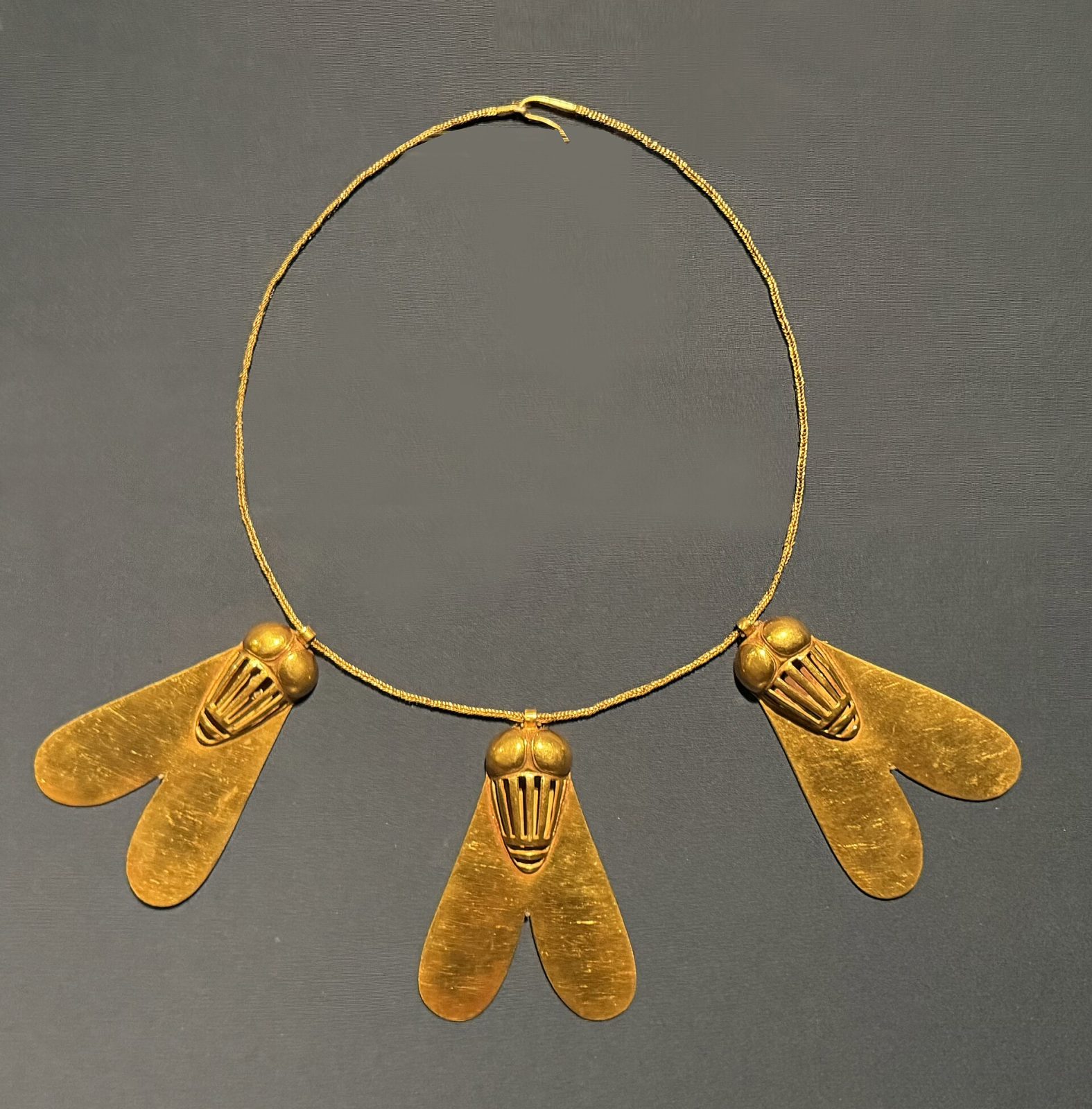
In 1859 workmen at Dra Abu el-Naga in Thebes found the coffin of Queen Ahhotep, packed with jewellery. When the local governor sent the treasure off by boat, the archaeologist Auguste Mariette chased it down the Nile. Its star is a gold chain hung with three great flies.

FF 180

Made about 1550 to 1500 BC · found 1876

Mask of Agamemnon

Greece · Artefacts

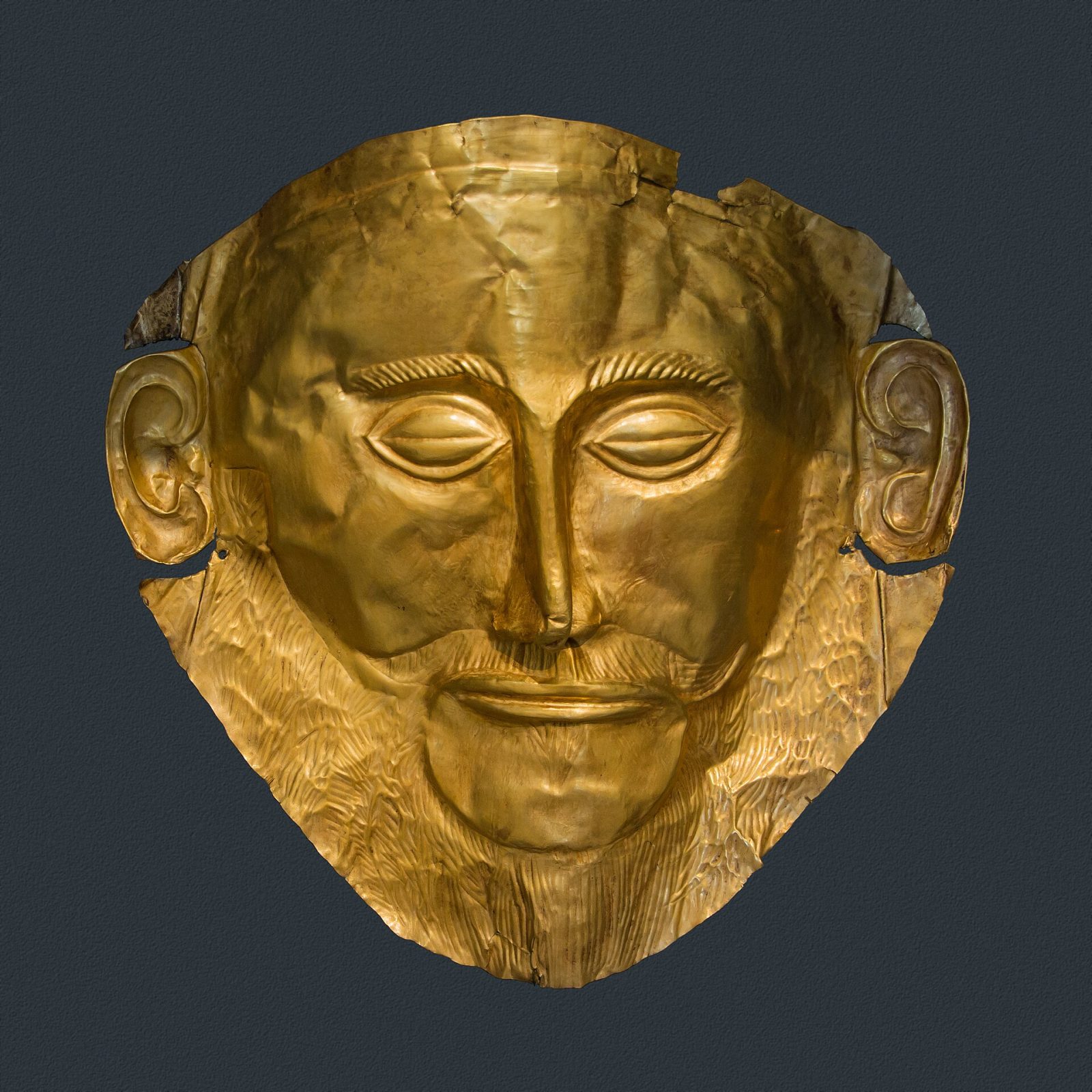
In November 1876 Heinrich Schliemann found a gold funeral mask in a royal shaft grave at Mycenae in Greece. It became one of the most famous objects of the ancient world, though it is centuries too old to be Agamemnon's, and some scholars have even questioned whether it is genuine.

FF 135

Made around 1400 BC · found 1902

Trundholm Sun Chariot

Denmark · Artefacts

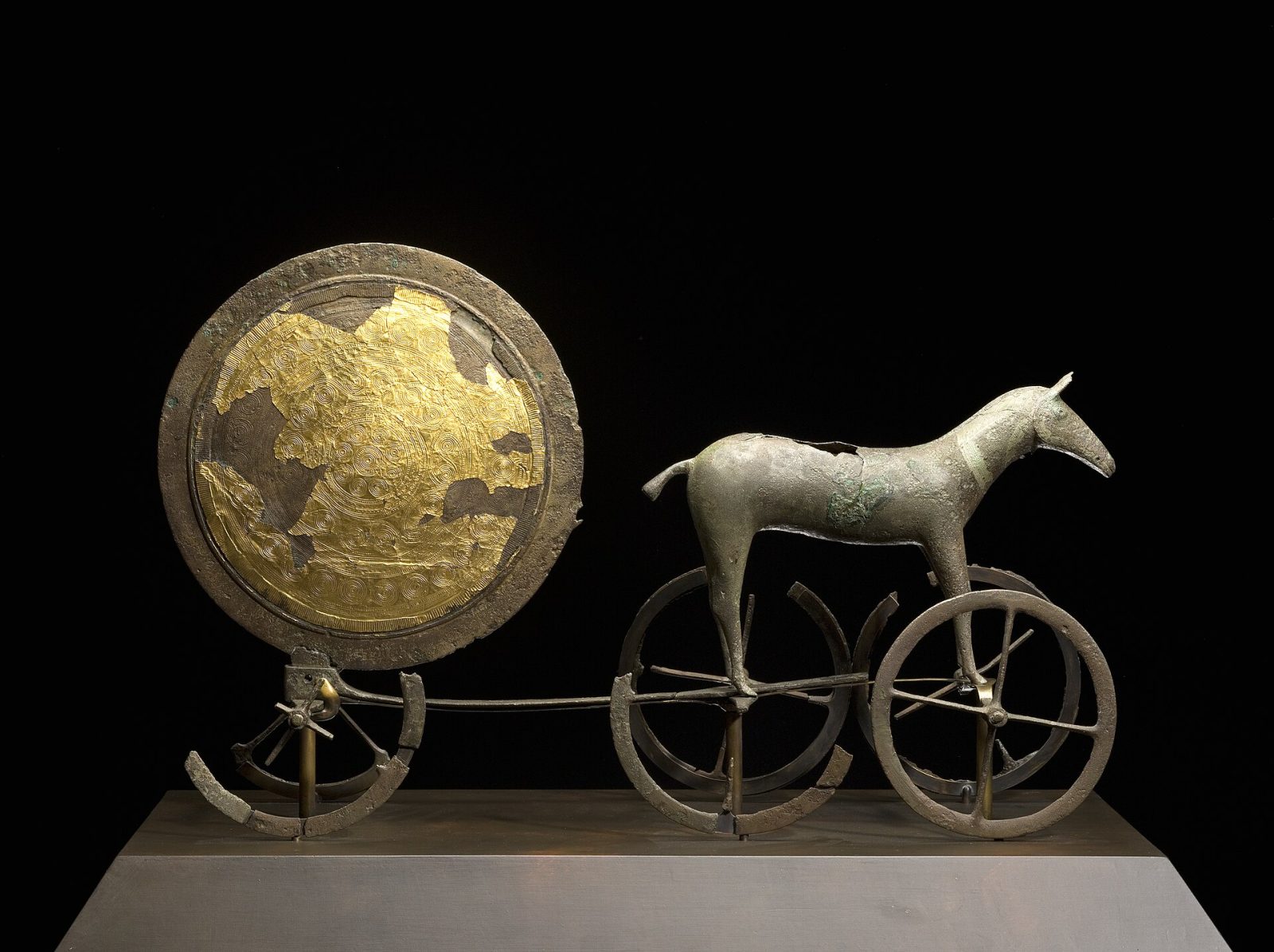
In 1902 a farmer ploughing a former bog on Zealand for the first time turned up a bronze horse pulling a sun disc gilded on one side. Nearly a century later, archaeologists with metal detectors found its missing pieces.

FF 281

Middle Bronze Age, about 1500 to 1350 BC · found 2002

Rudham Dirk

England · Weapons

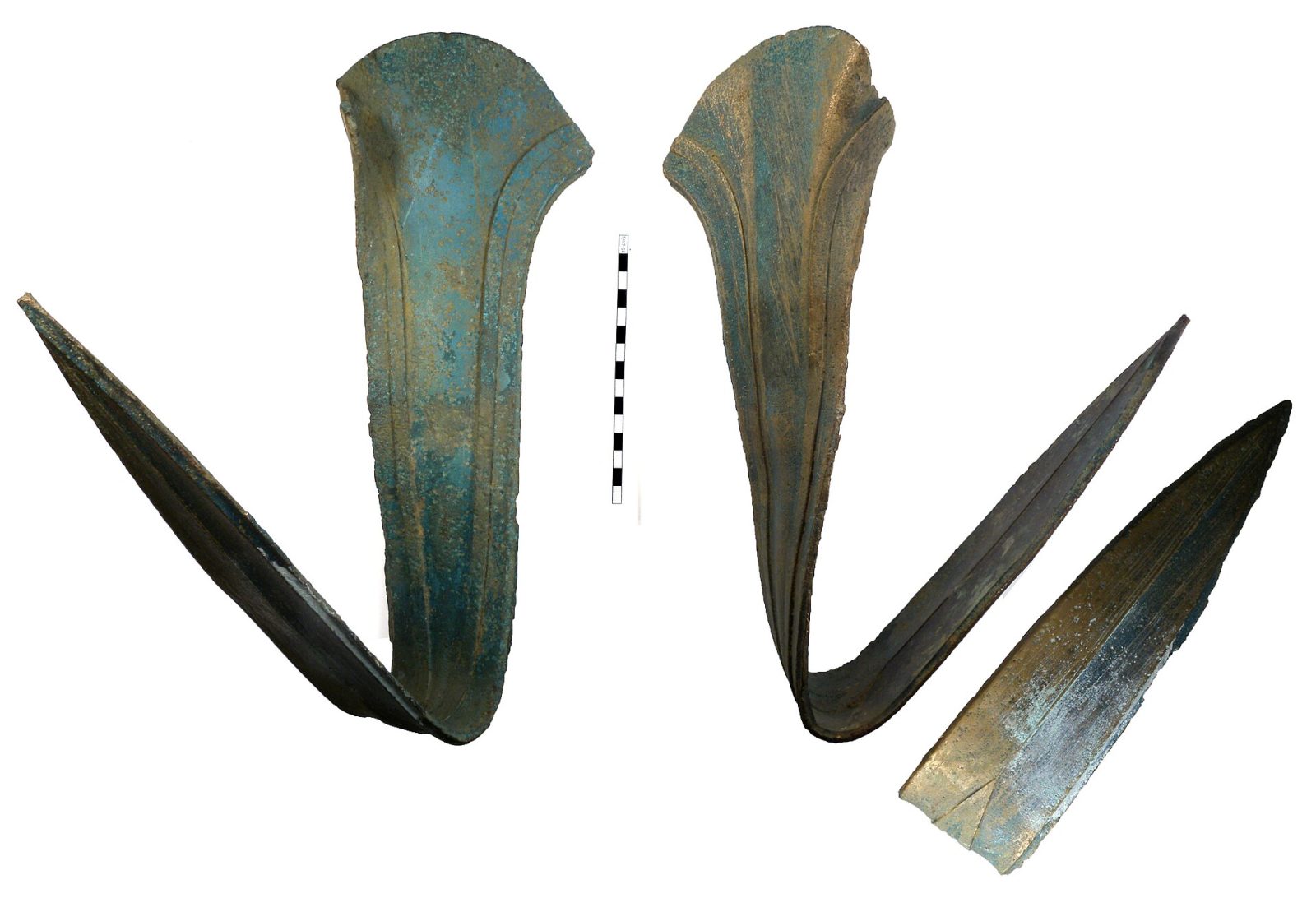
Around 2002 a Norfolk farmer ploughed up a large, bent piece of old metal at East Rudham and kept it in the farm office, where it was sometimes used as a doorstop. A decade later it was identified as one of only six giant ceremonial dirks known from Bronze Age Europe.

FF 361

Made about 1500 to 1000 BC · found 1924

Vulchitrun Treasure

Bulgaria · Hoards

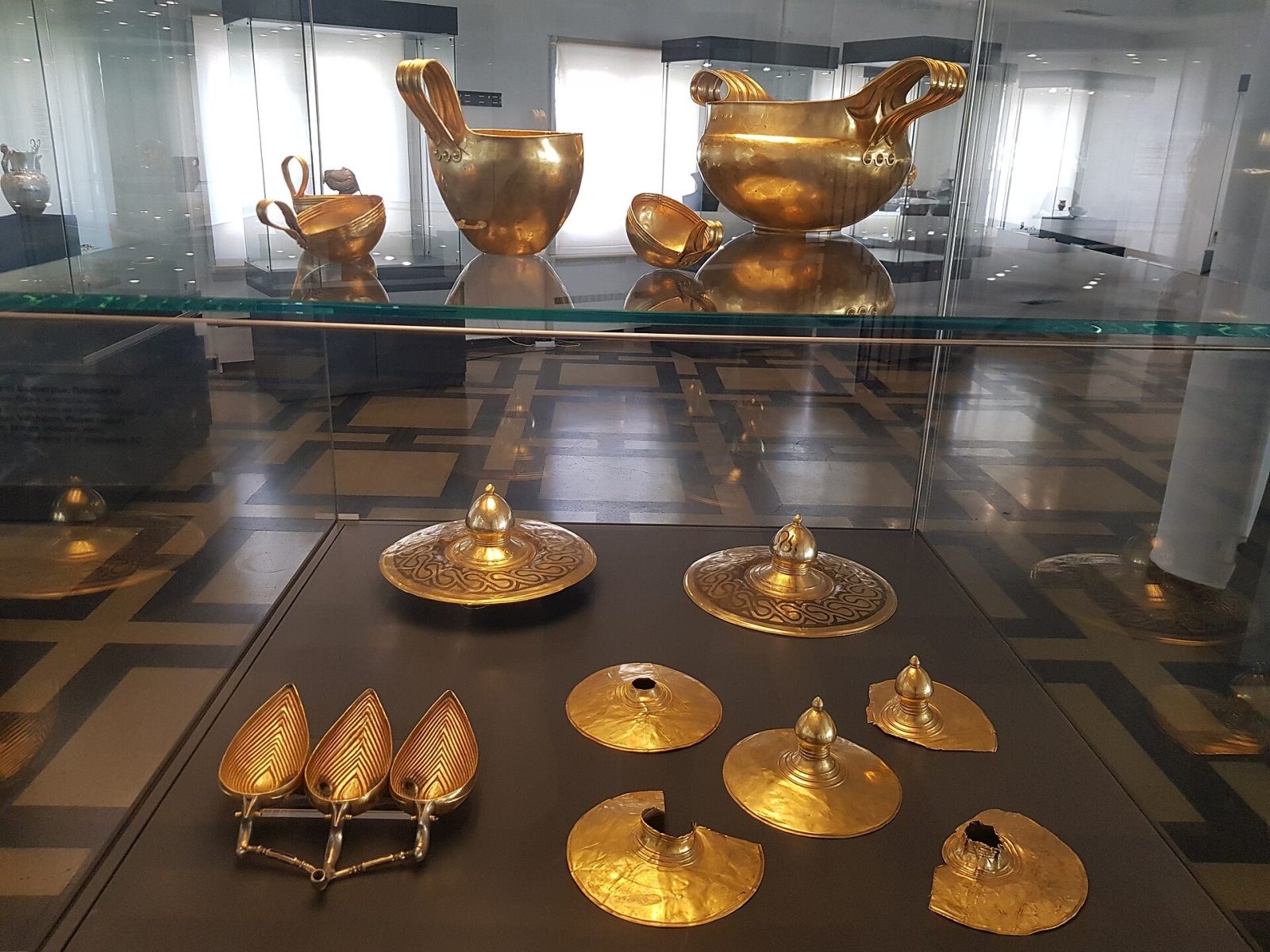
On 28 December 1924 two brothers working their vineyard near Valchitran in northern Bulgaria dug up thirteen gold vessels weighing about 12.5 kilograms. Unsure it was gold, they cut pieces off with vineyard shears. It is the heaviest Thracian gold treasure ever found in Bulgaria.

FF 432

Made about 1500 to 1400 BC · found 1928

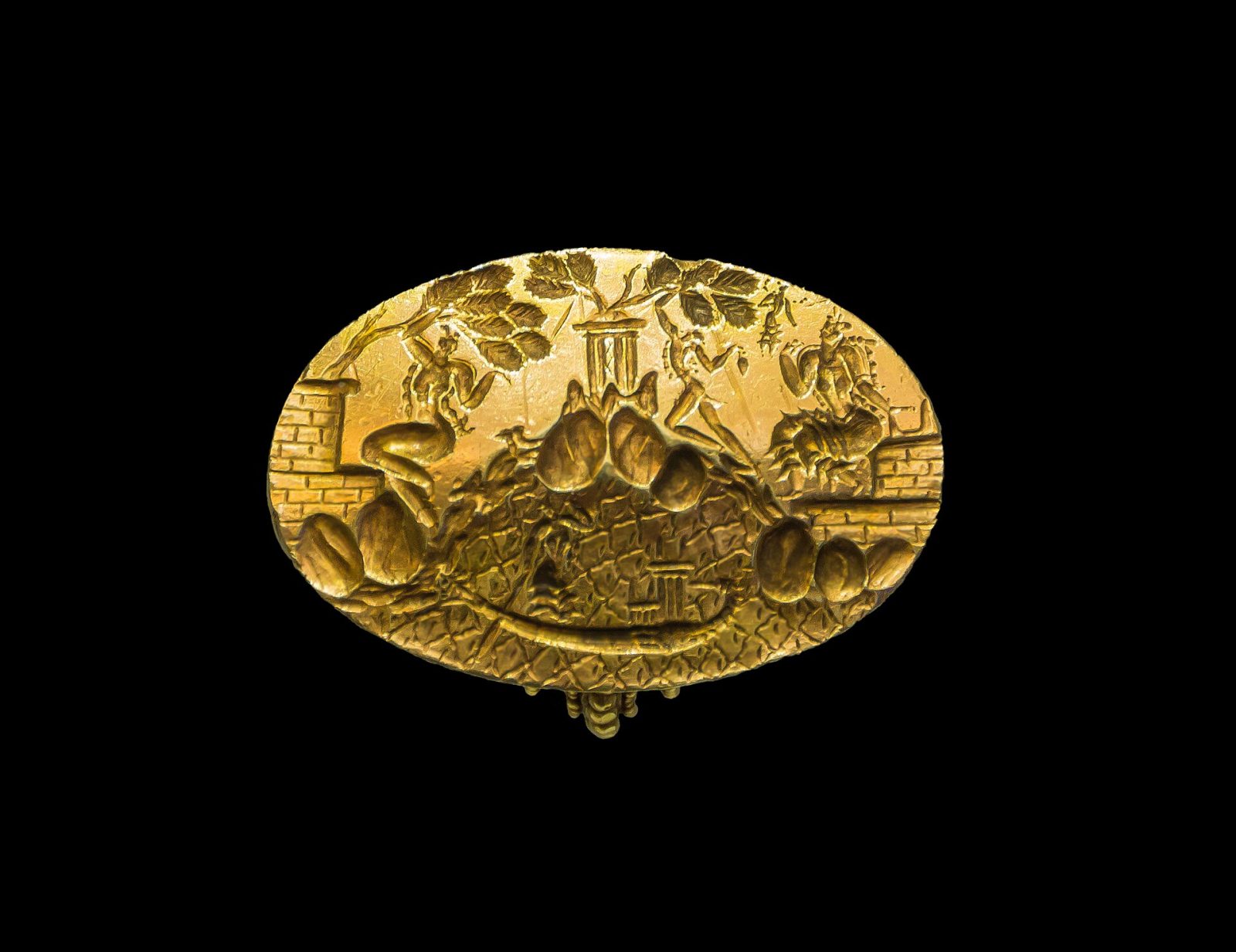
Ring of Minos

Greece · Jewellery

In 1928 a boy reportedly found a gold Minoan signet ring near Knossos on Crete. It passed to a village priest, was rejected by experts and copied for Arthur Evans, then vanished. In 2001 or 2002 it was found hidden in the priest's old house and declared genuine.

FF 252

About 1450 to 1300 BC · found 1988

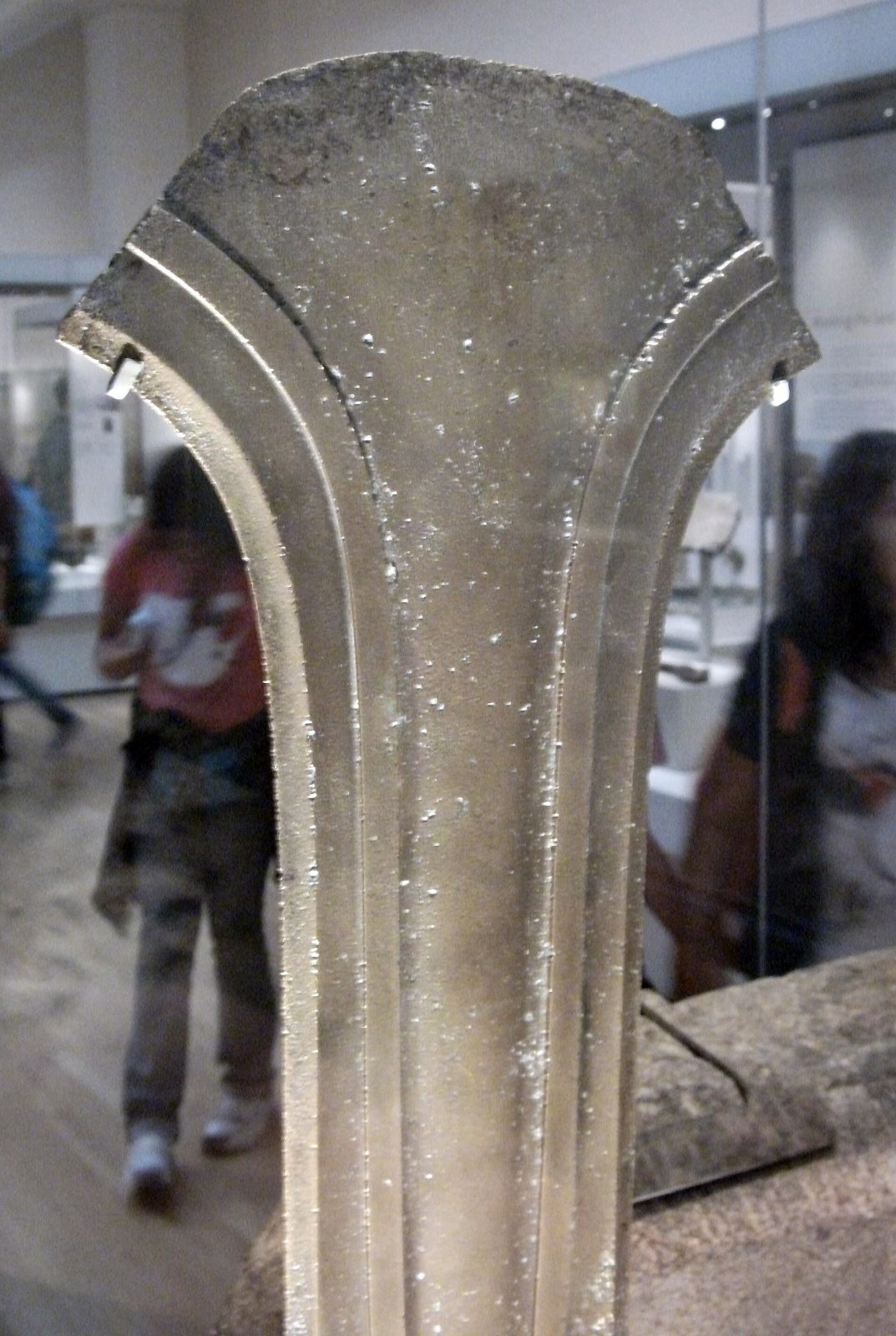
Oxborough Dirk

England · Weapons

In 1988 a man walking in woodland at Oxborough in Norfolk tripped over a piece of metal sticking out of the ground. It was the end of a bronze dirk 71 centimetres long, standing upright where it had been placed some 3,400 years earlier.

FF 241

About 1400 BC · found 1960

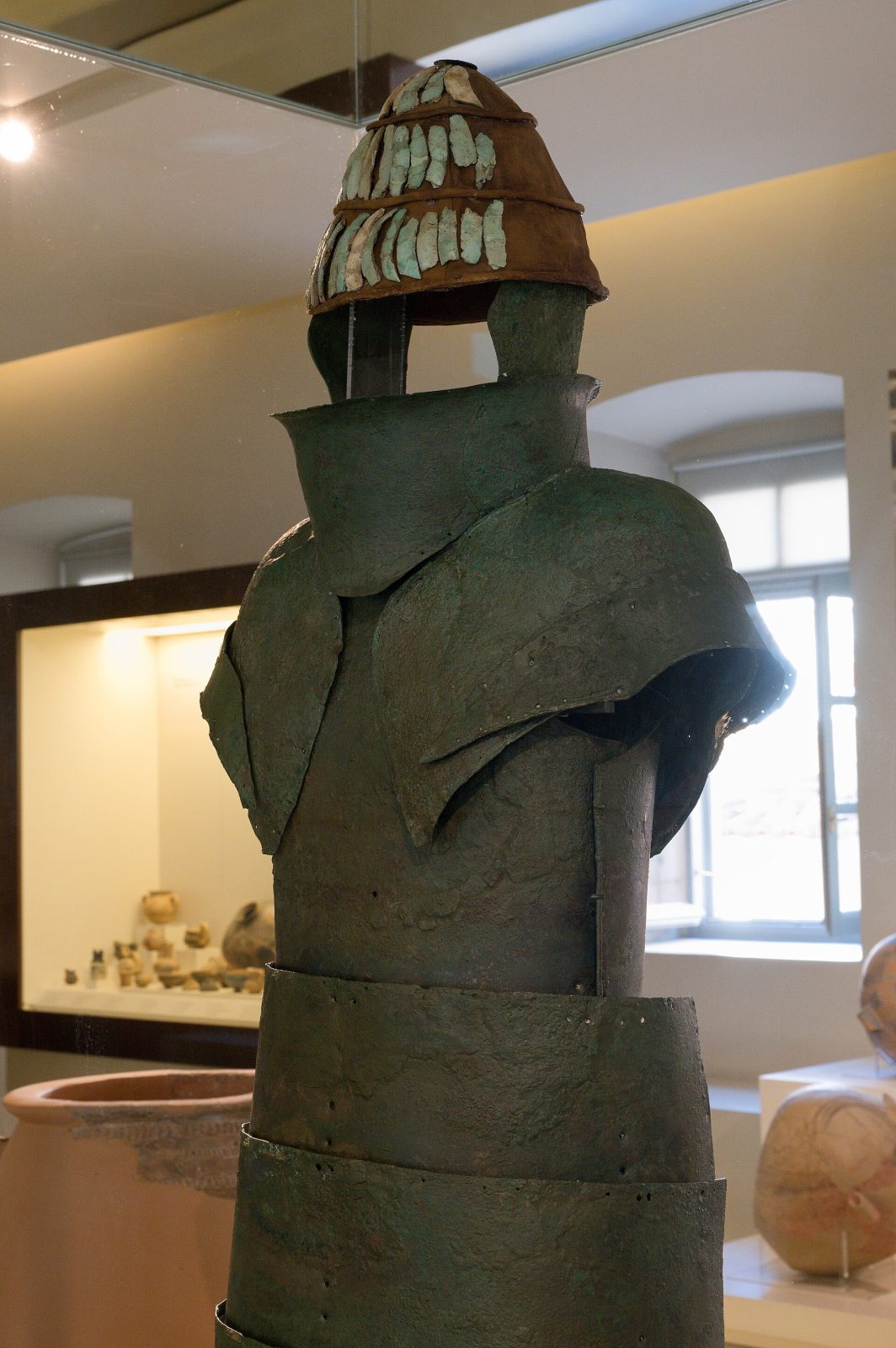
Dendra Panoply

Greece · Weapons

In 1960 Greek and Swedish archaeologists excavated a collapsed Mycenaean tomb at Dendra in southern Greece, part-robbed only months before. Inside was a full suit of bronze armour from about 1400 BC, the oldest in Europe. In 2024 an experiment showed it could be worn in battle.

FF 159

Late Bronze Age, about 1400 to 1000 BC · found 1963

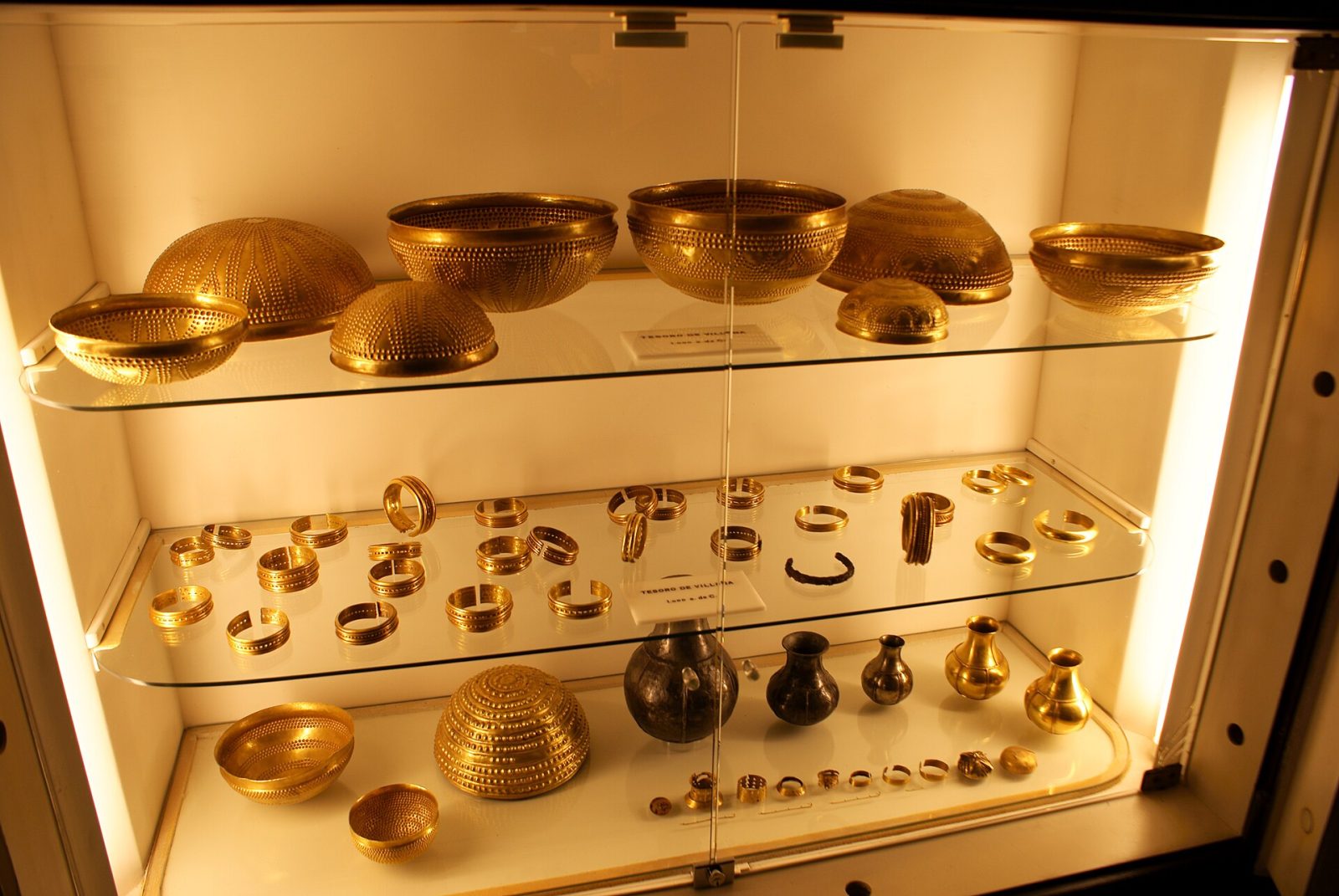
Treasure of Villena

Spain · Hoards

In 1963 a gold bracelet mistaken for scrap led a Spanish archaeologist to a buried pot holding almost 10 kilograms of Bronze Age gold bowls and bracelets. In August 2026 most of the treasure was stolen from the museum in Villena in under four minutes.

FF 187

14th century BC · found 1835

Golden Hat of Schifferstadt

Germany · Artefacts

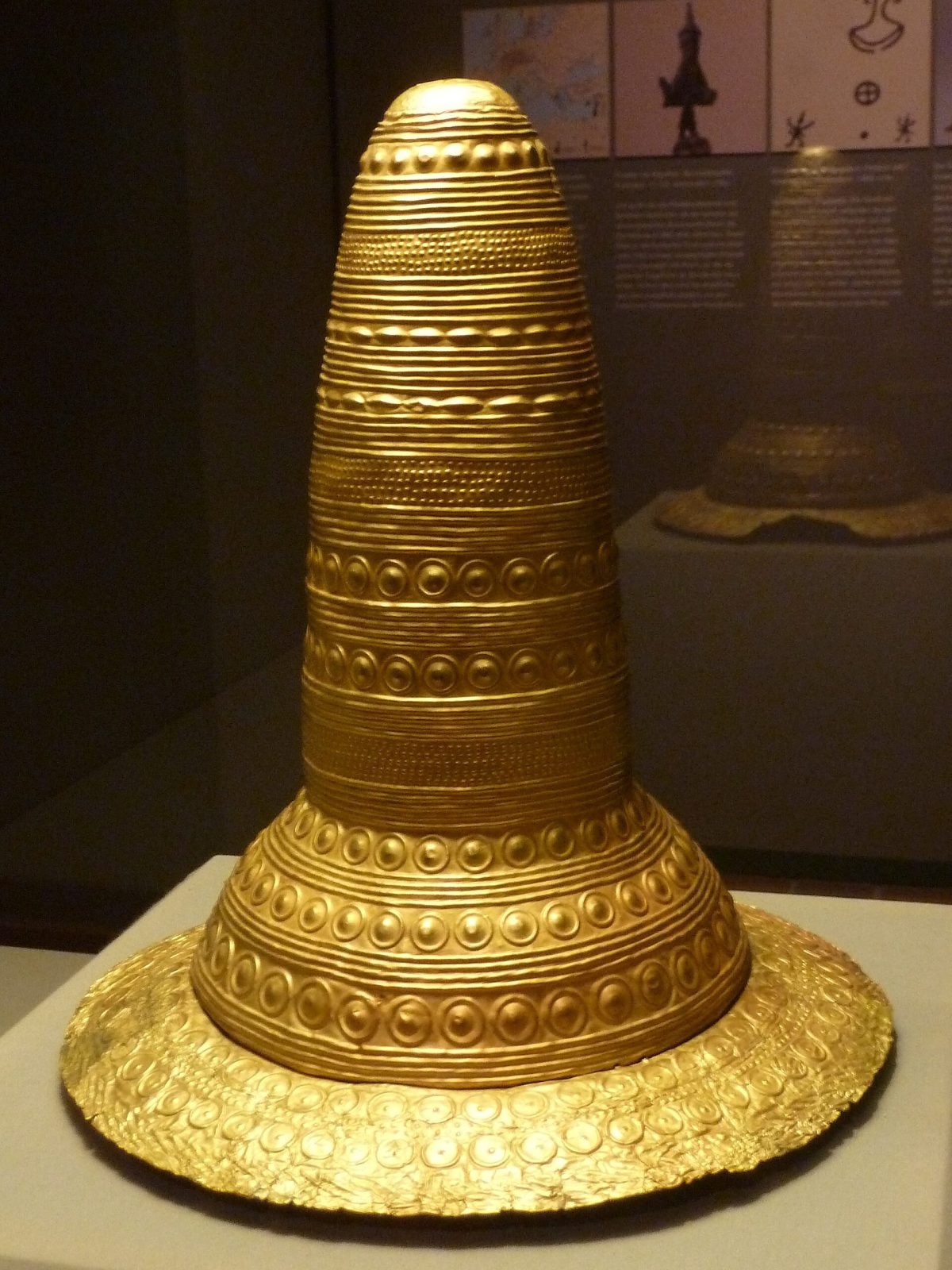
On 29 April 1835 a labourer working a field outside Schifferstadt in south-west Germany struck a tall cone of thin gold, buried upright with three bronze axes leaning against it. It was the first of the Bronze Age golden hats ever found.

FF 206

About 1300 BC · found 2011

Gessel Gold Hoard

Germany · Hoards

In April 2011 archaeologists checking the route of a new gas pipeline near Syke in northern Germany got a signal on their metal detector and uncovered a cloth bag of Bronze Age gold: 117 pieces weighing about 1.7 kilograms, buried some 3,300 years ago.

FF 292

Late Bronze Age, about 1400 to 1200 BC · found 1928

Ugarit

Syria · Artefacts

In 1928 a farmer ploughing near the bay of Minet el-Beida on the Syrian coast struck a stone slab covering an ancient tomb. It led archaeologists to Ugarit, a great Bronze Age port whose finds include gold bowls and one of the world's earliest alphabets.

FF 224

Buried in the summer of 1370 BC · found 1921

Egtved Girl

Denmark · Artefacts

In February 1921 a Danish farmer clearing a burial mound at Egtved hit a carved oak coffin. Inside lay a young woman of the Bronze Age in her clothes, with a bronze belt disc and a pail of fermented drink. Tree rings show she was buried in the summer of 1370 BC.
FF 329

Sank about 1300 BC · found 1982

Uluburun shipwreck

Turkey · Artefacts

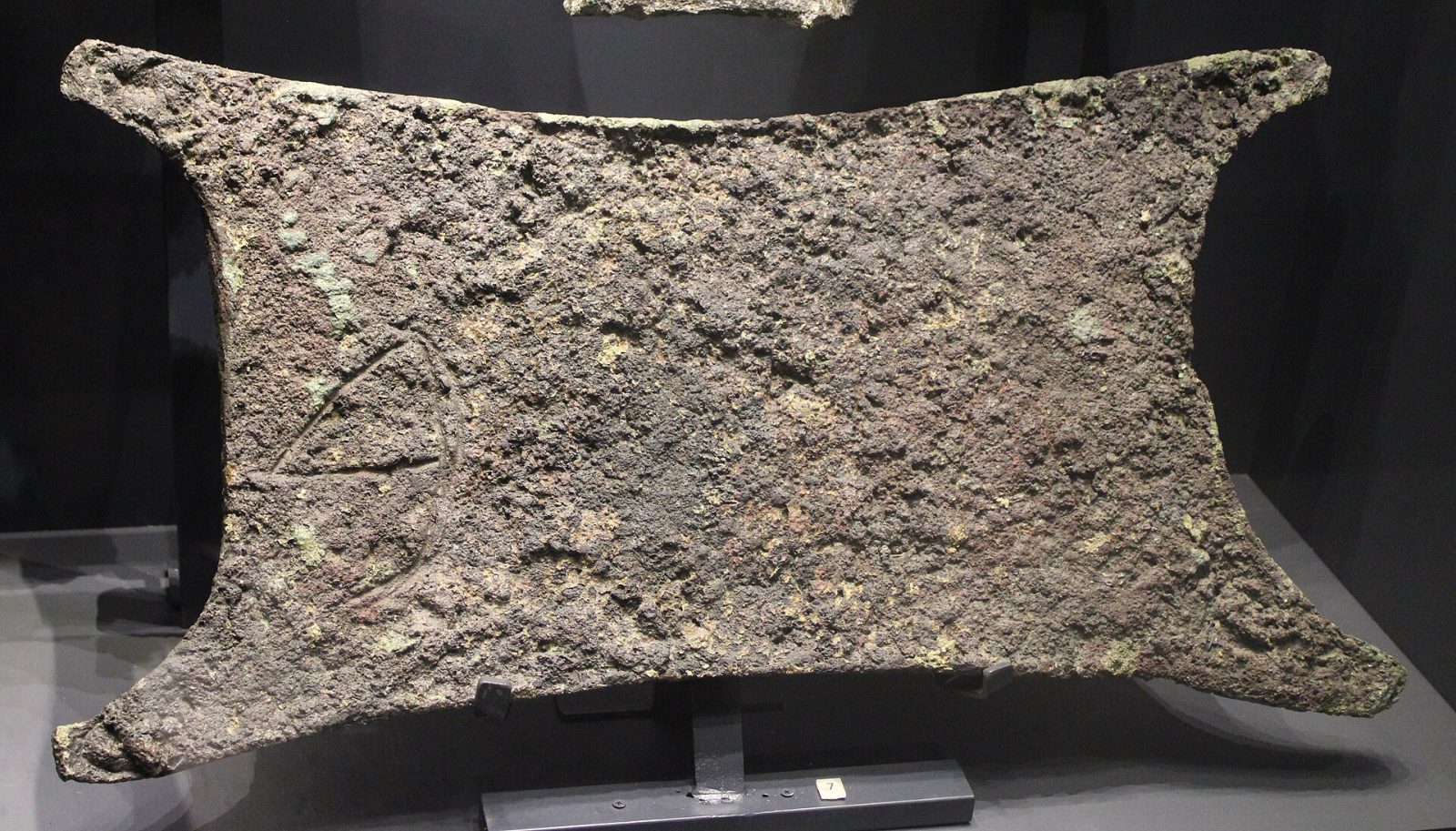
In 1982 a Turkish sponge diver described 'metal biscuits with ears' on the seabed near Kaş. They were copper ingots from a ship wrecked around 1300 BC, carrying ten tons of copper, a ton of tin, glass, ivory, gold and a scarab bearing the name of Nefertiti.