The Welwyn Garden City Burial: an Iron Age chieftain's grave found by a gas-pipe trench on a new housing estate
Famous find Buried about 50 to 10 BC · Found in 1965 See it on the timeline →
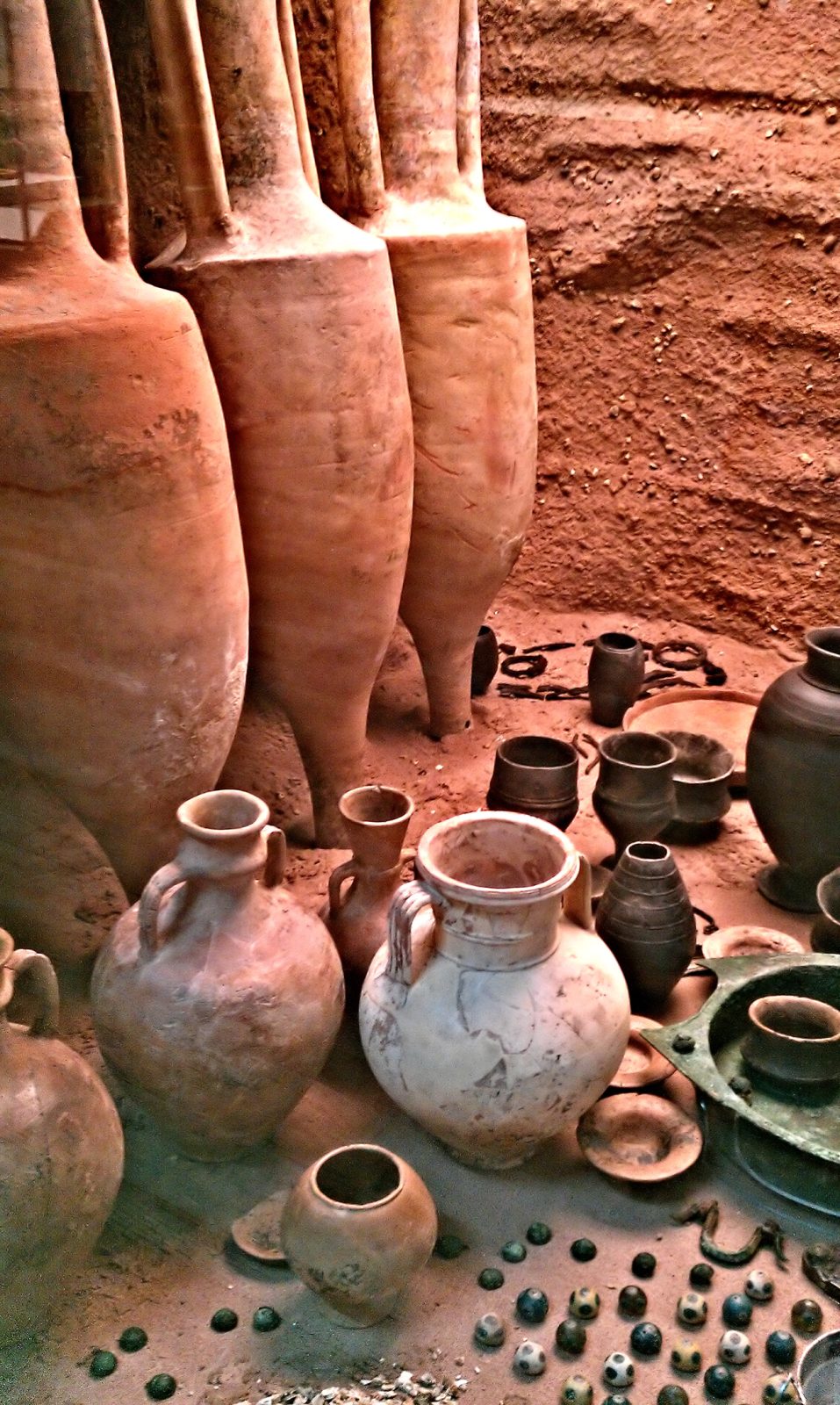
In 1965 a trench for a gas pipe on a new housing estate at Welwyn Garden City in Hertfordshire cut through the cremation grave of a late Iron Age chieftain, buried around 50 to 10 BC with five amphorae of Italian wine, a silver cup and a set of 24 glass gaming pieces.
In 1965, workmen laying gas pipes for the new Panshanger housing estate on the east side of Welwyn Garden City, in Hertfordshire, cut a trench straight through an ancient grave. The newly laid road had to be dug up again to recover the rest, and the archaeologist Ian Stead, of the Ministry of Public Building and Works, excavated what remained.
The grave was a rectangular pit about 2.5 by 1.7 metres and 1.2 metres deep, with no mound or marker above it, which is why graves of this kind are only ever found by accident. At one end lay the cremated bones of an adult, in a plain heap with no urn. Among them were six bear claws, which suggests that the body had been wrapped in a bearskin on the pyre.
Around the ashes stood the furnishings of a feast. There were five large amphorae that had held Italian wine, well over a hundred litres between them, a silver drinking cup made in Italy, a bronze strainer and dish, more than thirty pottery vessels, wooden boards and vessels with metal fittings, an iron knife and a straw mat. Lying together, where a bag had rotted away, were 24 glass gaming pieces in four colours, one of them green with five inset spirals: the oldest set of board-game counters known from Britain, buried so that their owner could play in the next world. The wine and silver date the burial to between about 50 and 10 BC, in the generation or two between Caesar's expeditions and the Roman conquest, when the chieftains north of the Thames were importing Mediterranean luxuries in quantity.
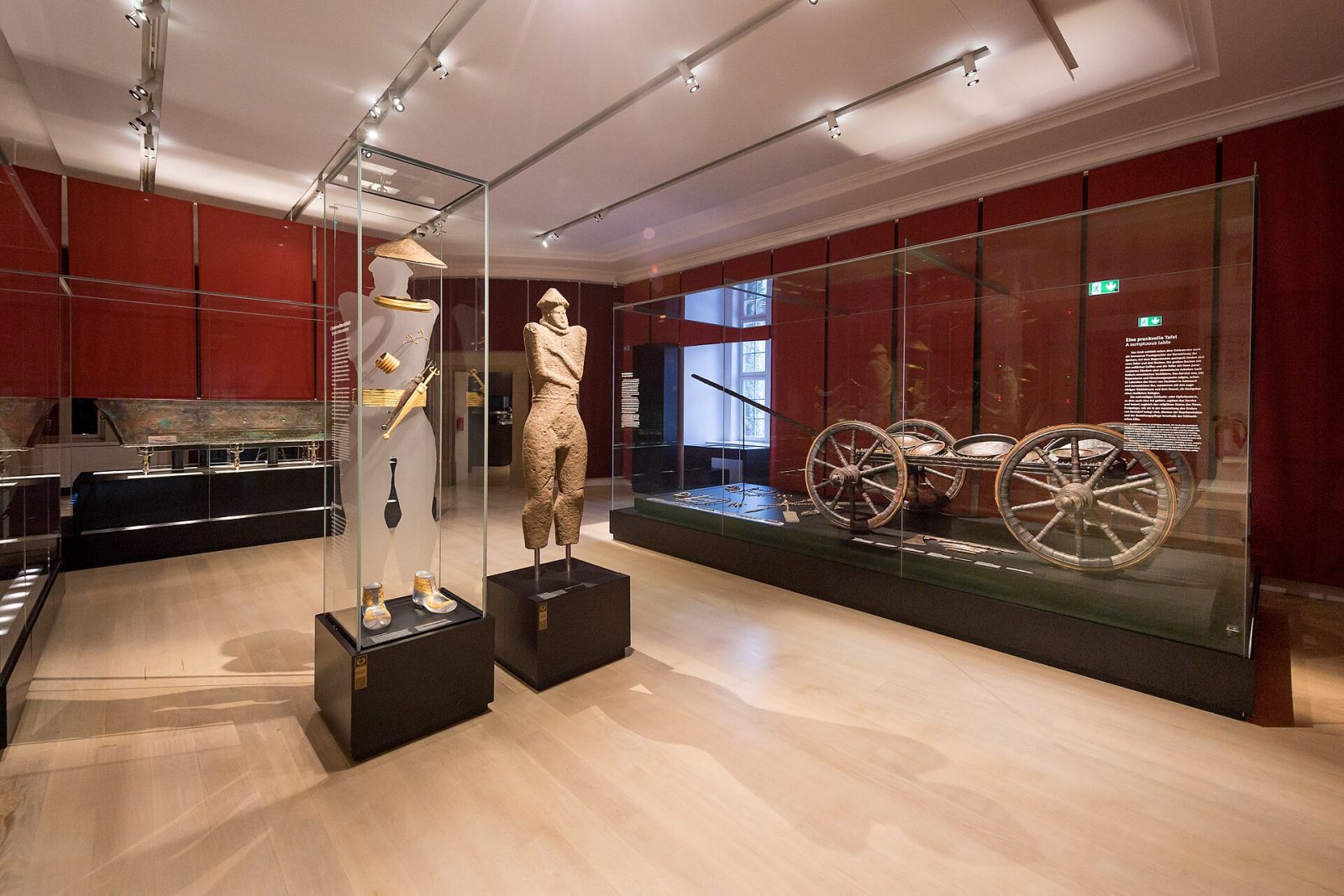
It was one of a small group of rich cremation burials in Hertfordshire known as Welwyn-type burials, after two chambered graves cut through by road-building workmen at Welwyn itself in 1906. The 1965 finds went to the British Museum, where the grave goods are laid out as they were found, in a reconstruction of the pit, in the gallery of Iron Age Britain.
Written for Global Finds from I. M. Stead in Archaeologia (1967), H. Williams (Archaeodeath, 2020) and the British Museum. Photo: the Welwyn Garden City burial as displayed in the British Museum, Andres Rueda, Wikimedia Commons, CC BY 2.0.
Approximate location51.80, -0.18View on map
Source: Archaeologia (I. M. Stead, 1967)