The Ballaquayle Hoard: the Isle of Man's greatest Viking treasure, dug up by builders and partly lost before anyone noticed
Famous find Buried about AD 970 · Found in 1894 See it on the timeline →
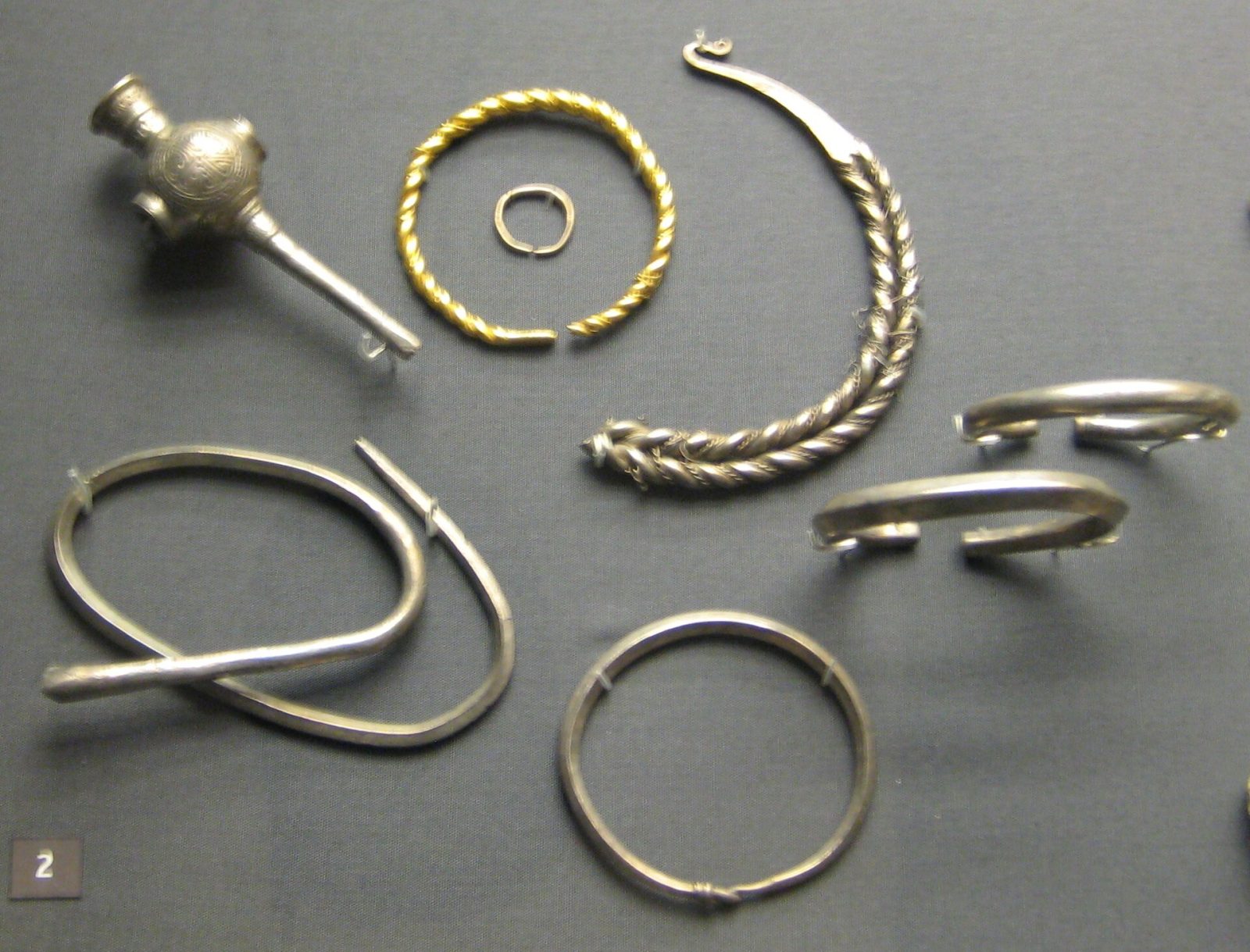
In 1894 builders digging house foundations on Derby Road in Douglas broke into a stone-lined pit of Viking-age silver and gold, buried around AD 970. It is still the largest Viking treasure from the Isle of Man, and losing it to London helped inspire the Manx Museum.
In 1894, men digging the foundations for a new house on Derby Road in Douglas, on the Isle of Man, broke into a small stone-lined pit full of silver. It was the largest Viking-age treasure ever found on the island, and it still is.
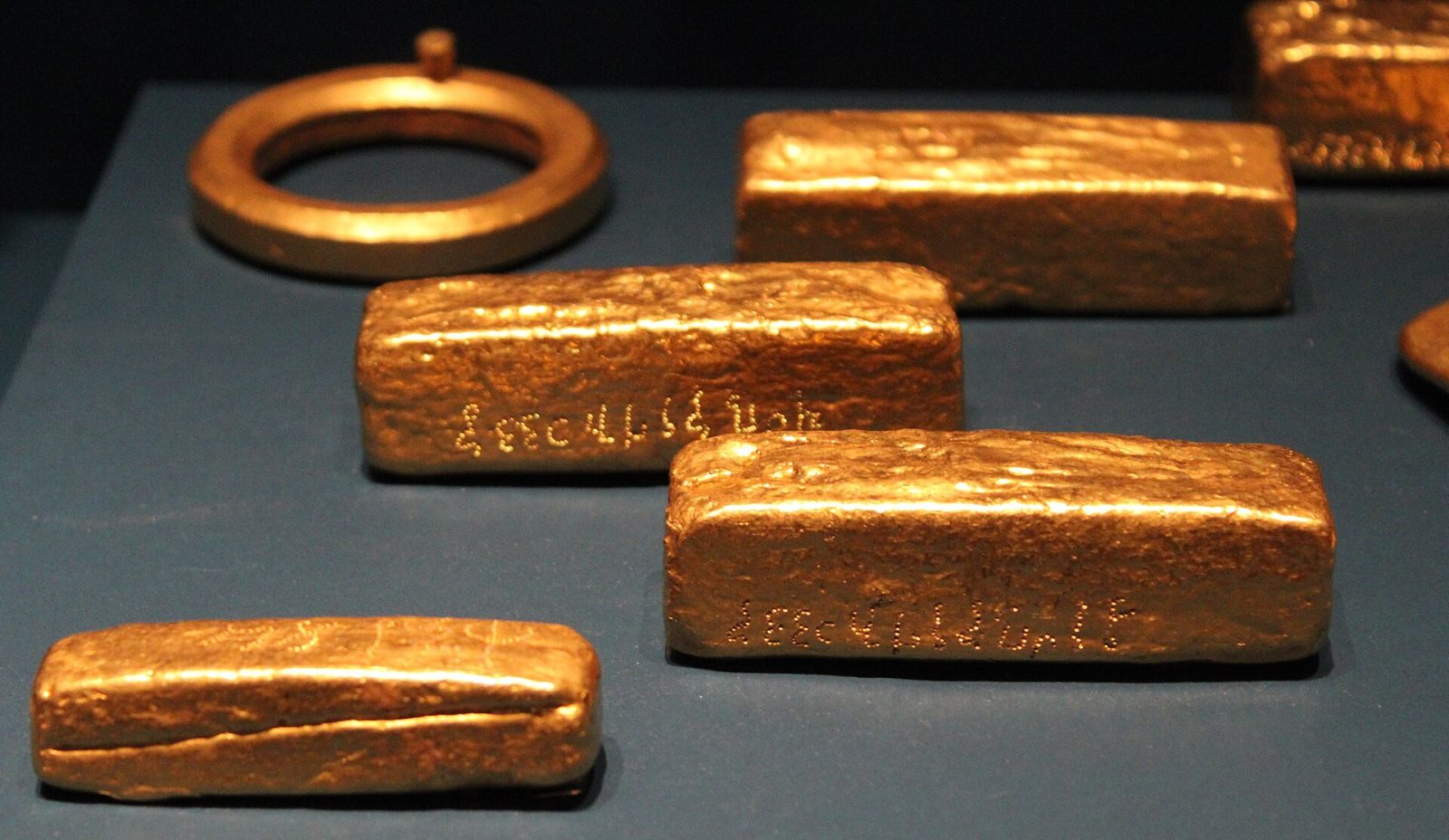
The hoard weighed about two kilograms. Alongside the coins were a twisted gold arm ring, a plaited silver neck ring, thirteen silver armlets, a silver finger ring and two pins with heads shaped like thistles, a style worn in Viking-age Britain and Ireland. The coins were Anglo-Saxon silver pennies, among them pennies of King Edgar, who reigned from 959 to 975, which date the burial of the hoard to around 970.
How many coins there were is not certain. Accounts suggest many more were found than survive, and some appear to have been lost or thrown away with the spoil before the authorities became involved. When the antiquary Philip Kermode recognised that the find might be treasure, the island's chief constable called for it to be handed in, and the finder is said to have been reluctant to give it all up.
The island had no museum, so the hoard was sent to the British Museum in London, which confirmed that it was Viking silver. Part of it later came back, and when the Manx Museum opened in Douglas in 1922, the first object entered on its register was a coin from Ballaquayle. The loss of the island's finest treasure to London is said to have helped persuade the Manx to build a museum of their own.
In the 10th century the Isle of Man sat at the centre of the Viking world of the Irish Sea, between Dublin, Cumbria, Galloway and the Hebrides, and many Viking-age silver hoards have been found there. Their owners traded in silver by weight, which is why so many hoards mix coins with arm rings that could be cut up and used as money.
Today the hoard is divided between the British Museum and Manx National Heritage. The London pieces went back to the island on loan for an exhibition at the House of Manannan in Peel in 2025, and the Manx Museum displays replicas of them.
Written for Global Finds from BBC News, Manx National Heritage and the British Museum. Photo: the Ballaquayle Hoard in the British Museum, BabelStone, Wikimedia Commons, CC0.
Approximate location54.16, -4.48View on map
Source: BBC News