The Dalverzin-Tepe Treasure: 36 kilograms of Kushan gold hidden under a house floor in Uzbekistan
Famous find Kushan, 1st century AD · Found in 1972 See it on the timeline →
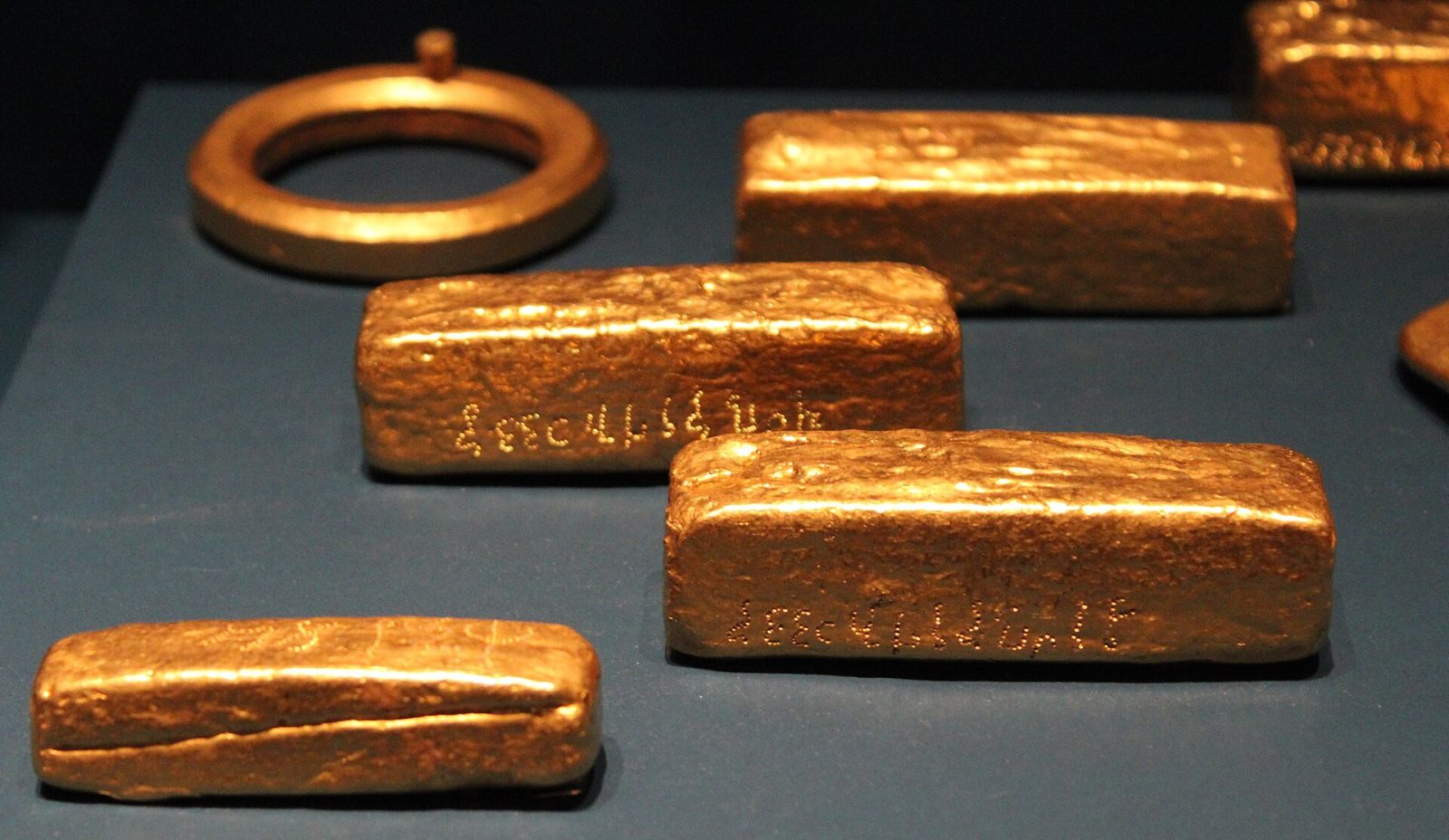
On 25 September 1972 archaeologists excavating a rich house at Dalverzin-Tepe in southern Uzbekistan found a clay jug under the floor holding 115 gold objects, about 36 kilograms, including bars punched with weights in an ancient Indian script. It is the largest gold hoard ever found in Central Asia.
Dalverzin-Tepe, in the Surkhandarya region of southern Uzbekistan, about 120 kilometres north of Termez, was a city of the Kushan empire, which in the first centuries AD stretched from Central Asia into northern India. From the 1960s it was excavated by the Uzbek Art History Expedition led by Galina Pugachenkova. On 25 September 1972 the team was working in a building they called the House of a Rich Citizen when they found, buried beneath the floor of one of its rooms, a plain two-handled clay jug about 34 centimetres high. It was full of gold.
The jug held 115 gold objects weighing in all about 36 kilograms. There were disc-shaped and bar-shaped ingots, some of them marked with lines of punched dots forming inscriptions in Kharoshthi, a script of north-west India, recording their weight, and in some cases mentioning the god Mithra. There was jewellery too: a torc, bracelets, crescent-shaped earrings, a man's necklace of five chains set with turquoise and garnets, and a pectoral set with an older carved carnelian showing the hero Heracles. It is the largest hoard of gold ever found in Central Asia.
The treasure dates from the 1st century AD, in the early Kushan period, and may have been hidden early in the 2nd century, perhaps by a wealthy owner who never returned for it. Members of the expedition carried the gold to Tashkent by road, without an armed escort.
The Dalverzin-Tepe treasure is held by the state gold fund of Uzbekistan and is not on permanent public display. It has been shown only rarely: in Tashkent in 2019, and at the Louvre in Paris in 2022 and 2023, in an exhibition of the treasures of Uzbekistan's oases.
Written for Global Finds from the Centre for Islamic Civilization in Uzbekistan, Society.uz, Yuz.uz and the Louvre. Photo: gold bars from the Dalverzin-Tepe treasure with punched inscriptions, Zunkir, Wikimedia Commons, CC BY-SA 4.0.
Approximate location38.10, 67.86View on map