The Gourdon Treasure: a gold chalice, a gold paten and a hundred gold coins, found by a shepherd girl's foot
Famous find Buried in the 520s · Found in 1845 See it on the timeline →
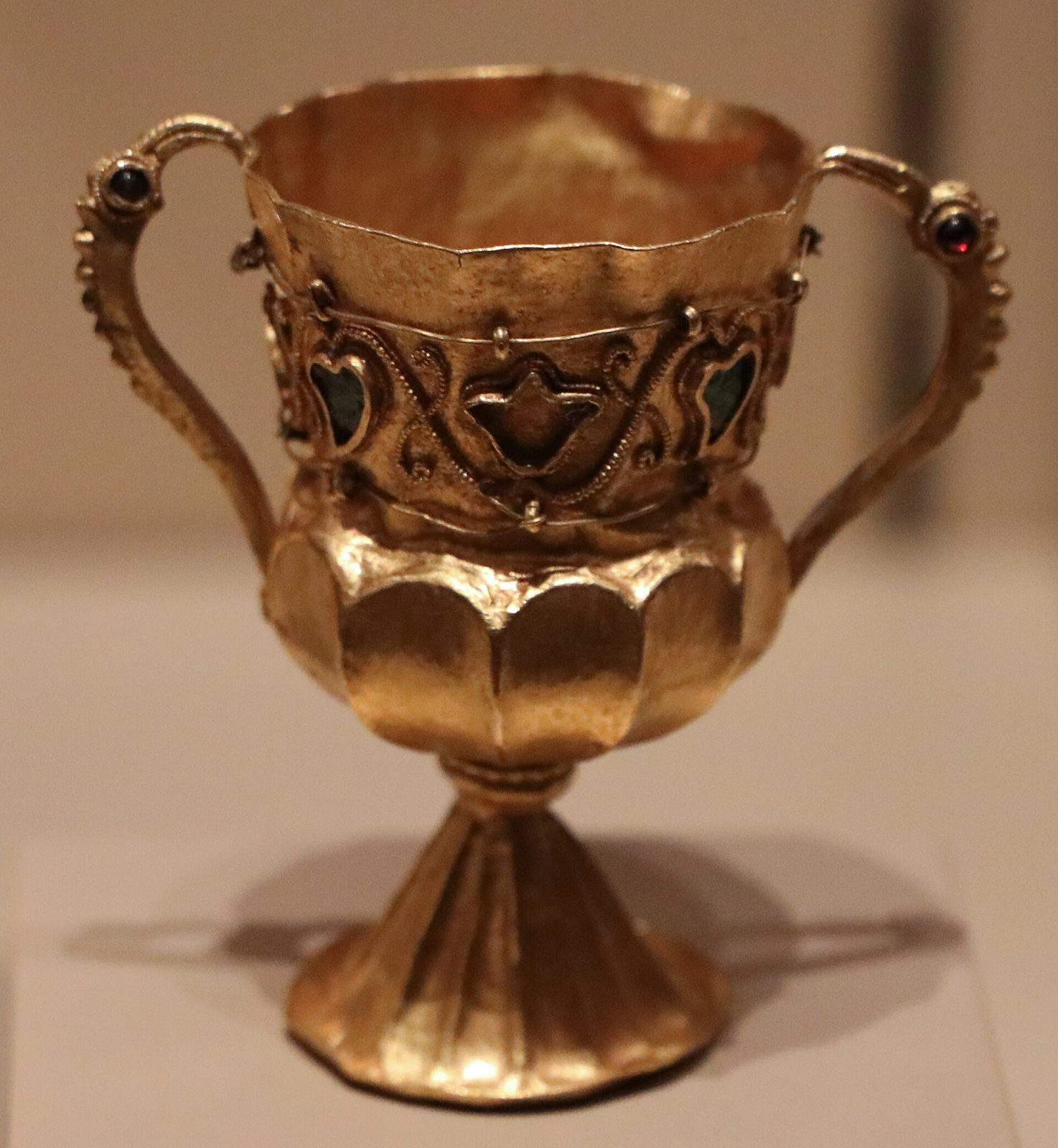
In April 1845 Louise Forest, a shepherd girl in Burgundy, kicked up a gold coin in a field near Gourdon. Under a Roman tile marked with a cross she found a gold chalice and paten set with garnets and about a hundred gold coins, buried in the early 6th century.
In April 1845, Louise Forest, a shepherd girl of about twelve, was minding animals with another girl in a field of the Vigny farm at Gourdon, in Saône-et-Loire in Burgundy, about 200 metres from the village's Romanesque church, when her foot turned up a gold coin. When she came back and dug, she found, about 30 centimetres down under a Roman roof tile engraved with a cross, a small gold cup, a gold tray and about a hundred gold coins. The girls are said to have run off, afraid they had broken into a priest's tomb.
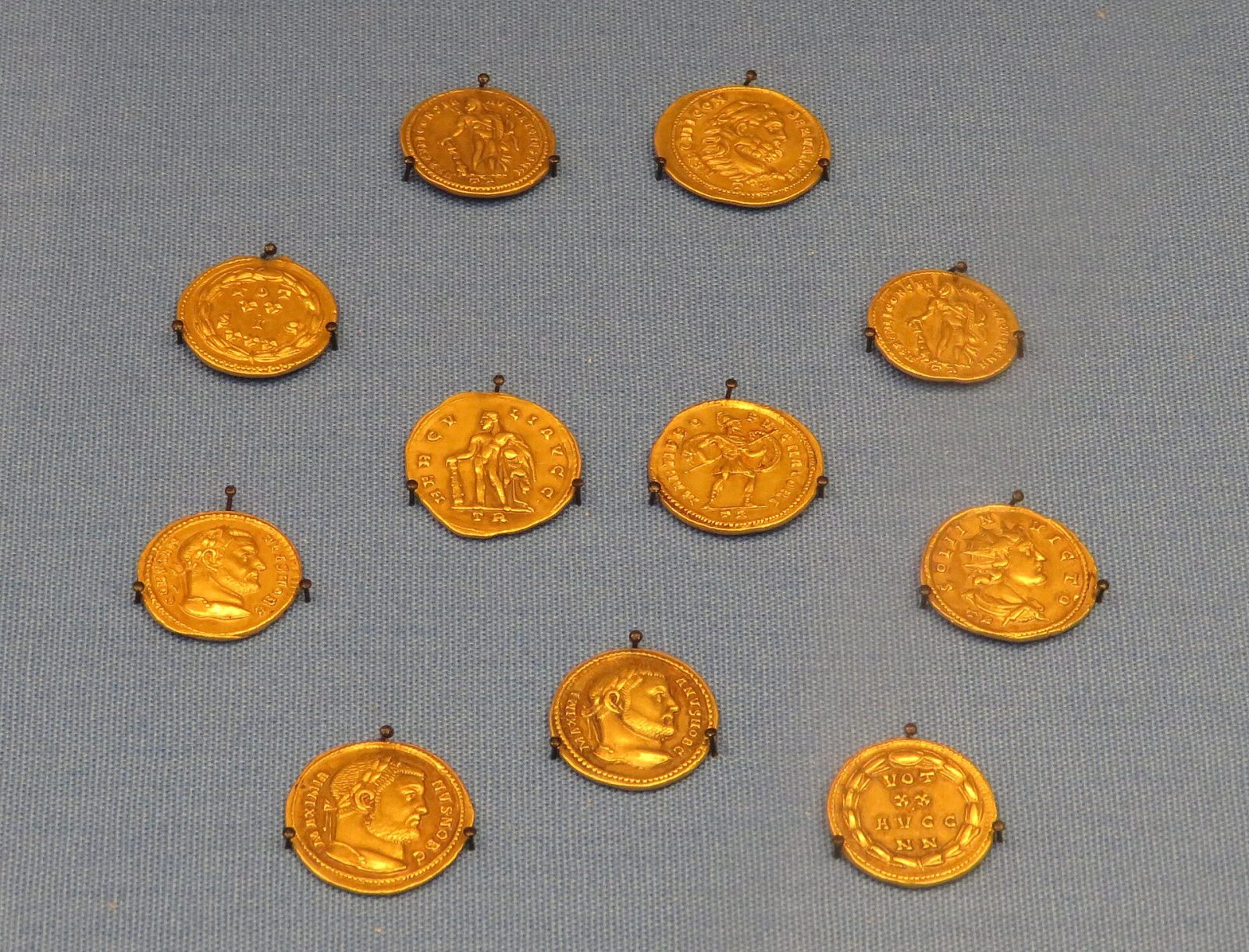
The cup is a chalice, only 7.5 centimetres high, with two handles shaped like stylised birds with garnet eyes, and it is decorated with garnets set in little gold cells and hearts of turquoise. The tray is a gold paten. A chalice and paten are the vessels used for the wine and the bread of the Christian communion, which suggests that the treasure belonged to a church or to a wealthy Christian family. There were 104 gold solidi, by one account, from Leo I, emperor in Constantinople from 457 to 474, to Justin I, who reigned from 518 to 527, including coins struck in Justin's name in the Burgundian kingdom, which then ruled this part of France. The latest coins show that the treasure was buried in the 520s, perhaps when the Franks invaded the Burgundian kingdom, a war that began in 523.
The find began a long quarrel. Louise and the landowner divided it, the case went to court at Chalon-sur-Saône in July 1845 and then on appeal to Dijon, and in the end everything was sold at auction in Paris on 20 July 1846. The French state bought the chalice and paten. The coins went to buyers whose names were not recorded and were scattered. A few gold coins of the Burgundian king Sigismund in collections today are said to have come from Gourdon, and one in the Bode-Museum in Berlin is recorded with Gourdon as its findspot.
The chalice and paten belong to the department of coins, medals and antiquities of the Bibliothèque nationale de France in Paris, and were on show in the library's museum in 2024.
Written for Global Finds from Le Journal de Saône-et-Loire (2002), the catalogue of the Bibliothèque nationale de France and the Berlin Münzkabinett. Photo: the Gourdon chalice in the museum of the Bibliothèque nationale de France, Francesco Bini, Wikimedia Commons, CC BY-SA 4.0.
Approximate location46.64, 4.45View on map