Little Bighorn: after a grass fire, volunteer detectorists found the cartridge cases that rewrote Custer's Last Stand
Famous find Fought on 25 and 26 June 1876 · Found in 1984 See it on the timeline →
In August 1983 a grass fire swept the Little Bighorn battlefield in Montana. In 1984 archaeologists and more than 30 volunteer metal detectorists mapped thousands of bullets and cartridge cases, and forensic study traced over 370 individual guns used in the battle of 1876.
In August 1983, a grass fire swept across the battlefield of the Little Bighorn in south-eastern Montana, where on 25 and 26 June 1876 Lakota and Cheyenne warriors had defeated the US 7th Cavalry, killing Lieutenant Colonel George Armstrong Custer and every man of the five companies with him. The fire stripped away grass and sagebrush that had covered the ground for a century. The park's superintendent, James Court, asked the archaeologist Richard Fox to walk the burnt ground.
The next year Fox and Douglas Scott of the National Park Service's Midwest Archeological Center led a full survey, helped by more than 30 volunteer metal detectorists. The volunteers swept the ground in lines and flagged every signal, and the archaeologists then recovered each find and plotted its exact position. The first hour produced 110 finds. In 1985 the survey moved to the hilltop where Major Reno's and Captain Benteen's men had held out, and over the following years 271 volunteers gave more than 12,000 hours.
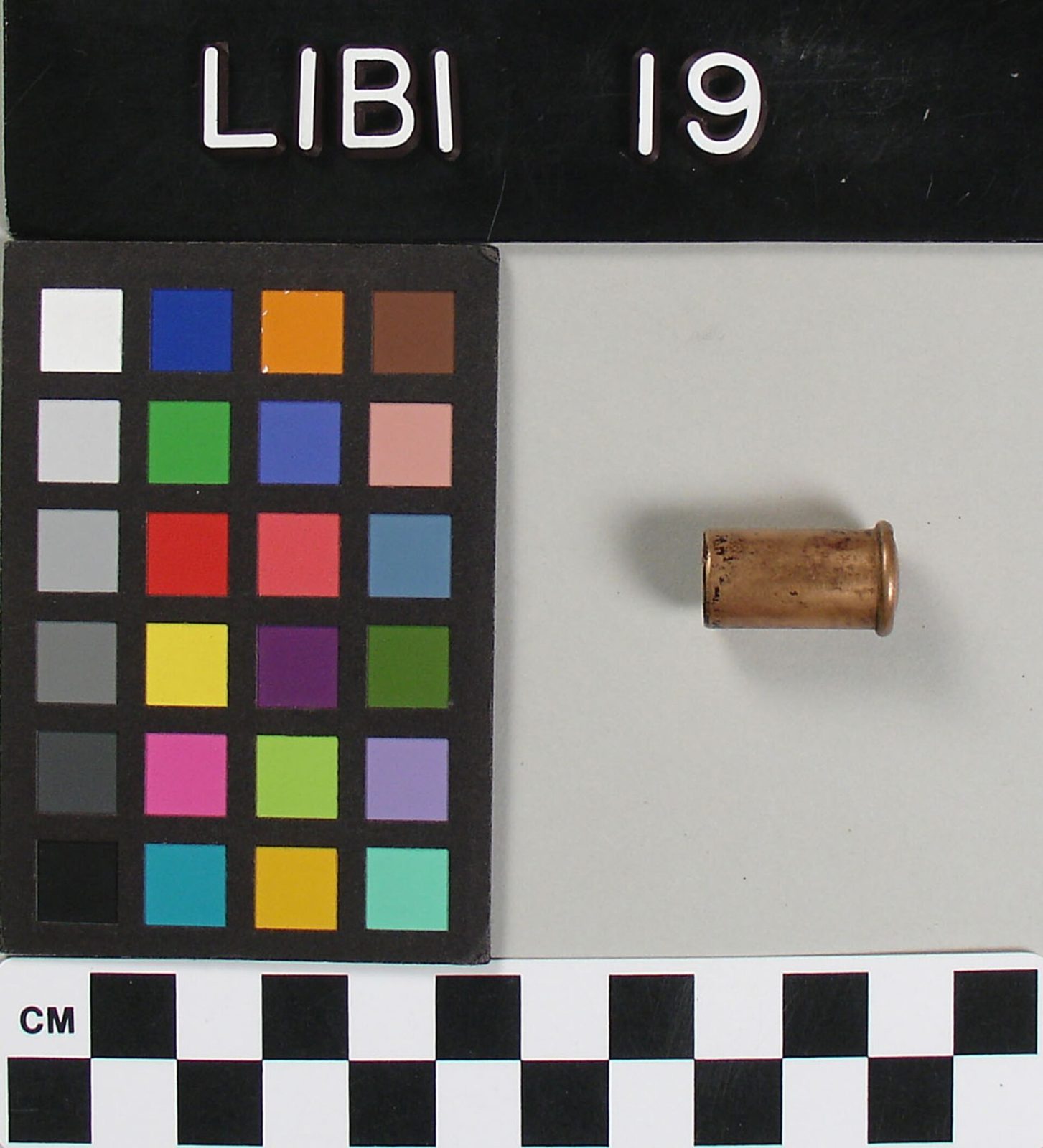
More than 5,000 battle artefacts were recovered, among them 2,665 cartridges, cartridge cases and bullets. The marks that a gun's firing pin and extractor leave on a case are as individual as a fingerprint, and Scott, who trained in firearms identification with the Nebraska State Patrol, used them to identify at least 371 individual guns of 47 different types, more than 300 of them used by the warriors. About a quarter of the cases came from .44 Henry and Winchester lever-action repeating rifles, against the soldiers' single-shot Springfield carbines, and on Greasy Grass Ridge alone at least 55 guns fired on Lieutenant Calhoun's company. Cases from the same weapon showed individual warriors moving up to a mile across the field.
The results changed the story of the battle. The soldiers' carbines rarely jammed: of 1,625 carbine cases checked, only three showed extraction problems. The cavalry had simply been outgunned.
The finds are federal property, held by the park, with the survey records at the Midwest Archeological Center in Lincoln, Nebraska. The battlefield's visitor centre is closed for rebuilding, with new exhibitions planned for 2027.
Written for Global Finds from D. D. Scott, Uncovering History (National Park Service, 2010), the National Trust for Historic Preservation (2014) and the National Park Service. Photo: a fired .44 Henry cartridge case in the Little Bighorn Battlefield collection, NPS, Wikimedia Commons, public domain.
Approximate location45.57, -107.43View on map
Source: National Park Service (D. D. Scott, Uncovering History, 2010)