The Moel Hebog Shield: a Bronze Age shield too thin for battle, cut from a Snowdonia bog by peat-diggers in 1784
Famous find Made about 1300 to 1000 BC · Found in 1784 See it on the timeline →
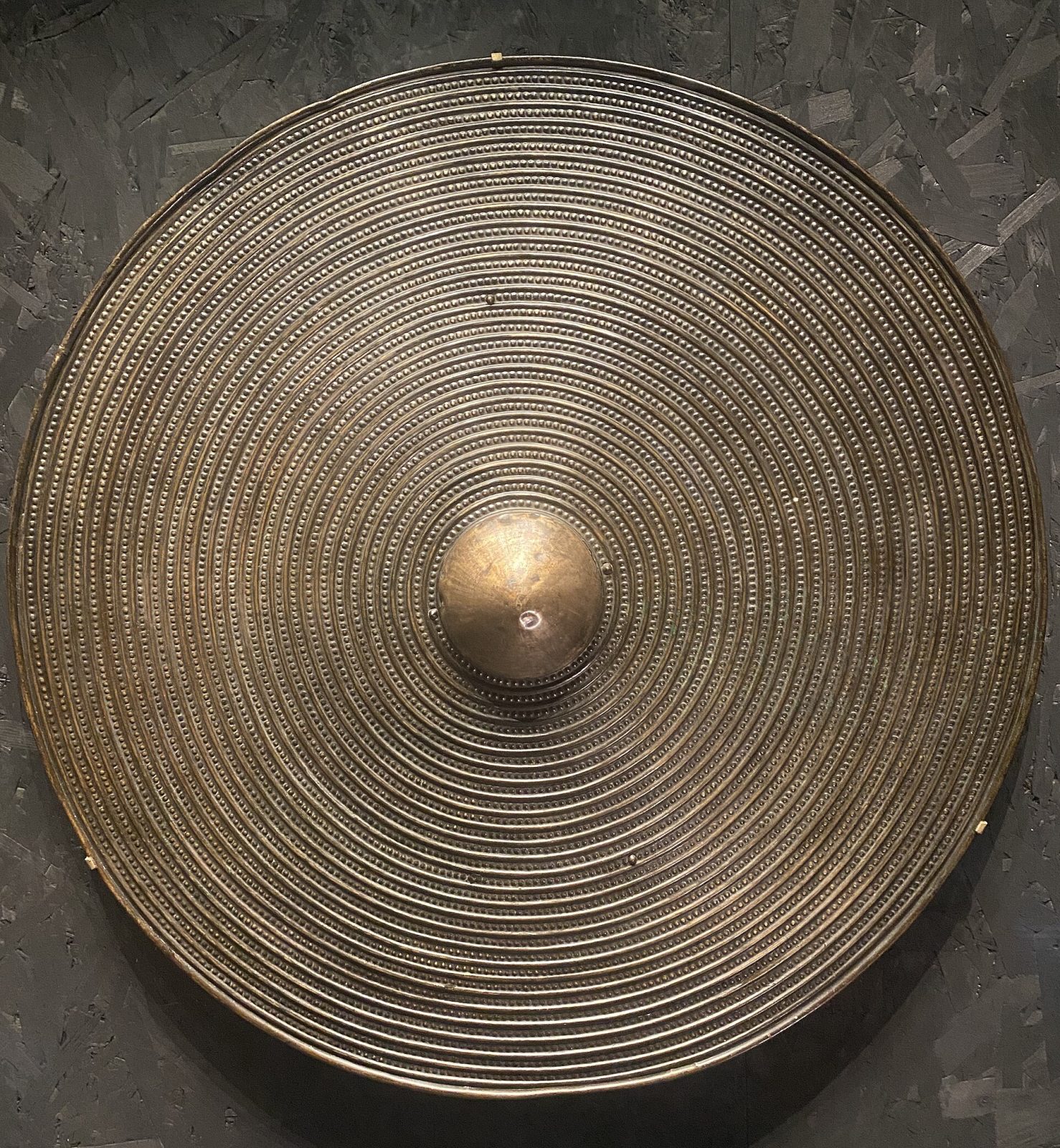
In 1784 peat-cutters on a mountain bog in Snowdonia dug up a round bronze shield in near-perfect condition. Made around 1300 to 1000 BC, it is one of only two shields of its kind from Wales, and even the records disagree about which mountain it came from.
In 1784, people cutting peat on a mountain bog in Snowdonia dug up a bronze shield. Nobody recorded their names. According to an account published in 1806, it was handed to Thomas Williams of Llanidan, the Anglesey copper magnate known as the Copper King, who was then the richest industrialist in Wales. The British Museum, which has owned it since 1873, records the findspot as Moel Hebog, the mountain above Beddgelert, but several older sources, and the Welsh national record, say Moel Siabod, some fifteen miles to the north-east. The argument has never been settled.
The shield is a single disc of sheet bronze 64 centimetres across, hammered thin, with a conical central boss and a riveted handle behind it. Around the boss run 27 raised ribs, alternating with 27 rings of tiny punched bosses. It is a shield of the Yetholm type, named after three found in a bog at Town Yetholm in the Scottish Borders, and only about 25 are known from Britain and Ireland. Several are so alike, among them this one and the shields from Yetholm and from Bagley in Yorkshire, that they may have come from a single workshop. The other Welsh example, from Rhos Rydd in Ceredigion, is also in the British Museum. The Moel Hebog shield dates from the Late Bronze Age, about 1300 to 1000 BC.
Yetholm shields were beaten to less than a millimetre thick, and experiments have shown that a bronze sword or spear goes straight through them. They were for show, carried in ceremony or displayed as signs of rank, and like most of them this one ended its life in a bog, almost certainly placed there deliberately as an offering, which is why it survived so well.
The shield is held by the British Museum but is not normally on public display; it was last exhibited abroad in 2016. Welsh politicians have more than once called for it to be returned to Wales, and Amgueddfa Cymru holds a replica.
Written for Global Finds from Coflein (Royal Commission on the Ancient and Historical Monuments of Wales), M. Uckelmann in Oxoniensia (2020), Nation.Cymru (2021) and Amgueddfa Cymru. Photo: the Moel Hebog shield in the British Museum, Titus Gold, Wikimedia Commons, CC BY-SA 4.0.
Approximate location53.00, -4.14View on map
Source: Coflein (RCAHMW)