The Harzhorn Battlefield: a 'candleholder' that was a Roman horseshoe, and a battle the history books had forgotten
Famous find Fought about AD 235 · Found in 2000 See it on the timeline →
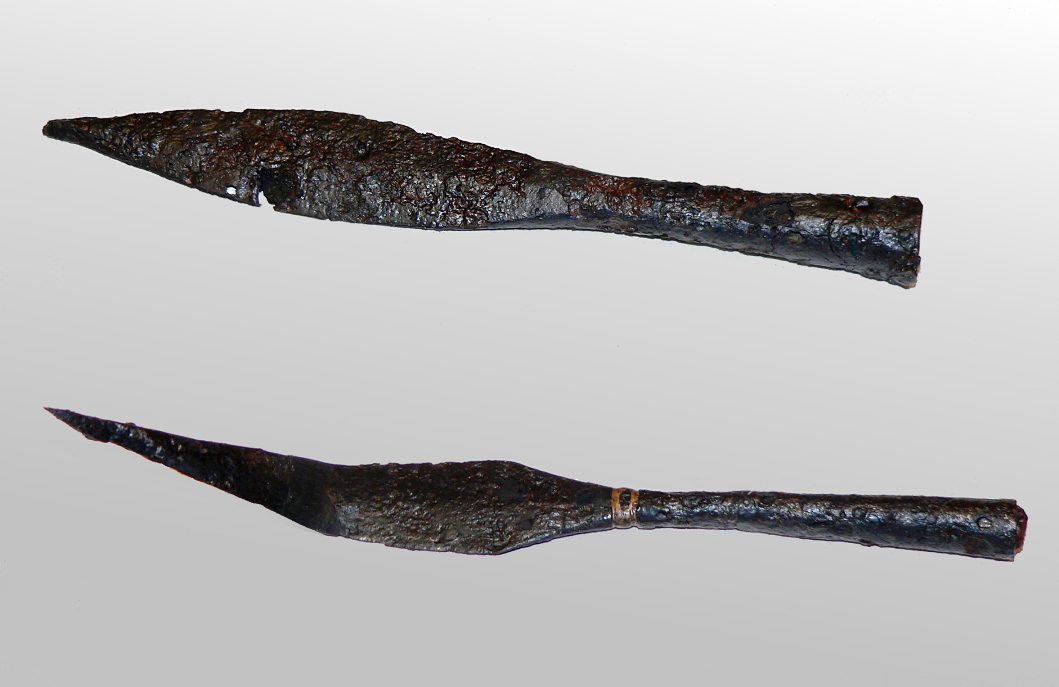
In 2000 two amateurs with metal detectors looking for a medieval castle in Lower Saxony picked up iron objects, including what they thought was a candleholder. Eight years later it was recognised as a Roman hipposandal, and the hill turned out to be a Roman battlefield of about AD 235.
In 2000, two local amateurs from Kalefeld in Lower Saxony, Germany, went looking for a lost medieval castle on the Harzhorn, a wooded ridge on the western edge of the Harz mountains. With metal detectors, and without the permit Lower Saxony requires, they picked up iron objects, among them heavy bolt heads, a pick and a curious iron object that they took for a candleholder.
Eight years later, in 2008, one of them posted photographs online and was told the finds might be Roman. The district archaeologist, Petra Lönne, recognised the candleholder as a hipposandal, an iron shoe strapped to a horse's hoof, and called in the state heritage office. The site was kept secret until it was announced on 15 December 2008.
Excavations revealed a battlefield. A Roman army had forced its way through a pass, still used by the A7 motorway, against Germanic warriors holding the ridge. About 2,700 finds have been plotted, more than 1,900 of them hobnails from soldiers' boots that trace the Romans' routes up the slope. Most of the rest are weapons: catapult bolt heads 6 to 13 centimetres long, some still jammed in the cracks of the limestone they struck, spearheads, lance heads, javelin heads and arrowheads, with pieces of mail, scale armour and a helmet, tools, and parts of a wrecked wagon. One horse lay where it had fallen into a pit. Only one lance head and a few arrowheads are Germanic.
Eleven coins were found, the latest struck in 228 under the emperor Severus Alexander, and radiocarbon dates fall between 230 and 240. The battle probably belongs to the campaign of the emperor Maximinus Thrax deep into Germany in AD 235, which ancient writers describe but which many historians had doubted reached so far north. In 2010, at the Kahlberg three kilometres away, the excavators found two Roman pickaxes, one scratched with the name of the Fourth Legion, and two bent javelins.
Finds from the battlefield were the centrepiece of an exhibition called Rome's Forgotten Campaign at Braunschweig in 2013 and 2014. A trail with information points has been laid out on the hill, and the full research was published in 2024.
Written for Global Finds from the Freie Universität Berlin and the Lower Saxony State Office for Heritage (2010), ScienceDaily (2013) and the History News Network. Photo: Roman lance heads from the Harzhorn battlefield, one of them bent, Axel Hindemith, Wikimedia Commons, CC BY 3.0.
Approximate location51.83, 10.07View on map
Source: Freie Universität Berlin / Lower Saxony State Office for Heritage