The Beaurains Treasure: Roman gold and the earliest picture of London, found by brickworks labourers near Arras
Famous find Gathered about AD 285 to 315 · Found in 1922 See it on the timeline →
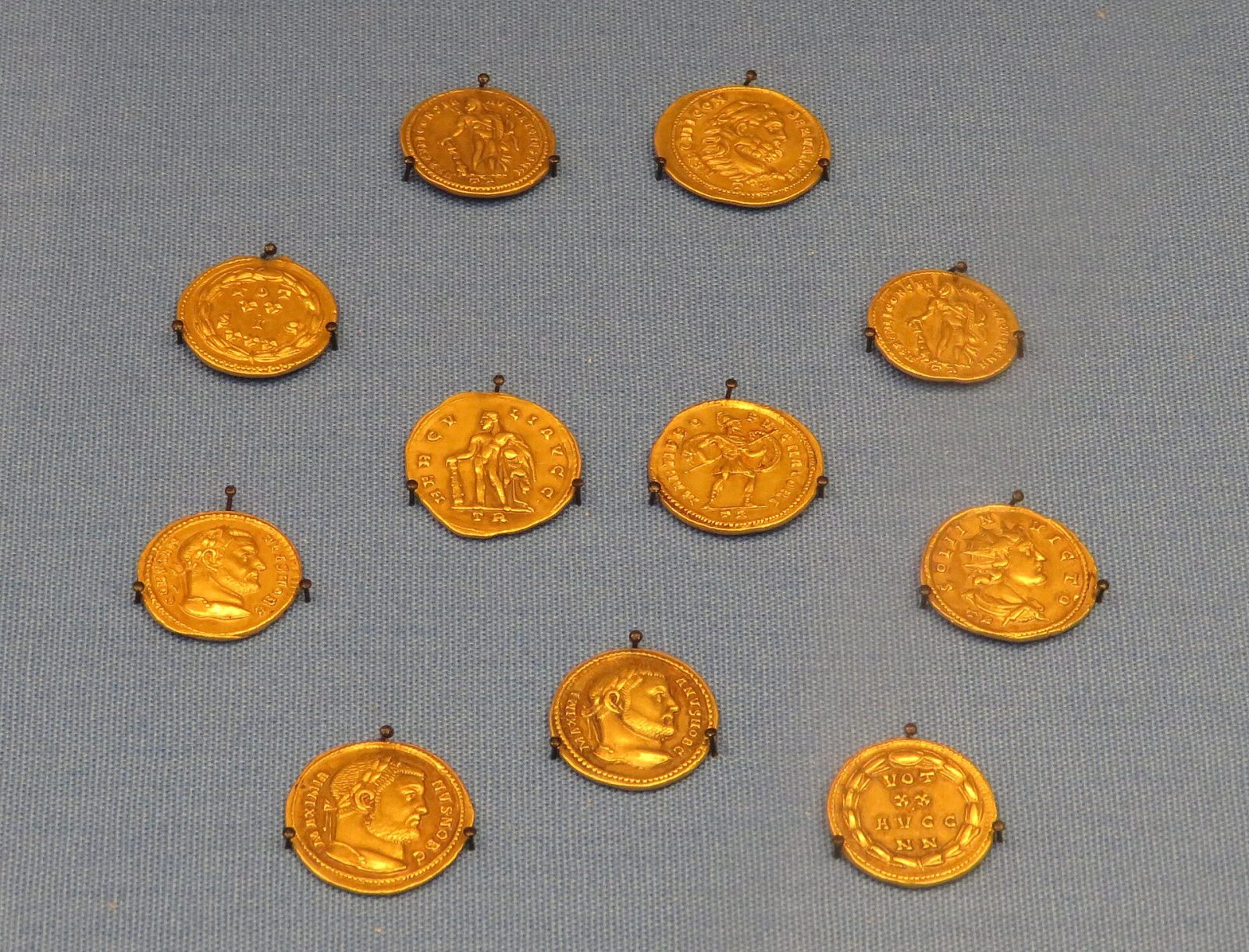
In September 1922 workmen digging clay at a brickworks at Beaurains, near Arras in northern France, found a hoard of Roman gold coins, medallions and jewellery. Much of it vanished overnight into the antiquities trade, including a medallion bearing the earliest known picture of London.
On 21 September 1922, workmen digging clay at a brickworks at Beaurains, on the edge of Arras in northern France, uncovered a hoard of Roman treasure in two containers, one of pottery and one of silver. Much of it disappeared overnight and was sold off through the antiquities trade, so that its pieces are now scattered among museums and private collections.
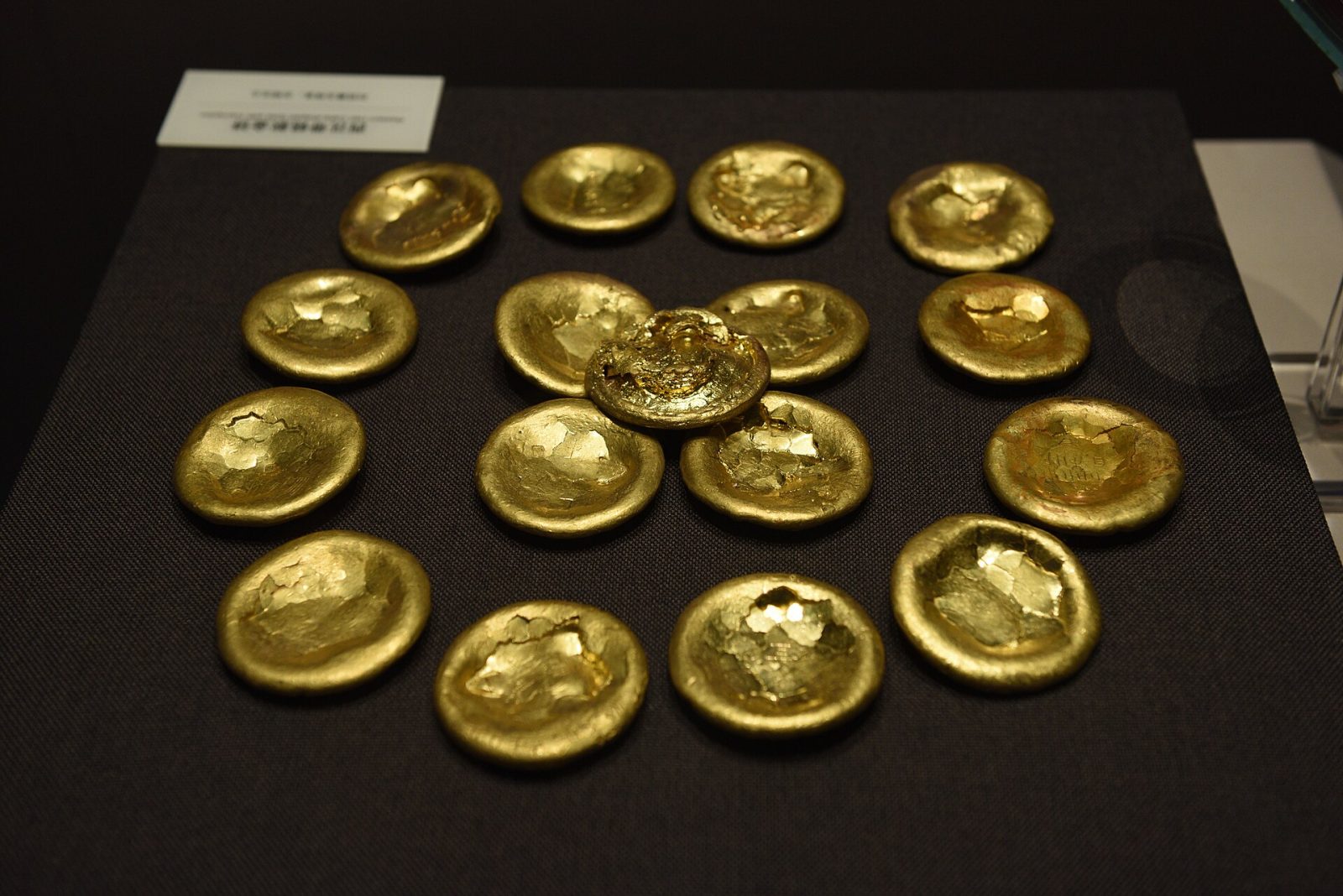
What is known of the hoard has been pieced together since. It held about a hundred gold aurei of the early Empire and about a hundred silver coins, 30 to 35 gold multiples or medallions, more than 400 later gold coins and dozens of smaller silver pieces, together with gold jewellery: necklaces, bracelets, rings, pendants, earrings and a belt buckle, as well as a silver candlestick, a spoon and an ingot. Totals vary between sources because so much was dispersed.
The owner was probably a Roman army officer who received many of the pieces as gifts from the emperors between about AD 285 and 310. One group of gold coins dates from 302 and 303 and was probably handed out at the celebrations for the twentieth anniversary of the emperor Diocletian's reign. The most famous piece is a gold medallion worth ten aurei, struck at Trier to celebrate the recovery of Britain by the emperor Constantius I in AD 296. It shows him riding towards a kneeling figure of London at the city gate, with a warship nearby, and the words REDDITOR LVCIS AETERNAE, restorer of eternal light. It is the earliest known picture of London.
The treasure is classed as a French national treasure. Pieces are held by the British Museum, by the Banque de France, which has shown its medallions at its Citéco museum in Paris since 2022, and at Arras, where the Banque de France says the London medallion is kept.
Written for Global Finds from the Banque de France (Citéco, 2022), the British Museum and Encyclopaedia Romana (University of Chicago). Photo: gold coins from the Beaurains Treasure in the British Museum, BabelStone, Wikimedia Commons, CC BY-SA 3.0.
Approximate location50.26, 2.79View on map
Source: Banque de France (Citéco)