A Metal Detectorist Dug up 52,503 Roman Coins
Famous find Coins of AD 253 to 293; buried soon after · Found in 2010 See it on the timeline →
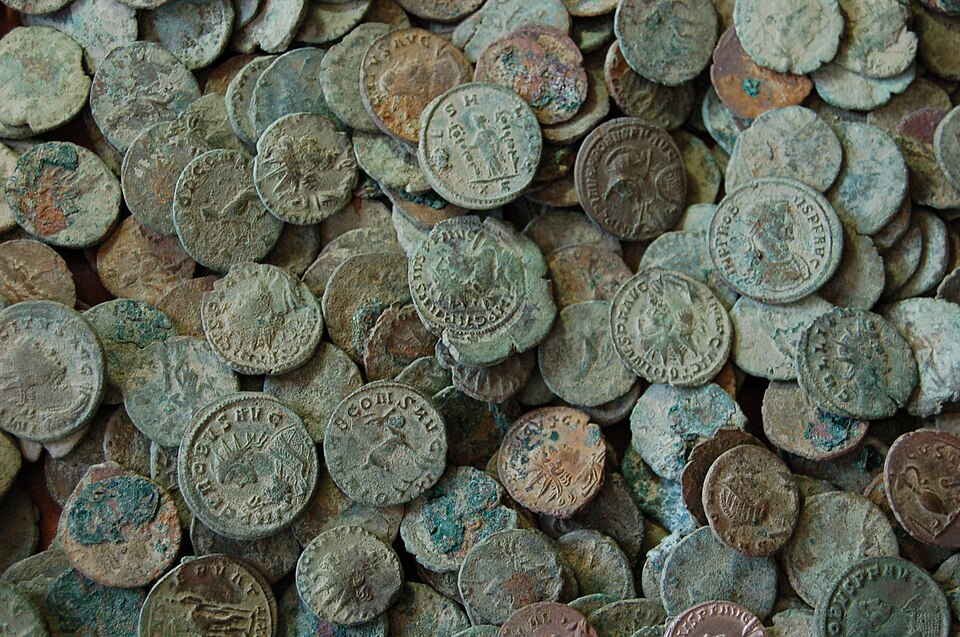
In 2010 a detectorist near Frome found a pot holding 52,503 Roman coins, the largest Roman hoard ever found in a single container in Britain. He stopped digging and called in the experts.
In April 2010, metal detectorist Dave Crisp was searching a field near Frome, in Somerset, when he found 21 Roman coins, and then the top of a pot full of many more. Rather than dig them out, he called Katie Hinds, the Finds Liaison Officer for Wiltshire, who arranged for archaeologists from Somerset County Council to excavate it.
The pot was lifted in 12 layers, giving 67 separate groups of coins. There were 52,503 coins in all, weighing about 160 kilograms, mostly of debased silver or bronze. They date from AD 253 to 293 and name more than 25 rulers, including the emperors of a breakaway Gallic Empire. Among them are more than 760 coins of Carausius, the commander who seized power and ruled Britain independently from 286 to 293, including five rare silver denarii.
How the coins were arranged changed how the hoard is understood. The latest coins were halfway down the pot, not at the top, so it had not been filled over the years and dug up from time to time. The empty pot had been put in the ground first and then filled from a number of smaller containers. That points to a communal offering by a local group, perhaps for a good harvest or good weather, rather than savings hidden by someone who meant to come back for them.
The British Museum conserved and studied the coins. In 2011, the Museum of Somerset in Taunton acquired the hoard, helped by a grant of £319,026 from the National Heritage Memorial Fund.
Reported by Popular Mechanics (2026). Written for Global Finds from that report, Current Archaeology, Frome Museum and the National Heritage Memorial Fund. Photo: coins from the Frome Hoard, Portable Antiquities Scheme, Wikimedia Commons, CC BY-SA 2.0.
Approximate location51.23, -2.32View on map
Source: Popular Mechanics