The Zvičina hoard: two hikers found 598 gold coins hidden in an old field wall
Hidden some time after 1921 · Found in 2025 See it on the timeline →
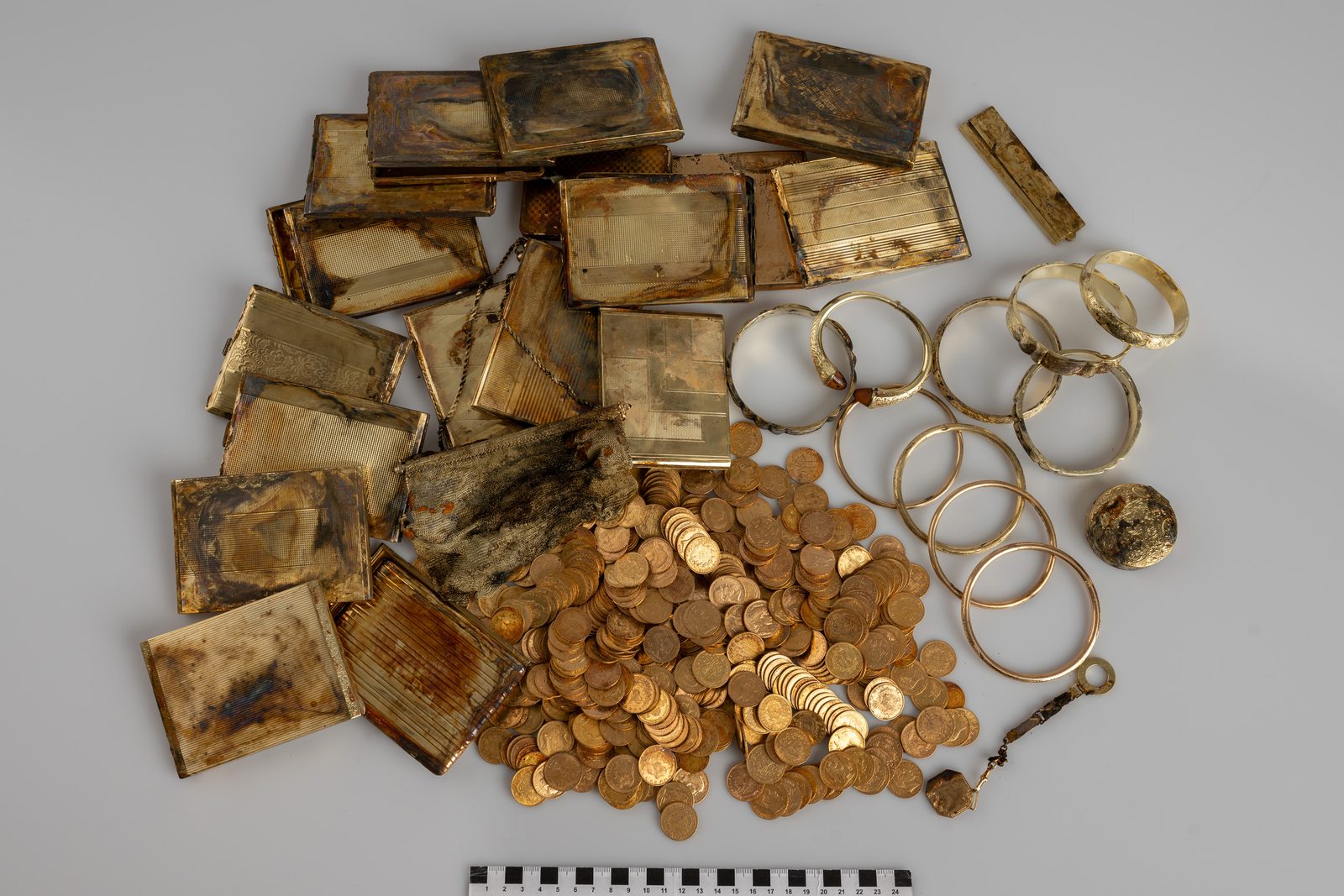
More photographs
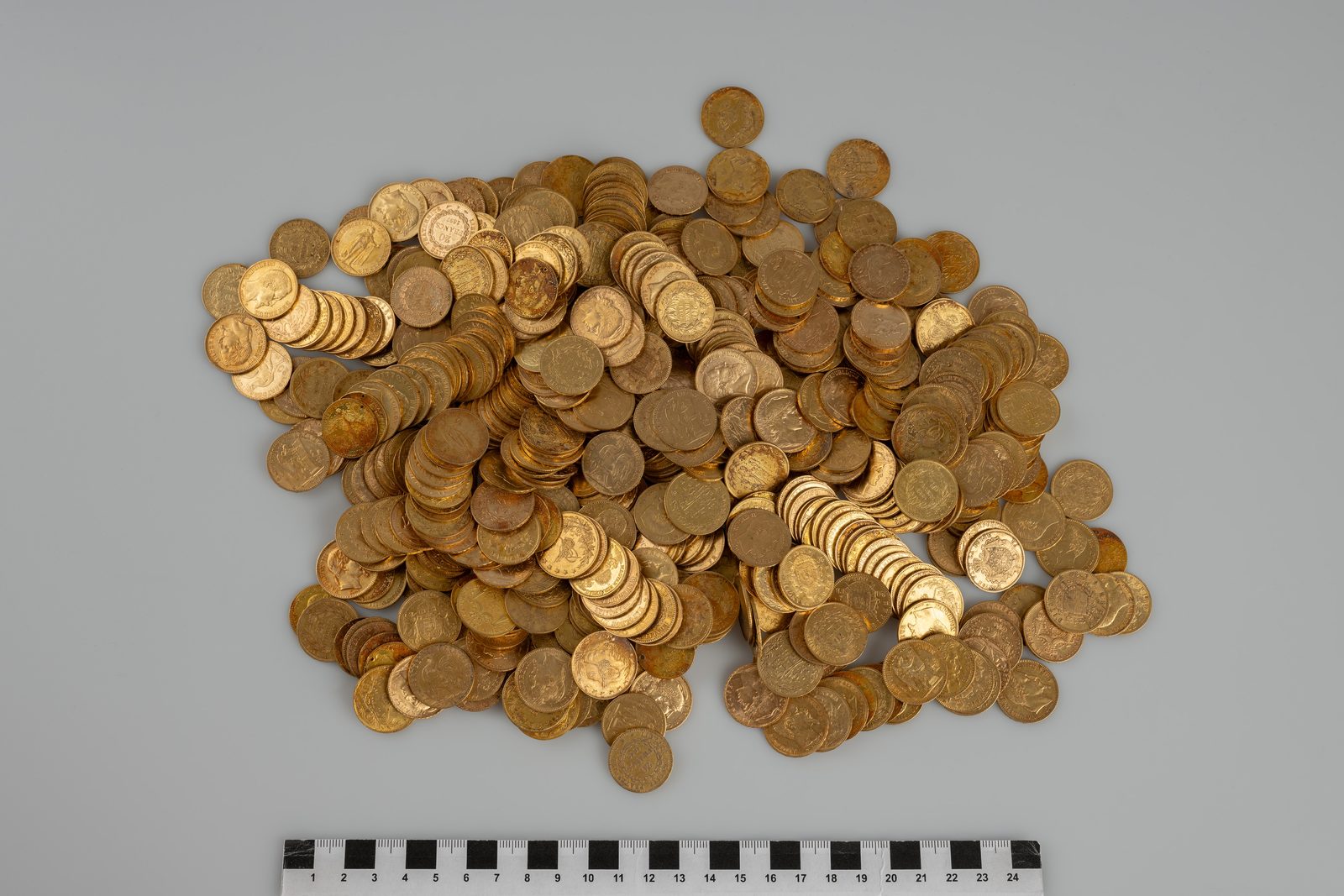 The 598 gold coins, Muzeum východních Čech v Hradci Králové (Museum of East Bohemia in Hradec Králové).
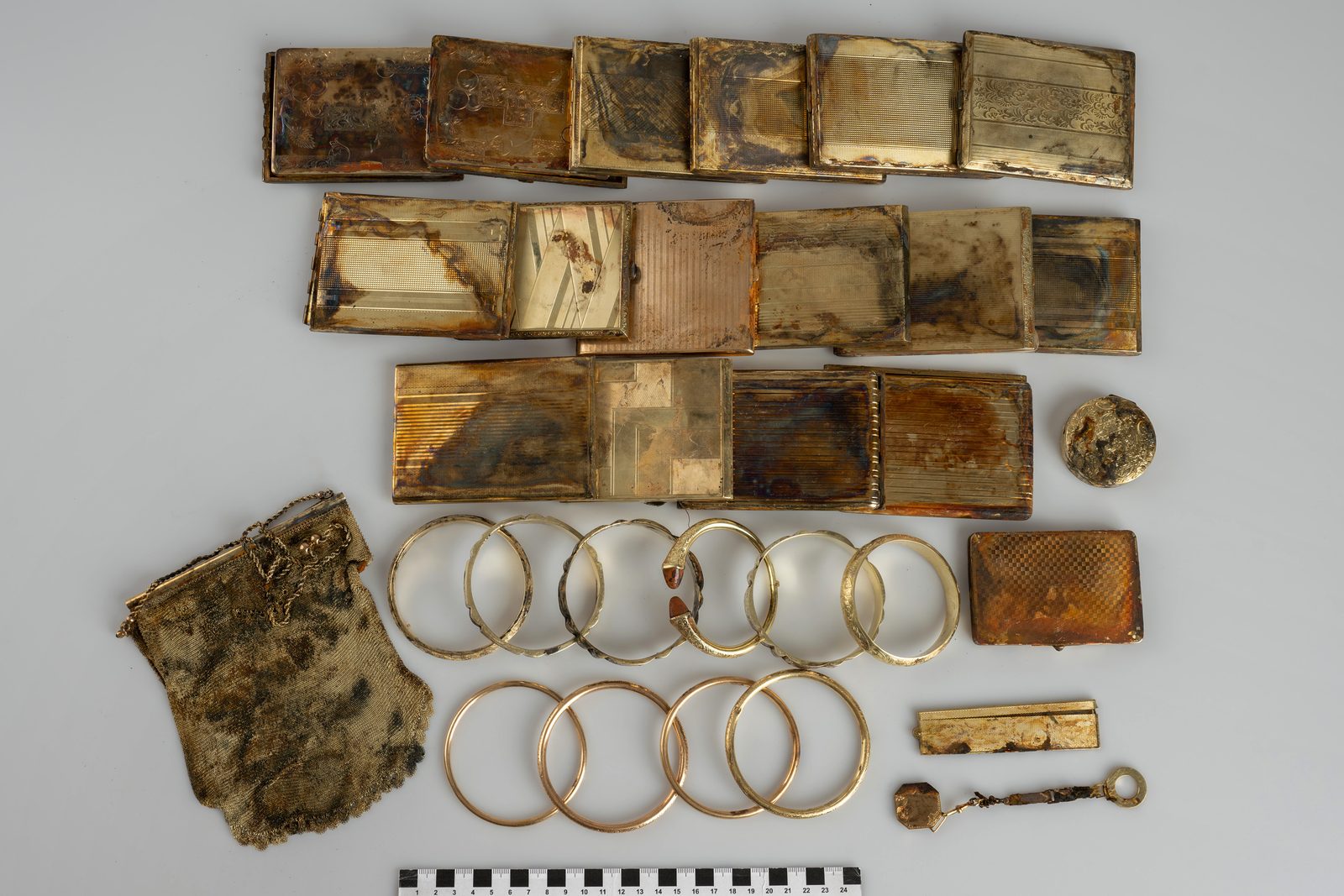 The cigarette cases, bracelets, mesh purse and other objects, Muzeum východních Čech v Hradci Králové (Museum of East Bohemia in Hradec Králové).
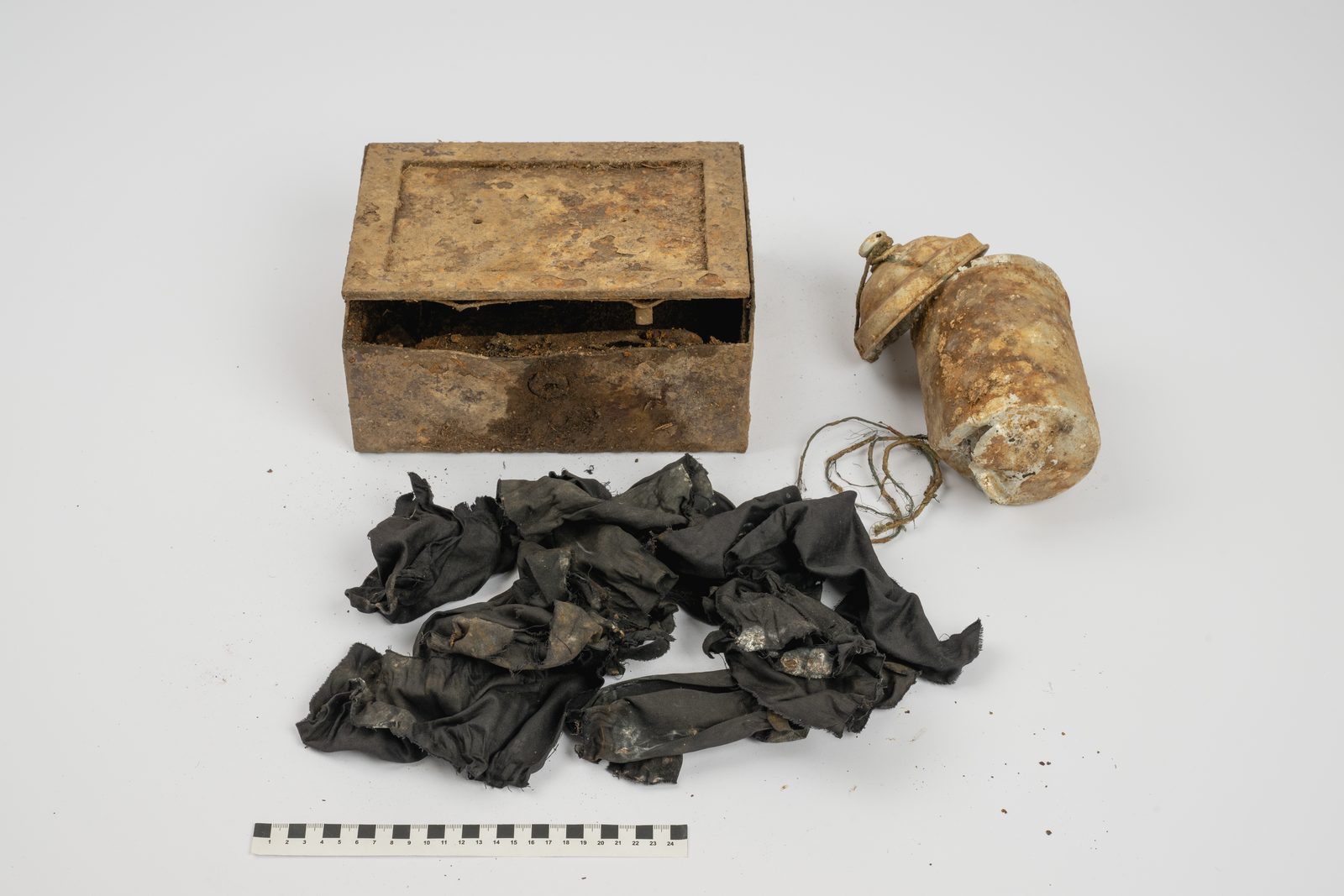 The two boxes and the black fabric the coins were wrapped in, Muzeum východních Čech v Hradci Králové (Museum of East Bohemia in Hradec Králové).
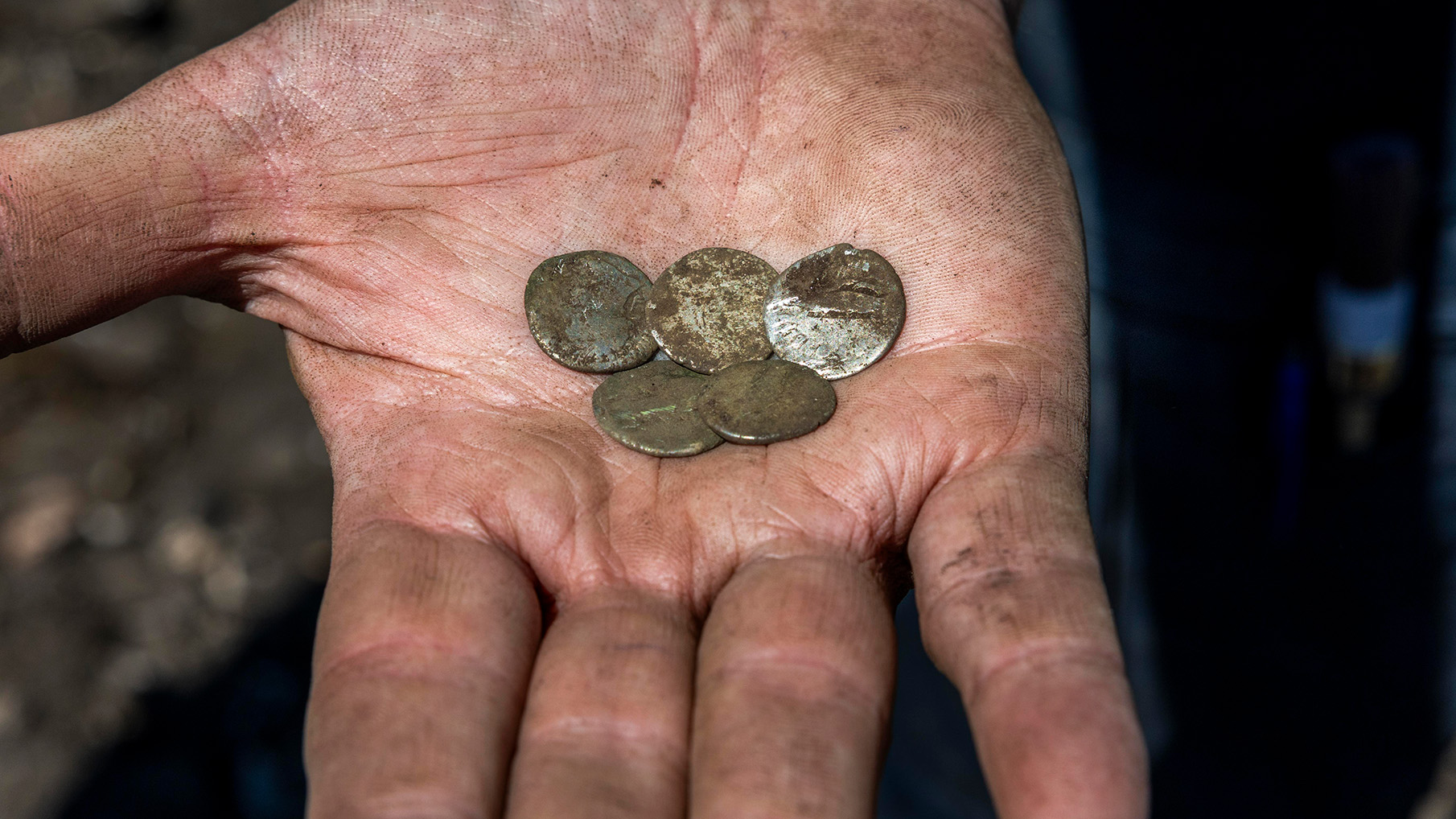
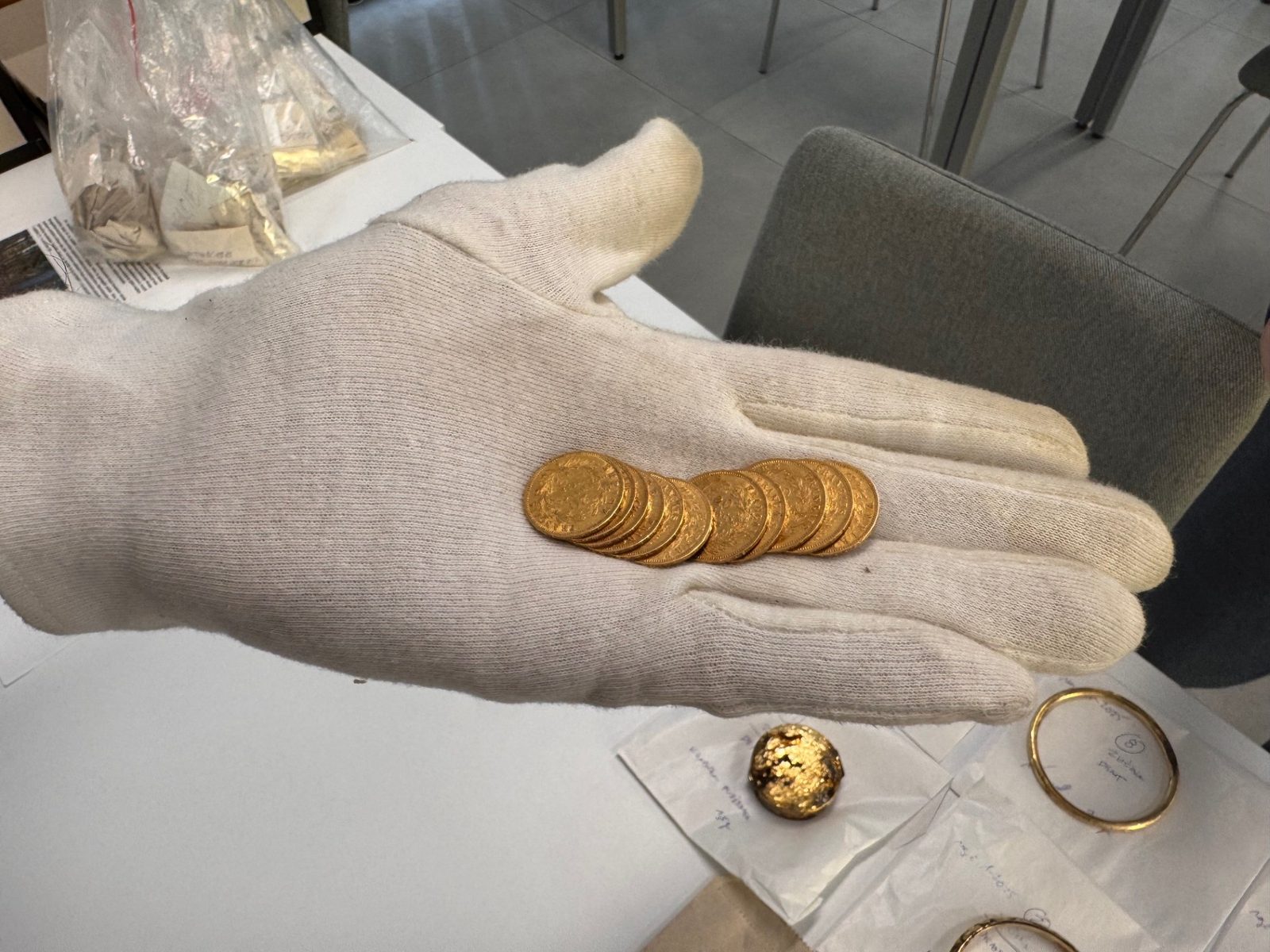 A handful of the coins at the museum, Muzeum východních Čech v Hradci Králové (Museum of East Bohemia in Hradec Králové).
Two hikers in north-east Czechia found 598 gold coins and a box of jewellery hidden in an old field wall, and handed everything to the regional museum the same day.
In early February 2025, two hikers on the south-western slope of Zvičina hill, near Dvůr Králové nad Labem in the foothills of the Krkonoše mountains, noticed an aluminium container sticking out of a man-made mound of stones at the edge of an old field, now overgrown with forest.
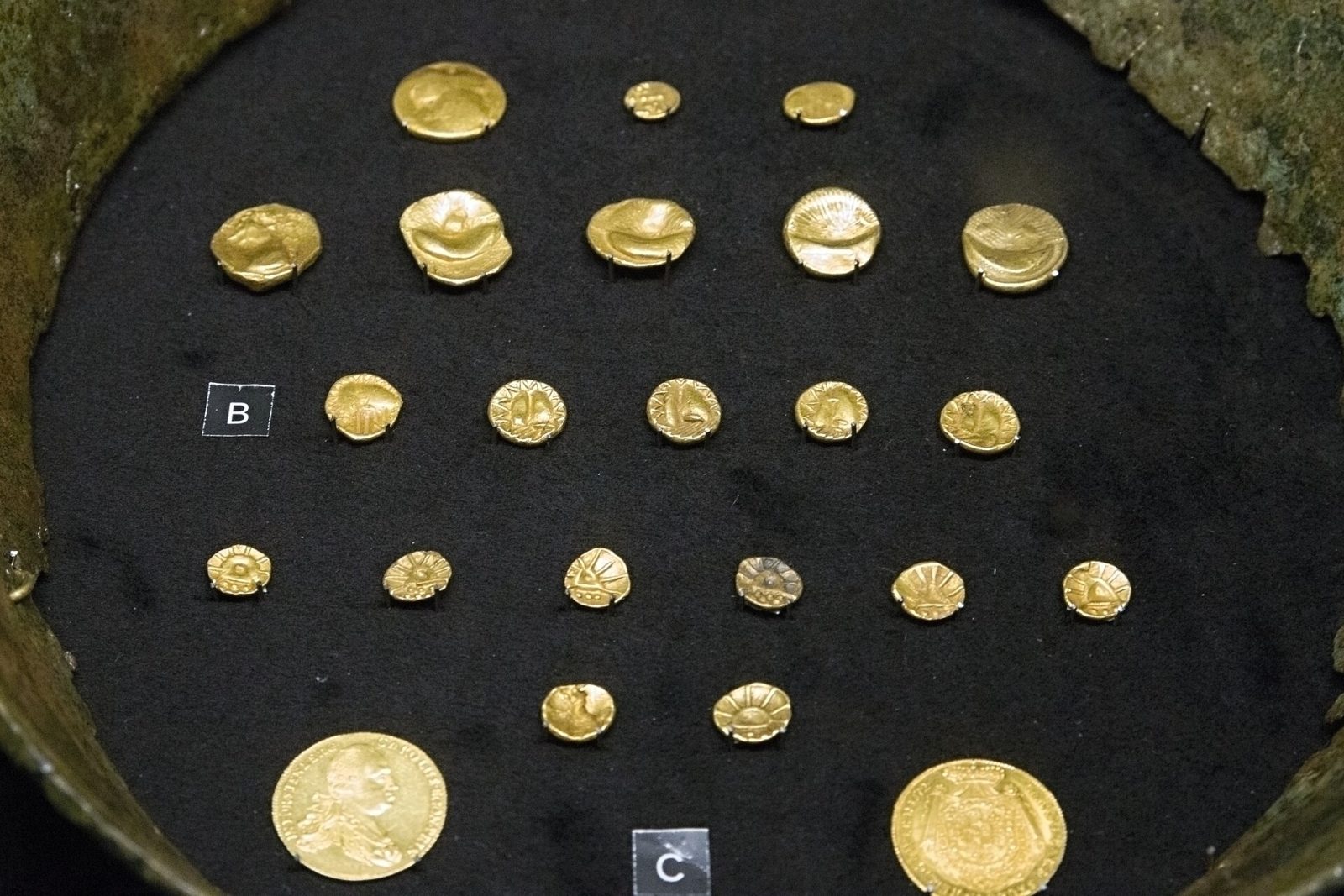
Inside were 598 gold coins, stacked in eleven columns and wrapped in black fabric. About a metre away was an iron box holding ten bracelets, sixteen cigarette cases, a wire-mesh purse, a comb, a chain and a powder compact, all in yellow metal. The whole find weighs about 7 kilograms, of which the coins account for about 3.75 kilograms. The hikers took everything to the Museum of Eastern Bohemia in Hradec Králové the same day.
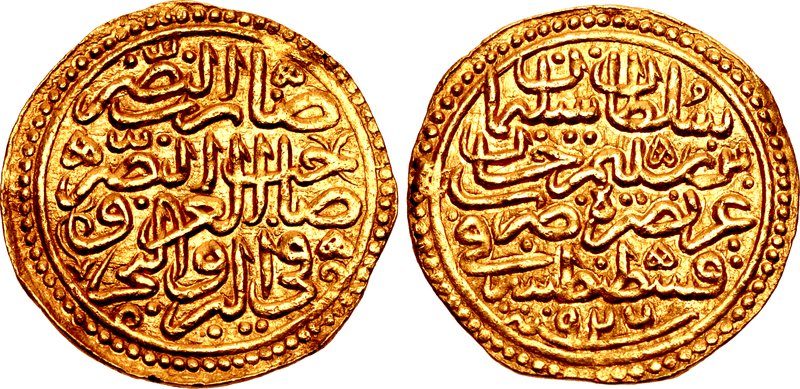
The coins were struck between 1808 and 1915. Most are French, with others from Austria-Hungary, Belgium, the Ottoman Empire, Russia, Italy and Romania. There are no German marks and no Czechoslovak crowns. Several carry countermarks applied in the Serbian and Bosnian provinces of Yugoslavia in 1921, so the hoard cannot have been hidden before then. The museum's director, Petr Grulich, has said it is impossible to tell whether it was Czech, German or Jewish gold.
After the gold was checked by the assay office, the two finders were told they would share a reward of 11.7 million Czech crowns, more than the first estimate of 7.5 million.
Reported by Earth.com (22 September 2026), from the Museum of Eastern Bohemia, with details from the museum's own press release. Written for Global Finds from those reports. Photos: (1) the whole hoard, Muzeum východních Čech v Hradci Králové (Museum of East Bohemia in Hradec Králové). (2) the 598 gold coins, Muzeum východních Čech v Hradci Králové (Museum of East Bohemia in Hradec Králové). (3) the cigarette cases, bracelets, mesh purse and other objects, Muzeum východních Čech v Hradci Králové (Museum of East Bohemia in Hradec Králové). (4) the two boxes and the black fabric the coins were wrapped in, Muzeum východních Čech v Hradci Králové (Museum of East Bohemia in Hradec Králové). (5) a handful of the coins at the museum, Muzeum východních Čech v Hradci Králové (Museum of East Bohemia in Hradec Králové).
Related guide: Choosing your first metal detector
Source: earth.com