Myah's iPhone: lost in the sea at Colwyn Bay, dug out of the wet sand five weeks later and posted home
Lost in the sea on 25 August 2026 · Found in 2026 See it on the timeline →
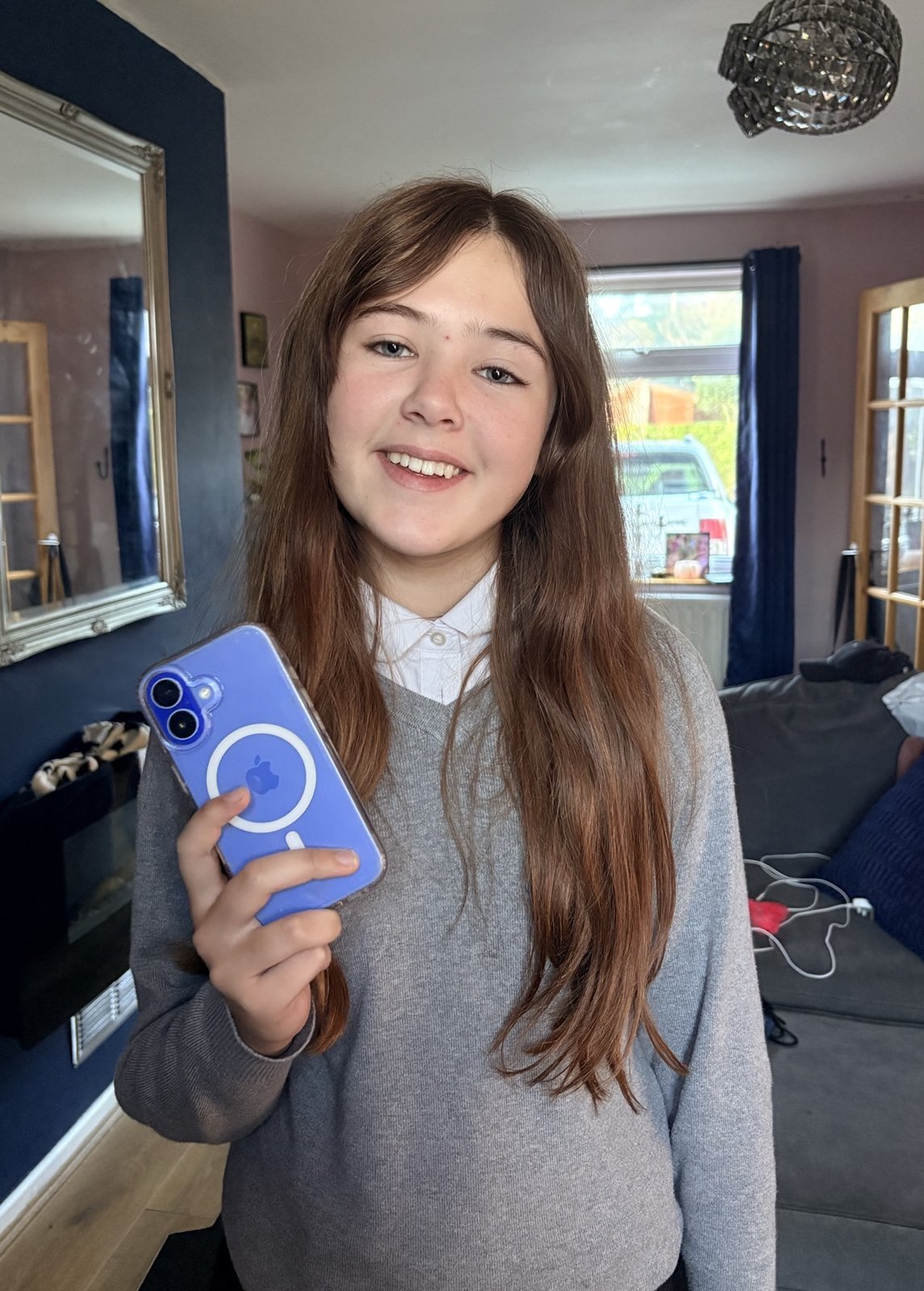
On 3rd October 2026, Rob dug an iPhone out of the wet sand on Cayley Beach, Colwyn Bay. It still worked; its Lost Mode message gave a number, and within the week it was back with Myah in Market Drayton, 73 miles away, who had lost it in the sea on 25 August.
On Saturday 3rd October 2026 I was detecting on Cayley Beach at Colwyn Bay, on the North Wales coast, when a strong signal in the wet sand turned out to be an iPhone, still in its clear case. It had clearly been in the sea. I rinsed the sand off, dried it as well as I could, and when I got home I put it on charge, not expecting much.
It switched on. The lock screen showed a Lost Mode message with a phone number to call, so I sent a text. Within the hour I had a reply from Demi, in Market Drayton in Shropshire, 73 miles away. The phone belonged to her daughter Myah, who had lost it on 25 August while on holiday at Colwyn Bay with her nan. The family had assumed the sea had taken it and had already replaced it. "I can't believe it's turned on," Demi wrote.
I said I would post it back, free of charge. The phone kept warning that there was moisture in the charging port, so I charged it with a magnetic charger instead, and on Monday 5 October it went in a padded envelope with a letter explaining where it had been found and suggesting that the family back up anything on it quickly, since five and a half weeks in salt water does a phone no favours. It arrived on Thursday 8 October with 99 per cent charge, and it still worked. "Phones come, thanks again!" Demi texted.
The next day she sent a photo of Myah with the phone, back home. Lost Mode is what made the difference. Without it, the phone would have been a locked slab of glass with no way to find out whose it was.
Written for Global Finds by Rob from his own find. Photo: Myah with her phone, back home in Market Drayton. Used with mother Demi's permission.
Detector usedMinelab X-Terra Elite
Approximate location53.31, -3.74View on map