The Bullington Brooch: a detectorist's find from a chariot pony's harness, stopped from going abroad and given to Hampshire's Iron Age museum
about 50 BC to AD 100 See it on the timeline →
A rare Late Iron Age harness brooch, found with a metal detector at Sutton Scotney in Hampshire, was sold at auction, barred from export in 2025, and then given to Hampshire Cultural Trust by the London gallery that bought it. It is now on show at the Museum of the Iron Age in Andover.
A detectorist searching at Sutton Scotney, in the parish of Bullington in Hampshire, found a small copper-alloy fitting about 7 centimetres long and recorded it with the Portable Antiquities Scheme. It turned out to be one of the rarest objects of the British Iron Age: a harness brooch, also called a horse or pony brooch, made between about 50 BC and AD 100. Only ten are known from England and Wales, and most of them are incomplete. This one is in excellent condition.
Nobody wore it. On the back it has both a hinged pin and loops for straps, a combination never found on brooches made for people. It joined the leather straps of a pony's harness to a cloth laid over the animal's back, like a blanket or rug. The front is covered in curving shapes and a basket-weave texture of the kind usually seen on mirrors and torcs, not harness. The Hampshire Field Club points out that the weave, three strands passing over and under three, may show what the cloth itself looked like, since Iron Age textiles almost never survive. The designs are close to those on the famous Desborough mirror from Northamptonshire.
The brooch was sold at Noonans in London on 5 December 2023 and bought by ArtAncient, a London gallery. When an export licence was sought, the government's expert committee judged that it met all three of its tests for national importance: its connection with the nation's history, its beauty, and its importance for the study of harness, chariots, metalwork and textiles. In January 2025 the arts minister placed a temporary bar on its export, valuing it at £18,500, to give a British museum the chance to buy it. In the end the gallery's directors, Costas Paraskevaides and Jethro Sverdloff, gave the brooch to Hampshire Cultural Trust, so it stays in the county where it was found.
After conservation, it went on show in 2026 at the Museum of the Iron Age in Andover, about ten miles from Sutton Scotney. It is on the cover of the export committee's annual report. The Romans were struck by the skill of British charioteers, and chariots are well known from northern Hampshire: at Bury Hill hillfort, near Andover, almost half the animal bone from the late Iron Age levels was horse, which suggests that horses were bred and trained there, perhaps for chariots.
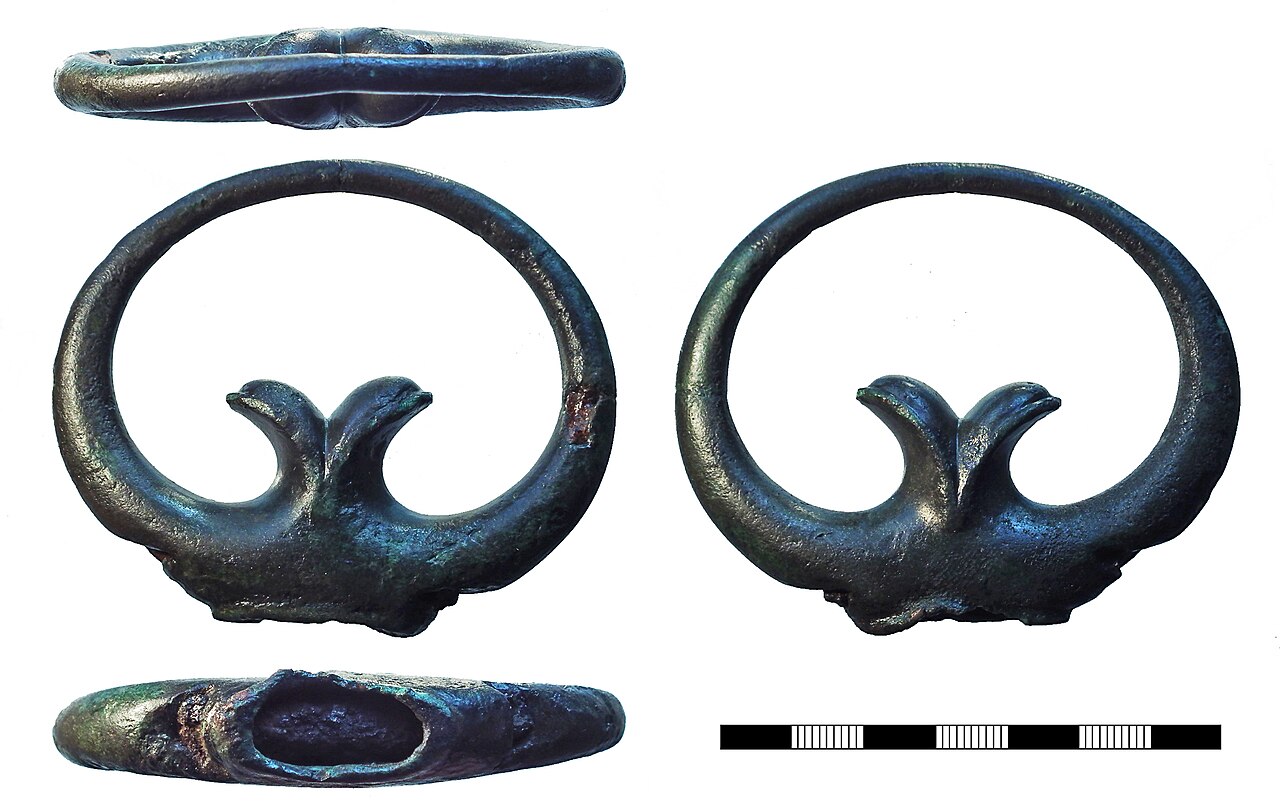
Reported by GOV.UK (10 January 2025), the Hampshire Field Club (2026) and Archaeology News Online Magazine (19 November 2026). Written for Global Finds from those reports. Photo: a Late Iron Age copper-alloy terret, a rein ring from a horse harness, recorded with the Portable Antiquities Scheme (not from this find), Surrey County Council, Margaret Broomfield, Wikimedia Commons, CC BY 2.0.
Related guide: Permission to detect: who to ask, and what to agree
Source: Archaeology News Online Magazine