The Isle of Man Viking burial: a detectorist found the island's second pair of Viking brooches, seven years after his father found the first
around AD 900 · Found in 2026 See it on the timeline →
More photographs
In February 2026 Daniel Crowe and Rhett Britton found a sword, three brooches, trading weights and scales in a ploughed Manx field. Declared Treasure in November, they probably came from a Viking double burial of about AD 900, perhaps the island's earliest known woman's Viking grave.
In February 2026 Daniel Crowe, a metal detectorist on the Isle of Man, found the remains of a Viking Age burial in a field whose location he is keeping secret. His fellow detectorist Rhett Britton helped with the search and found the axehead, part of a set of balance scales and other iron objects. The ground had been worked for centuries, and the finds were scattered over an area of up to 100 metres. Mr Crowe reported them to Manx National Heritage, whose curator of archaeology, Allison Fox, carried out an initial excavation before the objects went away for scanning and conservation.
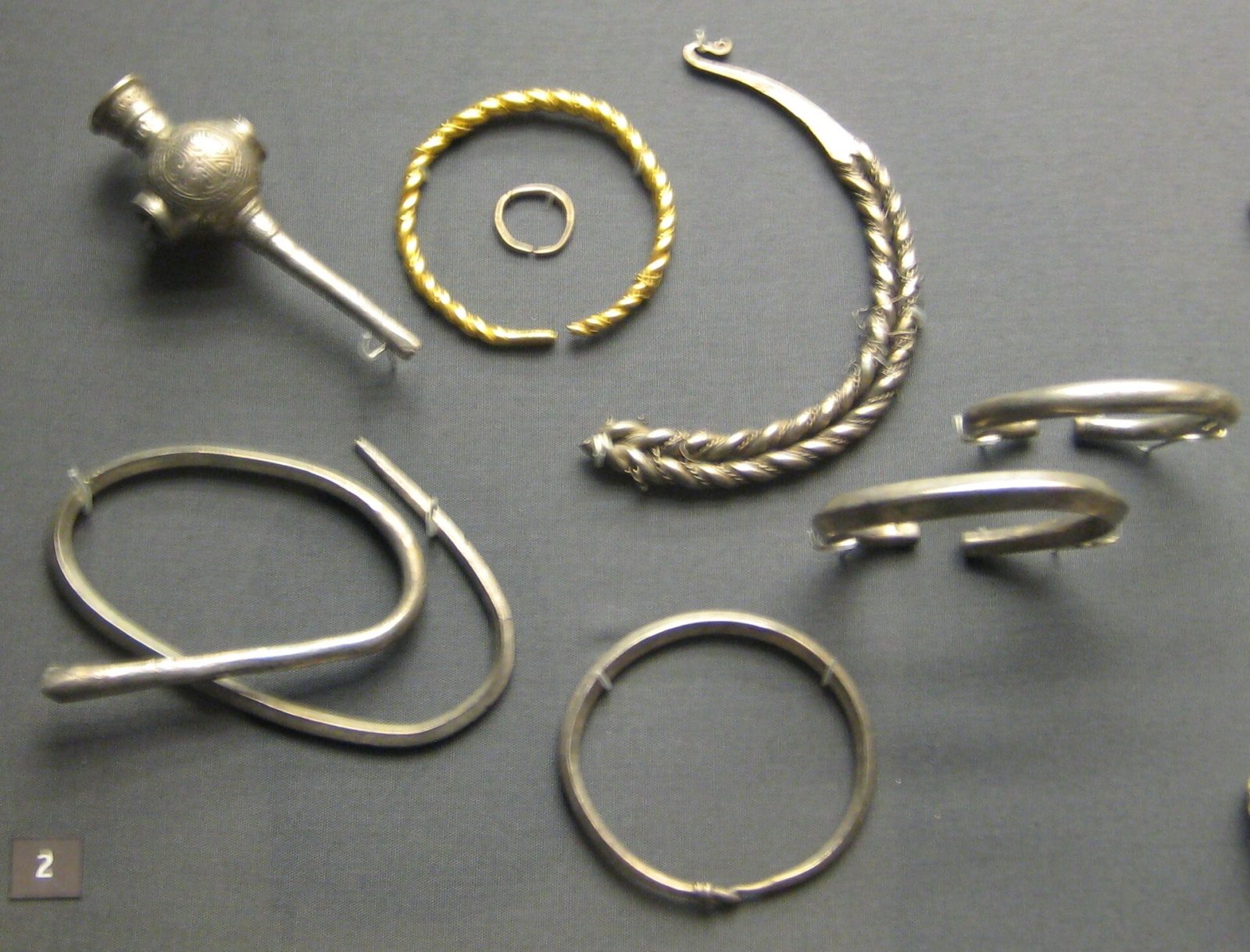
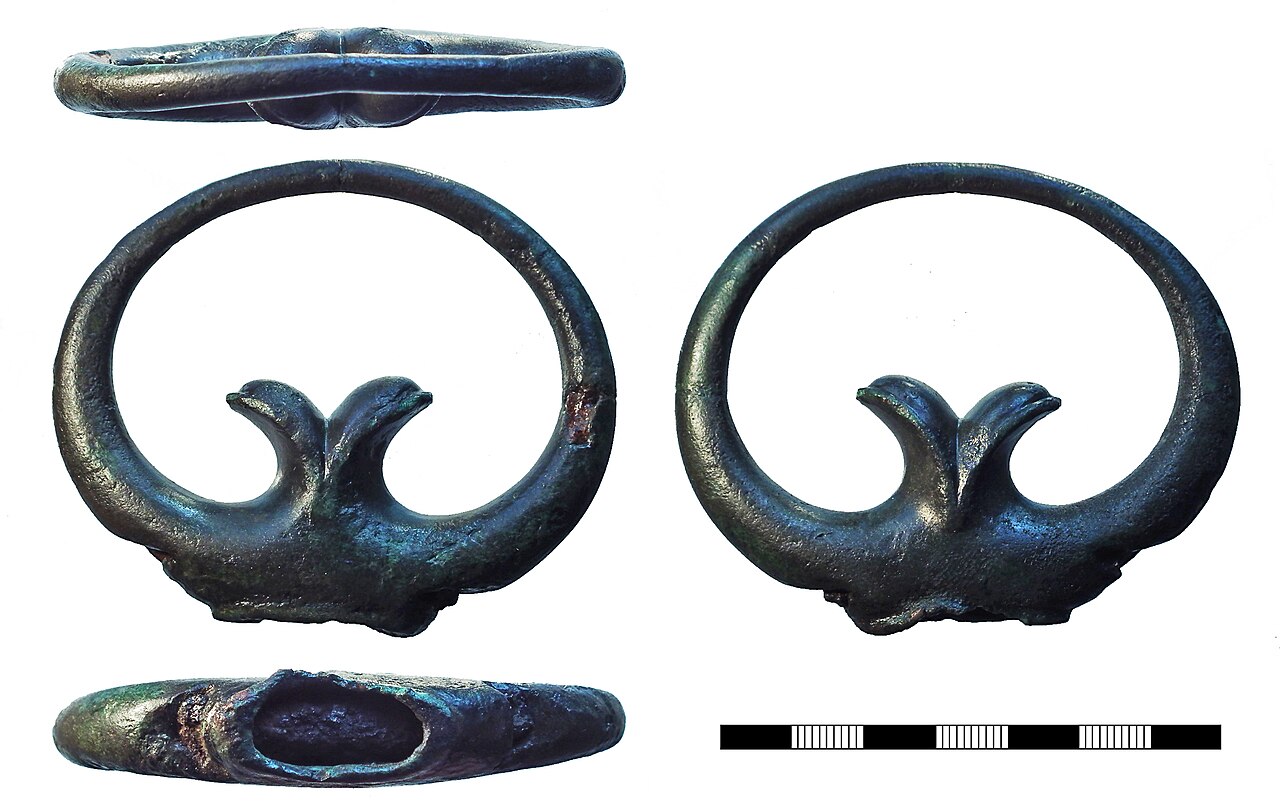
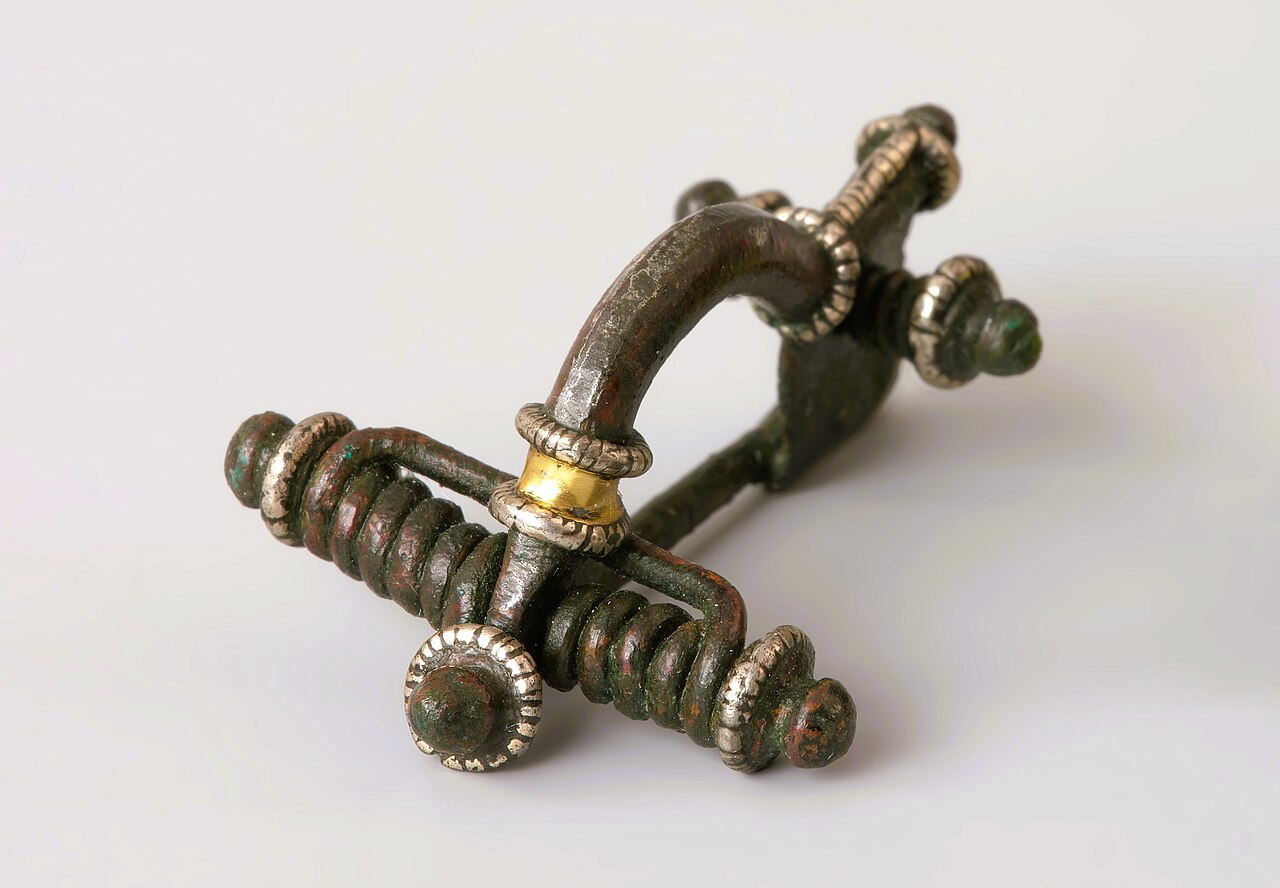
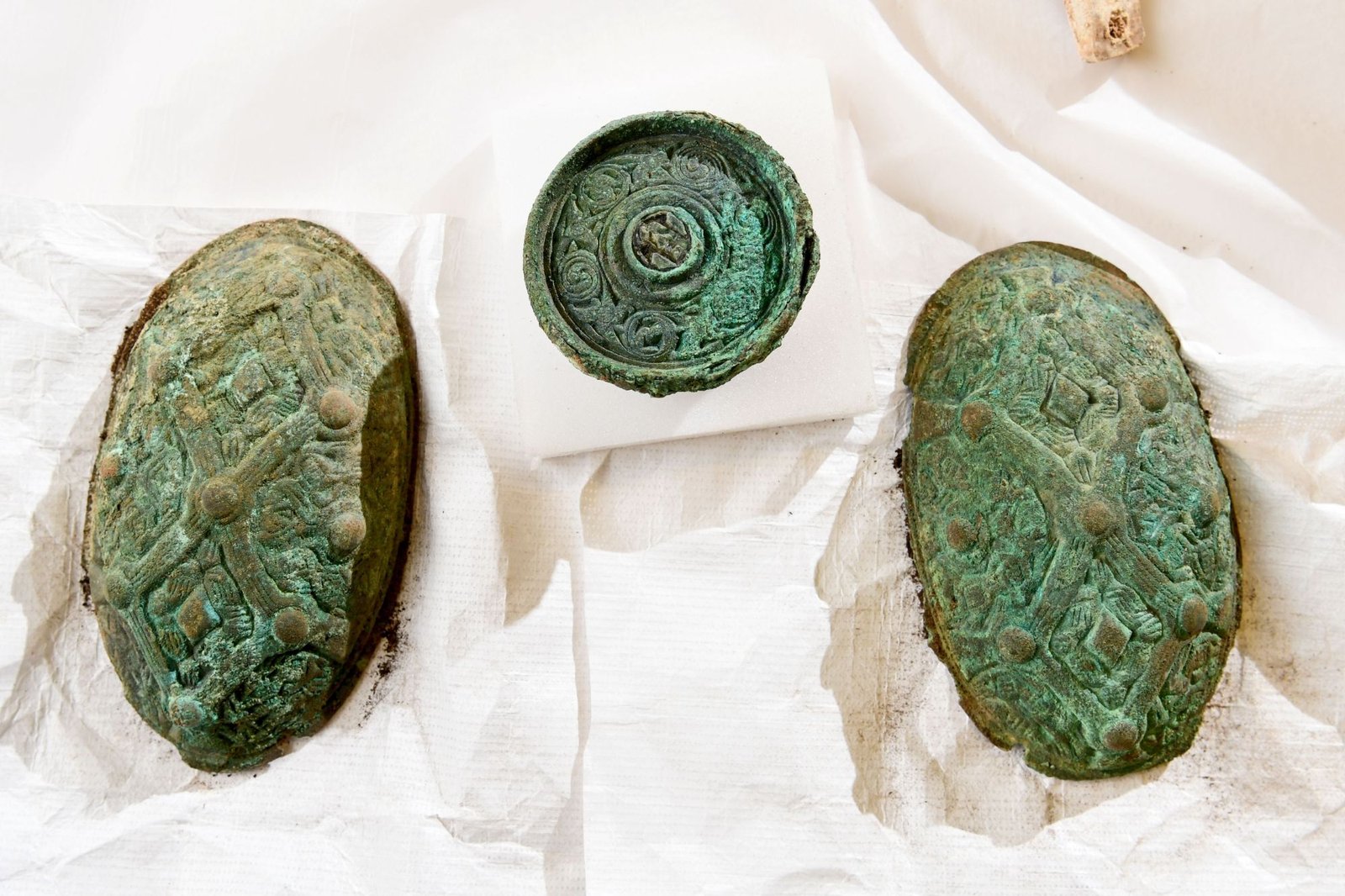
The group includes a sword, three bronze brooches, lead trading weights with pieces of bronze balance scales, a bronze ladle, fragments of a cauldron and an axehead. They date to around AD 900. Two of the brooches are oval brooches decorated with interlocking animals, a type worn by Viking women, and only one other pair has ever been found on the island. That pair was found in December 2018 by Craig Evans and John Crowe, Daniel's father, from whom he took up the hobby. The new pair may be around 50 years older, which could make this the earliest known female Viking burial on the island. The third brooch, once gilded and decorated with spirals around a glass centre, is the first of its kind found on Man.
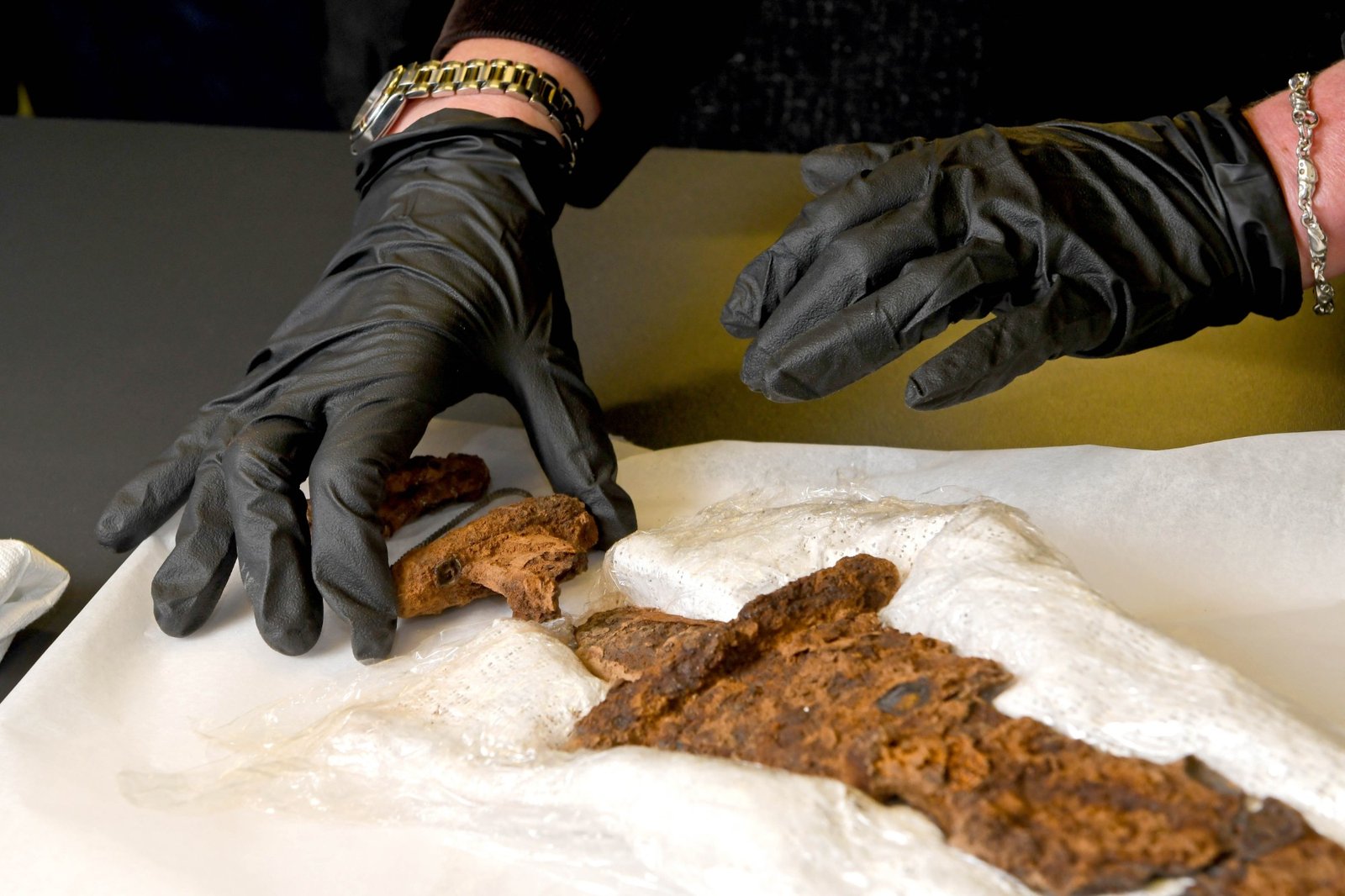
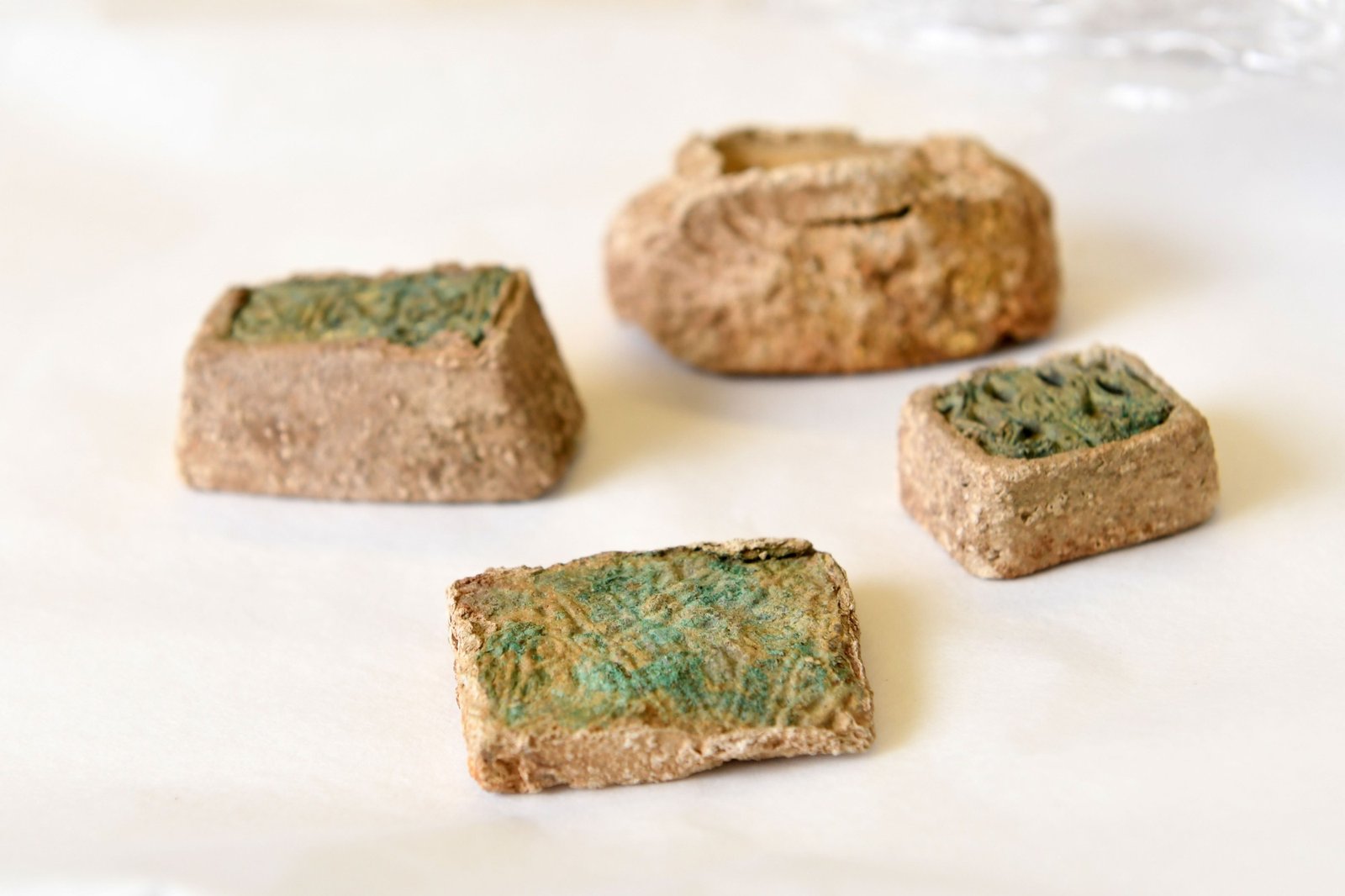
The sword is the thirteenth Viking sword found on the island. About two-thirds of it survives, and X-rays revealed fine silver inlay and twisted silver wire on the hilt; only two other Manx Viking swords have comparable decoration. It had been broken, probably on purpose as part of the burial rite. A sword usually belonged to a man and oval brooches to a woman, so the finds may come from a double burial, or from two graves of the same date close together. The weights are the first of their type found on the island, and one carries a bronze fitting in a style from Britain or Ireland, probably reused from a small chest or a religious object. The ladle is another type never recorded on Man before.
Mr Crowe deliberately left the finds uncleaned, and Manx National Heritage says that this preserved evidence that would otherwise have been lost. Radiologists from Manx Care scanned them before conservation began, revealing details hidden under the soil. The coroner declared the group Treasure at a hearing at Douglas Courthouse, and a selection went on display in the Viking Gallery at the Manx Museum in Douglas on 11 November 2026.
Reported by Manx National Heritage (9 November 2026), BBC News, Isle of Man Today and Manx Radio. Written for Global Finds from those reports. Photos: David Kneale, Manx National Heritage.
Related guide: Choosing your first metal detector
Source: Manx National Heritage
Also reported by