The Krynki cemetery: volunteers with detectors found scorched brooches in a Polish forest, and uncovered a burial ground linked to the Goths
3rd to late 5th century AD (preliminary) · Found in 2026 See it on the timeline →
Volunteers searching legally in the Krynki Forest District, north-east Poland, found burnt bronze fragments and brooches in June 2026. They reported them, and archaeologists have confirmed a Wielbark culture cemetery about 1,500 years old, a culture most researchers link to the Goths.
In June 2026 volunteers from Magna Silva, a group of history enthusiasts within the Association of Friends of the Knyszyn Forest, were searching woodland in the Krynki Forest District with metal detectors. The forest lies in Podlasie, in north-east Poland, near the border with Belarus, and the search was a legal one. They found pieces of a bronze ornament and several fibulae, brooches used to fasten clothing, marked with the patina that metal takes on in a fire. "The fragments of the ornament were burned, so we guessed that we might be dealing with a cemetery from the Roman period," Mateusz Dąbrowski of the group told Radio Białystok.
The volunteers told the archaeology department of the Podlasie Museum in Białystok. Archaeologists from the museum and the University of Warsaw's Faculty of Archaeology have since confirmed a cemetery of the Wielbark culture. Under the leaf litter they found brooches, buckles, pendants and glass beads, along with fragments of bone combs, clay spindle whorls and burned bone. There were also clay vessels that had held the ashes of the dead. Krzysztof Korzeniewski of Magna Silva said that these were human cremation graves, although animal remains have not been ruled out. The soil layers are mixed up and most of the finds are fragmentary, but they are still considered scientifically valuable.
The site is dated, for now, from the 3rd or 4th century AD to the end of the 5th. TVP Białystok reports that it was in use for about 200 years. The Wielbark culture takes its name from a large cemetery near Malbork in northern Poland, and most researchers connect it with the Goths and their migration towards the Black Sea, although archaeologists are wary of tying objects to a single people. According to TVP, this is the first site of the culture in this part of the region, and probably its easternmost known point. The museum had not expected to find traces of Gothic settlement here.
The exact location has not been disclosed, and the area is being watched by the Forest Service and other authorities. All the finds have gone to the Podlasie Museum for conservation and may one day go on display. The volunteers say that archaeologists will probably return to dig again next year.
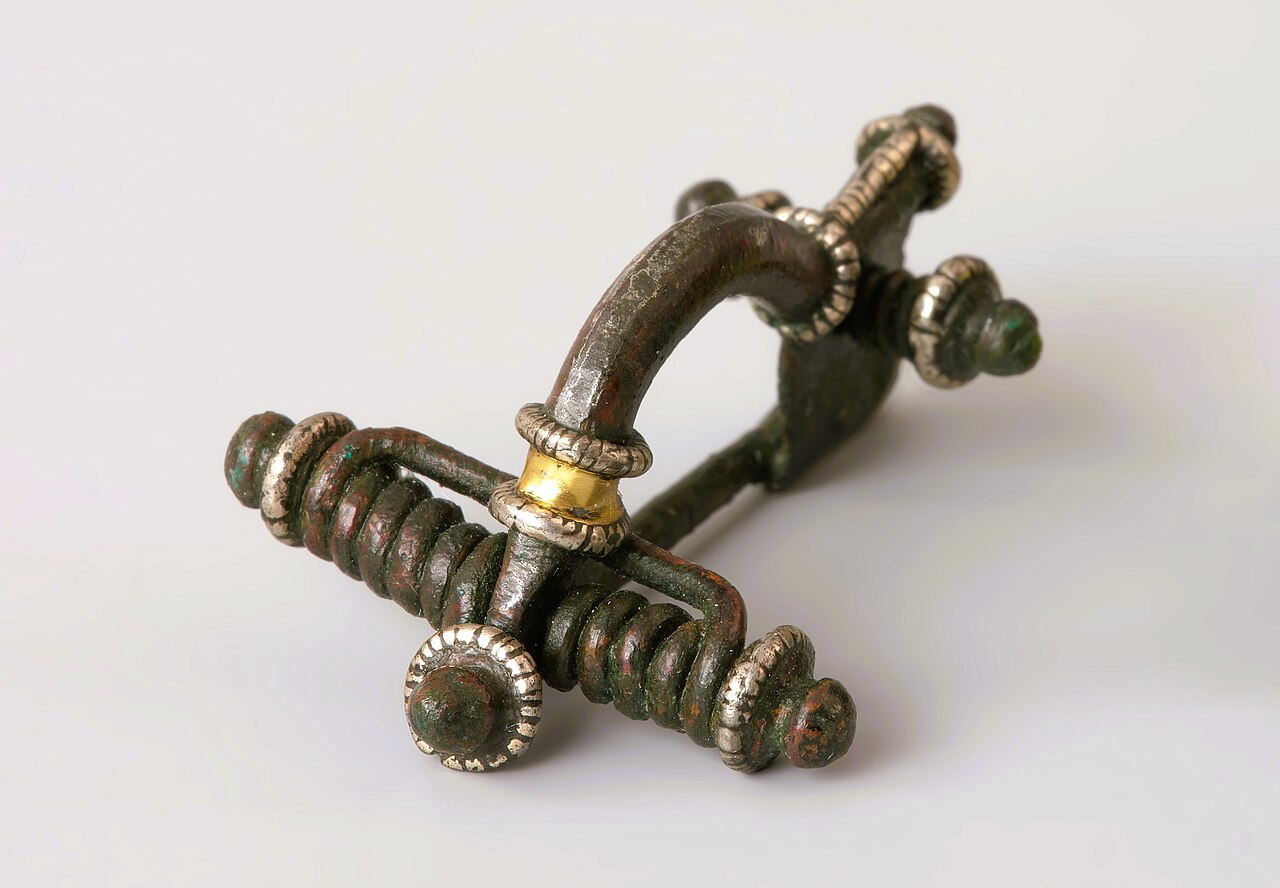
Reported by Radio Białystok, iSokolka.eu (27 October 2026), TVP Białystok and The Daily Galaxy (November 2026). Written for Global Finds from those reports. Photo: a bronze Wielbark culture brooch with silver wire decoration, from a cemetery at Żalęcino in north-west Poland (not from this find), wMuzeach, Wikimedia Commons, CC0.
Related guide: Choosing your first metal detector
Source: Radio Białystok
Also reported by