The "I live in hope" posy ring: a detectorist found a gold love ring fifteen minutes into an evening's search, the day after he posted a stranger's lost earring home for free
16th to 18th century · Found in 2026 See it on the timeline →
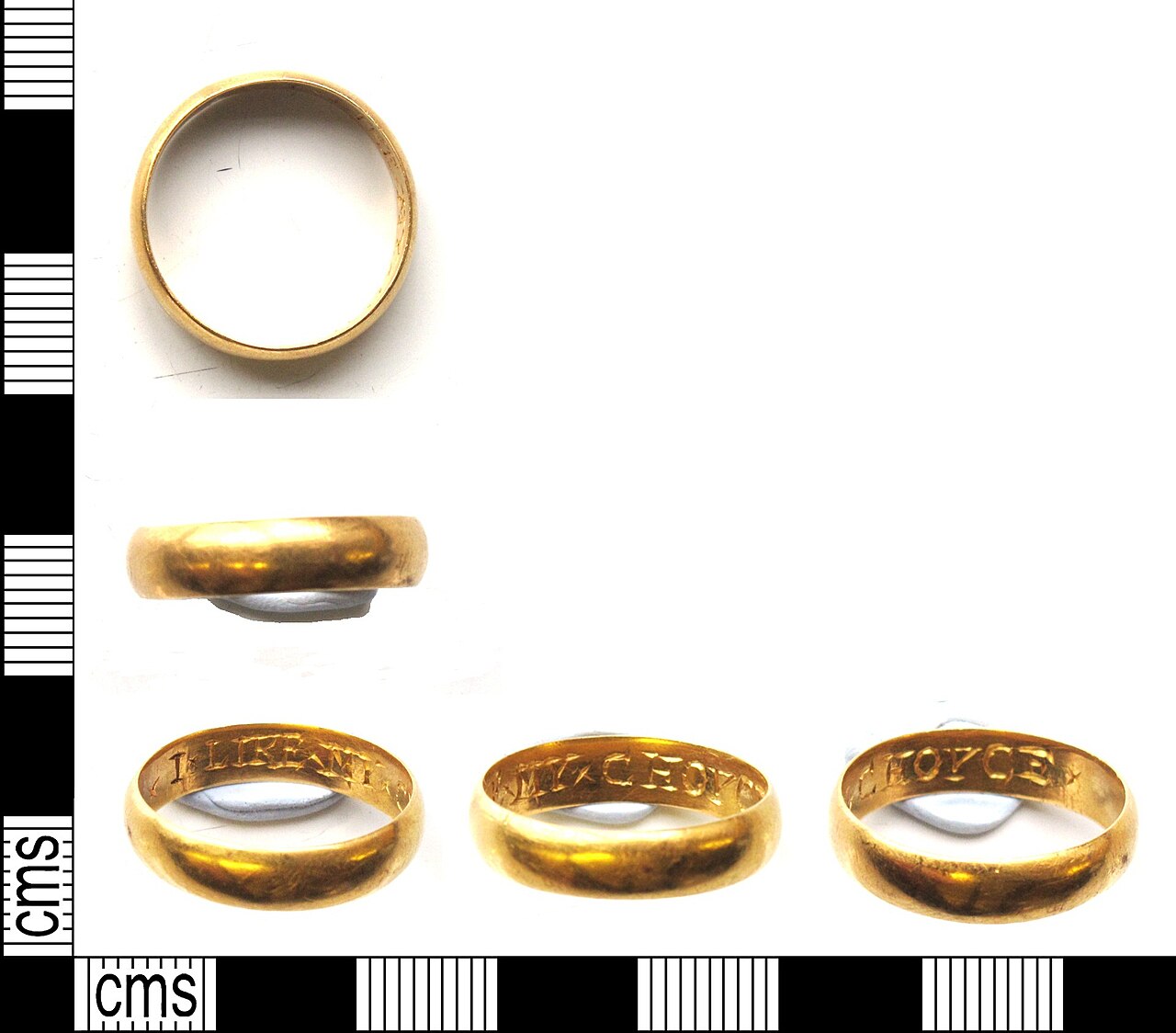
Detecting with friends in a Warwickshire field, Kevin Short found a gold posy ring inscribed "I live in hope" a couple of inches down. The British Museum dated it to the 16th to 18th century, and it goes to auction in Banbury on 2 December 2026.
Kevin Short had been detecting with friends in a field in Warwickshire for only 10 or 15 minutes one evening when he saw something glinting in the soil, a couple of inches below the surface. He picked out a gold finger ring. "I knew straight away it was gold, although I had no idea of its quality or how significant it might be," he told the BBC. "When we realised what we'd found, we did the gold dance!" He has been detecting for years and calls it by far his most exciting find.
It is a posy ring, a plain band with a short message engraved on the inside where only the wearer would see it. Posy rings were given as tokens of love or friendship, often at a betrothal or wedding. The inscription on this one, as the Banbury Guardian sets it out, reads "x I x LIVE x IN x HOPE x", with small crosses between the words. The British Museum examined the ring, confirmed it as genuine and dated it to between the 16th and 18th centuries. Some reports call it Elizabethan, but the museum's date covers a much longer span. Nobody knows who had it made, who wore it, or how it came to be lost in a Warwickshire field.
The evening before, Mr Short had posted a photograph of an earring he had dug up to a metal-detecting group on Facebook, hoping that someone could identify it. One reply said that it looked exactly like an earring that had belonged to their late sister. He sent it to them free of charge. Finding a gold ring the next evening, he said, left him wondering whether a little good karma had come his way.
The ring will be offered at Holloways Auctioneers in Banbury on 2 December 2026, with an estimate of £2,000 to £3,000. "There's a whole story here that we'll probably never know, but it's lovely to imagine," said Amanda Butler, a director of the auction house.
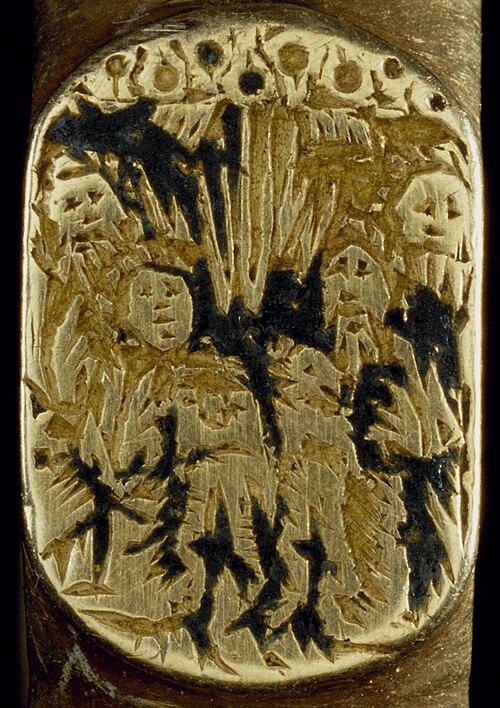
Reported by BBC News (12 November 2026), the Oxford Mail (13 November 2026), the Banbury Guardian and British Heritage (13 November 2026). Written for Global Finds from those reports. Photo: a gold posy ring of the 16th or 17th century inscribed "I like my choyce", recorded with the Portable Antiquities Scheme (not from this find), Derby Museums Trust, Lauren Proctor, Wikimedia Commons, CC BY-SA 4.0.
Related guide: How to read a metal detector's signals
Source: BBC News
Also reported by