ANCE: experts crack the code of a padlock from a 1583 shipwreck, after the detectorist who found it tried for 20 years
Lost in the wreck of 1583 · Found in 1999 See it on the timeline →
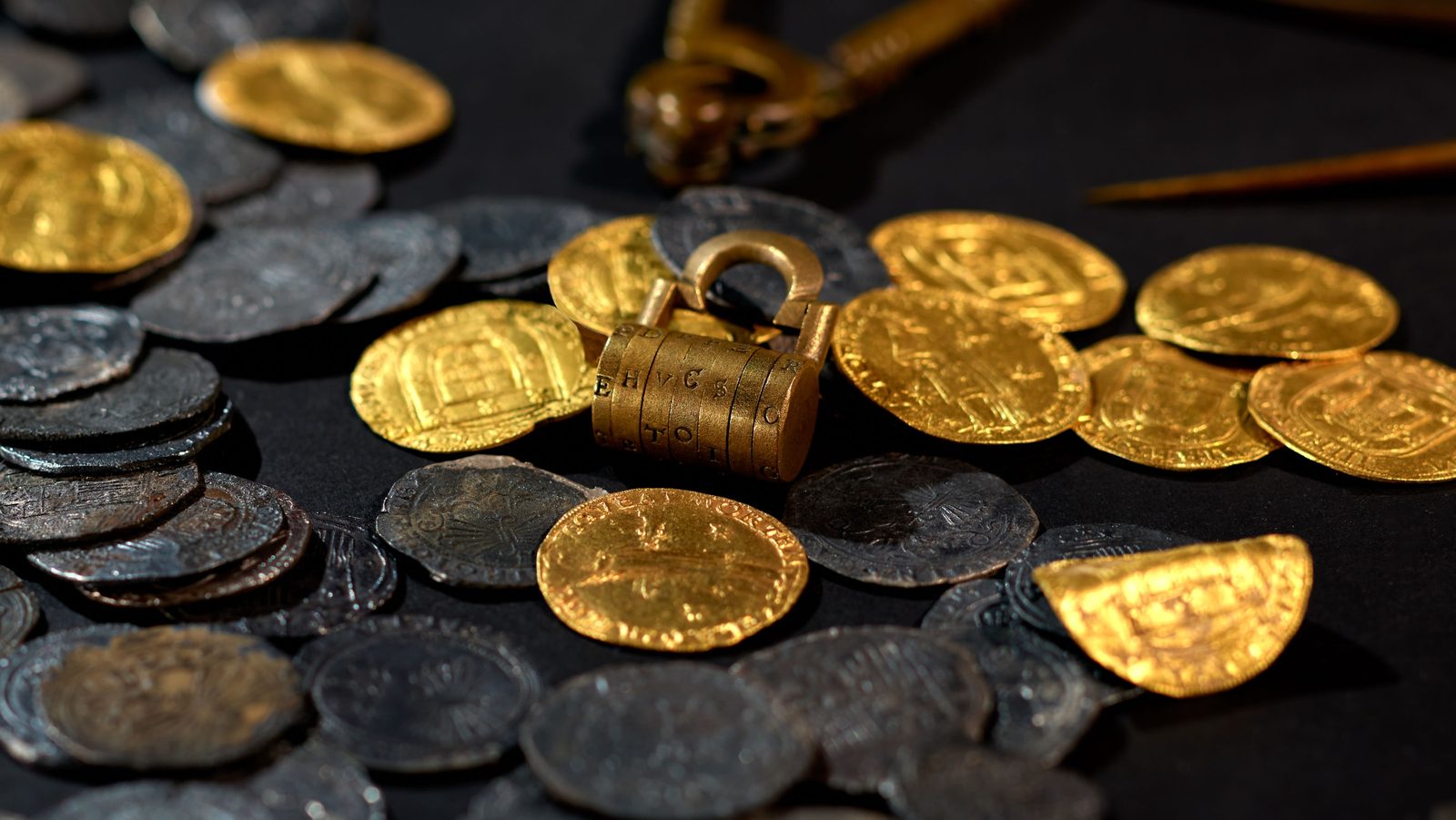
A brass combination lock found by detectorist Peter Hughes on Morfa beach, Margam, has given up its secret. Using micro CT scanning, experts from Amgueddfa Cymru and Cardiff University found the code to the lock from the Ann Francis, wrecked in 1583. It spells ANCE.
For about 20 years Peter Hughes tried to open a small brass padlock. He had found it in 1999 with his metal detector on Morfa beach at Margam, near Port Talbot, one of hundreds of objects he recovered from the wreck of the Ann Francis, a merchant ship lost in a storm on 28 December 1583. However he turned its dials, it would not open. Now experts have done what he couldn't. The code is ANCE.
The lock is tiny, just 31.8 mm tall and weighing 28.5 g. It is a type sometimes called a Nuremberg lock, with four rotating rings, each engraved with six letters. That makes 1,296 possible combinations. To confuse things further, there are more letters on the fixed plates at each end, which play no part in opening it. Senior curator Alastair Willis said they look as if they were put there to mislead a burglar.
Amgueddfa Cymru - Museum Wales turned to Dr David Williams, a research associate at Cardiff University's School of Engineering, who used a micro CT scanner, a smaller version of a hospital scanner. He admits that he was sceptical. The first scan showed, to the team's surprise, that letters could be seen. The second went badly. On the third they tried a different approach and worked out the code, and when the dials were set to ANCE, the lock clicked open for the first time in more than four centuries.
Mr Hughes, now 69 and from Maesteg, compared it to cracking the Da Vinci Code, and told BBC Wales it was "like opening the Ark of the Covenant". Senior curator Siân Iles said that such locks are usually found corroded and in pieces, but this one is in excellent condition and still works as it did hundreds of years ago. It was found near a group of Spanish silver coins and two coin weights, so it may have secured a chest or small box holding valuables or documents that did not survive. What ANCE meant to its owner, if anything, is not known.
Similar locks of the 16th century have turned up elsewhere. The museum's record notes that a British Museum example opens with the word MARCI, and that one found on the Suffolk coast has been recorded by the Portable Antiquities Scheme.
Mr Hughes passed his collection to the museum in 2017. The lock is the centrepiece of the free exhibition Tides of Treasure at the National Waterfront Museum in Swansea, which runs until 26 June 2027. The full story of the wreck and the 21-year search is on the Ann Francis page.
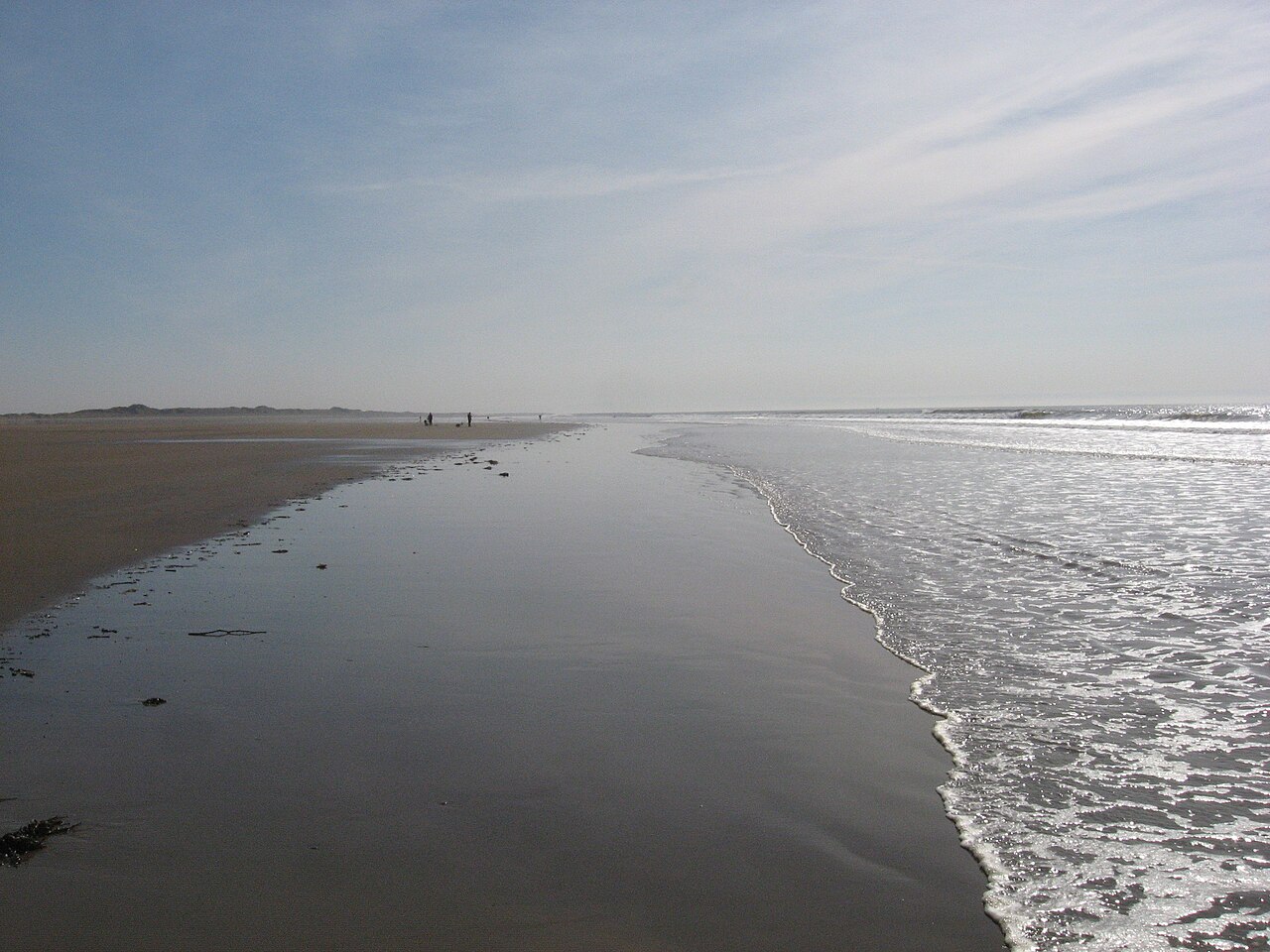
Reported by BBC News (3 November 2026) and Smithsonian Magazine (12 November 2026), with details from the Amgueddfa Cymru - Museum Wales collection record. Written for Global Finds from those sources. Photo: Margam Sands at low tide (the beach today, not the find), Gareth James, Wikimedia Commons, CC BY-SA 2.0.
Related guide: Beach detecting: the rules, the tides and the salt
Linked finds
Source: BBC News