The Rao pectoral: a sand burial mound near the mouth of the Senegal River hid a gold disc that became a national treasure
Famous find 12th-13th century AD · Found in 1941 See it on the timeline →
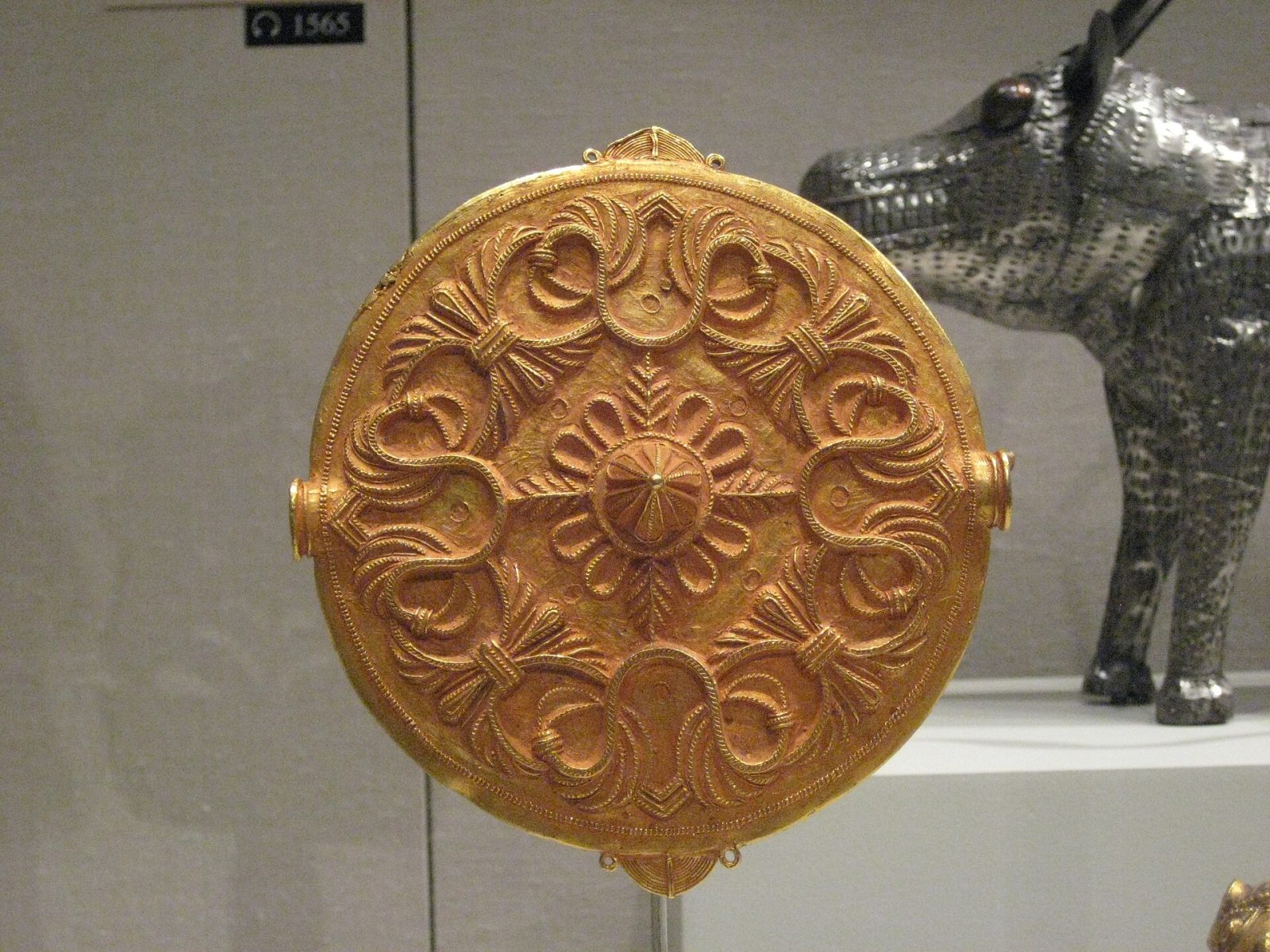
In 1941 Jean Joire excavated a sand burial mound at Rao, south of Saint-Louis in Senegal, and found a skeleton wearing a gold disc 18.4 cm across, with gold beads. Made in the 12th or 13th century, the Rao pectoral is now one of Senegal's national treasures.
South of the old colonial town of Saint-Louis, near where the Senegal River meets the Atlantic, low sand mounds rise from the land around the village of Rao. Local people call such burial mounds mbanaar. In 1941 and 1942 J. Joire, working with C. Duchemin, dug into 21 of them: 12 in the Nguiguéla group, about 3 km north-east of the village, and 9 at Massar. In 1941, in the mound now known as tumulus P at Nguiguéla, Joire uncovered a skeleton with a broad disc of gold on its chest.
The disc is 18.4 cm across and weighs about 192 g. The Metropolitan Museum of Art in New York notes that its decoration suggests its maker knew Islamic metalwork. Five gold beads were found with it, and the grave also held other gold objects, silver, copper and iron weapons. The Rao mounds produced more besides: massive ribbed gold bracelets weighing 400 to 800 g each, an iron barbed javelin head and a copper-alloy hoe blade.
The pectoral is usually dated to the 12th or 13th century. At that time the Senegal valley lay at the western end of the trade routes that carried West African gold north across the Sahara, and the burials show that the people buried here were wealthy and powerful. Some writers link them with the beginnings of the Wolof kingdoms, though that is not proven. Some scholars have also suggested that later gold chest discs made by the Akan peoples of Ghana may have been inspired by Sahelian work such as this.
Joire published the excavations in 1955 in the bulletin of IFAN, the French institute for Black Africa in Dakar. Nobody dug the Rao mounds again until 1971. The pectoral is held by IFAN Cheikh Anta Diop in Dakar and is treated as one of Senegal's national treasures. In 2020 it was lent to the Metropolitan Museum for the exhibition Sahel: Art and Empires on the Shores of the Sahara, and then returned to Dakar.
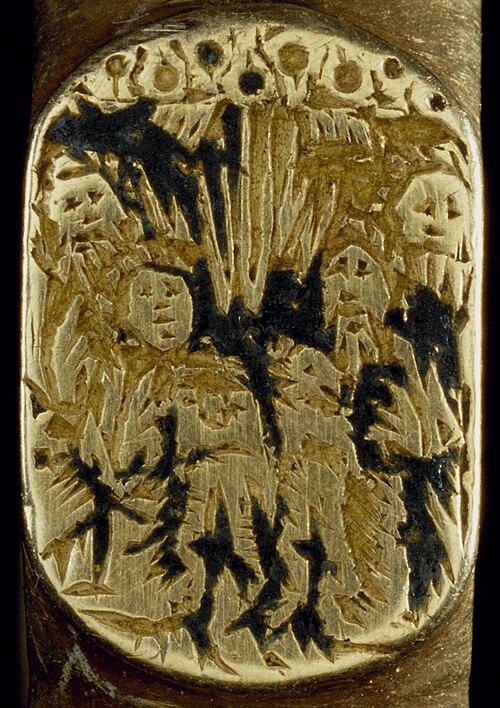
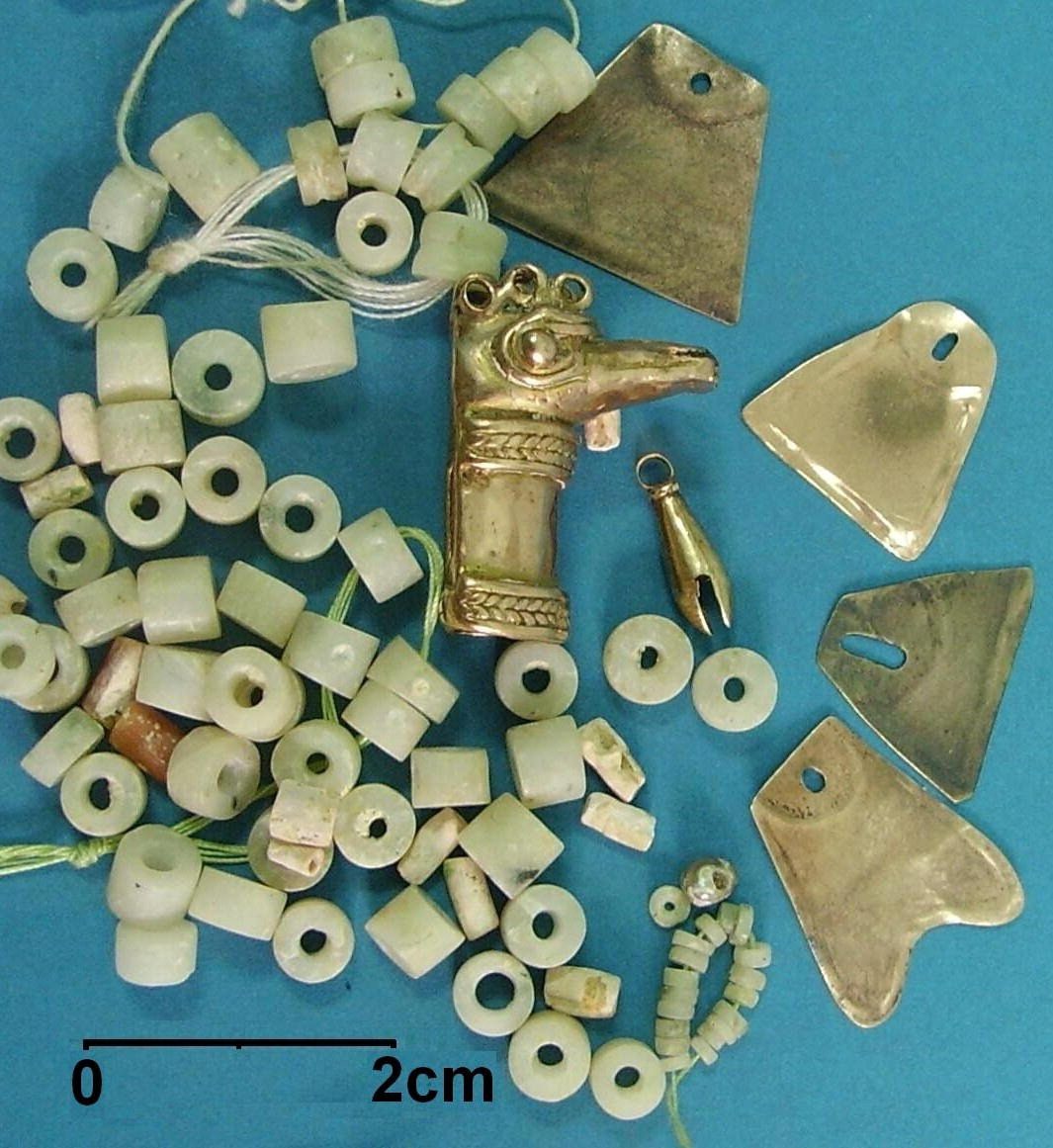
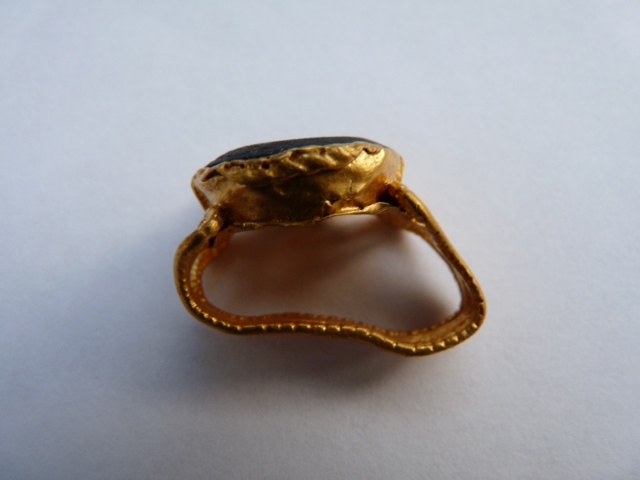
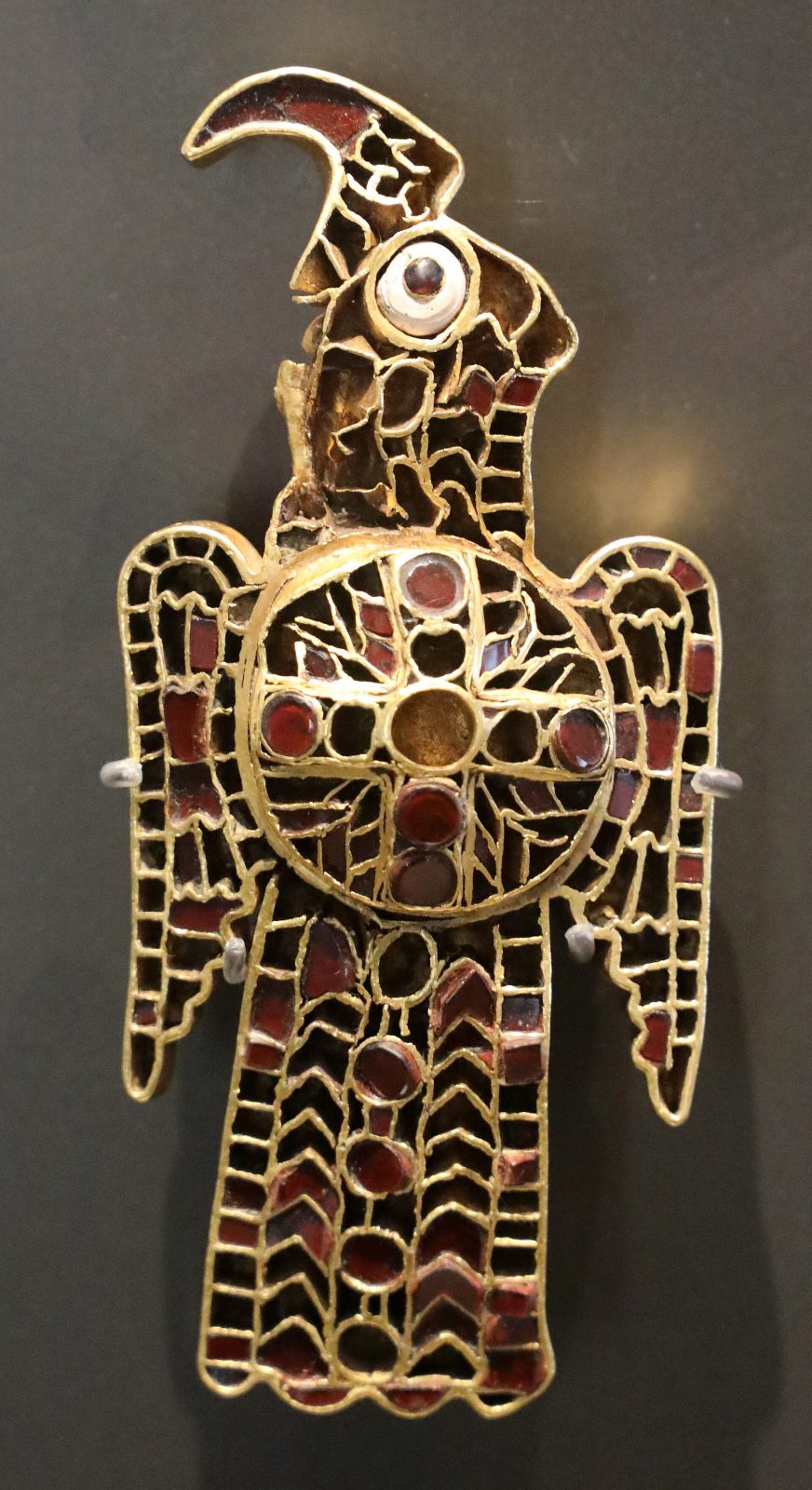
Written for Global Finds from Hamady Bocoum, "Les tumulus de Rao, nouvelles recherches" (ANKH), the Metropolitan Museum of Art's Sahel exhibition records (2020) and Art of the Ancestors. Photo: a gold soul-washer's disc made by the Asante of Ghana in the 18th or 19th century, at the Metropolitan Museum of Art (a later stand-in, not the Rao pectoral, which has no free photograph), Claire H., Wikimedia Commons, CC BY-SA 2.0.