The Mildenhall Treasure: Roman silver ploughed up in wartime Suffolk
Famous find Made in the 4th century AD · Found in 1942 See it on the timeline →
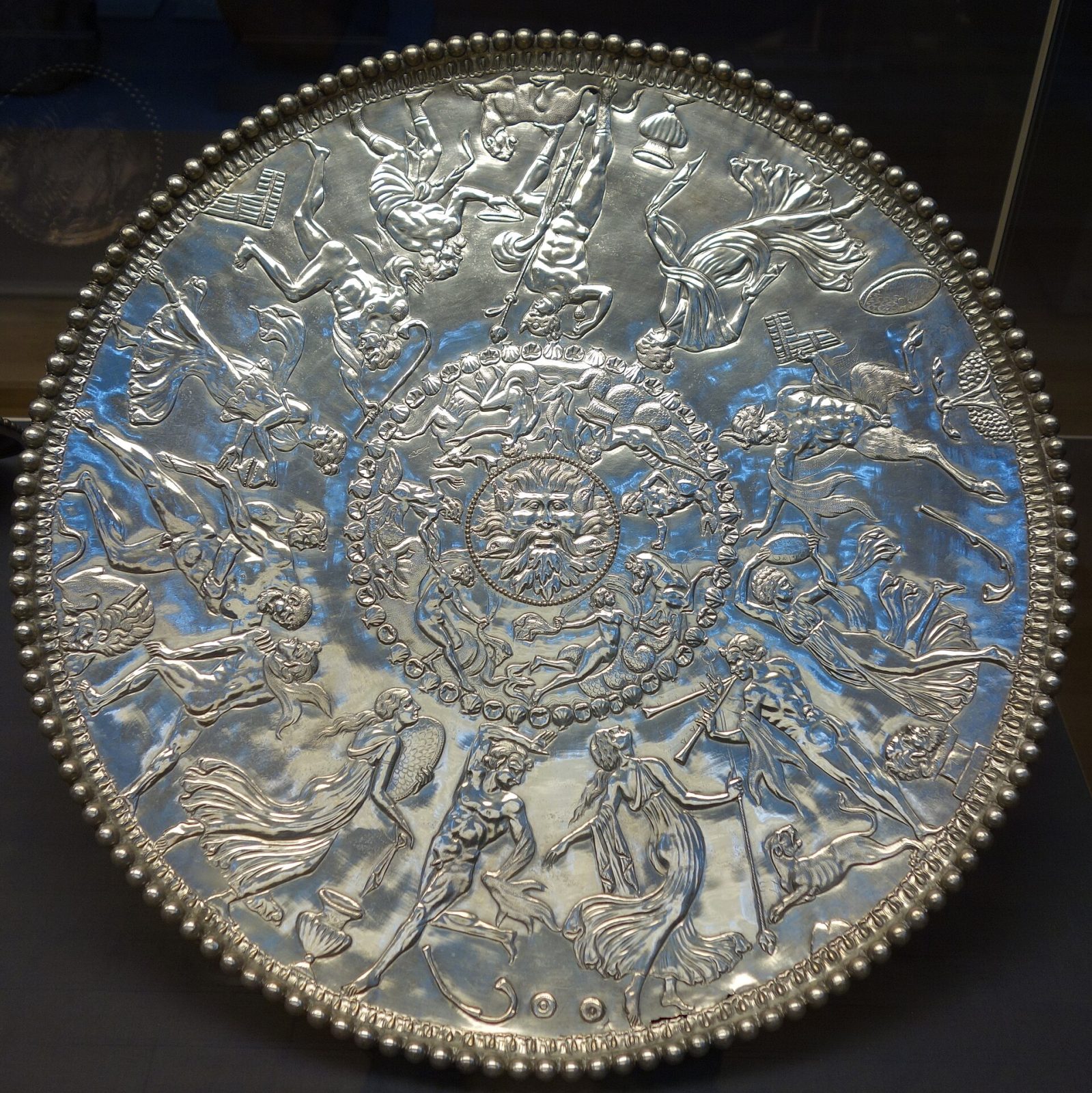
In 1942 a ploughman at West Row in Suffolk struck a hoard of 34 pieces of late Roman silver tableware. His employer took it home and kept quiet about it for four years before the world found out.
In January 1942, Gordon Butcher was ploughing a field at West Row, near Mildenhall in Suffolk, when his plough struck metal. He fetched his employer, Sydney Ford, a local agricultural engineer with an interest in antiquities, and together they dug out a heap of blackened plates, bowls and spoons.
Ford took everything home, cleaned some of it and, by most accounts, kept it in his house without telling anyone what it was. It was more than four years before a visitor, Dr H. A. Fawcett, recognised the pieces in 1946 and reported them.
What Ford had was 34 pieces of late Roman silver tableware from the 4th century AD: platters, bowls, goblets and spoons. The star is the Great Dish, 60.5 centimetres across and weighing more than 8 kilograms, decorated with Bacchus, Hercules, Pan and a crowd of dancing revellers around the face of a sea god. With no coins in the hoard, it is dated by its style and decoration.
An inquest at Bury St Edmunds in 1946 declared it treasure trove, and the British Museum acquired it. Because the find had not been reported, Butcher and Ford received £1,000 each, far less than a prompt report would have earned. The story has never quite settled. The author Roald Dahl interviewed Butcher and wrote it up, and some researchers and local people have doubted parts of Ford's account, including exactly where and how the silver was found.
The treasure is on display in the British Museum, with replicas at Mildenhall Museum. It remains one of the finest groups of Roman silver ever found, and evidence of great private wealth in Britain in the last century of Roman rule.
Written for Global Finds from the British Museum, Mildenhall Museum and other published accounts. Photo: the Mildenhall Great Dish in the British Museum, Daderot, Wikimedia Commons, CC0.
Approximate location52.35, 0.45View on map
Source: British Museum