The Traprain Law Treasure: Roman silver cut up beyond the Empire's edge
Famous find Buried in the early 5th century AD · Found in 1919 See it on the timeline →
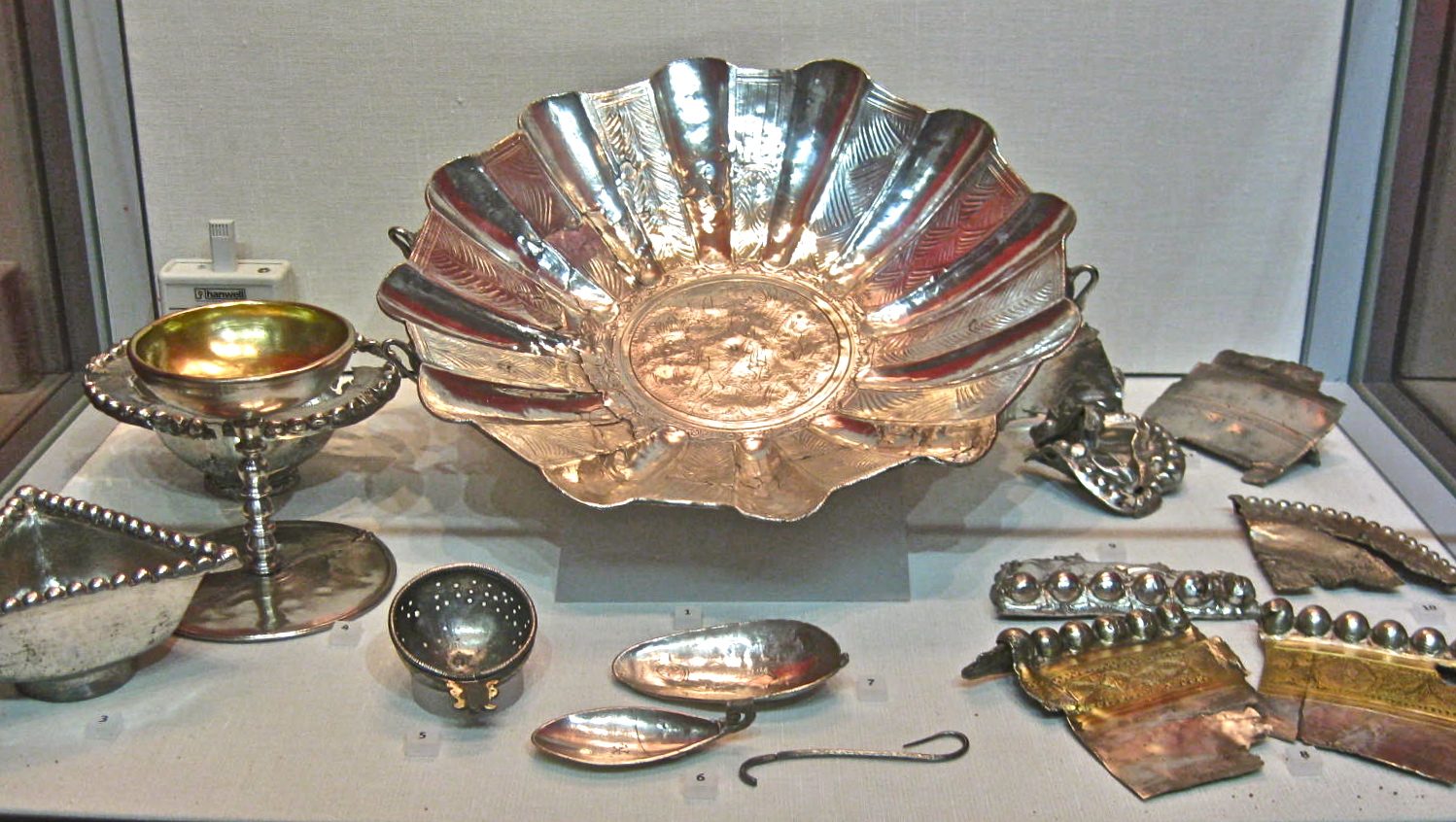
In 1919 archaeologists digging a hillfort in East Lothian found more than 20 kilograms of late Roman silver, deliberately cut and crushed into pieces. It is the largest hoard of Roman hacksilver ever found.
In May 1919, archaeologists led by Alexander Curle were excavating the hillfort on Traprain Law, a great whaleback hill in East Lothian, when they found a pit beneath the floor of a house. It was packed with silver: just over 23 kilograms of it.
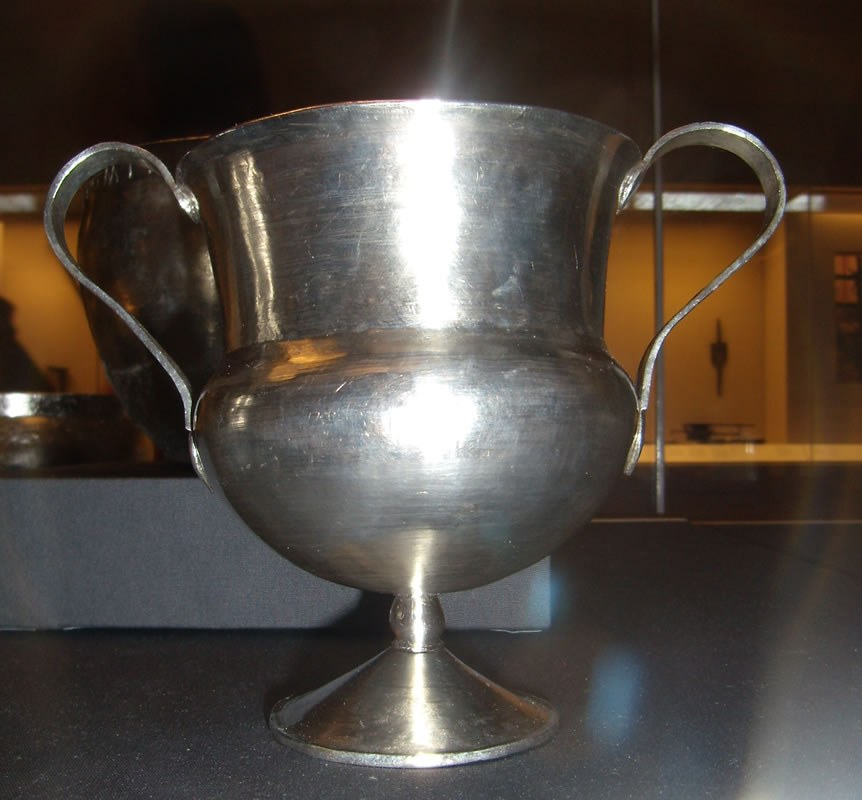
Almost none of it was whole. The hoard was made up of Roman silver tableware, dishes, flagons, bowls, cups and spoons, that had been deliberately cut up, crushed and folded. Hundreds of fragments survive, though the counts vary from one source to another. When silversmiths in Edinburgh pieced some of them back together, remarkable objects reappeared: a flagon decorated with scenes from the Old and New Testaments, and a fluted bowl showing a sea nymph riding a sea-panther.
A few clipped silver coins were found with it, struck for the emperors Valens, Arcadius and Honorius, the last of whom ruled until 423. They date the burial to the early 5th century, the years when Rome was giving up Britain.
Cutting silver up like this turned luxury plate into bullion, to be weighed out and paid by its value as metal. Early writers assumed the hoard was loot from raids south of Hadrian's Wall. National Museums Scotland now favours a different explanation: that the silver reached the people of Traprain Law as diplomatic gifts or as payment from Rome, perhaps for military service, arriving over a period of time.
It is the largest hoard of Roman hacksilver ever found, and it was found outside the Empire, which makes it one of the best clues to how Rome dealt with the peoples beyond its frontier. It is on display in the National Museum of Scotland in Edinburgh.
Written for Global Finds from National Museums Scotland, the University of Basel's Traprain Law project and other published accounts. Photo: part of the Traprain Law Treasure in the National Museum of Scotland, Tyssil, Wikimedia Commons, CC BY-SA 4.0.
Approximate location55.96, -2.67View on map
Source: National Museums Scotland