The Vale of York Hoard: a Viking treasure packed into a silver cup
Famous find Buried around 928 · Found in 2007 See it on the timeline →
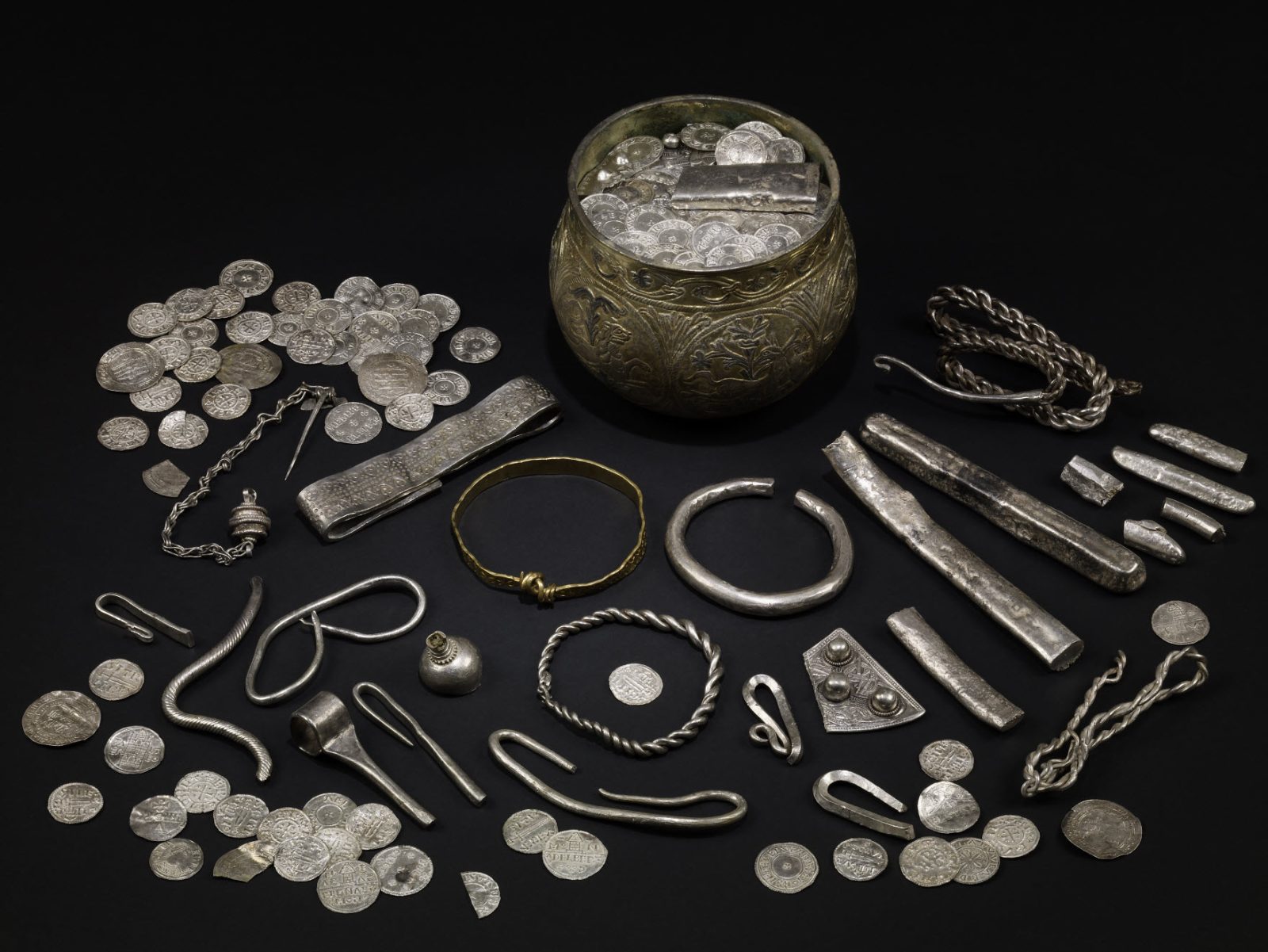
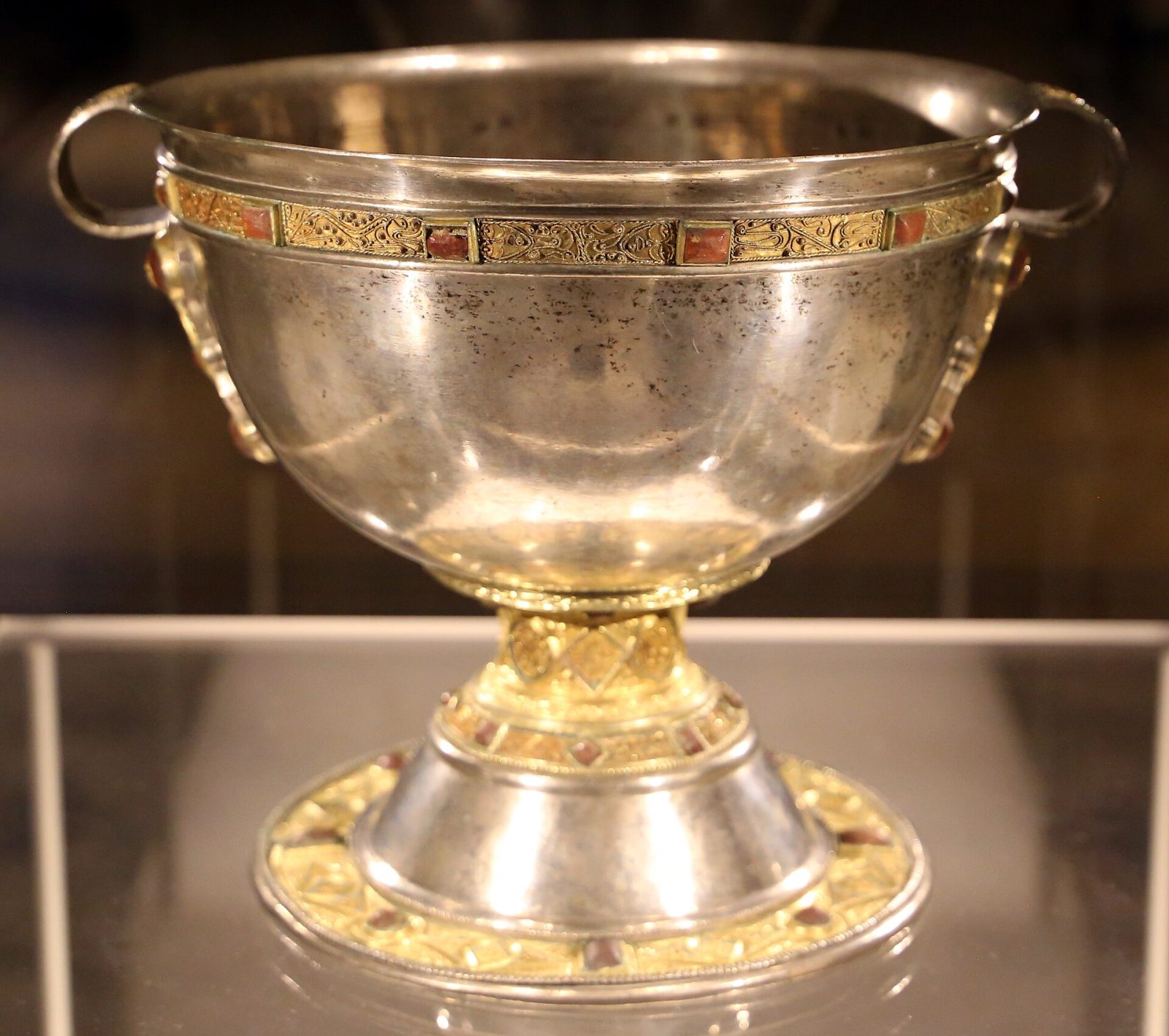
On 6 January 2007 a father and son detecting near Harrogate found a Viking hoard of 617 silver coins and gold and silver jewellery, packed into a gilded cup made in the Frankish empire. It was valued at £1,082,000.
On 6 January 2007, David Whelan and his son Andrew were metal detecting on farmland near Harrogate in North Yorkshire when they found a hoard about 30 centimetres down. They did exactly the right thing: rather than empty it in the field, they lifted it whole and reported it to the Portable Antiquities Scheme, and its contents were excavated in the laboratory at the British Museum.
At its heart was a silver-gilt cup, made in the 9th century in the Frankish lands of what are now France or western Germany, and probably taken in a raid. It had been packed with treasure: 617 silver coins, a gold arm-ring, silver arm-rings, ingots and hacksilver, with scraps of a lead container around it. The coins come from a remarkable range of places, from Anglo-Saxon England and Viking York to Ireland, Scandinavia and the Islamic world, including dirhams struck as far away as Samarkand and Afghanistan.
The coins also date the hoard closely. Among them are freshly struck coins of King Athelstan, who took York from the Vikings in 927, including one of a type that styles him king of all Britain, introduced around 928. That points to a burial around 928, perhaps by a wealthy Viking hiding his silver as the new English king took control of the north.
The hoard was declared Treasure and valued at £1,082,000. York Museums Trust and the British Museum bought it jointly in 2009, with help from the National Heritage Memorial Fund and the Art Fund. After touring, it has been on display at the Yorkshire Museum in York since 2015.
It was the most important Viking hoard found in Britain for about 150 years, since Cuerdale.
Written for Global Finds from York Museums Trust, the British Museum's Treasure report and other published accounts. Photo: the Vale of York Hoard, Portable Antiquities Scheme, Wikimedia Commons, CC BY 2.0.
Approximate location53.99, -1.54View on map
Source: York Museums Trust