The Galloway Hoard: the richest Viking-age treasure found in Britain or Ireland
Famous find Buried around AD 900 · Found in 2014 See it on the timeline →
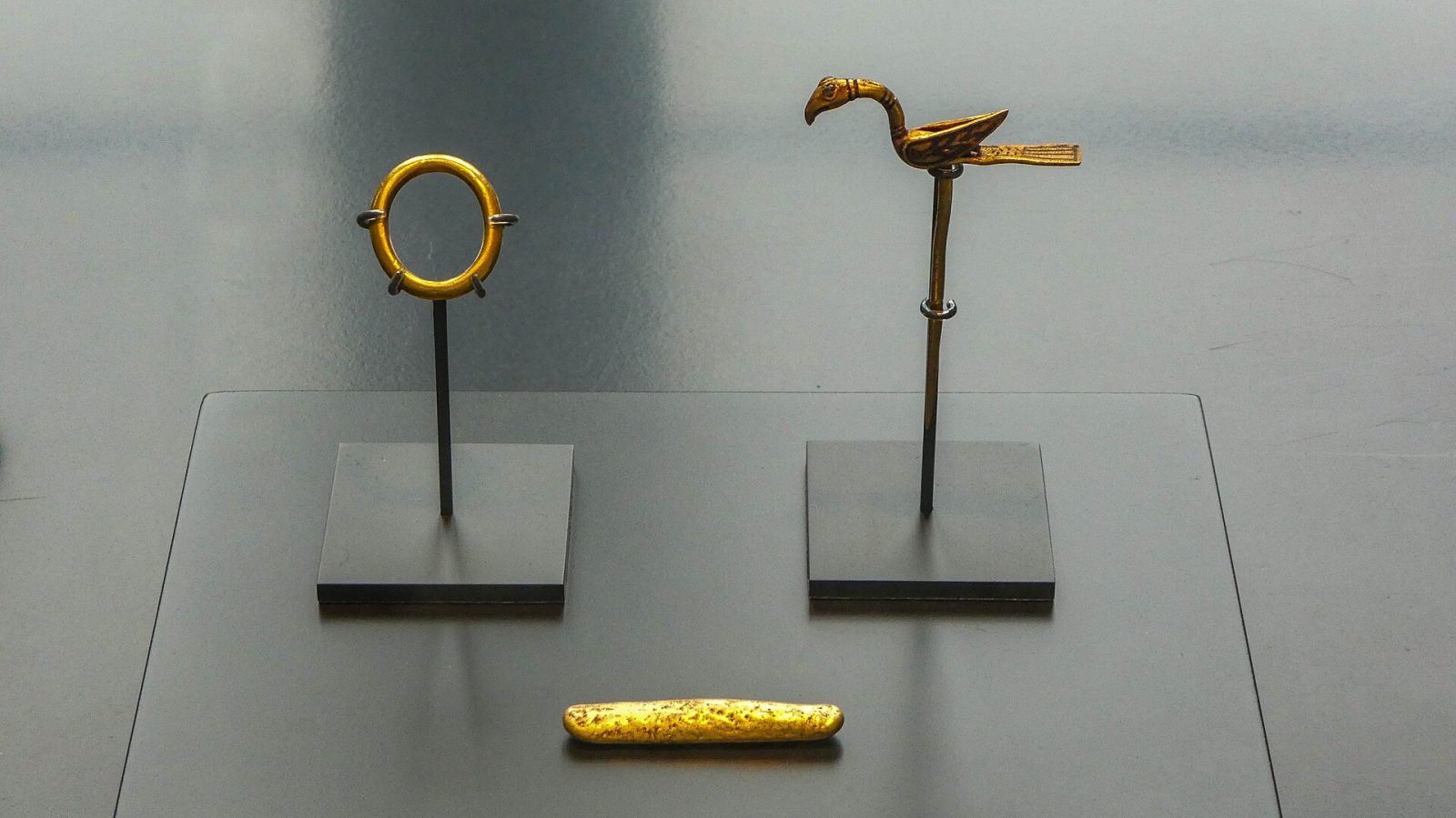
In 2014 a metal detectorist in Dumfries and Galloway found more than 100 objects of silver, gold and rare materials, buried in carefully wrapped parcels around AD 900. It was valued at £1.98 million.
In September 2014, Derek McLennan was metal detecting with two friends on Church of Scotland land in the parish of Balmaghie, in Dumfries and Galloway, when his detector led him to a hoard of Viking-age silver. The exact spot has never been made public.
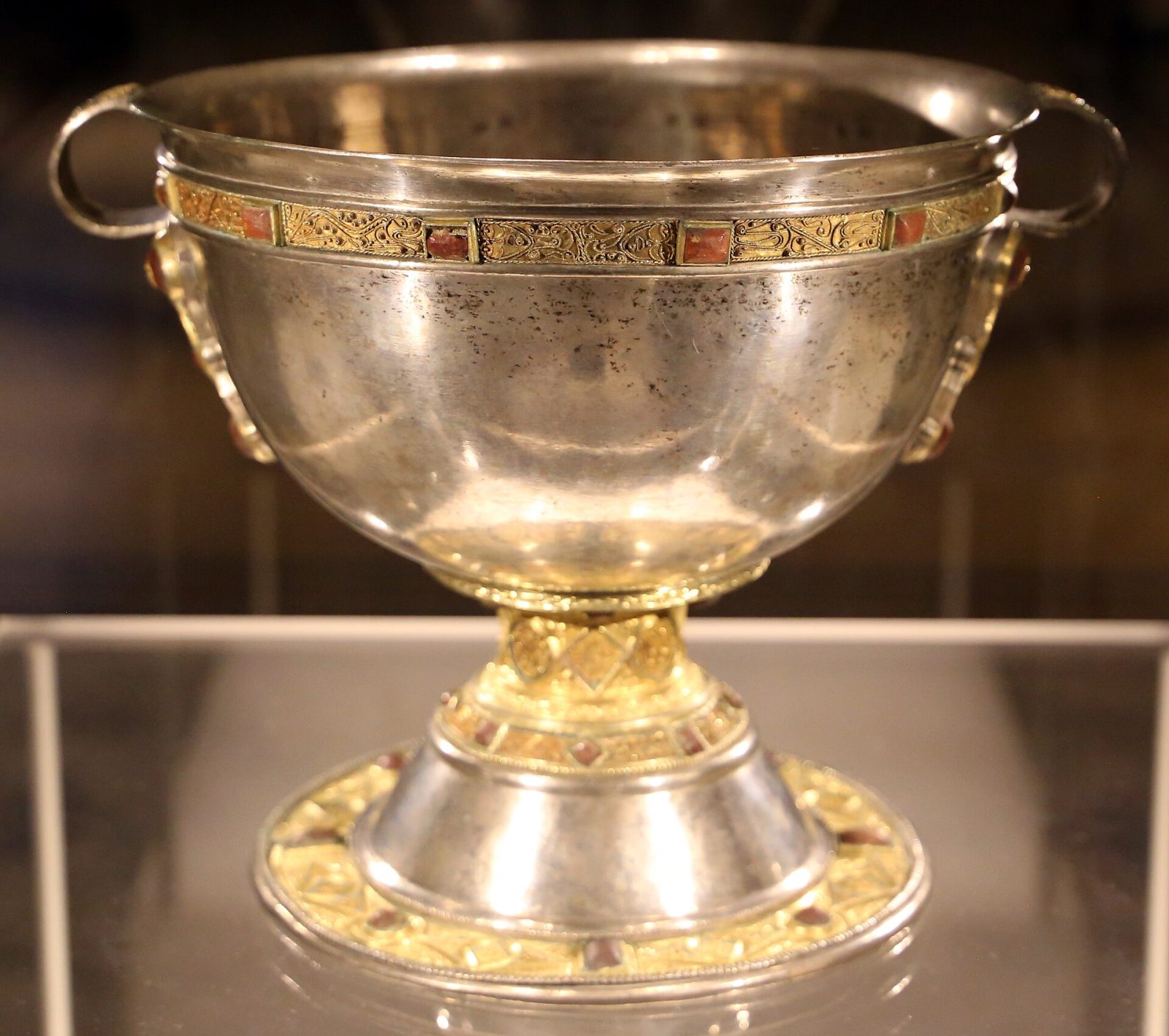
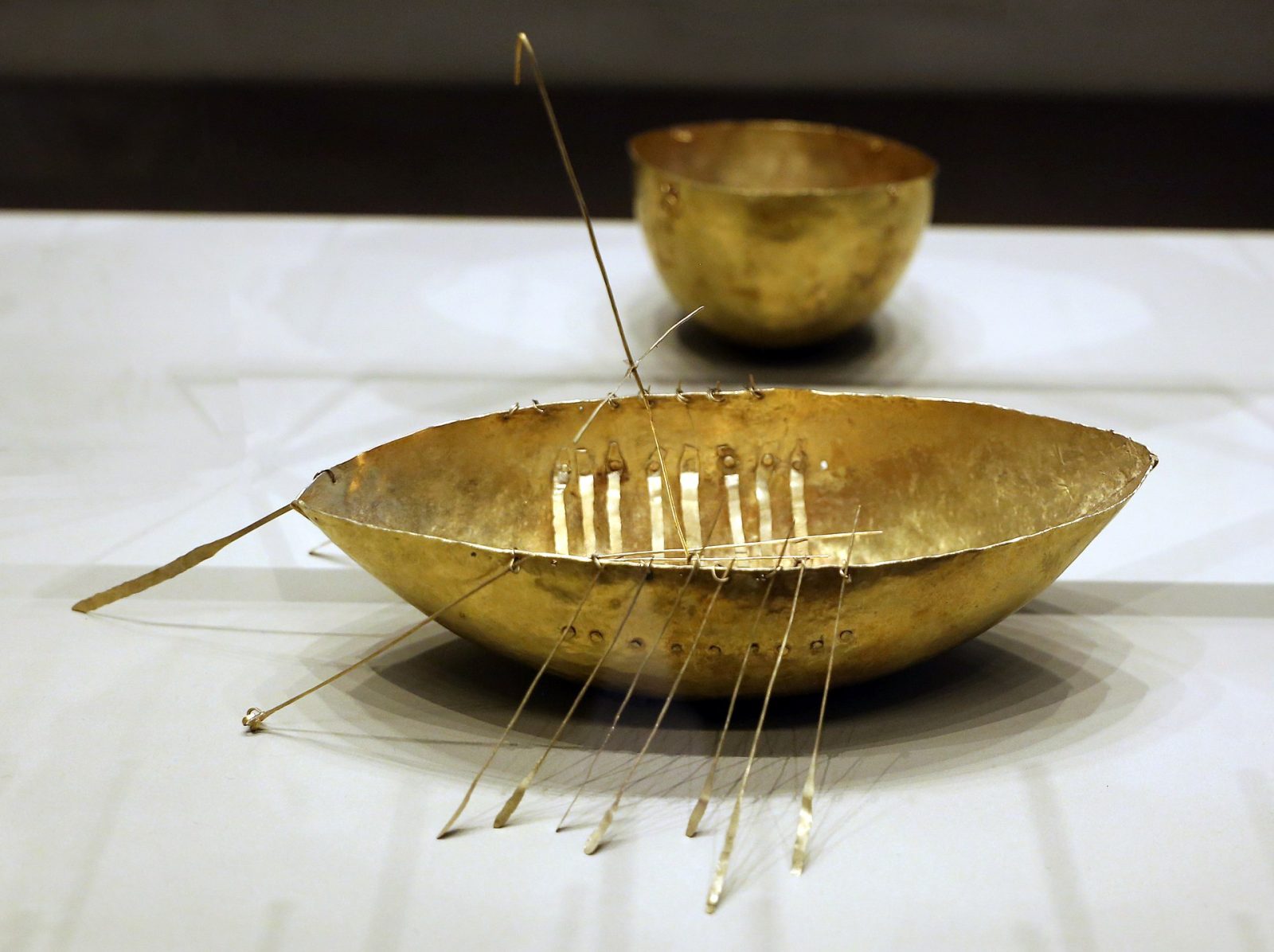
The Galloway Hoard turned out to be more than 100 objects, weighing over 5 kilograms in all, packed in separate parcels and carefully wrapped. There was silver bullion and an Anglo-Saxon cross; silver arm-rings, some scratched with Anglo-Saxon names in runes; a small wooden box containing gold objects, including a pin shaped like a bird; and a lidded silver-gilt vessel packed with brooches, beads, a rock-crystal jar and other treasures. Fragments of silk survive, the earliest found in Scotland.
National Museums Scotland dates the burial to around AD 900, from the style of the arm-rings, but many pieces were already old when they went into the ground. The only coin was struck for Coenwulf, king of Mercia, who died in 821, and the wool wrapped around the vessel has been radiocarbon dated to between about 680 and 780. The vessel itself is decorated in a style from western Asia.
Under Scots law, finds like this can be claimed by the Crown as treasure trove. The hoard was valued at £1.98 million, and the finder and the Church of Scotland, as landowner, agreed to share the reward. Where it should go was disputed: Dumfries and Galloway Council wanted it kept in Kirkcudbright, but it was allocated to National Museums Scotland in 2017, which raised the £1.98 million with help from the National Heritage Memorial Fund, the Art Fund and a public appeal. It has since been shown in Edinburgh, Kirkcudbright and Aberdeen.
National Museums Scotland calls it the richest collection of rare Viking-age objects ever found in Britain or Ireland.
Written for Global Finds from National Museums Scotland, the Museums Association and other published accounts. Photo: gold objects from the Galloway Hoard, -JvL-, Wikimedia Commons, CC BY 2.0.
Approximate location54.98, -4.02View on map
Source: National Museums Scotland