Sutton Hoo: the Anglo-Saxon ship burial that rewrote the Dark Ages
Famous find Buried about 610 to 635 · Found in 1939 See it on the timeline →
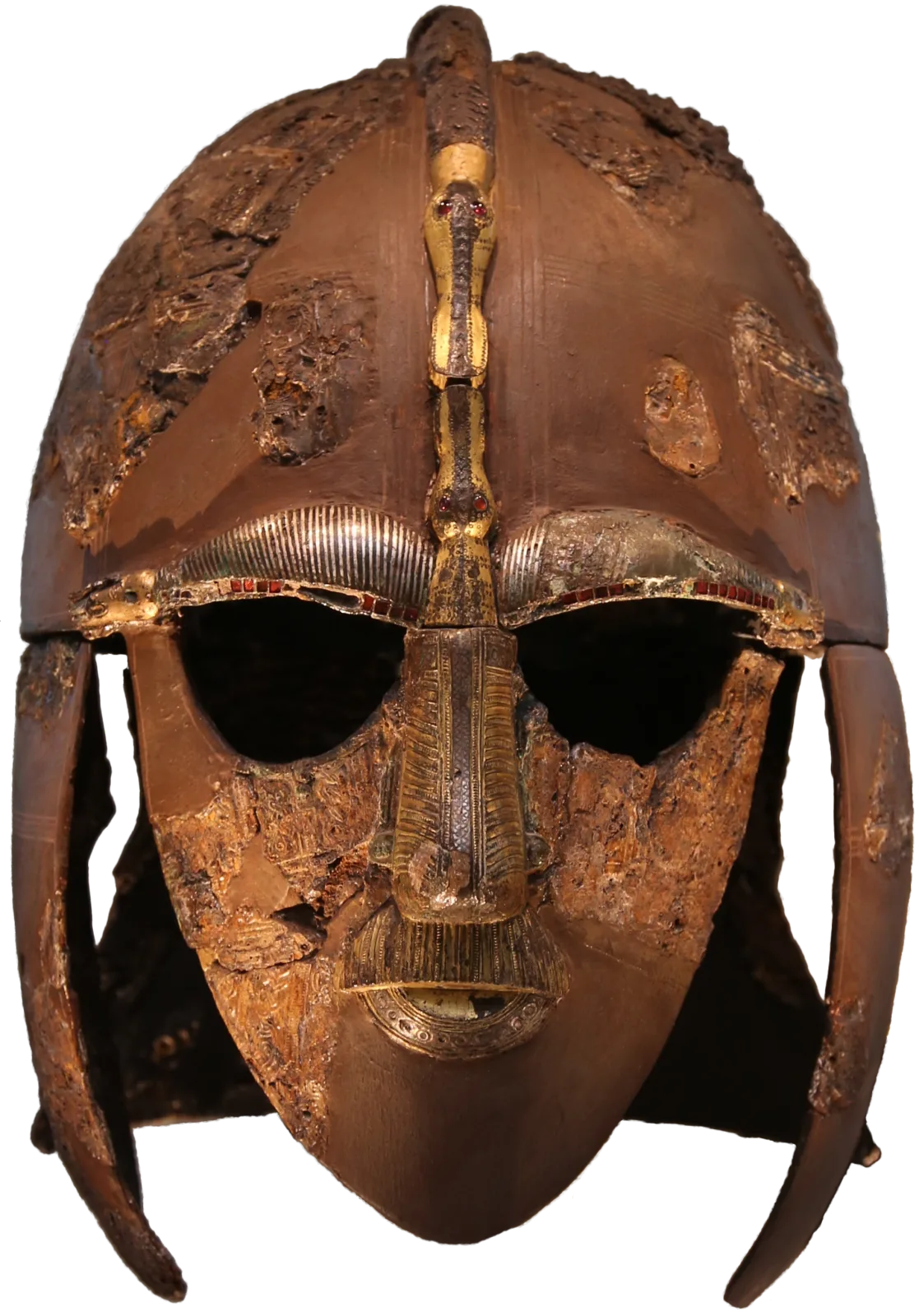
In 1939 a self-taught archaeologist uncovered the outline of a 27-metre ship under a Suffolk burial mound, and inside it the richest Anglo-Saxon burial ever found: a helmet, gold and garnet fittings and silver from Byzantium.
In 1938, Edith Pretty, who owned the Sutton Hoo estate near Woodbridge in Suffolk, asked Basil Brown, a self-taught archaeologist working for Ipswich Museum, to investigate the burial mounds on her land. He opened three that summer. In May 1939 he started on the largest, Mound 1, and soon found rows of iron ship rivets still in place in the sand.
The ship's timbers had rotted away completely, but the rivets and the stain they left in the soil kept its shape: a vessel about 27 metres long, dragged up from the River Deben and buried in a trench. In June, archaeologists led by Charles Phillips of Cambridge University took over, and on 14 June 1939 they reached the burial chamber in the middle of the ship.
No body survived in the acid soil, but what had been buried with it did. There were 263 finds, among them the iron helmet with its face mask, a great gold buckle, shoulder clasps of gold and garnet, a pattern-welded sword, and silver bowls and spoons made in the Byzantine Empire. A purse held 37 gold coins from Frankish Gaul, which date the burial to between about 610 and 635. The most likely candidate for the man buried there is Rædwald, king of the East Angles, who died around 624, though that cannot be proved.
A treasure trove inquest in 1939 ruled that the finds belonged to Mrs Pretty, because they had been buried with no intention of anyone coming back for them. She gave them all to the nation. They spent the Second World War in a London Underground tunnel and are now in the British Museum. The site itself belongs to the National Trust.
Sutton Hoo changed how historians saw the centuries after Rome: not a dark age, but a world of skilled craftsmen and kings with connections across Europe.
Written for Global Finds from the British Museum, the National Trust and other published accounts. Photo: the Sutton Hoo helmet in the British Museum, Geni, Wikimedia Commons, public domain.
Approximate location52.09, 1.34View on map
Source: British Museum