The Cuerdale Hoard: Britain's largest Viking silver hoard
Famous find Buried around 905 · Found in 1840 See it on the timeline →
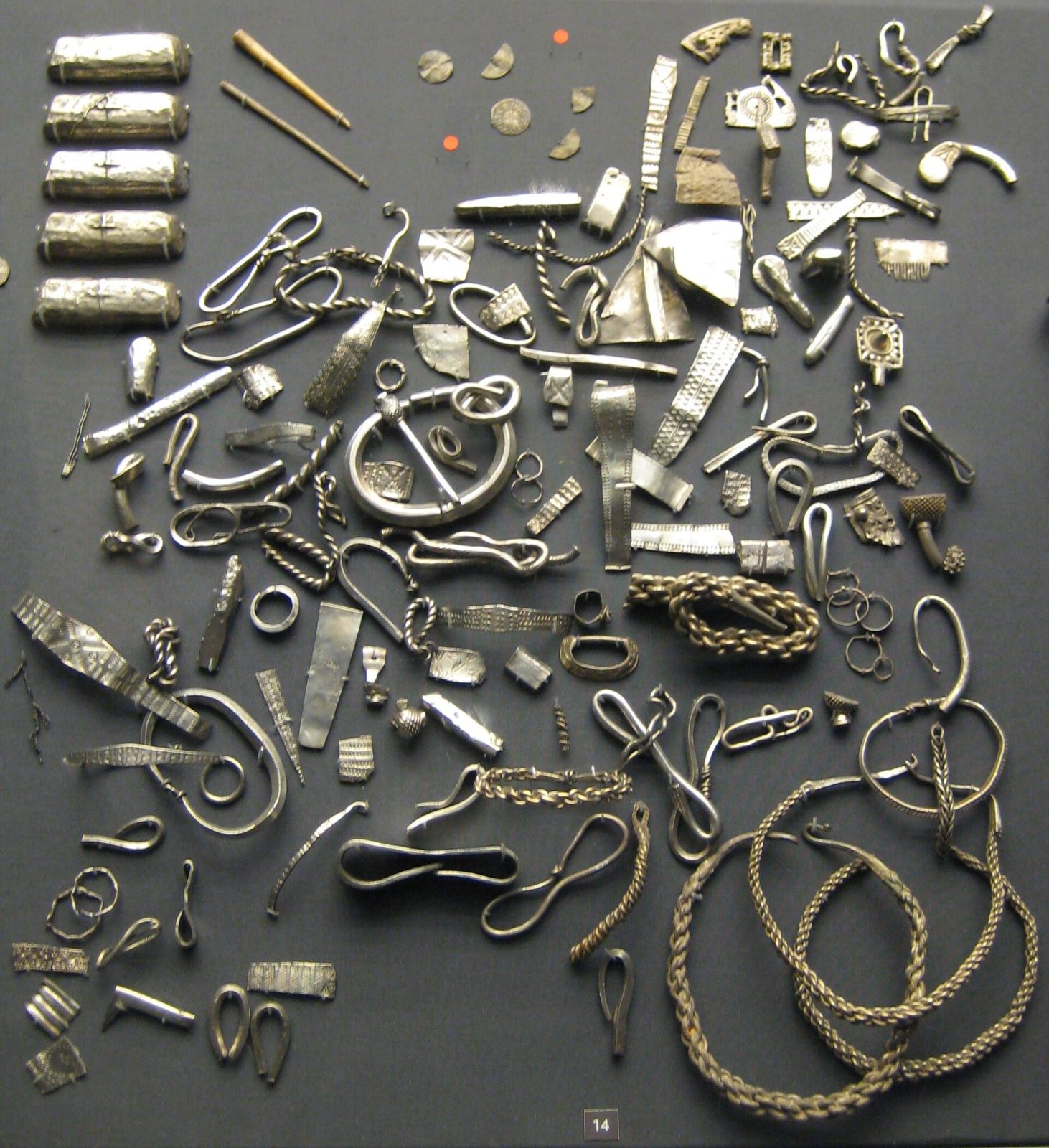
In 1840 workmen repairing a riverbank near Preston dug into a lead chest packed with about 40 kilograms of Viking silver: thousands of coins and more than a thousand ingots, arm-rings and pieces of hacksilver.
On 15 May 1840, workmen were repairing the embankment on the south bank of the River Ribble at Cuerdale, near Preston in Lancashire, when they dug into a lead chest. It was packed with silver: about 40 kilograms of it, the largest Viking silver hoard ever found in Britain.
The British Museum counts about 7,000 coins and more than 1,300 other pieces, though older counts differ a little. Most of the coins were struck by the Vikings who ruled the Danelaw in northern and eastern England, but there are also Anglo-Saxon pennies, coins from the Frankish kingdoms and Italy, and Islamic dirhams that had travelled from the Middle East. The rest is bullion: ingots, arm-rings, brooch fragments and hacksilver, silver cut up to be weighed and traded for its value as metal. Bone pins found with it probably fastened the cloth bags it was packed in.
The coins date the burial to around 905. Why it was hidden beside the Ribble, on a route between Viking Dublin and York, is not known. One idea is that it was a war chest, gathered by Vikings driven out of Dublin in 902 who were trying to win back a foothold.
The find set off a dispute between the landowner, William Assheton, and the Crown. It was declared treasure trove belonging to Queen Victoria as Duke of Lancaster and presented to the British Museum in 1841, though the Asshetons kept a selection. Much of the hoard was then given away, to more than 170 museums and individuals, so pieces of it are now in the Ashmolean Museum in Oxford, National Museums Liverpool and elsewhere. The bulk is in the British Museum.
Cuerdale shows how far Viking trade reached, from Ireland to the Islamic world.
Written for Global Finds from the British Museum, the Ashmolean Museum and other published accounts. Photo: part of the Cuerdale Hoard in the British Museum, BabelStone, Wikimedia Commons, CC0.
Approximate location53.76, -2.65View on map
Source: British Museum