The Battersea Shield: an Iron Age masterpiece from the River Thames
Famous find Made about 350 to 50 BC · Found in 1857 See it on the timeline →
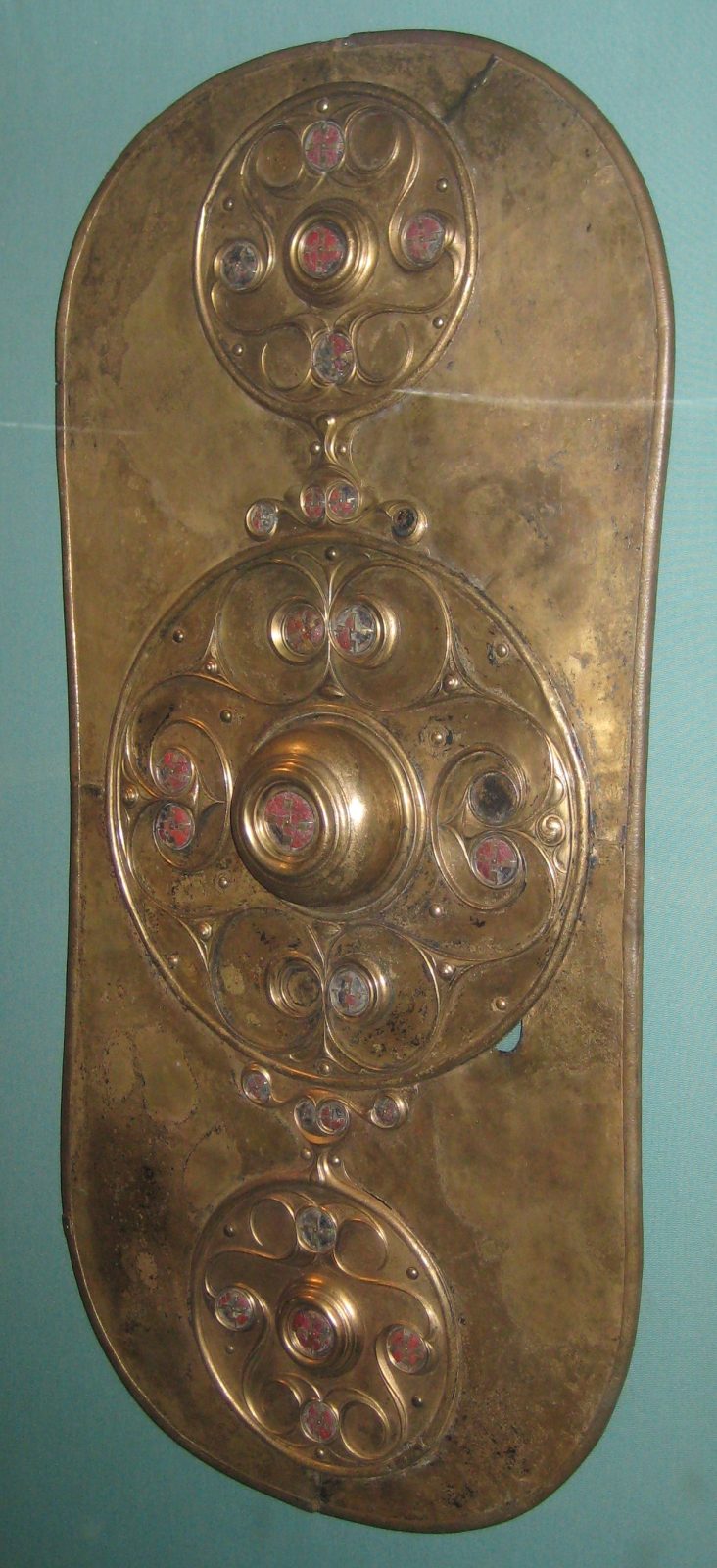
In 1857 work in the Thames at Battersea for the first Chelsea Bridge brought up a bronze shield cover decorated with swirling Celtic designs and red glass. It was never meant for battle.
In 1857, during work in the River Thames at Battersea for the building of the first Chelsea Bridge, a bronze shield cover was brought up from the riverbed. The British Museum acquired it soon afterwards, reportedly from Henry Briggs, a labourer who sold objects found in the Thames to the museum.
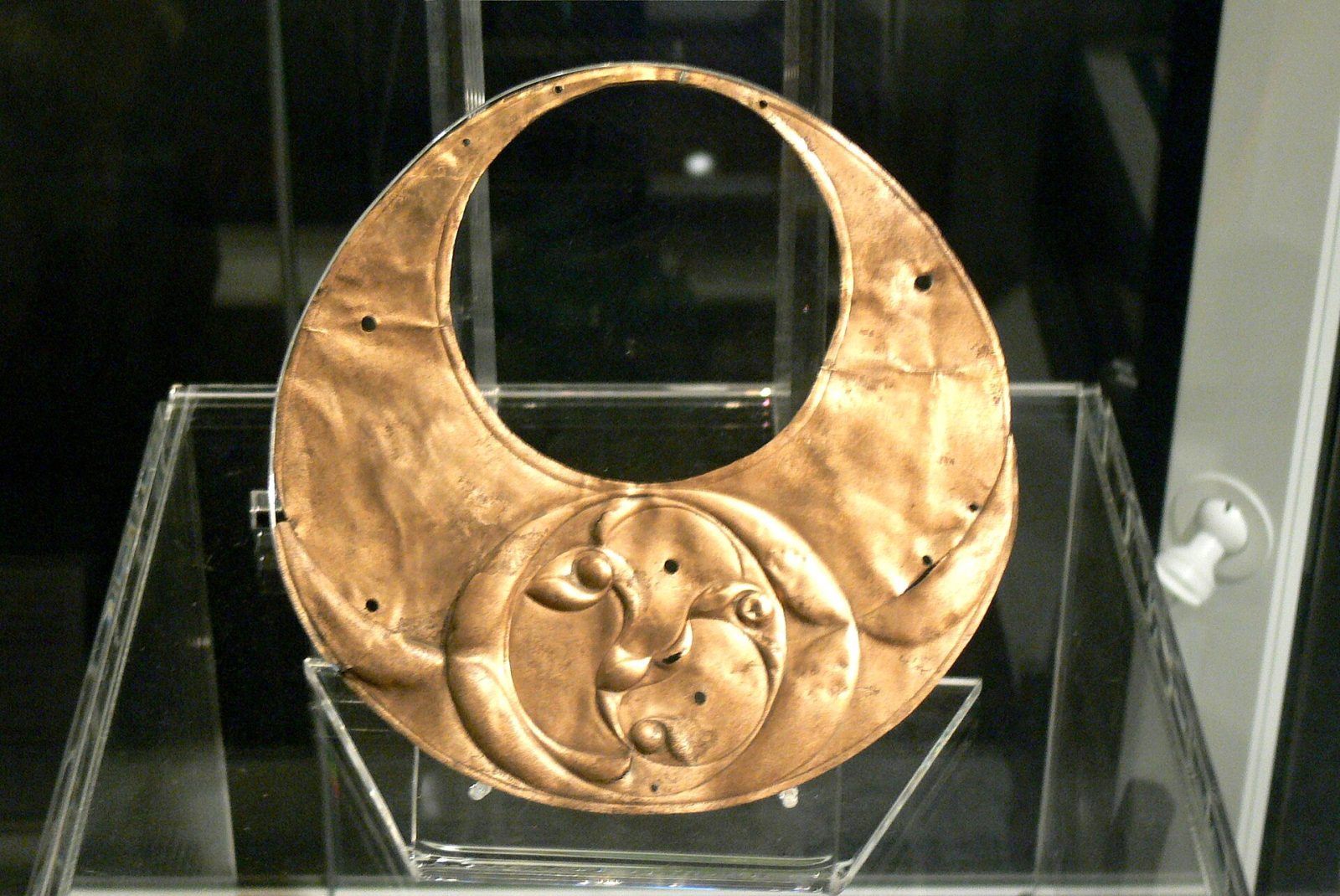
The Battersea Shield is the decorated bronze facing that once covered a wooden shield. The wood has long since rotted away. It is about 78 centimetres long, made from several sheets of bronze joined by rivets hidden beneath the decoration. Three roundels carry swirling patterns in the La Tène style of Celtic art, set with 27 studs of red glass that was softened by heat and pressed into place, often described as enamel.
It was not made for fighting. The bronze is thin, it shows no sign of damage from combat, and it would have been ruined by the first heavy blow. Like many fine weapons from the Thames, it is thought to have been placed in the river deliberately, as an offering. The British Museum dates it to between about 350 and 50 BC, and analysis of the glass suggests it was made no later than the 2nd century BC.
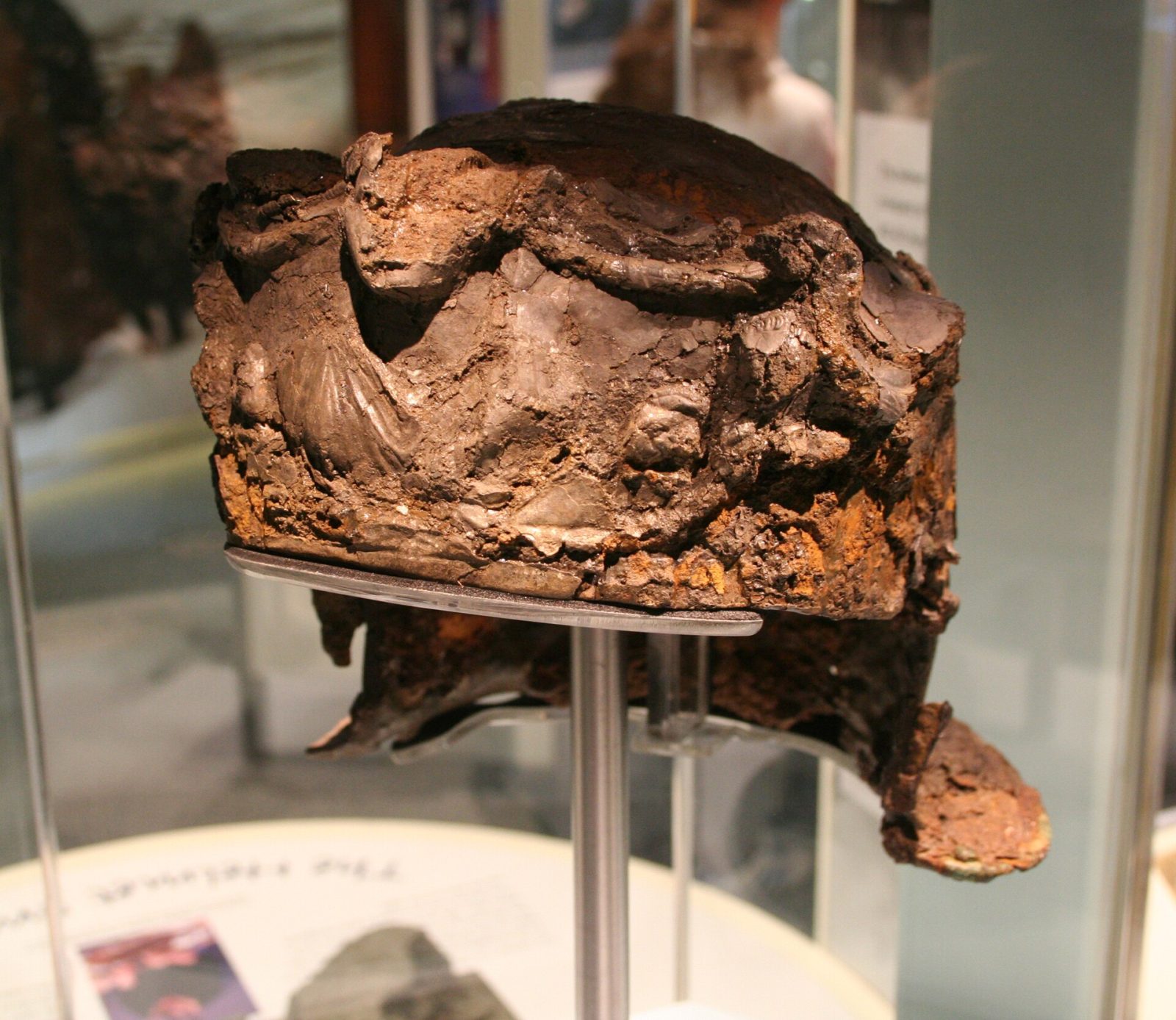
The Thames has given up other remarkable Iron Age pieces, including the horned Waterloo Helmet and the Wandsworth shield bosses, which suggests the river was a special place for offerings for centuries.
The Battersea Shield has become one of the best-known pieces of Celtic art in Britain, and in 1976 a replica was made for the Museum of London. The original is on display in Room 50 of the British Museum.
Written for Global Finds from the London Museum, Harvard University's teaching collection on the Celts and other published accounts. Photo: the Battersea Shield in the British Museum, BabelStone, Wikimedia Commons, CC0.
Approximate location51.48, -0.15View on map
Source: London Museum