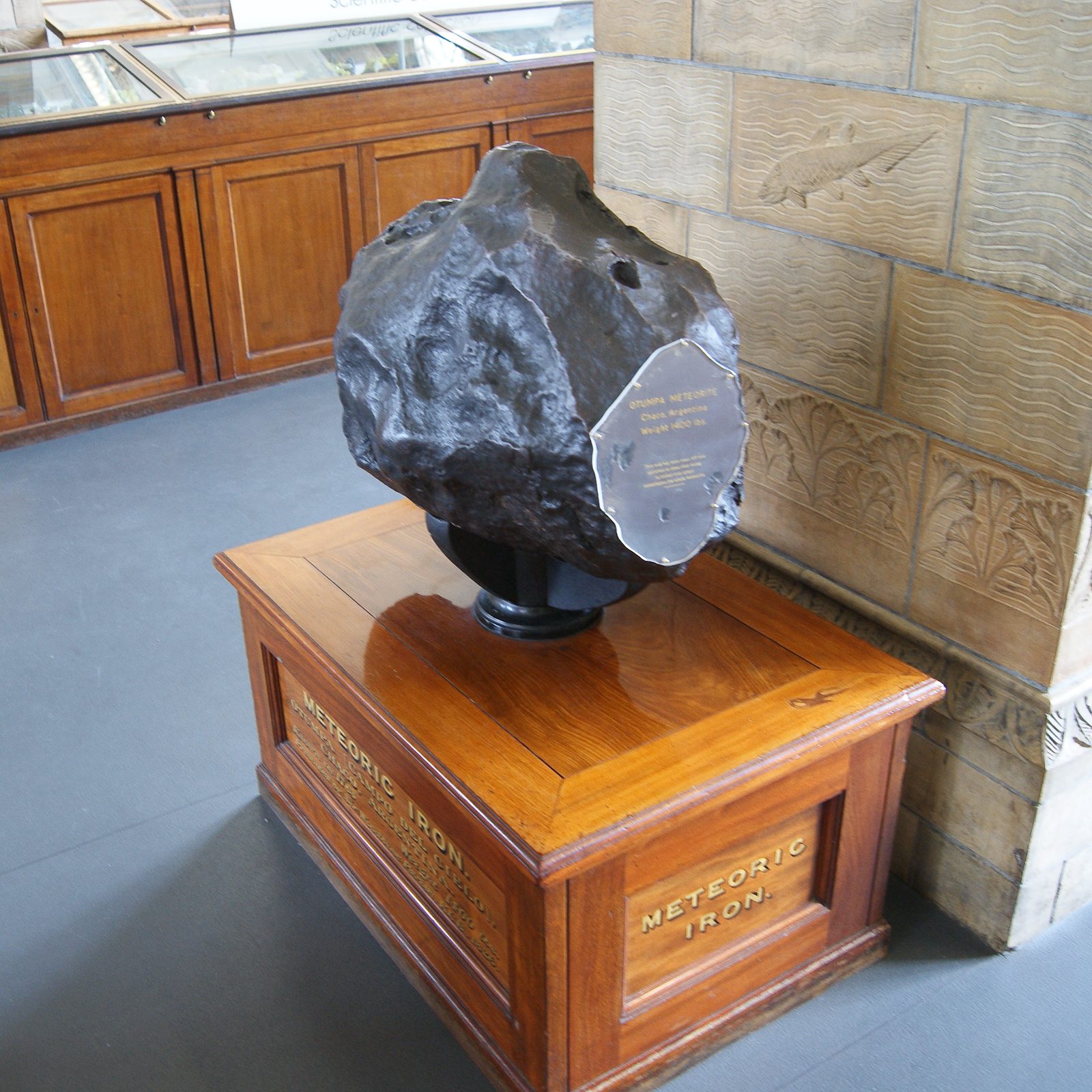
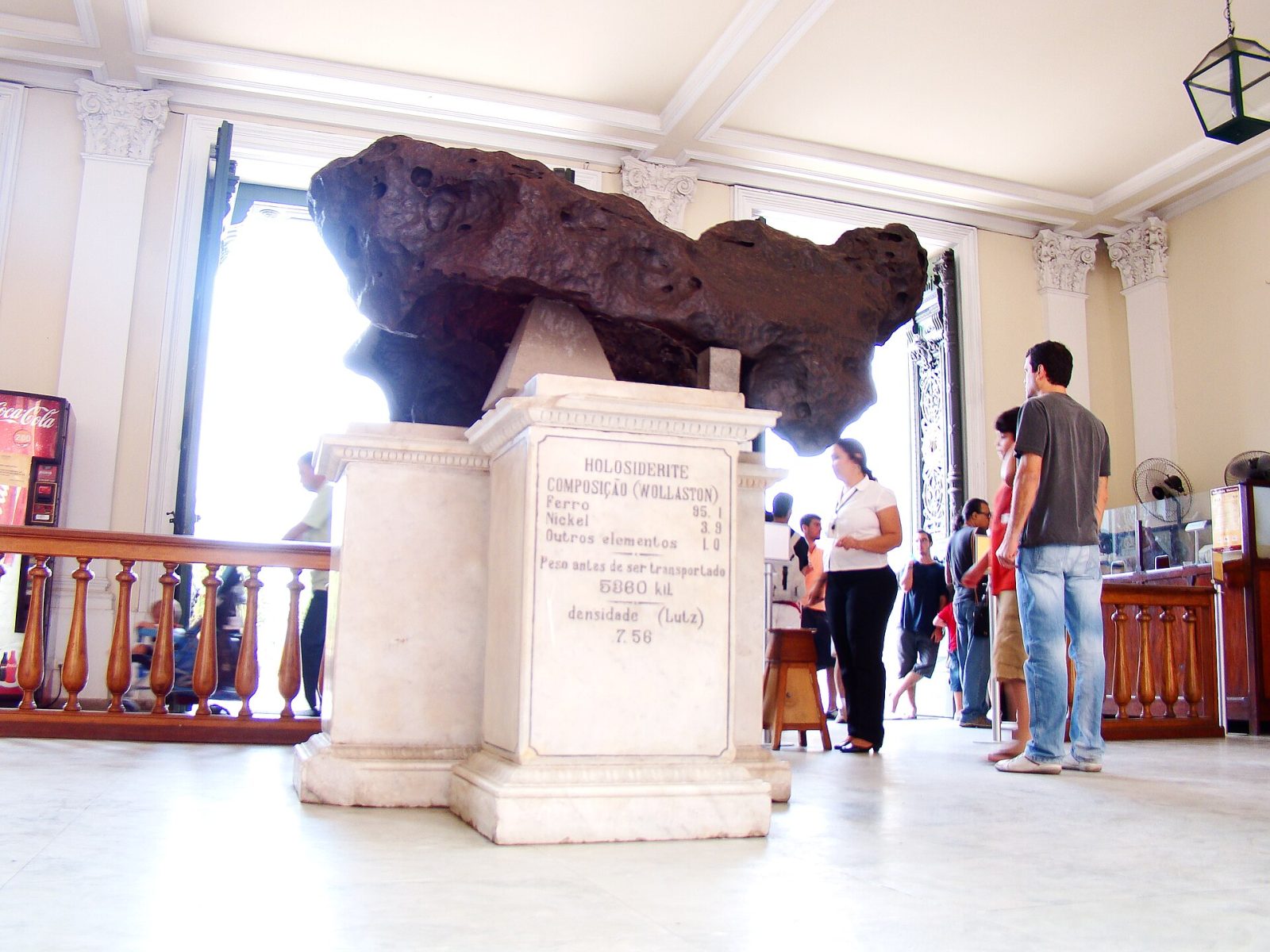
The Hoba Meteorite: the largest meteorite on Earth, still lying where it landed in Namibia
Famous find Fell to Earth less than 80,000 years ago · Found in 1920 See it on the timeline →
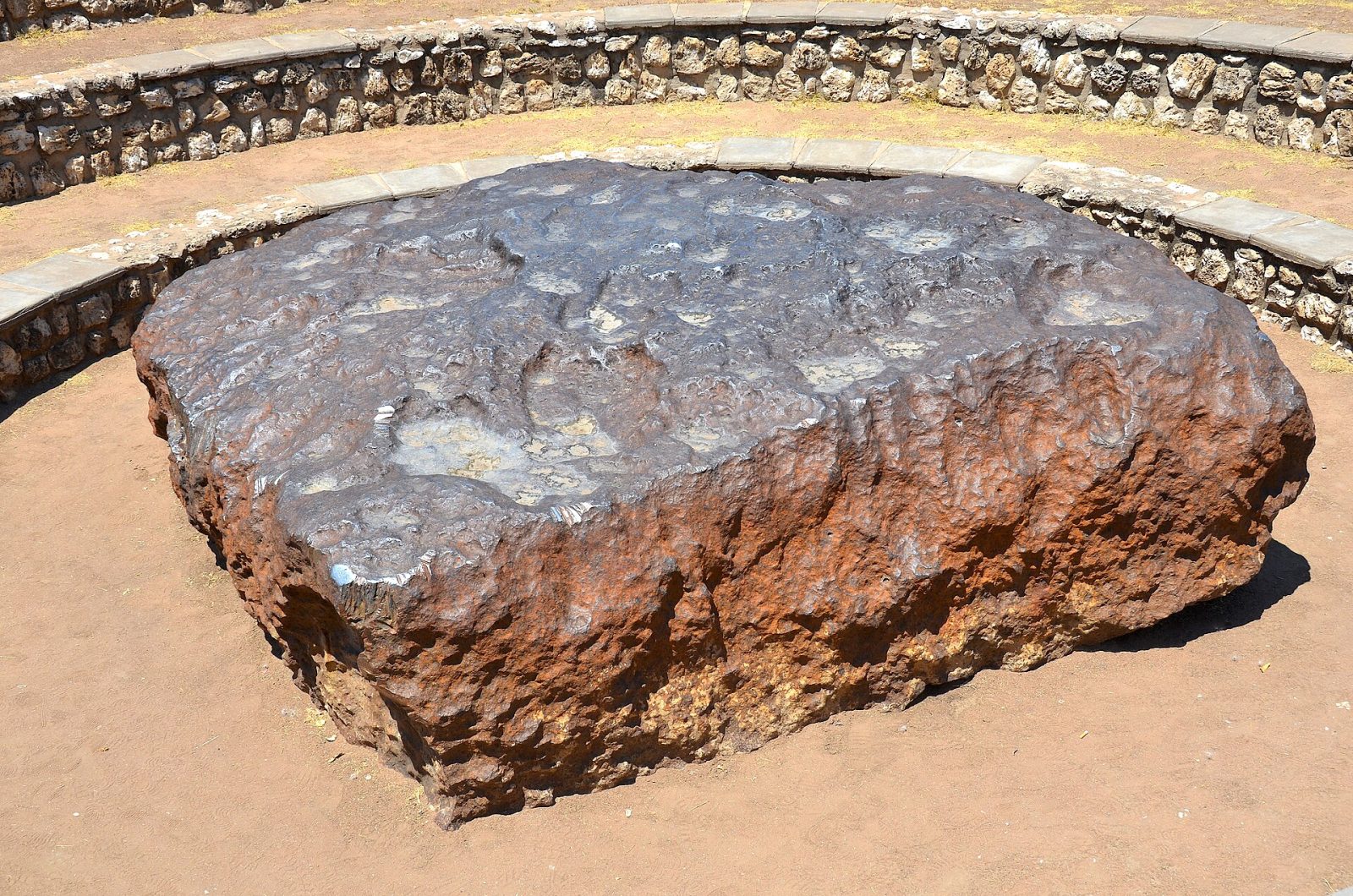
Around 1920 a farmer on Hoba West farm in northern Namibia came across a strange black rock that shone when he scraped it. It was a slab of iron and nickel weighing about 60 tonnes, the largest meteorite known, and it has never been moved.
Around 1920, Jacobus Hermanus Brits, who lived on the farm Hoba West, about 20 kilometres west of Grootfontein in northern Namibia, came across a strange black rock. The popular story says his plough struck it. In a signed statement he made in 1954, Brits said instead that he was out hunting, sat down on the rock, scraped it with his knife and found it shone like metal. He chiselled off a piece and took it to the South West Africa Company in Grootfontein, whose manager recognised it as a meteorite. By May 1921 the company had it analysed: it was more than 80 per cent iron and about 17 per cent nickel.
The Hoba meteorite is a flat, roughly rectangular slab about 2.95 by 2.84 metres across and on average about 90 centimetres thick, weighing around 60 tonnes. It is the largest intact meteorite known on Earth. It belongs to a rare group of nickel-rich irons called ataxites, and its metal formed some 4.5 billion years ago, at the birth of the solar system. Strangely, it left no crater. It probably fell less than 80,000 years ago. It lies in limestone-like calcrete, surrounded by a crust of rusted iron about 30 centimetres thick.
Hoba was too ductile to blast and too heavy to move. In 1930 a 2.5-kilogram wedge was sawn off for the British Museum; it took two men two days and many hacksaw blades. Souvenir hunters cut pieces off over the years, and one piece sawn off in 1968 was sold at auction in 2021. To protect it, the meteorite was declared a National Monument in March 1955, and in the mid-1980s a stone amphitheatre and visitor centre were built around it.
The Hoba meteorite still lies where it was found, and visitors can walk up to it and touch it. It is managed by Namibia's National Heritage Council.
Written for Global Finds from P. E. Spargo in MNASSA (2008), The Namibian (2025) and Bonhams (2021). Photo: the Hoba meteorite, Namibia, Olga Ernst, Wikimedia Commons, CC BY-SA 4.0.
Approximate location-19.59, 17.93View on map
Source: MNASSA (P. E. Spargo, 2008)