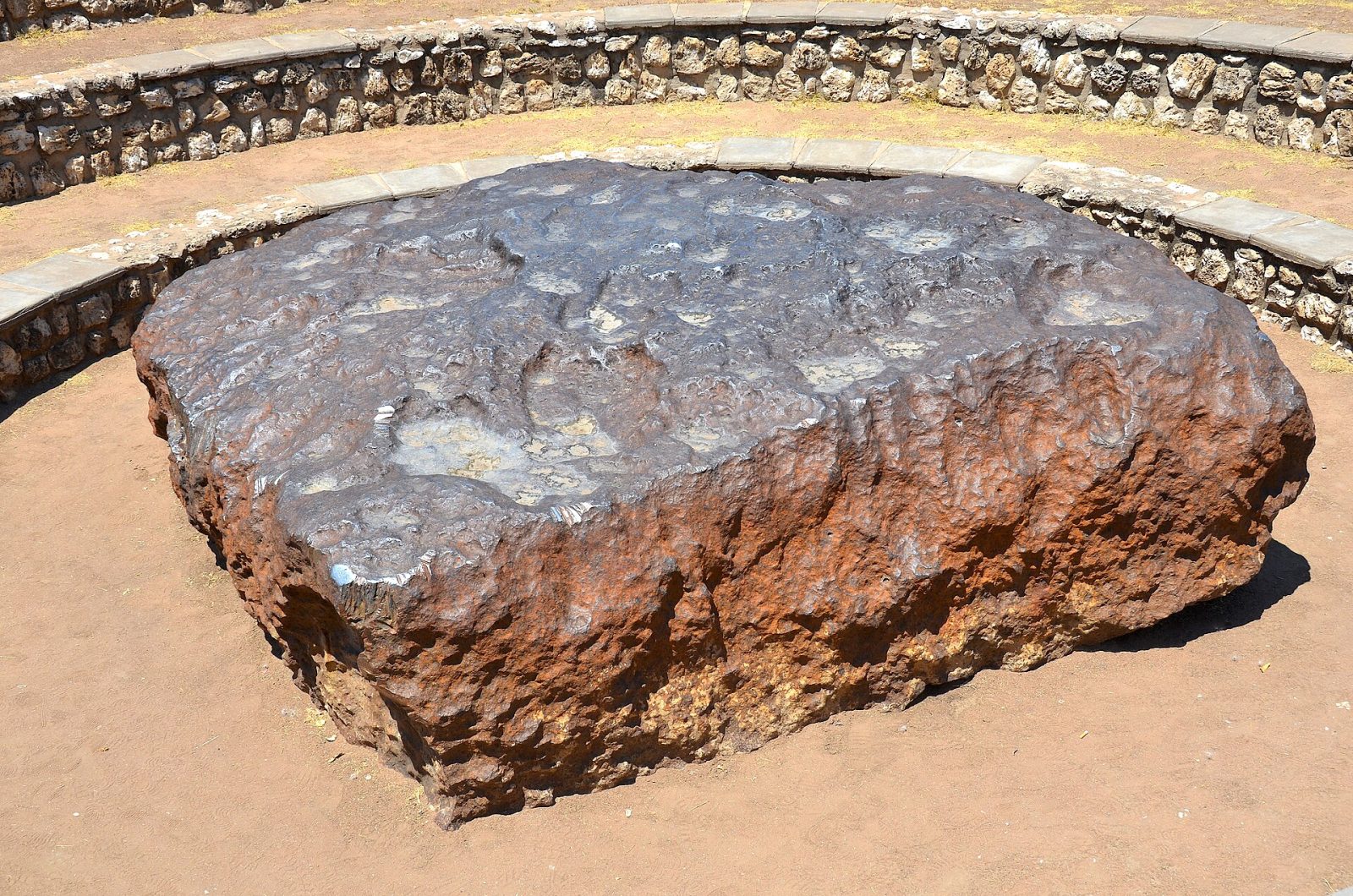
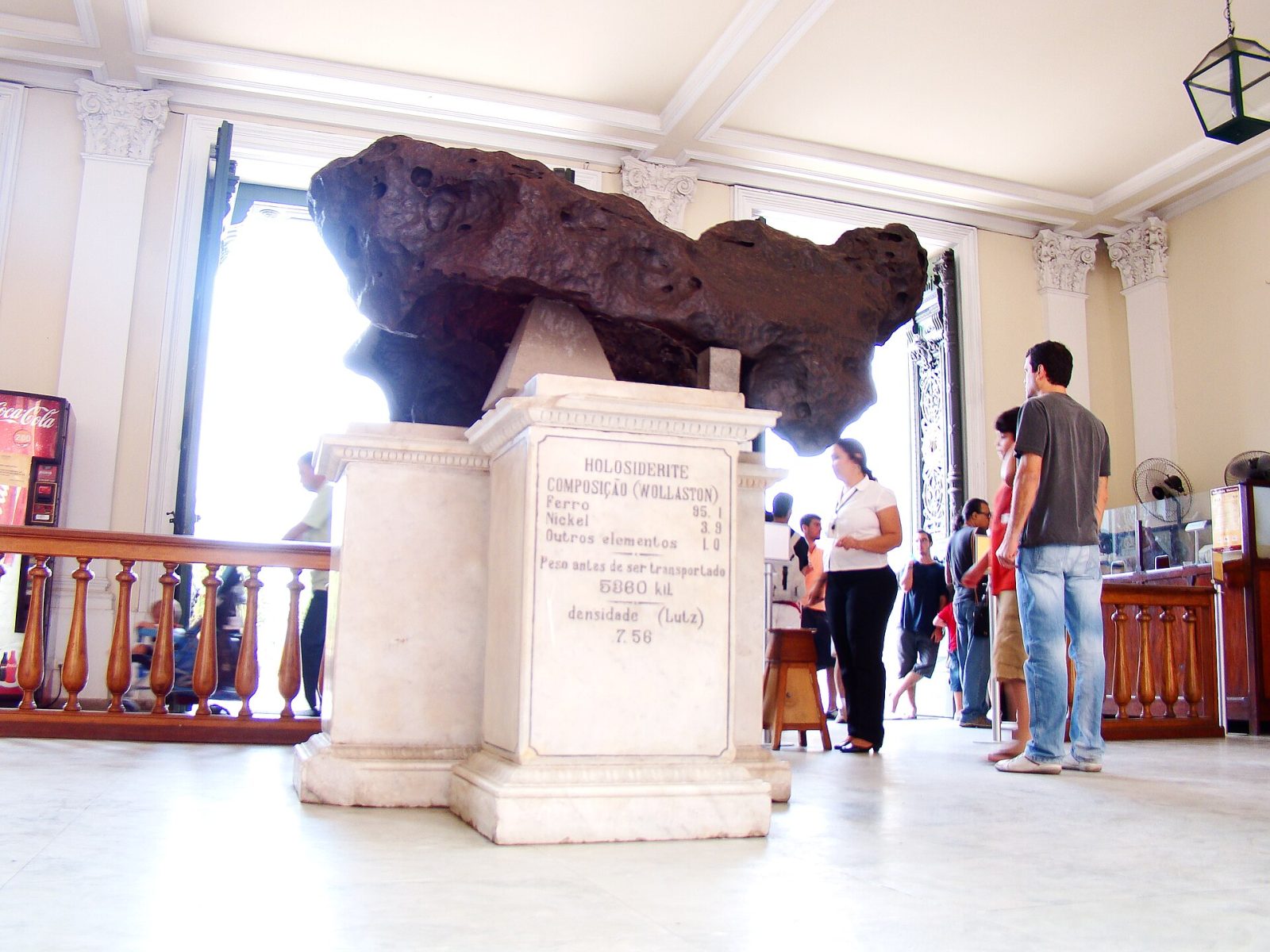
Campo del Cielo: Argentina's field of sky iron, where a metal detector found a 28-tonne meteorite
Famous find Fell about 4,000 to 4,700 years ago · Found in 1969 See it on the timeline →
About 4,000 years ago a giant iron meteorite broke up over northern Argentina, scattering more than 100 tonnes of iron across the Chaco plain. Spanish explorers hunted for its 'table of iron' from 1576, and in 1969 a metal detector found a 28-tonne mass five metres down.
Some 4,000 to 4,700 years ago, a huge iron meteorite broke up as it plunged through the atmosphere over what is now northern Argentina. Its fragments punched at least 26 craters into the plain along a strip about 20 kilometres long, on the border of Chaco and Santiago del Estero provinces. The Indigenous peoples of the region knew the place, and called it the field of the sky: Campo del Cielo in Spanish.
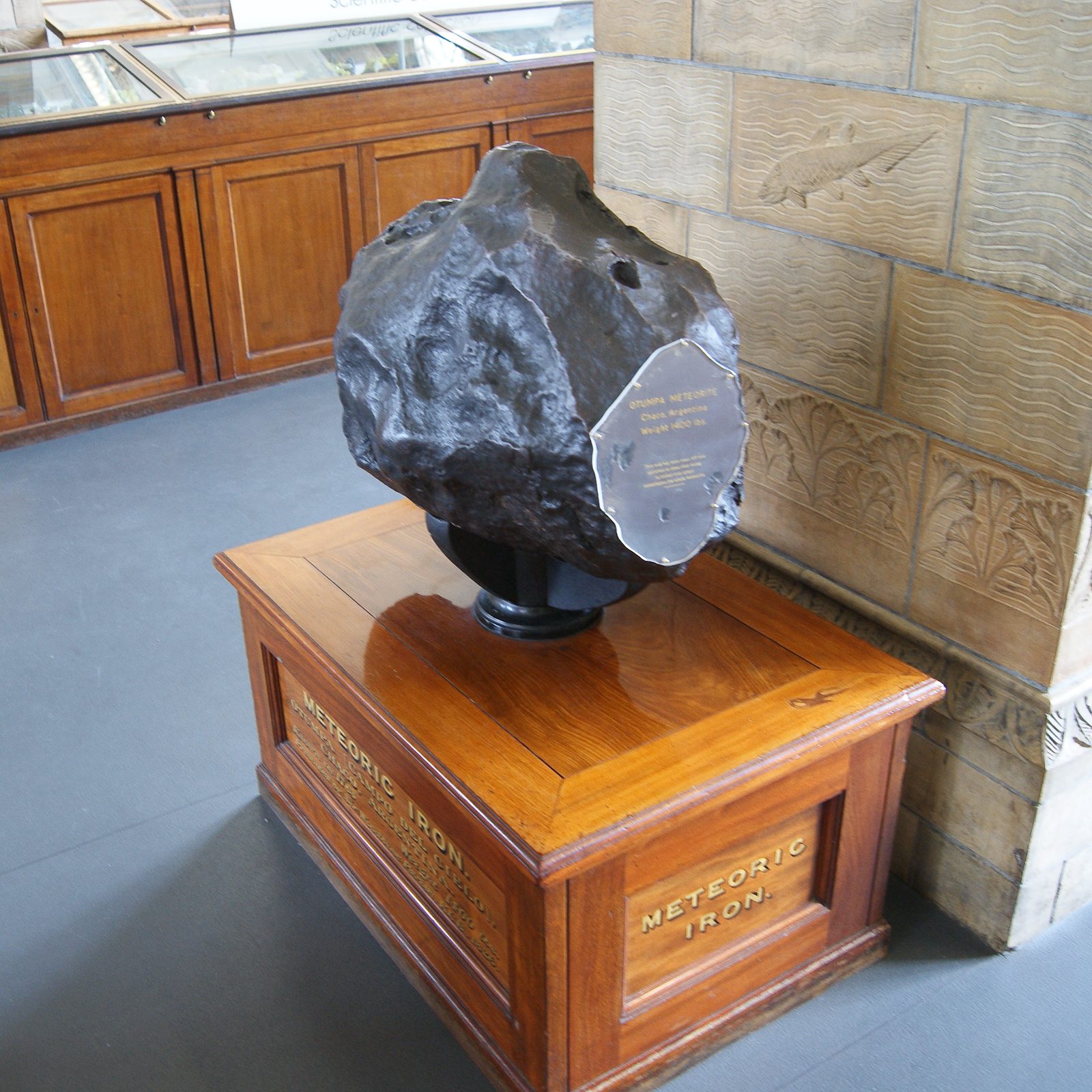
The Spanish heard about it early. In 1576 an expedition set out to find a great mass of iron that local people said had fallen from the sky. In the 18th century explorers described a "Mesón de Fierro", a table of iron, and in 1783 Miguel Rubín de Celis estimated it at about 15 tonnes and sent a report to the Royal Society in London. The Mesón de Fierro has never been found again. A smaller mass found in 1803, the Otumpa iron, was later shipped to England, and part of it, weighing about 634 kilograms, is in the Natural History Museum in London.
In 1969, searchers using a metal detector located a buried mass about five metres underground. Dug out in 1980, it became known as El Chaco, and when it was reweighed in 2016 it came to 28,840 kilograms, one of the heaviest meteorites ever found. In 1990 an American meteorite dealer tried to take it out of the country, claiming to have bought it, and was stopped by the Argentine police. In 2016 local astronomers and municipal workers dug out an even larger mass, Gancedo, weighing about 30,800 kilograms. More than 100 tonnes of iron, about 93 per cent iron and 7 per cent nickel, have been recovered from Campo del Cielo, more than from any other meteorite fall.
Since 2007 meteorites found in Argentina have been protected by law as cultural heritage, and El Chaco stands in the open in a provincial park near the town of Gancedo, where visitors can touch it. Despite the law, smuggling continues; in 2024 police seized 77 meteorites.
Written for Global Finds from the European Space Agency, The World (2024), La Capital (2016) and the US Geological Survey. Photo: the Otumpa mass, part of the Campo del Cielo fall, in the Natural History Museum, London, CherryX, Wikimedia Commons, CC BY-SA 3.0.
Approximate location-27.52, -61.70View on map
Source: The World (PRX)