Boot of Cortez: The largest surviving gold nugget ever discovered in the Western Hemisphere
A natural gold nugget · Found in 1989 See it on the timeline →
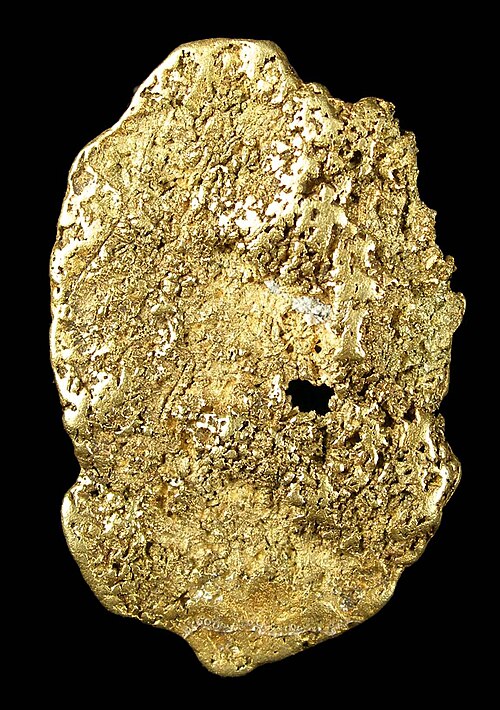
Found in 1989 by a man with a newly bought Radio Shack metal detector, the Boot of Cortez is the largest surviving gold nugget from the Western Hemisphere. It went back to auction in 2026 and failed to reach its reserve.
In 1989, a local man searching the Sonoran Desert near Caborca, in the Mexican state of Sonora, found a gold nugget almost a foot tall with a metal detector he had just bought from Radio Shack, an American chain of electronics shops.
Its shape gave it its name: the Boot of Cortez. It stands about 10¾ inches high and 7¼ inches wide, weighs a little over 26 pounds, and is described by its current sellers as 98 per cent pure gold. It is the largest surviving natural gold nugget ever found in the Western Hemisphere. Larger nuggets have been found elsewhere, mostly in Australia, but many of them were melted down.
The nugget was shown at the American Museum of Natural History in New York, and on 20 January 2008 it was sold at Heritage Auctions in Dallas for $1,553,500 to an anonymous American buyer. The auction house worked out that this was nearly $4,000 an ounce, when gold bullion was selling for under $900.
It has stayed with the same owner since, and has been exhibited at the Houston Museum of Natural Science among other places. On 12 June 2026, it was offered again at EJ's Auction and Appraisal in Glendale, Arizona, with an estimate of $3 million to $7 million. Bidding reached $1.5 million but did not meet the reserve, and the nugget is now being offered for private sale.
Reported by Greek Reporter (July 2026). Written for Global Finds from that report, Heritage Auctions' 2008 sale announcement and EJ's Auction and Appraisal (2026). Photo: a gold nugget from Sonora, Mexico (not the Boot of Cortez), Robert M. Lavinsky, Wikimedia Commons, CC BY-SA 3.0.
Approximate location30.72, -112.16View on map
Source: GreekReporter.com