The Ringlemere Cup: a Bronze Age gold cup crushed by the plough
Famous find Made about 1950 to 1750 BC · Found in 2001 See it on the timeline →
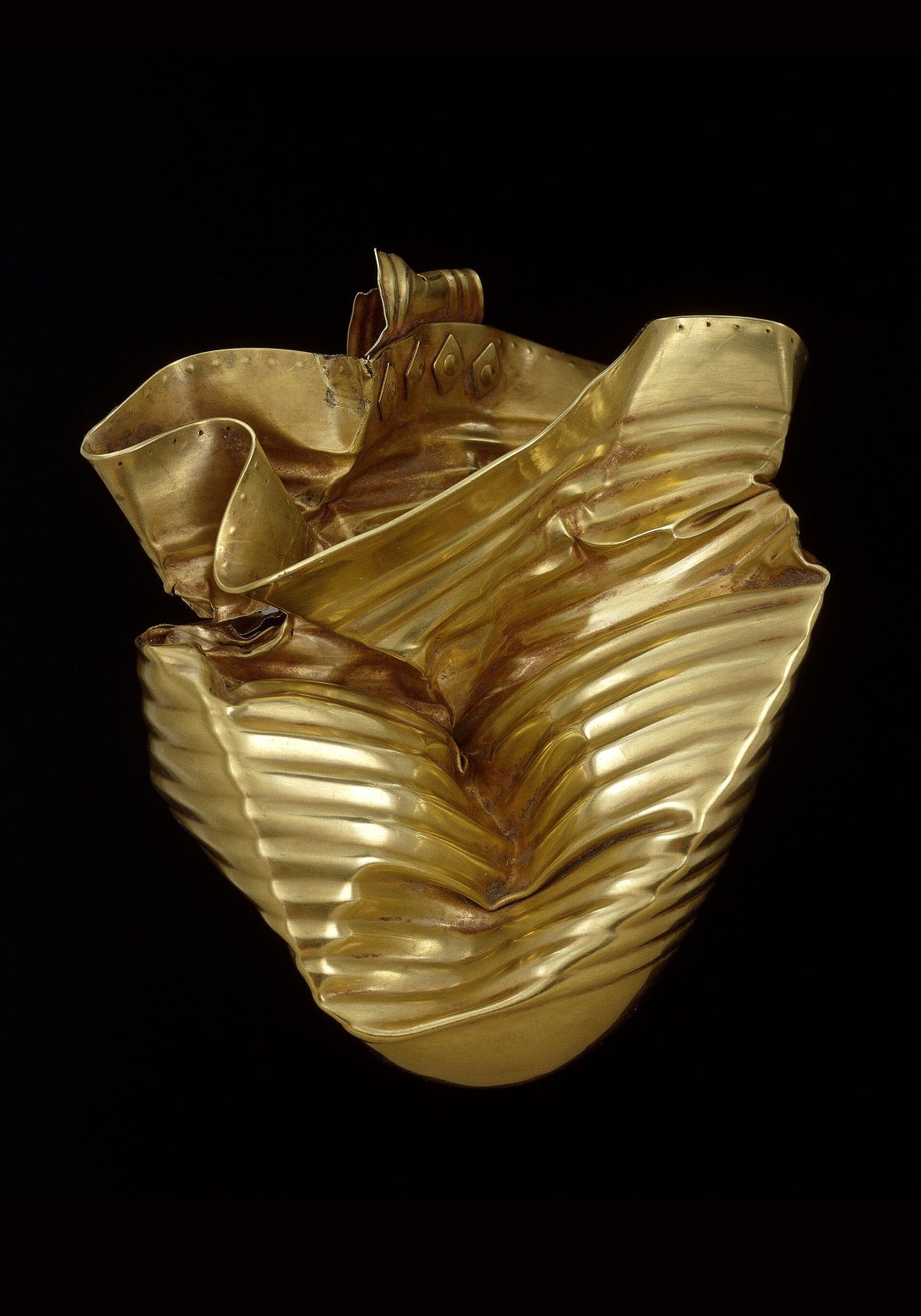
In 2001 a detectorist in Kent found a crushed gold cup in a ploughed field. It was a rare Early Bronze Age cup, and the excavation that followed his report found an ancient monument hidden beneath the field.
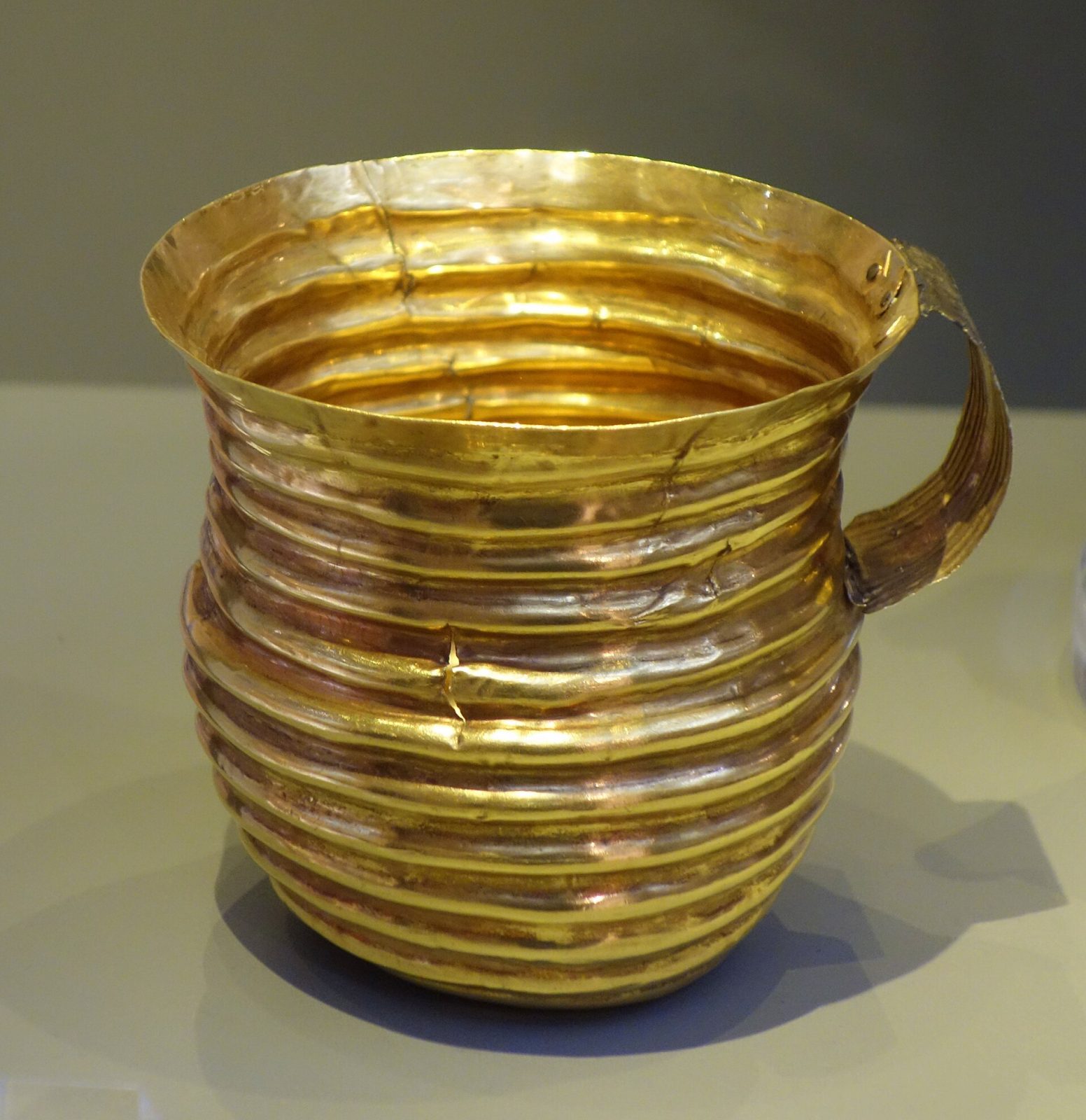
On 4 November 2001, Cliff Bradshaw was metal detecting on Ringlemere Farm, at Woodnesborough near Sandwich in Kent, when he found a gold cup in a ploughed field. A ploughshare had caught it and crushed it, but it was still recognisable: a small handled cup beaten from a single piece of gold, with ribbed sides and a handle fixed on with rivets.
It is about 11 centimetres tall and weighs just under 184 grams. The British Museum dates it to the Early Bronze Age, between about 1950 and 1750 BC, by comparing it with the handful of similar gold cups known from Europe, though some other estimates put it a few centuries later. Only one cup like it had been found in Britain before: the Rillaton Cup, dug out of a burial mound in Cornwall in 1837.
Mr Bradshaw reported the find to his Finds Liaison Officer. It was declared Treasure, and the British Museum acquired it with help from the Art Fund, the Heritage Lottery Fund and the British Museum Friends. The reward was shared between the finder and the landowners.
Because the findspot had been reported precisely, archaeologists went back to look. They found that the cup had been buried in a mound built inside an older ritual monument, a henge, and the excavations also uncovered an Anglo-Saxon cemetery on the same site. A single detecting find had revealed a whole ancient landscape that nobody knew was there.
The cup is on display in the British Museum.
Written for Global Finds from the British Museum, the Kent Historic Environment Record and other published accounts. Photo: the Ringlemere Cup, The Portable Antiquities Scheme / The Trustees of the British Museum, Wikimedia Commons, CC BY-SA 2.0.
Approximate location51.26, 1.29View on map
Source: British Museum