Tomb 7 at Monte Albán: the Mixtec treasure that made world headlines in 1932
Famous find Mixtec burials of the 14th to 15th centuries AD · Found in 1932 See it on the timeline →
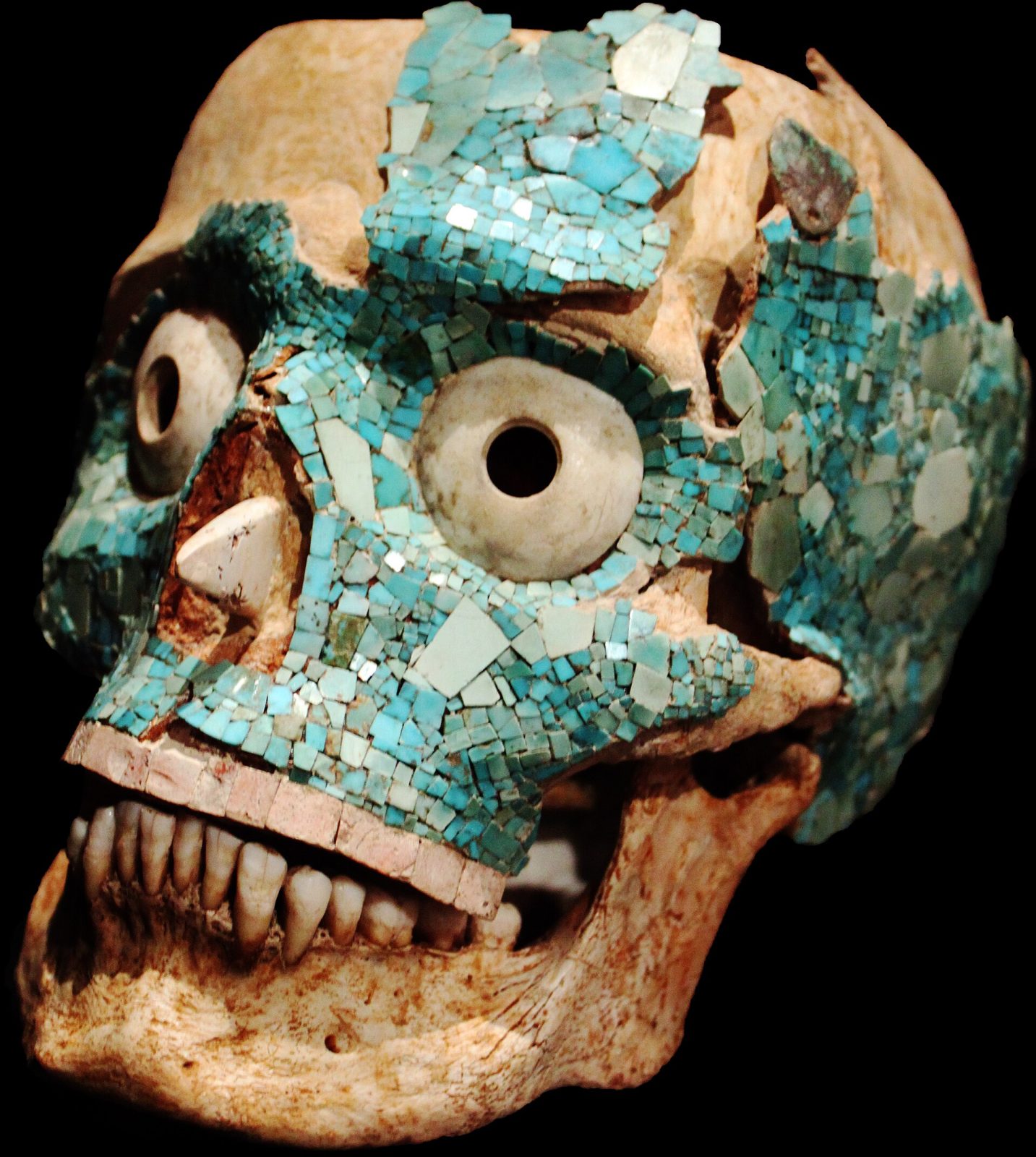
In January 1932 the Mexican archaeologist Alfonso Caso opened a tomb at Monte Albán in Oaxaca and found it filled with Mixtec treasure: gold pectorals, jade, pearls, carved jaguar bones and a skull covered in turquoise mosaic. It made headlines around the world.
Monte Albán, on a flattened mountaintop above the city of Oaxaca in southern Mexico, was the great capital of the Zapotec people for more than a thousand years. In the winter of 1931 to 1932, the Mexican archaeologist Alfonso Caso was excavating there with a team that included Juan Valenzuela, Eulalia Guzmán and his wife, María Lombardo. In early January 1932, digging beneath the floor of a later temple on the North Platform, they entered a stone tomb, numbered Tomb 7. It was full of treasure.
The tomb had been built by the Zapotecs centuries earlier and reused much later by the Mixtecs, who placed nine people in it, with some of the richest offerings ever found in the Americas. There were hundreds of objects, including more than 120 of gold: pectorals, necklaces, earrings, rings and a diadem. There were objects of silver and copper, jade, turquoise, rock crystal, alabaster and onyx, coral and shell, and pearls. One of the most striking finds is a human skull covered in a mosaic of turquoise and shell, with shell discs set in the eye sockets. Caso himself considered 34 carved bones, mostly of jaguars, decorated with intricate Mixtec scenes and writing, to be the most important objects of all.
The best known piece is a gold pectoral showing a figure wearing a helmet, with a skeletal jaw, carrying the names and dates of the Mixtec calendar. Caso read it as a portrait of a lord; more recent research has suggested that the principal burial in the tomb may have been a woman. The Mixtec burials are dated to between the 14th and 15th centuries AD.
The discovery was front-page news around the world and helped to inspire Mexico's 1934 law protecting its archaeological heritage and the founding of its national institute of archaeology and history, INAH, in 1939. The treasure of Tomb 7 is displayed in the Museo de las Culturas de Oaxaca, in the former convent of Santo Domingo in Oaxaca city.
Written for Global Finds from National Geographic History, El Universal, México Desconocido and the Instituto Nacional de Antropología e Historia. Photo: the turquoise-mosaic skull from Tomb 7 in the Museo de las Culturas de Oaxaca, Anagoria, Wikimedia Commons, CC BY 3.0.
Approximate location17.04, -96.77View on map
Source: National Geographic History